
7 Rider-Friendly Stretches to Ease Stiffness Before and After a Ride
 Jake Miller
9 min read
Jake Miller
9 min read
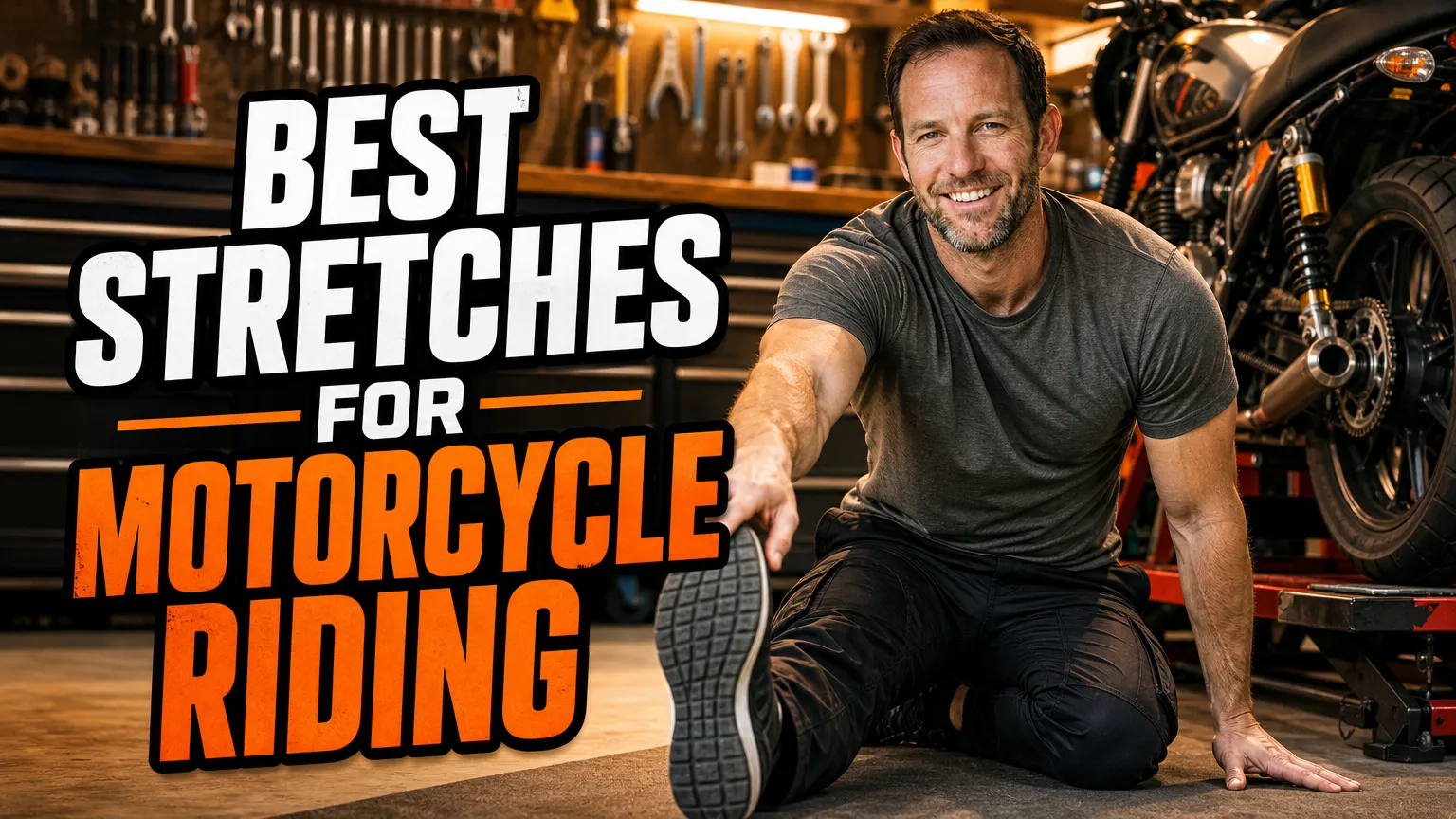
I feel the difference between a ride that ends with a little stiffness and one that leaves me feeling locked up often comes down to how long I have been sitting in one position. My hips, upper back, chest, and legs tend to notice first, especially after a long day in the saddle.
These are the stretches I find useful around a ride. I pair each one with a real piece of mobility equipment, but the gear is optional: comfortable, controlled movement matters more than owning a particular product.
- I loosen my back, hips, legs, and chest with gentle stretches, not forceful yanks.
- I use longer holds after riding and easy movement before I set off.
- I stop if I feel sharp pain, numbness, tingling, or dizziness.
- I never stretch beside moving traffic or while balancing on my motorcycle.
How I stretch around a ride
Before riding, I prefer a few minutes of easy walking and comfortable range-of-motion movements. After a ride, when I am safely parked and out of traffic, I slow down and use relaxed holds. I breathe normally and aim for a mild pulling sensation, never a painful one.
I do not treat stretching as a fix for every ache. If pain is severe, persistent, or accompanied by weakness, tingling, or numbness, I stop and seek advice from a qualified health professional. I also avoid stretching in a roadside spot where I cannot pay attention to traffic.
I think of flexibility as one small part of a bigger safety picture. Stretching cannot prevent a crash, and it does not replace alert riding, good protective gear, or sensible breaks. For broader context, I have read about what percentage of motorcycle accidents are caused by cars and what percent of motorcycle accidents are caused by other drivers. Those risks are a reminder to stay focused, including when I take a break.
1. TriggerPoint GRID Foam Roller — Thoracic Extension
When my upper back feels stiff after holding a riding posture, I like a gentle thoracic extension over a roller. The TriggerPoint GRID Foam Roller is a specific 13-inch model with a hollow core and a textured EVA foam surface. It commonly sells in roughly the $35 to $45 range, though prices vary by retailer.
How I do the stretch
I place the roller across my upper back, support my head with my hands, and keep my feet planted. I lean back only a little over the roller, pause for a breath, and return to center. Then I move the roller a small distance and repeat, avoiding my lower back and neck.
I do not use body weight to force a big arch. If I do not have a roller, I can sit tall and gently open my chest without equipment. I treat the GRID as a convenient mobility aid, not a medical device or a replacement for professional care.
2. OPTP Stretch Out Strap — Supine Hamstring Stretch
Long periods with my knees bent can make the backs of my thighs feel tight. The OPTP Stretch Out Strap is a roughly six-foot nylon stretching strap with multiple hand loops, which makes it easier for me to adjust my grip without reaching awkwardly. It is often priced around $15 to $25.
How I do the stretch
I lie on my back, bend one knee with my foot on the floor, and loop the strap around the other foot. With that leg comfortably raised, I gently straighten the knee until I feel a mild stretch behind my thigh. I hold for about 20 to 30 seconds while breathing steadily, then switch sides.
I keep my lower back relaxed against the floor and avoid pulling hard on the strap. I do not need to lock my knee or bring my leg toward my face. A towel can work as a substitute if I do not have the OPTP strap handy.
3. Manduka PRO Yoga Mat — Half-Kneeling Hip Flexor Stretch
My hips can feel restricted after sitting with bent knees, so I make time for a half-kneeling hip flexor stretch. The Manduka PRO Yoga Mat is a dense, 6-millimeter mat made with a PVC surface; the standard version measures about 71 by 26 inches. It is a premium option, often costing roughly $130 to $150, so I would not buy one just for stretching if a comfortable floor or basic mat already works for me.
How I do the stretch
I kneel on the mat with one knee down and the other foot in front. Keeping my torso upright, I gently tuck my pelvis and shift forward a small amount until I feel the stretch at the front of the kneeling-side hip. I hold without arching my lower back, then repeat on the other side.
I like the mat because its cushioning can make kneeling more comfortable, but it does not make the stretch more effective by itself. I keep my movement small and controlled, especially if my knees are sensitive.
4. ProStretch Original Calf Stretcher — Calf Stretch
When I have spent a while with my feet on the pegs, I sometimes notice tightness through my calves and ankles. The ProStretch Original Calf Stretcher is a molded rocker-style device designed to position a foot for a calf stretch. It commonly sits around $30 to $40, depending on the seller.
How I do the stretch
I place the device on a stable, level surface, position one foot in it, and keep my heel supported as I gently lean forward. I bend my knee slightly to shift the sensation lower toward the Achilles area, or keep it straighter to feel more of the calf. I stay within a comfortable range and repeat on the other side.
I never use the rocker while standing somewhere slippery or unstable. If I do not own the ProStretch, I can place my hands on a wall and step one foot back for a simple calf stretch. I keep the heel down without forcing it.
5. Gaiam Cork Yoga Block — Supported Side-Body Stretch
I find a gentle side-body stretch useful when my torso feels compressed after a long ride. A Gaiam Cork Yoga Block gives me a stable support option; the brand’s cork blocks are commonly listed in a standard 9-by-6-by-4-inch size. They are generally in the approximate $15 to $25 range, although the price depends on the retailer.
How I do the stretch
I kneel or sit comfortably and place the block beside me as a hand rest. I raise one arm overhead and lean slightly toward the block, keeping both sides of my body long rather than collapsing into the stretch. I take a few slow breaths, come back to center, and switch sides.
I use the block for balance and support, not to push myself farther. If kneeling is uncomfortable, I sit cross-legged or on a chair and make the movement smaller. A sturdy cushion or no support at all can work just as well.
6. TheraBand CLX Resistance Band — Gentle Shoulder Opener
I sometimes feel tight across the front of my shoulders after holding my arms forward at the handlebars. The TheraBand CLX Consecutive Loops Resistance Band is a latex resistance band with a series of loops that offer different hand positions. It is sold in different resistance levels, and pricing varies by length and resistance, often landing around $15 to $30.
How I do the stretch
I hold a loop in each hand with the band in front of me, elbows soft and shoulders relaxed. I gently separate my hands only far enough to feel a mild opening across my chest, then return to the starting position. I keep the movement easy and avoid shrugging or pulling the band behind my body.
I treat this as a light mobility movement, not a strength test. The band should not snap back or pull me off balance, and I stop if I feel shoulder pain. If I do not have a band, I can clasp my hands loosely behind me and gently open my chest instead.
7. Tune Up Fitness Therapy Balls — Glute Release Before a Figure-Four Stretch
When my hips feel especially stiff, I like to address the surrounding muscles gently before stretching. Tune Up Fitness Therapy Balls are grippy rubber massage balls sold as a pair; they are designed for targeted self-massage. The price is commonly around $20 to $30, but I check current listings because products and prices can change.
How I do the stretch
I sit on a ball placed under one side of my glute, using my hands and feet to control how much pressure I apply. I pause over a comfortable spot for a few breaths, then move off the ball and lie on my back for a figure-four stretch: I cross one ankle over the opposite thigh and draw the supporting leg toward me gently.
I avoid rolling directly over bones, joints, or any area that feels bruised or unusually tender. I use only light pressure and stop if I feel numbness, tingling, or sharp pain. The balls are optional; I can skip the release and do the figure-four stretch by itself.
My simple routine for long rides
I do not try to complete every stretch at every stop. Before riding, I walk for a few minutes and move my shoulders, hips, and ankles comfortably. During a break, I stand somewhere safe, take an easy walk, and choose one or two areas that feel stiff.
After I finish riding, I might spend 20 to 30 seconds on each side of a hamstring, calf, or hip stretch, then add a gentle upper-back or chest opener. I keep breathing, avoid bouncing, and ease out of each position slowly. I would rather finish feeling looser than chase a deeper stretch.
Most importantly, I take breaks before stiffness distracts me. I never stretch next to moving traffic or in a place where I cannot stay alert. Riding carries real risks, and I use resources discussing how many fatal motorcycle accidents per day, what percent of motorcycle accidents result in death, and what percent of motorcycle accidents are fatal as reminders to take safety seriously. For me, stretching is a small comfort habit, while attentive riding and safe stops remain essential.
Frequently Asked Questions
How long should I hold a stretch after motorcycle riding?
I usually start with a comfortable 20 to 30 second hold, breathing slowly. I ease off if I feel sharp pain, numbness, or tingling.
Should I stretch before or after a motorcycle ride?
I use gentle, dynamic movement before riding and save longer, relaxed stretches for breaks or after I have parked safely.
What areas should I stretch after a long ride?
I focus on my hips, hamstrings, calves, chest, and upper back, since those areas can feel stiff after staying in a riding position.
Do I need special equipment for motorcycle riding stretches?
No. I can do most stretches without gear, though a mat, strap, block, or roller can make some movements more comfortable.

Related Articles

Smooth Motorcycle Downshifts: My Step-by-Step Guide to Rev Matching
Learn how I rev-match motorcycle downshifts smoothly, with clear steps, safe practice drills, common mistakes, and tips for different bikes…
Jake Miller
11 min read

Motorcycling in Early Pregnancy: Risks, Questions to Ask, and Safer Choices
Riding a motorcycle while pregnant in the first trimester raises safety questions. I cover crash risks, clinician advice, gear limits,…
Jake Miller
9 min read

How Road-Friction Tests Reveal What Happens When a Motorcycle Slides
I explain how motorcycle sliding-friction tests measure tire grip, what changes on wet or dirty roads, and how I use…
Jake Miller
10 min read