
ATV, Quad Bike, or Quadricycle? A Rider’s Guide to Four-Wheel Motorcycles
 Jake Miller
11 min read
Jake Miller
11 min read
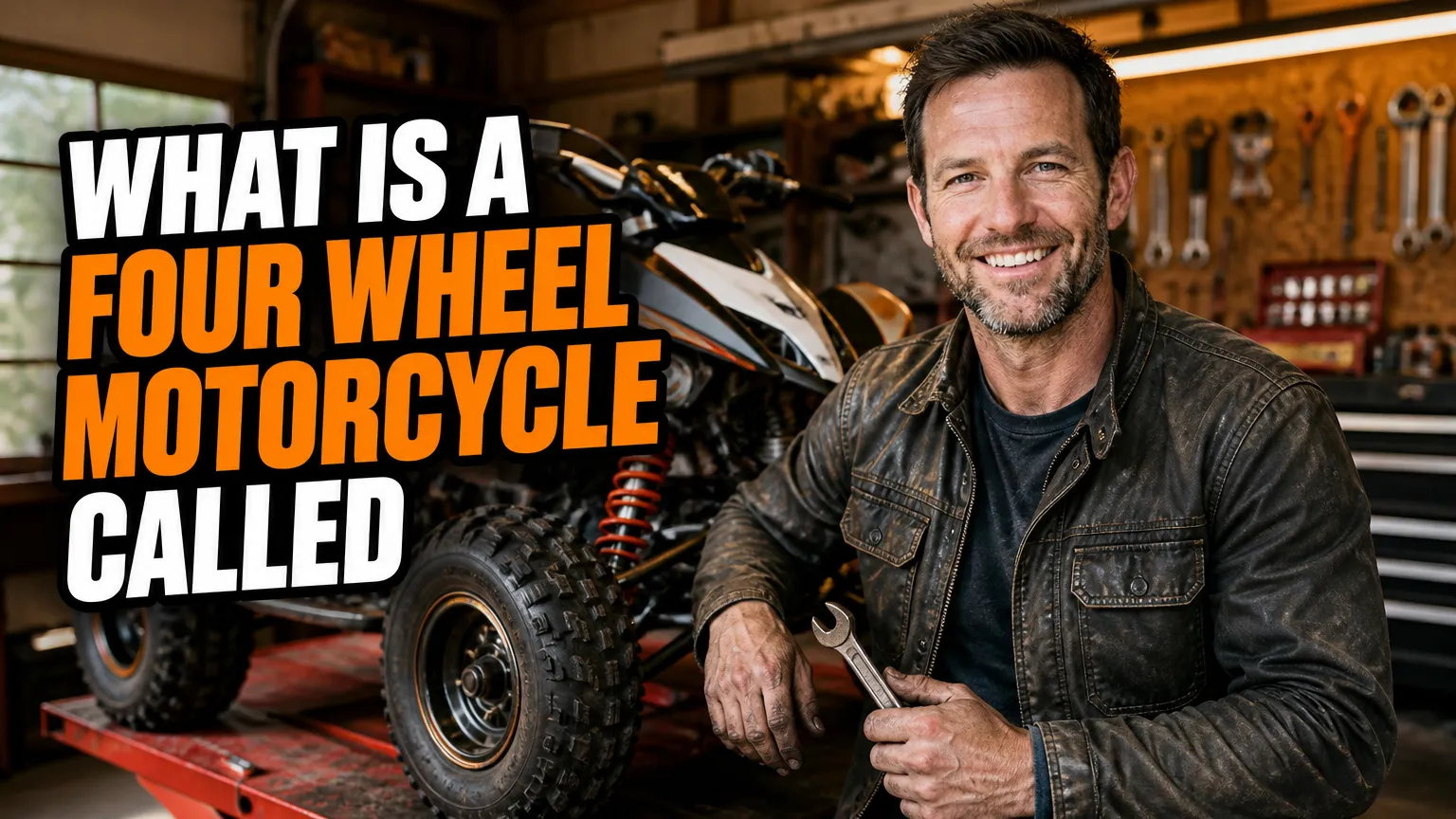
When I first heard someone ask what a four-wheel motorcycle is called, I understood the picture immediately: a small motorized machine with handlebars, a seat you straddle, and a wheel at each corner. The name I hear most often is ATV, though plenty of riders call one a quad bike or four-wheeler.
- I usually call a handlebars-and-straddle-seat four-wheeler an ATV, quad bike, or four-wheeler.
- A UTV is a different style, usually with side-by-side seats, a steering wheel, and a roll cage.
- “Four-wheel motorcycle” is an informal description, not always the official vehicle category.
- I check local laws and wear proper protective gear before riding any quad.
In this guide, I’ll explain the names I use, how these machines differ from motorcycles and UTVs, and what I consider before choosing one. I’ll also cover the terminology that can matter when I’m looking at road rules, safety, or buying options.
The name I use for a four-wheeled bike
In everyday conversation, I usually call a four-wheeled machine with handlebars and a straddle-style seat an ATV. That abbreviation stands for all-terrain vehicle. “Quad bike” and “four-wheeler” are also common names, and I’ve heard riders use all three to mean roughly the same thing.
There can be small differences in how people use those terms. Some use “quad” for nearly any four-wheeled off-road vehicle, while others reserve it for a machine with a motorcycle-like riding position. When I want to be precise, I describe the layout as well as using the name.
ATV, quad bike, and four-wheeler
For most casual discussions, I treat ATV, quad bike, and four-wheeler as overlapping labels. I might say “ATV” when talking about the vehicle category, “quad bike” when emphasizing the bike-like riding position, and “four-wheeler” in an informal conversation.
Those labels don’t tell me everything about a machine. An ATV could be designed for trails, utility work, recreation, or sport riding, and its size and power can vary substantially. I look at the manufacturer’s description and the vehicle’s intended use instead of assuming every quad is built for the same job.
Why “four-wheel motorcycle” is not always the official term
I understand why the phrase four-wheel motorcycle makes sense: the rider sits astride the seat and steers with handlebars, much like on a motorcycle. But it’s usually a descriptive phrase rather than the formal category I’d expect to see on registration documents or in vehicle regulations.
In many places, motorcycles are defined and regulated separately from four-wheeled vehicles. An ATV may have different rules for licensing, registration, insurance, equipment, and where it can be ridden. I never assume that a motorcycle rule automatically applies to a quad, or that an ATV can use public roads just because it has an engine and handlebars.
How an ATV differs from a motorcycle
The most obvious difference I notice is the number of wheels, but the riding experience changes along with it. On a conventional motorcycle, I balance the machine and lean into turns. On an ATV, the four-wheel layout provides a broader footprint, but I still need to shift my weight and steer thoughtfully, especially on uneven ground.
I don’t consider four wheels a guarantee against tipping or losing control. A quad can roll if I take a corner too quickly, ride across a steep slope carelessly, or hit an obstacle at an unsuitable angle. The machine may feel stable at a standstill, but safe handling still depends on speed, terrain, rider skill, and the ATV’s design.
Controls and riding position
Many ATVs have a motorcycle-style seat and handlebars, but I may use a thumb throttle rather than a twist-grip throttle. Shifting systems vary too: a model might have a manual transmission, a clutch, or an automatic setup. I check the controls before riding because I don’t want to discover an unfamiliar brake or gear arrangement halfway along a trail.
Compared with a motorcycle, an ATV often gives me a different way to manage rough terrain. I can move my body over the seat, use the footrests, and adjust my posture as the ground changes. That doesn’t mean I can simply sit back and let the four wheels do the work; I still need to read the terrain and follow the machine’s operating guidance.
Purpose and terrain
I most often associate ATVs with off-road riding and practical tasks. Depending on the model, someone might use one on private land, designated trails, farms, or work sites. A sport-oriented quad, a utility ATV, and a youth-sized model can have very different features, so I match the machine to the rider and the intended terrain.
A motorcycle can also be built for off-road use, but dirt bikes and ATVs aren’t interchangeable. When I compare them, I think about where I’ll ride, how I want to control the vehicle, and whether I’m prepared to learn its handling characteristics. A test ride in an appropriate, legal setting can tell me more than the shape alone.
ATV versus UTV: the distinction I check
One point that can cause confusion is the difference between an ATV and a UTV, or utility task vehicle. I picture an ATV as a machine I straddle and steer with handlebars. A UTV more commonly has seats arranged side by side, a steering wheel, pedals, and a protective frame or roll cage.
People sometimes call a UTV a side-by-side, and that description helps me tell the two layouts apart. UTVs can carry a passenger next to the driver and may include cargo beds or other work-focused equipment. They are four-wheeled motorized vehicles, but they don’t usually resemble a motorcycle in the way an ATV does.
A quick way I tell them apart
- ATV or quad bike: I straddle the seat and use handlebars.
- UTV or side-by-side: I sit beside a passenger, steer with a wheel, and usually use pedals.
- Road-going quadricycle: I check the local vehicle category and specifications, because the term can describe a road-legal four-wheeler in some regions.
These descriptions are useful starting points, not substitutes for official paperwork. Vehicle names and definitions vary by country, and manufacturers may use their own model labels. When I need a definitive answer, I check the owner’s manual, registration documents, and local transport authority guidance.
When a four-wheeler is called a quadricycle
I sometimes see the word quadricycle used for a four-wheeled motor vehicle, especially in regulatory or European contexts. It doesn’t always mean the same thing as an off-road ATV. The specific legal class can depend on factors such as vehicle design, power, weight, and intended use.
That distinction matters if I’m shopping for something I can use on public roads. A quad that is designed primarily for off-road use may not be approved for ordinary road travel, while a road-legal four-wheeler may have to meet specific equipment and registration requirements. I verify the exact category rather than relying on a seller’s casual description.
Why local rules matter
Road rules can differ significantly from one place to another. Registration, number plates, insurance, minimum age, licensing, helmet use, and permitted roads may all be governed by local law. Even within one country, rules can differ between public roads, private land, and designated off-highway routes.
Before I ride anywhere unfamiliar, I check both the vehicle requirements and the rules for the location. I also confirm that the ATV is permitted on the route I plan to use. A vehicle that is legal on private property might not be road-legal, and a road-approved quad may still be prohibited on certain trails.
Choosing the right kind of quad for my needs
When I’m comparing ATVs, I start with the job rather than the most impressive-looking specification. I ask whether I want a recreational trail machine, a utility vehicle for work, or a sport-focused quad. Then I consider rider experience, physical fit, storage needs, service access, and where I’m actually allowed to ride.
I pay close attention to fit. I want to reach the controls comfortably, sit in a balanced position, and operate the brakes without straining. If I’m helping a new rider choose a machine, I focus on an appropriate size and manageable power rather than assuming that a bigger engine automatically makes the experience better.
Questions I ask before buying
- Where will I ride, and is this machine allowed there?
- Does its size and power suit my experience and physical fit?
- Is it designed for sport riding, utility work, or general recreation?
- What maintenance, parts, and protective equipment will I need?
- What registration, licensing, and insurance rules apply where I live?
If I’m researching motorcycles alongside quad bikes, I also like to understand how different markets and brands approach their machines. For instance, my motorcycle reading might begin with what motorcycle is made in india, then branch into brand-specific comparisons.
When I’m comparing Indian Motorcycle models, I might look into what is the cheapest indian motorcycle or explore what is the fastest indian motorcycle. Those questions are about two-wheeled motorcycles rather than ATVs, but they’re useful examples of how I narrow a search by budget or performance.
I might also compare dimensions and weight by reading about what is the lightest indian motorcycle and what is the smallest indian motorcycle. I treat those as separate research questions, then return to the ATV’s own specifications before making a decision.
Safety habits I consider essential
I treat an ATV as a motor vehicle that requires attention and training, not as a toy. I wear a properly fitting helmet and appropriate protective gear, including eye protection, gloves, sturdy footwear, and clothing suited to the conditions. I check the owner’s manual for the manufacturer’s recommendations and any safety equipment specific to the model.
I also avoid carrying passengers unless the ATV is designed and approved for them. A one-rider seat isn’t made safe for two people just because there’s room to squeeze someone on. I follow the capacity guidance, keep a safe speed for the terrain, and avoid riding under the influence of alcohol or drugs.
Learn the machine before exploring
Before heading out, I get familiar with the throttle, brakes, transmission, and shutoff controls. I practice starting, stopping, and turning in a safe, permitted area, and I look for training resources suited to my location and experience. Familiarity makes it easier for me to respond calmly when the surface changes or an obstacle appears.
I inspect the ATV before riding, paying attention to tires, brakes, lights, and visible damage. I bring the equipment and supplies appropriate to the route, and I let someone know where I’m going when I’m riding remotely. Those small habits help me avoid preventable problems and make a ride more enjoyable.
Common naming mix-ups I try to avoid
The first mix-up is using “motorcycle” as if it were always the official name for a quad. I understand the comparison, but if I’m discussing laws, registration, or insurance, I use the category shown in the vehicle documents. That keeps me from assuming a rule applies when the law may classify the machine differently.
The second mix-up is treating every four-wheeled recreational vehicle as an ATV. A side-by-side UTV has a distinct seating and control arrangement, while a road-going quadricycle may belong to a separate legal category. If I’m uncertain, I describe the layout and check the manufacturer’s identification rather than guessing from the number of wheels.
Finally, I don’t assume that an ATV’s four tires make it safer in every situation than a motorcycle. Each vehicle type has its own handling demands and risks. I choose based on the ride I want, learn the machine properly, and use the appropriate gear and route.
My simple answer
If someone asks me what to call a four-wheel motorcycle, I usually answer an ATV, quad bike, or four-wheeler. Those are the everyday names I hear for a four-wheeled machine with handlebars and a seat the rider straddles.
If I’m talking about official vehicle classes, I’m more careful: the machine might be registered as an ATV, a quadricycle, or another category depending on its design and location. So my practical answer is simple, but my advice is to check the exact model and local rules before riding, buying, or taking it onto public roads.
Frequently Asked Questions
What is a four-wheel motorcycle usually called?
I’d usually call it an ATV, quad bike, or four-wheeler. The exact name can vary by region and vehicle type.
Is an ATV technically a motorcycle?
Not usually. I think of an ATV as a separate kind of vehicle because it has four wheels and is classified differently from a two-wheeled motorcycle in many places.
Can I ride a quad bike on public roads?
Sometimes, but I always check local laws first. Road use can depend on registration, equipment, licensing, and the specific vehicle.
What is the difference between an ATV and a UTV?
I usually distinguish them by seating and controls: an ATV is generally straddled like a bike, while a UTV typically has side-by-side seats, a steering wheel, and a roll cage.

Related Articles
Motorcycle Wheelbase Explained: How It Shapes Stability, Handling, and Comfort
Learn what motorcycle wheelbase measures, how it influences stability, cornering and comfort, and how I compare the spec when choosing…
Jake Miller
11 min read
Inside the Backbone: How This Motorcycle Frame Works and What Riders Should Know
Learn how a motorcycle backbone frame works, how it compares with other chassis designs, and what I check for in…
Jake Miller
10 min read

7 Best Touring Motorcycles for New Riders Who Want to Go Far
Seven approachable touring motorcycles for new riders, with real specs, comfort trade-offs, price guidance, and my picks for highways, weekends,…
Jake Miller
12 min read