
8 Lightweight Adventure Motorcycles I’d Choose for Trails and Long Weekends
 Jake Miller
12 min read
Jake Miller
12 min read
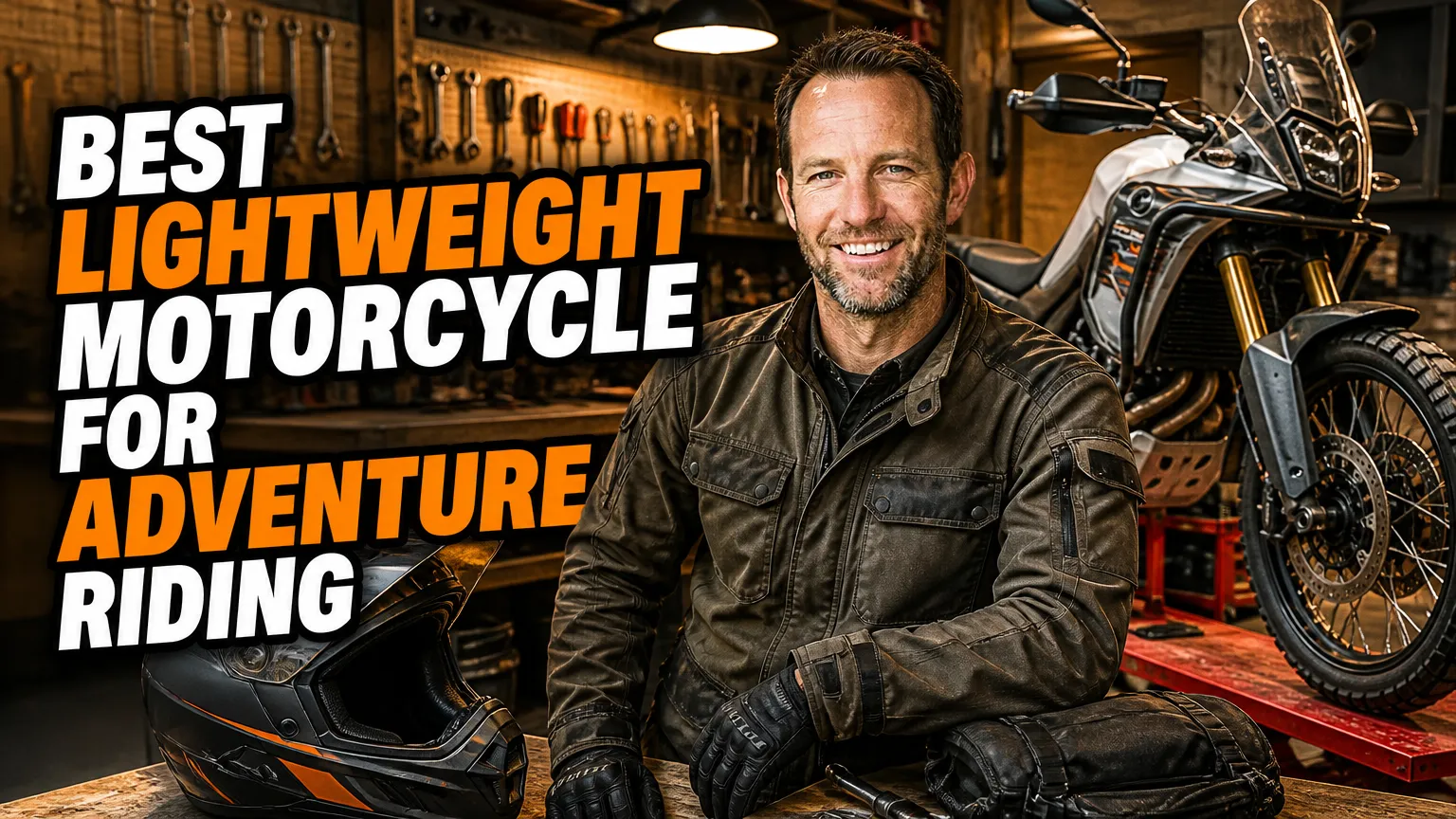
I look for a particular mix in a lightweight adventure motorcycle: manageable weight when the trail gets rough, enough comfort for the ride to the trailhead, and dependable performance when plans change. The best lightweight motorcycle for adventure riding will look different for every rider, though. A small dual-sport can feel ideal on tight tracks, while a more road-focused bike may make a long weekend easier.
Below, I’ve picked eight real models that approach adventure riding in different ways. I’ve focused on usable capability, published specifications, and the trade-offs I’d weigh before buying; I also recommend checking local model availability and current pricing, since both can vary by market.
- I’d shortlist the Honda CRF300L Rally for balanced, lightweight adventure use.
- I’d choose a Kawasaki KLX300 or Suzuki DR-Z4S when trail control matters most.
- I’d consider the KTM 390 Adventure R or CFMOTO 450MT for more road-friendly travel.
- I’d compare ready-to-ride weight, seat height, range, and passenger needs before deciding.
1. Honda CRF300L Rally — My All-Round Lightweight Pick
I’d put the Honda CRF300L Rally near the top of my shortlist because it balances dirt-road ability with useful touring details. Its 286cc liquid-cooled single, 21-inch front wheel, and 18-inch rear wheel give it a familiar dual-sport foundation, while the rally-style bodywork and windscreen make longer rides less exposed.
Why I’d choose it
The Rally’s larger fuel tank and added wind protection set it apart from the standard CRF300L. Honda lists its curb weight at about 153 kg, so I wouldn’t call it a featherweight trail bike, but I’d still find it far more approachable than many full-size adventure models when a route turns slow or uneven.
I’d expect the modest single-cylinder engine to suit back roads and steady trail progress better than rapid highway passing. For me, that’s a fair trade if I value a manageable chassis and simple, well-established design over big-bike speed. I’d check the seat height in person, especially if I’m new to riding off pavement.
What I’d keep in mind
Its suspension and engine output are aimed at versatility rather than high-speed, technical competition. I’d also budget for luggage or protection if my trips involve camping and rocky tracks. For a wider range of road-oriented options, I’d compare it with this guide to the best motorcycle for adventure touring.
2. Kawasaki KLX300 — My Choice for Tight Trails
When I picture a lightweight bike for narrow trails and short gravel connections, the Kawasaki KLX300 makes a lot of sense. Its 292cc liquid-cooled engine and 21/18-inch wheel combination give it the basic hardware I want for uneven ground, without the size and bulk of a large touring machine.
Where it works well
I’d favour the KLX300 if most of my riding were off-road, with pavement used mainly to connect trails. Its slim, dirt-bike-inspired layout is easier to place through tight turns than a wide-bodied adventure tourer, and its straightforward approach makes it a sensible option for riders building confidence away from smooth roads.
The standard KLX300 is also a good reminder that “adventure” doesn’t have to mean a huge fuel tank and tall touring screen. I’d add a small luggage setup for overnight trips, but I wouldn’t expect the same wind protection or out-of-the-box touring convenience as the CRF300L Rally.
My trade-off
I’d think carefully about highway distance before choosing the KLX300. A small single can handle paved stretches, but sustained fast riding is not where I’d expect this type of bike to feel most relaxed. I’d also check the current local specification and seat height, since details can differ by year and market.
3. Suzuki DR-Z4S — My Pick for a Modern, Trail-First Single
The Suzuki DR-Z4S brings a fresh generation of a familiar trail-focused formula. Its 398cc single-cylinder engine gives me more displacement than the 300-class bikes, while its 21-inch front and 18-inch rear wheels signal that Suzuki designed it for real dirt-road use rather than just an adventure-bike appearance.
What appeals to me
I’d look at the DR-Z4S if I wanted a capable solo machine with a little more engine for road connections. Suzuki lists a curb weight around 151 kg, although I’d compare the exact published figure and equipment for my market. The model also adds modern electronics and rider aids, bringing updated convenience to a straightforward dual-sport format.
That combination could make the DR-Z4S an appealing middle ground for me: more substantial than a small trail bike, yet still relatively manageable beside many full-size adventure motorcycles. I’d value its dirt-oriented wheel setup on broken tracks, where predictable balance matters more to me than a low seat or wide touring bodywork.
What I’d check before buying
I’d confirm seat height, fuel range, and luggage options for the exact version sold locally. Like other trail-first singles, the DR-Z4S may need accessories to become a comfortable long-distance travel bike. I’d also ride it at my usual cruising speed before deciding whether its wind protection and engine character suit my road mileage.
4. KTM 390 Adventure R — My Road-and-Trail All-Rounder
I’d consider the KTM 390 Adventure R when I wanted a small-displacement bike with more of a road-going adventure setup. Its 399cc single-cylinder engine, 21/18-inch wheels, and longer-travel suspension give it a more serious off-road stance than a compact commuter-based crossover.
Why I’d shortlist it
The 390 Adventure R is attractive to me because it aims to bridge paved touring and trail riding in one package. KTM’s current-generation model includes modern electronics and rider aids, and I’d check the exact equipment, suspension settings, and weight for the market I’m shopping in. That specification is worth comparing closely with older 390 Adventure versions.
I’d expect its stronger performance and road-oriented features to make it more versatile on mixed routes than a basic dual-sport. At the same time, I’d keep my expectations realistic: this is still a relatively compact single, and I’d choose my pace and luggage load to match the bike rather than treating it like a large touring twin.
My main caution
I’d put the KTM on a test ride list rather than buying based on the spec sheet alone. Seat height, throttle response, and suspension feel matter a lot when I’m standing on the pegs or maneuvering slowly. I’d also compare its price and service support locally with the simpler Japanese singles.
5. CFMOTO 450MT — My Twin-Cylinder Adventure Option
The CFMOTO 450MT stands out to me because it offers a parallel-twin engine in a compact adventure-bike format. Its 449cc engine, 21-inch front wheel, and 18-inch rear wheel make it a more travel-oriented choice than a pure dual-sport, while keeping the wheel sizes I prefer for rougher routes.
What I like about the format
I’d look closely at the 450MT if I expected to split my time between pavement, gravel, and moderate trails. The twin-cylinder layout should appeal to riders who want a smoother-feeling engine character for road miles than many small singles provide. Its adventure-bike bodywork and equipment also make it an appealing base for luggage and longer weekends.
I wouldn’t describe it as as light as a stripped-down trail bike. Published weight figures vary depending on whether they’re dry or ready to ride, so I’d make sure I’m comparing like with like and check the bike in person. For me, a manageable center of gravity can matter just as much as the number on a spec sheet.
Who I’d recommend it to
I’d consider the 450MT if I wanted passenger capability or more relaxed paved-road travel alongside dirt-road ability. For two-up priorities, I’d also read about the best adventure motorcycle for 2up riding and compare seat space, payload, and suspension support before choosing.
6. Royal Enfield Himalayan 450 — My Comfortable Long-Weekend Choice
I’d shortlist the Royal Enfield Himalayan 450 for trips where comfort, range, and a composed ride matter as much as minimizing weight. It uses a 452cc liquid-cooled single and a 21-inch front wheel paired with a 17-inch rear wheel. Its upright riding position and touring-friendly design suit mixed-distance travel.
Why I’d take it touring
The Himalayan 450 has a larger, more substantial feel than a small dual-sport, and its roughly 196 kg curb weight makes that clear. I wouldn’t choose it for the tightest trails if low mass were my only priority, but I’d appreciate the extra presence and comfort on longer paved stretches and rougher open roads.
Its 17-litre fuel tank and modern display are useful touring features I’d value on a weekend route. I’d still check real-world range for my riding style, and I’d avoid assuming that equipment automatically makes it a full luggage-and-passenger tourer. Payload and suspension setup deserve a close look.
My honest caveat
I’d pick the Himalayan 450 when I wanted a capable adventure bike that leans toward comfort rather than minimal weight. If my routes involved frequent low-speed drops, deep ruts, or solo lifting, I’d compare it against the lighter CRF300L Rally or DR-Z4S before committing.
7. Husqvarna 701 Enduro — My Lightweight Powerhouse
The Husqvarna 701 Enduro is the high-performance outlier on my list. Its 692.7cc single-cylinder engine and dirt-bike-style chassis deliver substantially more power than the small-displacement options, while the claimed dry weight is around 147 kg. I’d be careful comparing that figure with the curb weights listed for other bikes.
Where it shines for me
I’d consider the 701 Enduro when I wanted to cover ground quickly on open dirt roads and still have a machine built for serious off-road riding. Its 21/18-inch wheels and long-travel suspension are a strong foundation for rough terrain, and the engine gives me more passing ability on pavement than I’d expect from a 300-class single.
That capability comes with a learning curve. I’d want to be comfortable managing the throttle, tall seat, and stronger engine before taking it onto demanding trails. I’d also factor in purchase price, maintenance requirements, and the cost of protection and luggage when comparing it with simpler alternatives.
Who I’d choose it for
I’d recommend the 701 Enduro to an experienced rider who wants a genuinely dirt-capable machine with serious power, not to someone whose top priority is an easy first adventure bike. I’d verify current availability and model-year specifications with a Husqvarna dealer before making a decision.
8. Beta Alp 4.0 — My Simple, Accessible Trail Companion
The Beta Alp 4.0 is a more unusual choice, and that’s exactly why I’d include it. Its 350cc single-cylinder engine and relatively simple, trail-friendly design offer a different take on adventure riding: less emphasis on big touring bodywork, more on manageable riding over back roads and approachable trails.
Why I’d consider it
I’d look at the Alp 4.0 if my idea of adventure meant exploring local tracks, forest roads, and quiet country routes rather than crossing continents. Its compact format can be less intimidating than a full-size adventure bike, and its lower-key equipment leaves room for me to tailor the bike with the luggage and protection I actually need.
I’d check the exact model-year specifications and local availability carefully, including wheel sizes, seat height, and ready-to-ride weight. The Alp 4.0 is not as widely supported in every market as major Japanese models, so I’d make sure parts and servicing are practical where I live.
My best-use case
I’d see the Beta as a good fit for riders who value simple trail exploration over high-speed touring. If I wanted a bike mainly for paved commuting, I’d also compare choices in this guide to the best motorcycle for street riding or the best motorcycle for town riding.
How I’d Choose Between These Bikes
I’d start by being honest about where I ride most. If I spend most weekends on narrow, uneven trails, I’d favour a lighter, simpler single such as the KLX300 or DR-Z4S. If I regularly travel paved distances to reach dirt, I’d give more weight to wind protection, engine smoothness, luggage options, and fuel range.
I’d compare ready-to-ride weight and seat height
Dry weight can make a bike look lighter on paper than it feels with fuel, fluids, and accessories. I’d compare the manufacturer’s curb or wet weight whenever possible, then sit on the bike and try moving it around. For off-road riding, I’d also consider whether I can manage a slow stop or pick the motorcycle up on uneven ground.
I’d match engine size to the route
A 300-class single can be plenty for solo back-road trips and moderate speeds, while a larger engine may feel more relaxed on faster roads or with luggage. If I planned to carry a passenger often, I’d consider whether a compact bike has enough room and payload; a guide to the best 300cc motorcycle for 2 up riding can help frame that comparison.
I’d budget for the whole setup
I’d include a helmet, protective gear, crash protection, luggage, and any suspension adjustments in my budget. The lowest purchase price doesn’t always make the best value if the bike needs several upgrades for my intended trips. I’d also check dealer support and parts availability before committing to a less common model.
For my own shortlist, I’d begin with the Honda CRF300L Rally as the most balanced lightweight option, the KLX300 for trail-first riding, and the KTM 390 Adventure R for a more road-ready mix. I’d choose based on fit and route, not the spec sheet alone: a motorcycle that feels manageable and enjoyable is the one I’m most likely to take exploring.
Frequently Asked Questions
What is the best lightweight motorcycle for adventure riding?
I’d start with the Honda CRF300L Rally for a capable, approachable mix of trail ability, range, and road comfort.
What weight should I look for in an adventure motorcycle?
I’d compare ready-to-ride weight, not just dry weight, and consider how easily I can pick the bike up and manage it on uneven ground.
Is a 300cc motorcycle powerful enough for adventure riding?
For solo trips and moderate speeds, I find a 300cc bike can be plenty. Frequent highway riding or carrying a passenger may call for more power.
Are lightweight adventure motorcycles comfortable on the highway?
Some are, but comfort varies. I’d check wind protection, seat comfort, gearing, and vibration for the speeds and distances I plan to ride.

Related Articles
Motorcycle Wheelbase Explained: How It Shapes Stability, Handling, and Comfort
Learn what motorcycle wheelbase measures, how it influences stability, cornering and comfort, and how I compare the spec when choosing…
Jake Miller
11 min read
Inside the Backbone: How This Motorcycle Frame Works and What Riders Should Know
Learn how a motorcycle backbone frame works, how it compares with other chassis designs, and what I check for in…
Jake Miller
10 min read
7 Best Touring Motorcycles for New Riders Who Want to Go Far
Seven approachable touring motorcycles for new riders, with real specs, comfort trade-offs, price guidance, and my picks for highways, weekends,…
Jake Miller
12 min read