
The Safest 3-Wheel Motorcycles: Stability, Safety Features, and My Top Pick
 Jake Miller
10 min read
Jake Miller
10 min read
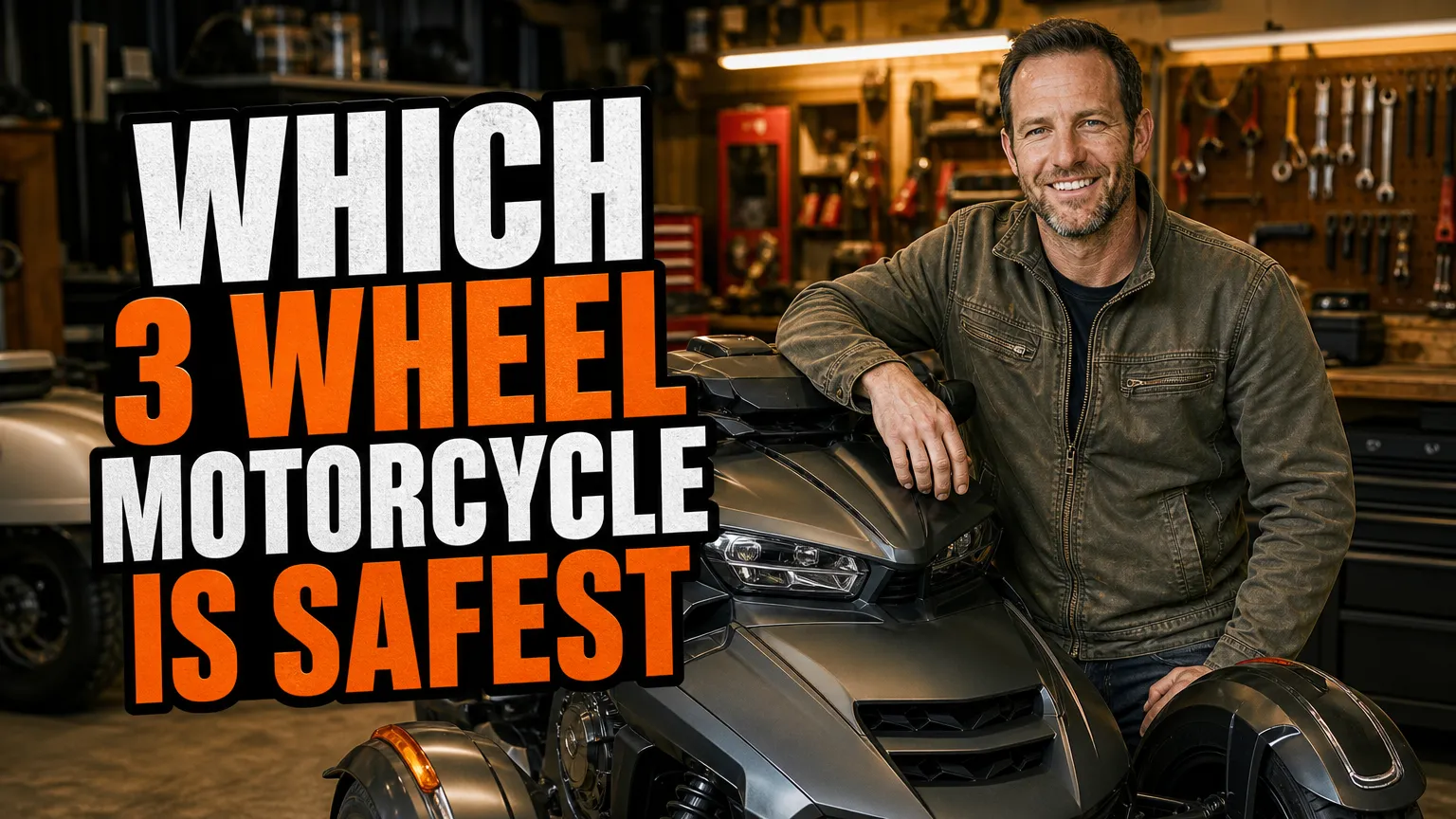
When someone asks me, “which 3 wheel motorcycle is safest,” I start with a useful distinction: three wheels can make a machine feel more stable, but they do not make it immune to crashes. The design, electronic safety systems, tires, rider fit, and the way I handle corners all shape the real-world safety picture.
My top starting point for most road riders is a well-equipped Can-Am Spyder, especially an RT for touring or an F3 for a more open riding position. I value its two front wheels and electronic stability aids, but I would still test-ride it, check the exact model-year equipment, and take training before deciding.
- I’d put a well-equipped Can-Am Spyder near the top of my safety shortlist.
- I look for ABS, traction control, and stability control, and verify features by model year.
- Three wheels help with balance at a stop, but do not prevent skids, rollovers, or collisions.
- I’d choose based on fit, training, tires, and intended use, not wheel count alone.
My short answer: start with a reverse trike and strong safety aids
When I compare three-wheel motorcycles, I pay close attention to wheel layout. A Can-Am Spyder has two wheels in front and one in back, a setup commonly called a reverse trike. That front track can feel reassuring to me under braking and through ordinary turns, while the machine’s electronic systems can help manage traction and stability.
For a rider who wants touring comfort, storage, and a substantial windscreen, I’d begin by looking at the Spyder RT. For someone who wants a smaller, more stripped-back machine, I’d also consider the Ryker. I wouldn’t assume that one is safer simply because it costs more or feels bigger; I’d compare its exact features, ergonomics, and intended use.
I can’t point to a universal crash-test ranking that proves one three-wheeler is safest for every rider. Equipment and specifications can change between years and trims, so I treat any model recommendation as a place to start, then confirm the details on the bike I’m actually considering.
Why the wheel layout matters to me
Two wheels in front: a confident feel, not a safety guarantee
With two front wheels, I have a wider contact area at the front than I would on a conventional motorcycle. That can make the bike feel planted, especially when I’m stopped or moving slowly. On a Spyder, I steer with handlebars rather than leaning the whole vehicle like a standard motorcycle, so I give myself time to learn its different cornering feel.
I also remember that a wider front end doesn’t cancel the laws of physics. If I enter a turn too fast, make an abrupt steering input, or ride over a low-grip surface, I can still lose control. I avoid treating stability control as permission to push harder.
Two wheels in back: a different kind of trike
A traditional trike has one wheel in front and two at the rear. I understand the appeal, especially for riders converting a familiar motorcycle or wanting a certain touring style, but I don’t assume every three-wheel layout behaves alike. Rear-wheel trikes can feel different in tight turns, and sudden maneuvers may bring handling challenges that I need to learn deliberately.
Some trikes are conversions, so the quality of the conversion, setup, and maintenance matters to me as much as the original motorcycle. I’d ask who performed the work, how the chassis and braking system were adapted, and whether a qualified shop has inspected it. A conversion with a poor setup is not a bargain from a safety perspective.
The safety features I check before I buy
ABS, traction control, and stability control
My first specification check is for anti-lock braking, traction control, and stability control. These systems can help a rider maintain control in certain situations, but I don’t expect them to overcome excessive speed, worn tires, poor road conditions, or an emergency I haven’t practiced handling.
On Can-Am models, the Vehicle Stability System can incorporate functions such as ABS, traction control, and stability control, but I verify the equipment for the exact model and year. I also read the owner’s manual so I know what the systems do, what warning lights mean, and what they cannot do.
Brakes, tires, lights, and visibility
I inspect the tires closely because they’re the only parts connecting the machine to the road. I check tread, age, pressure, and visible damage, and I follow the manufacturer’s specifications rather than guessing. I’m equally careful about brake condition and service history, since electronic aids can’t compensate for neglected basic maintenance.
I also think about being seen. I favor working lights, reflective gear, and riding positions that give me a clear view of traffic. A bright jacket won’t prevent every collision, but I consider visibility one practical layer in a larger safety plan.
How my top choices compare
Can-Am Spyder RT: my touring-focused pick
If I were choosing a three-wheeler for longer rides, I’d put the Spyder RT high on my list. Its touring-oriented layout can make it easier for me to carry luggage and settle in for a full day on the road. I’d still check seat comfort, reach to the controls, and whether I can maneuver and park it confidently.
I like the RT as a safety-minded option when it has the electronic aids I want, but I wouldn’t call it universally safest. A large touring vehicle may feel intimidating in a garage or tight parking lot, and its size doesn’t excuse me from practicing slow-speed control.
Can-Am Spyder F3: my alternative for a more open riding position
I’d consider the F3 if I wanted a different seating position and a more open feel than a full touring setup. Ergonomics are part of safety for me: I want a comfortable reach, an unobstructed view, and controls I can use without straining. I’d compare trims and model years rather than assuming every F3 has identical equipment.
Rider fit matters especially if I’m tall, broad-shouldered, or looking for extra room. I’d use the same careful approach I’d take when researching which harley davidson street motorcycle is best for larger men: check seat position, legroom, handlebar reach, and comfort in person instead of choosing from appearance alone.
Can-Am Ryker: my smaller, simpler option to investigate
I’d put the Ryker on my list if I wanted a more compact machine and didn’t need the touring features of an RT. It may be a better fit for some riders’ budgets and everyday use, but I’d assess the exact configuration, safety equipment, and riding position before making a call.
For a newer rider, I would not choose a machine only because its engine sounds manageable on paper. I’d compare weight, throttle response, braking feel, and how easy it is for me to control in a parking lot. My research into the best motorcycle engine size for beginners helps me remember that displacement is only one part of how approachable a ride feels.
Piaggio MP3: a leaning option I’d assess locally
I’d also look at a Piaggio MP3 where it’s available and appropriate for my local licensing rules. Its two front wheels and leaning design give it a different feel from a Spyder, and some versions include rider aids such as ABS and traction control. I’d confirm the equipment for the specific model and practice its handling rather than expecting it to behave exactly like a conventional motorcycle.
Availability, engine options, regulations, and dealer support vary by market. That means I’d check what is actually sold and supported near me, then arrange a test ride if possible. A model that looks ideal in a brochure may not be my safest choice if I can’t get comfortable with its controls.
What I do not use as a shortcut for safety
I don’t equate more power with more protection
Engine size alone doesn’t tell me whether a three-wheeler is safe or suitable. More power can offer useful passing ability, but I need the restraint and skill to use it smoothly. I focus on predictable throttle response and manageable control, particularly while I’m learning a new vehicle.
For context, I might read about how fast a 150cc motorcycle can go, how fast a 300cc motorcycle can go, or how fast a 500cc motorcycle can go when comparing engine classes. I treat top-speed information as context, not as a measure of safety or a target for public-road riding.
I don’t assume three wheels mean no chance of tipping
A trike can still tip or slide, particularly if I combine high speed with a sharp turn or abrupt input. The added wheels can help the vehicle stand without a kickstand, but they don’t make every maneuver stable. I ride smoothly, leave room for corrections, and avoid sudden swerves whenever I can.
How I’d make a three-wheeler safer in everyday riding
I’d practice before carrying passengers or luggage
I would spend time in an empty, legal practice area getting familiar with braking, turning, and low-speed control. I’d build up gradually, because a three-wheeler can steer and respond differently from a two-wheel bike. If I were new to motorcycling or new to trikes, I’d look for a hands-on course that covers the type of machine I plan to ride.
I’d also keep my first rides simple. I’d choose familiar roads, ride in good conditions, and avoid heavy traffic until I felt comfortable. If the machine felt awkward, I’d treat that as information to work with, not as a challenge to overcome by rushing.
I’d maintain a safety margin
I leave extra following distance so I have more time to react, and I scan ahead for gravel, potholes, painted lines, and other low-grip surfaces. I slow down before corners instead of relying on braking or stability systems halfway through a turn. Smooth inputs give me more time to respond if the road surprises me.
I wear a properly fitted helmet and protective riding gear on every ride. I also keep up with scheduled maintenance and fix warning lights promptly. To me, the safest machine is not just the one with the most features; it’s the one I can operate comfortably and maintain correctly.
My final recommendation
If I had to name one starting point, I’d choose a well-equipped Can-Am Spyder, with the RT as my touring pick and the F3 as an alternative to compare for fit and riding style. I’d give the Ryker serious consideration for a more compact option, and I’d assess a Piaggio MP3 if its leaning design, availability, and local rules suited my needs.
But I wouldn’t buy any of them on a blanket “safest” label. I’d verify the year-specific safety equipment, test the ergonomics, get trained, and make sure I can control the machine at low speed and in an emergency. That combination of a suitable design, working safety systems, good maintenance, and careful riding is what gives me the best chance of a confident ride.
Frequently Asked Questions
Which three-wheel motorcycle is safest overall?
I would start with a well-equipped Can-Am Spyder, such as the RT or F3, because its Vehicle Stability System can include ABS, traction control, and stability control. I still recommend comparing the exact model year and taking a training course.
Are three-wheel motorcycles safer than two-wheel motorcycles?
A three-wheeler can feel more stable at a stop, but it is not automatically safer in every situation. Handling, tires, rider skill, speed, protective gear, and the specific design all matter.
Is a Can-Am Spyder safer than a Ryker?
Both can have important electronic safety aids, depending on year and configuration. I would compare their features and fit, then choose the model that suits your riding, comfort, and experience.
Can a three-wheel motorcycle tip over?
Yes. Three wheels do not prevent a rollover or loss of control. I ride within the vehicle’s limits, avoid abrupt high-speed turns, and keep tires and safety systems in good condition.

Related Articles
Motorcycle Wheelbase Explained: How It Shapes Stability, Handling, and Comfort
Learn what motorcycle wheelbase measures, how it influences stability, cornering and comfort, and how I compare the spec when choosing…
Jake Miller
11 min read
Inside the Backbone: How This Motorcycle Frame Works and What Riders Should Know
Learn how a motorcycle backbone frame works, how it compares with other chassis designs, and what I check for in…
Jake Miller
10 min read
7 Best Touring Motorcycles for New Riders Who Want to Go Far
Seven approachable touring motorcycles for new riders, with real specs, comfort trade-offs, price guidance, and my picks for highways, weekends,…
Jake Miller
12 min read