
Harley-Davidson vs. Honda Trikes: What You Can Buy and Which Ride Fits You
 Jake Miller
9 min read
Jake Miller
9 min read
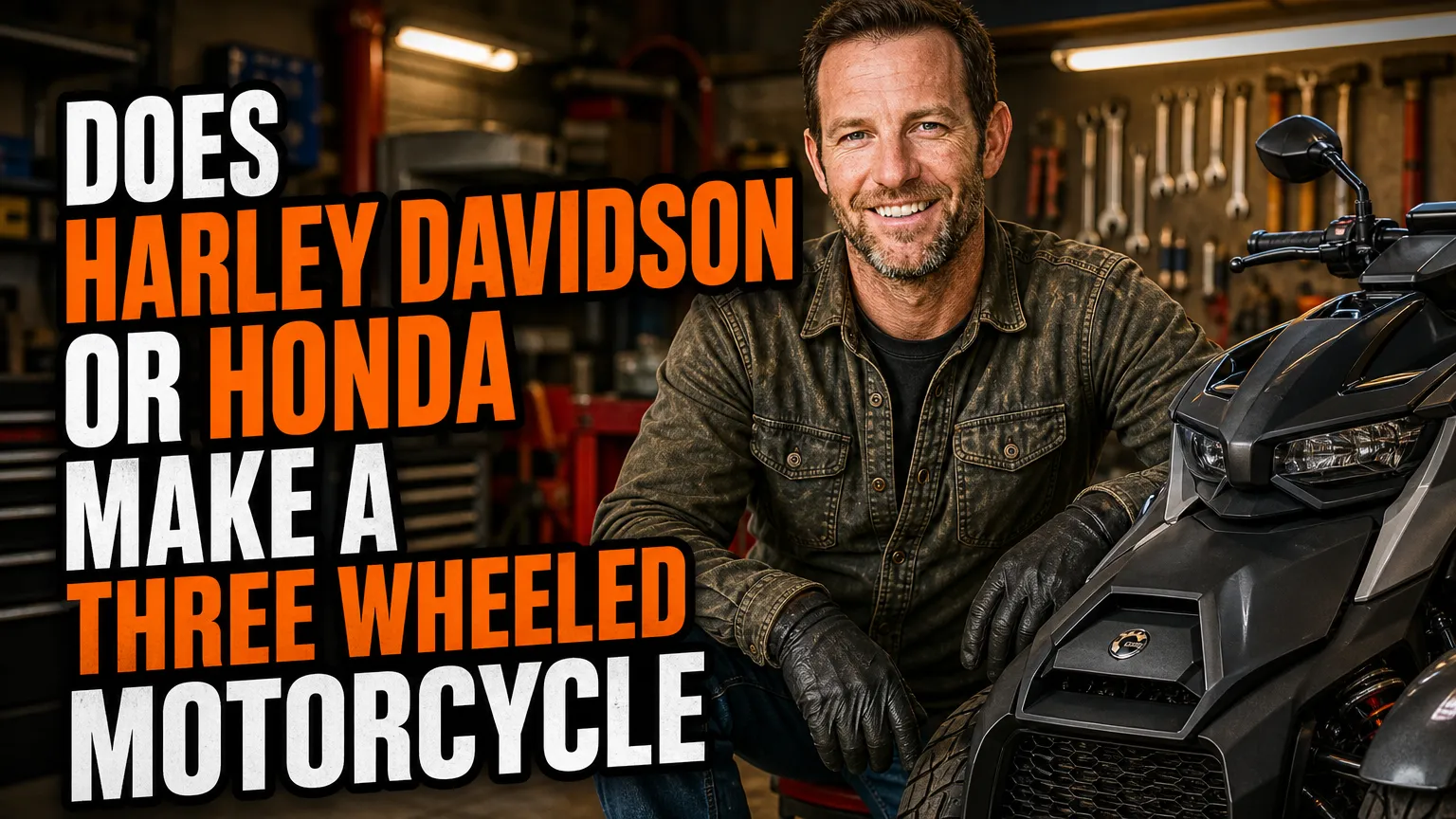
When I hear riders ask whether Harley-Davidson or Honda makes a three-wheeled motorcycle, I know they’re often looking for a comfortable, confidence-inspiring way to ride without balancing two wheels at every stop. The short answer is that Harley-Davidson offers factory-built trikes, while Honda does not currently sell a comparable full-size trike in the U.S. market.
That doesn’t mean Honda fans are out of options. I can look at specialist conversions that turn certain Honda motorcycles into trikes, but that’s different from buying a three-wheeler designed and assembled by Honda. Here’s how I separate the choices, compare the riding experience, and decide which route makes sense.
- Harley-Davidson sells factory-built trikes, including touring and cruiser-style options.
- Honda does not currently offer a full-size factory trike in the U.S.
- Some Honda motorcycles, including Gold Wing models, can be converted by specialist companies.
- I’d test-ride a trike before buying because its steering, cornering, and width feel different from a two-wheeler.
What each brand actually offers
When I compare the two brands, I start by separating a factory trike from a converted motorcycle. A factory model is built and sold as a three-wheeler by the motorcycle manufacturer; a conversion takes a two-wheel motorcycle and adds a rear axle, suspension, and other components through a specialist.
That distinction matters for availability, warranty questions, dealer support, parts, and resale. A converted Honda can be a great fit, but I wouldn’t describe it as a Honda factory trike.
Harley-Davidson’s factory-built trikes
Harley-Davidson has offered factory trikes in more than one style. Depending on the model year and market, the lineup can include the Tri Glide Ultra, a touring-oriented trike, and the Freewheeler, which takes a more stripped-down cruiser approach.
I’d check Harley-Davidson’s current model listings and speak with a local dealer before settling on a specific model. Names, equipment, colors, and availability can change by year, and a bike listed in one country may not be available in another.
The broad appeal is easy to understand: I can get a Harley-style engine and design in a package that stays upright when stopped. The touring-focused versions also emphasize long-distance comfort and storage, while a cruiser-style trike may suit someone who wants a simpler look and a less touring-heavy setup.
Honda’s lineup and the conversion option
Honda does not currently sell a full-size, factory-built three-wheel motorcycle comparable to Harley-Davidson’s touring trikes in the U.S. Honda’s Gold Wing is a large touring motorcycle, but it comes from the factory on two wheels, even though it has features such as reverse assistance on some versions.
For a Honda trike, I’d look at specialist conversion companies and confirm that they support the exact year and model I’m considering. Gold Wings are common candidates, but conversion availability, components, and installation details vary, so I’d get a written quote and ask who handles future service.
Honda has also sold three-wheeled scooters in some markets, including models in its Gyro family. I consider those a separate category from a full-size touring motorcycle: they’re not a factory Gold Wing trike or a direct counterpart to Harley’s touring trikes.
How a trike feels on the road
My biggest advice is not to assume that a trike rides like a motorcycle with an extra wheel. A conventional motorcycle leans into a turn, while a typical two-rear-wheel trike stays upright and steers more like a three-wheeled vehicle.
That changes the sensations I feel through the handlebars and seat. I have to steer through a corner rather than simply lean the bike, and the rear wheels follow a wider path than I might expect at first.
Balance and low-speed confidence
The most obvious benefit is that I don’t need to balance the machine at a stop. That can be reassuring for riders who find heavy motorcycles difficult to manage in parking lots, at traffic lights, or on uneven ground.
Still, I wouldn’t call a trike effortless or risk-free. It can be wide, heavy, and physically demanding to maneuver, and the way it responds in a turn takes practice. I’d look for a dealer demo, a trike safety course, or a supervised test ride before deciding.
Cornering, braking, and road position
On a two-wheeler, leaning is part of cornering; on a conventional trike, I need to steer and manage my body position differently. A quick turn can feel more forceful across my upper body, so I’d enter corners smoothly and leave room to get comfortable with the handling.
I also pay attention to road position. The trike occupies more width than a motorcycle, and the rear wheels may track over a different part of the road than the front wheel. I’d be especially mindful around potholes, narrow lanes, parking spaces, and congested traffic.
Braking and traction depend on the specific machine and its equipment, so I wouldn’t assume every trike behaves the same. I’d read the owner’s manual, ask the dealer about the braking system, and practice gentle stops in a quiet area before taking a new-to-me trike on a busy ride.
Choosing between a Harley trike and a Honda conversion
For me, this choice comes down to how much I value a factory-supported package versus the Honda platform I may already know and enjoy. I’d compare the total purchase and ownership costs, not just the price on the window sticker.
When I’d lean toward Harley-Davidson
I’d start with Harley-Davidson if I wanted a trike that was designed and sold by the motorcycle brand as a three-wheeler. I’d also give it a close look if the dealer network, factory configuration, touring equipment, and Harley ownership experience are important to me.
Riders who are new to the brand may also want to compare the trike experience with a manageable two-wheel model first. I found it useful to explore guidance on the best Harley-Davidson motorcycle for beginners before deciding whether a trike is the right starting point.
If I’m shopping used, I’d look closely at service history, tire condition, brake wear, and any signs of damage or poorly done modifications. I’d use a guide to the best used Harley-Davidson motorcycle as a starting point, then apply trike-specific checks and arrange an inspection by a qualified technician.
When I’d consider a Honda conversion
I’d consider a converted Honda if I’m attached to the Honda model, prefer its engine and ergonomics, or already own a compatible bike. A Gold Wing conversion may preserve the touring character I want, but I’d make sure I understand what changes to the chassis, suspension, handling, and service requirements come with it.
Before buying, I’d ask the conversion company which parts are covered by its warranty and which remain under the motorcycle manufacturer’s coverage. I’d also ask whether the conversion was professionally installed, whether replacement components are readily available, and whether a local shop is willing and qualified to service it.
Honda’s reputation for durability can be part of my decision, but I’d judge the whole converted vehicle, not just the original motorcycle. If long-term ownership is on my mind, I’d read about how long Honda motorcycles last and then ask the converter how its parts affect maintenance and longevity.
Questions I’d answer before buying
I’d take my time with a trike purchase because the right choice depends on more than the badge on the tank. Here are the questions I’d put on my own shopping list.
- What kind of riding will I do? I’d choose differently for touring, short local rides, commuting, or frequent passenger trips.
- Can I manage the size and weight? I’d check seat height, handlebar reach, reverse assistance, and how easily I can maneuver it where I park.
- What does ownership cost? I’d include insurance, tires, scheduled service, conversion parts, and any specialized labor in my budget.
- Is the model supported near me? I’d call nearby dealers and independent shops to confirm they can service the exact trike or conversion.
- Can I get comfortable on a test ride? I’d practice turns, stops, and low-speed maneuvers in a safe space before riding in traffic.
I’d also think honestly about fit and comfort. Reach, seat width, and legroom make a big difference on longer rides, so I’d sit on several models and take time to adjust the controls where possible. Riders comparing Harley street bikes for fit may find this guide to which Harley-Davidson street motorcycle is best for larger men useful, although I’d still test the specific trike in person.
What about automatic transmission?
Some riders ask about three wheels because they hope the machine will be simpler to operate. I’d separate those two questions: having three wheels doesn’t automatically mean a motorcycle has an automatic transmission, and transmission options depend on the model.
If shifting is part of what’s holding me back, I’d check the specifications for the exact trike and model year rather than relying on a general assumption. I’d also read more about whether Harley-Davidson makes automatic motorcycles before I narrow my search.
My bottom line
So, does Harley-Davidson or Honda make a three-wheeled motorcycle? In the current U.S. market, Harley-Davidson offers factory-built trikes, while Honda does not offer a comparable full-size factory trike. Honda riders can still explore specialist conversions, particularly for compatible touring models, but they should treat those as converted motorcycles rather than Honda-built trikes.
My pick depends on what I value most. I’d start with Harley-Davidson if I wanted a manufacturer-built trike, and I’d investigate a Honda conversion if I specifically wanted a Honda platform and was comfortable checking the installer, warranty, and service arrangements carefully.
Either way, I wouldn’t buy based on looks or specifications alone. I’d sit on the machine, ask detailed ownership questions, and arrange a careful test ride, because the best three-wheeler for me is the one I can handle confidently and enjoy riding for years.
Frequently Asked Questions
Does Harley-Davidson make factory three-wheel motorcycles?
Yes. Harley-Davidson sells factory-built trikes, including touring and cruiser-style models such as the Tri Glide Ultra and Freewheeler, subject to model-year and market availability.
Does Honda make a factory three-wheel motorcycle?
Honda does not currently offer a full-size, factory-built three-wheel touring motorcycle in the U.S. A Honda motorcycle can, however, be converted by a specialist.
Can I turn a Honda Gold Wing into a trike?
Yes. Specialist companies offer conversion kits and completed trike builds for some Gold Wing models. I recommend checking model compatibility, warranty terms, and local registration rules before buying.
Is a three-wheel motorcycle easier to ride than a two-wheel motorcycle?
A trike does not require the same balancing at a stop, but steering, cornering, width, and braking feel different. I recommend a training session or test ride before choosing one.

Related Articles
Motorcycle Wheelbase Explained: How It Shapes Stability, Handling, and Comfort
Learn what motorcycle wheelbase measures, how it influences stability, cornering and comfort, and how I compare the spec when choosing…
Jake Miller
11 min read
Inside the Backbone: How This Motorcycle Frame Works and What Riders Should Know
Learn how a motorcycle backbone frame works, how it compares with other chassis designs, and what I check for in…
Jake Miller
10 min read
7 Best Touring Motorcycles for New Riders Who Want to Go Far
Seven approachable touring motorcycles for new riders, with real specs, comfort trade-offs, price guidance, and my picks for highways, weekends,…
Jake Miller
12 min read