
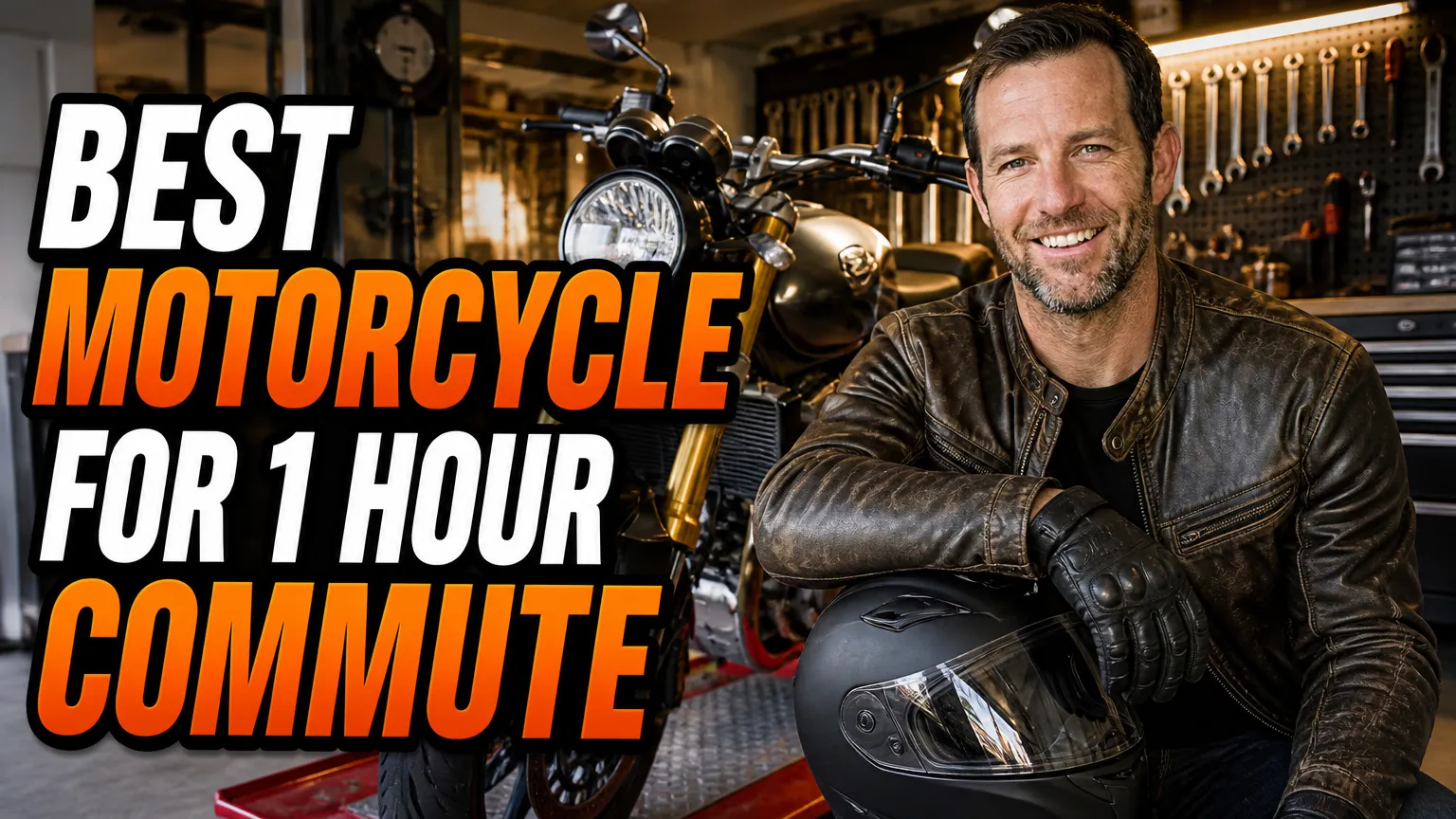
When I’m spending an hour on a motorcycle each way, the best choice is not automatically the biggest, fastest or most adventurous-looking bike. I care more about how relaxed I feel after the ride, whether the bike copes with my fastest roads, and how easy it is to use in traffic, rain and everyday parking.
My shortlist below ranges from practical middleweights to a comfortable scooter. I’ve focused on real, named models with features that matter on a commute, while keeping in mind that specifications, availability and pricing can vary by country and model year.
- I’d start with the Honda NC750X for practical storage, relaxed road manners and an optional automatic transmission.
- I’d choose the Yamaha XMAX 300 for a mostly urban route and easy, automatic commuting.
- I’d look at the Kawasaki Versys 650 or Triumph Tiger Sport 660 if my hour includes plenty of faster roads.
- I’d match engine size, seat height and wind protection to my actual route before deciding.
How I choose a bike for a long daily ride
I first think about the route, not the showroom. An hour through stop-and-go city traffic asks for different things than an hour on a fast bypass, and a bike that feels effortless at low speeds might feel tiring if I’m exposed to wind for most of the trip.
I also consider the practical details that become important on a workday: fuel range, storage, passenger space, ease of parking and how much maintenance the bike needs. Before settling on a size, I’d compare the options in my guide to best motorcycle engine size for beginners, then think honestly about the speeds I ride.
Displacement alone doesn’t tell me whether a motorcycle is suitable. I’d check how it feels at my usual cruising speed, how much protection it offers and whether its weight is manageable when I’m tired or maneuvering in a tight parking space.
1. Honda NC750X — My practical all-rounder
If I wanted one bike to cover varied roads without making the commute feel like a workout, I’d put the Honda NC750X near the top of my list. Its 745cc parallel-twin engine is tuned for useful, accessible performance rather than a high-strung rush, and the bike’s upright riding position makes it a natural fit for a long daily ride.
The NC750X’s standout feature is its large storage compartment in place of a conventional fuel tank, with room for a full-face helmet depending on the helmet’s size and shape. That gives me genuinely useful space for a work bag or everyday essentials without immediately needing to add a top box.
Why it works on my commute
I’d consider the optional Dual Clutch Transmission (DCT) if my route involved frequent traffic jams. It shifts automatically, so I can avoid working a clutch and gear lever in stop-and-go conditions, while still having the option of manual-style control on many versions.
The NC750X is a middleweight rather than a small, lightweight city bike, so I’d sit on one before buying, particularly if I’m shorter or often need to paddle it around a sloped parking area. I’d expect to pay more than I would for a basic entry-level motorcycle, with local pricing depending on the model year and whether I choose DCT.
2. Yamaha XMAX 300 — My urban and suburban scooter pick
For a commute that is mostly paved city streets and suburban roads, I’d give the Yamaha XMAX 300 serious consideration. Its 292cc single-cylinder engine, automatic transmission and scooter layout make it an easy option for frequent stops, while the bodywork and screen offer more built-in weather protection than I’d get on many naked motorcycles.
The under-seat storage is one of the reasons I’d choose the XMAX 300 for everyday use. Depending on helmet size and shape, it can accommodate two helmets, and I’d find that convenient for carrying work gear or storing a helmet when I arrive.
Where I’d draw the line
I wouldn’t automatically pick the XMAX for a route dominated by fast motorways or high-speed rural roads. Although its 300-class engine can handle ordinary commuting, I’d test it at the speed I actually travel and leave a comfortable margin for merging, hills and headwinds.
I’d also check the scooter’s screen and seating position on a proper test ride. A screen that keeps wind off my chest can still send turbulence toward my helmet, and comfort varies with rider height. For shorter commutes with lots of traffic, though, its automatic operation and built-in storage are compelling.
3. Kawasaki Versys 650 — My choice for longer, faster roads
When my hour includes a substantial stretch of highway or open A-road, I’d look closely at the Kawasaki Versys 650. Its 649cc parallel-twin engine gives me more room for sustained faster riding than a small city-focused machine, while its upright, adventure-inspired layout is designed for a comfortable view of traffic.
I like that the Versys 650 combines an upright riding position with a touring-oriented fairing and adjustable windscreen. It also has a 17-liter fuel tank on recent versions, which can help limit fuel stops, though my real-world range would depend on speed, conditions and riding style.
What I’d check before buying
The Versys is taller and bulkier than a basic commuter, so I’d make sure I can comfortably plant a foot and maneuver it at low speed. I’d also see how much wind reaches my shoulders and helmet, because a short screen adjustment can make a noticeable difference over an hour-long ride.
For riders who want to compare real-world expectations across engine classes, I’d also read about how fast can a 500cc motorcycle go. I wouldn’t choose by top speed alone, but I would want enough performance for my own traffic and road conditions.
4. Triumph Tiger Sport 660 — My balanced sport-tourer
I’d consider the Triumph Tiger Sport 660 if I wanted a commute-friendly bike that still feels engaging on a winding road. Its 660cc, three-cylinder engine gives it a different character from a twin, and the upright sport-touring shape offers a more practical riding position than a committed sport bike.
Recent Tiger Sport 660 versions include rider-focused features such as multiple ride modes and a fairing with an adjustable windscreen. I’d verify the precise equipment on the particular year and trim I’m shopping for, since options and specifications can vary between markets.
Why I’d choose it over a sport bike
For me, an upright position and some wind protection are valuable when I’m riding every day. The Tiger Sport 660 gives me a road-focused feel without asking me to hold a low, forward-leaning posture through traffic or for an entire hour.
I’d expect it to cost more than a basic small-capacity commuter, and I’d include insurance, servicing and any luggage accessories in my budget. If I want a bike that can handle both the weekday ride and a weekend detour, it makes a convincing case.
5. Honda NX500 — My sensible middleweight for mixed roads
The Honda NX500 is a strong option if I want an approachable motorcycle with the stance and flexibility of a small adventure-style bike. Its 471cc parallel-twin engine is paired with a 19-inch front wheel, upright ergonomics and a riding position that can suit commuting as well as weekend trips.
I’d appreciate that the NX500 doesn’t require me to step straight into a heavy, high-powered machine to get highway-capable versatility. Its ABS-equipped braking system and relatively manageable middleweight format make it a model I’d consider for both newer riders and experienced commuters who want an uncomplicated daily bike.
My route test
Before buying, I’d ride the NX500 at the speeds I expect to use and pay attention to wind pressure, seat comfort and overtaking response. If most of my trip is at high speed, I’d compare its protection and performance with a larger touring-oriented model rather than assuming that an adventure-style appearance guarantees comfort.
I’d also check seat height against my inseam and try the bike with the luggage I plan to carry. If I’m comparing compact adventure bikes and need a lower seat or easier reach to the ground, I’d use this guide to the best adv motorcycle for short riders as another starting point.
6. BMW F 900 XR — My premium pick for open-road commuting
If my commute is fast, exposed and long enough that wind protection really matters, I’d look at the BMW F 900 XR. Its 895cc parallel-twin engine and sport-touring design give it a more powerful, premium character than the smaller options on this list, with a fairing and upright ergonomics intended for longer rides.
The F 900 XR can be equipped with modern rider aids and comfort options, depending on the market and package. I’d check the individual bike’s specification carefully: equipment such as electronic suspension, heated grips or cruise control may depend on the version or selected options rather than being standard everywhere.
The trade-off I’d consider
This is not the bike I’d buy simply because I commute for an hour. Its higher purchase price, insurance and potential servicing costs may be hard to justify if I spend most of the ride crawling through city streets, where its extra performance brings less benefit.
But if I regularly cover fast roads and want a more premium touring experience, the F 900 XR could make sense. I’d test it with my normal riding gear and check that its size and weight still feel comfortable during slow-speed turns and parking.
7. Honda Rebel 500 — My low-seat option for town and shorter riders
I’d shortlist the Honda Rebel 500 if I wanted a low seat and an accessible, relaxed-feeling motorcycle. Its 471cc parallel-twin engine is shared with other Honda models in the same general engine family, but the Rebel’s cruiser layout gives it a distinct riding position and a seat height of about 690 millimeters on recent versions.
That low seat can make stops and parking feel less intimidating for me, especially if I’m not tall or I prefer to put both feet down easily. I’d still check the riding position carefully, because the Rebel’s feet-forward layout will suit some riders far better than others over a full hour.
Where it fits best
I’d favor the Rebel 500 for a mixed urban and suburban commute rather than a route where I’m sitting at high speeds for most of the ride. Its 11-liter fuel tank is relatively modest, so I’d pay attention to my actual fuel consumption and how often I’m happy to stop for gas.
For a newer rider, I’d compare the Rebel with other manageable engine sizes rather than deciding that a bigger bike is automatically safer or more comfortable. I’d also make sure the handlebar reach and seat work for my body before committing to the cruiser style.
8. Royal Enfield Himalayan 450 — My rough-road and bad-weather choice
If my commute includes broken pavement, potholes or an occasional gravel shortcut, I’d consider the Royal Enfield Himalayan 450. Its 452cc liquid-cooled single-cylinder engine, upright riding position and long-travel suspension give it a more adventure-focused character than a conventional street commuter.
The Himalayan 450 has a 17-liter fuel tank and a seat height that can be configured in different positions on some versions. I’d check the exact setup and local specification before buying, particularly if seat height is important to me or if I’m comparing it with a lower road bike.
Why I wouldn’t choose it for every route
I’d pick the Himalayan when road condition and versatility matter more to me than compact size. On an hour of smooth, high-speed commuting, I’d compare its wind protection and single-cylinder feel against a road-focused touring bike before assuming the adventure format is the most comfortable.
I’d also take a test ride on my usual roads, because engine character and vibration are personal. If I’m curious about what smaller engines can manage on faster routes, I’d read about how fast can a 300cc motorcycle go and how fast can a 150cc motorcycle go unleashing top speeds, then compare that information with my actual road speeds and local traffic.
My final checklist before I buy
I wouldn’t make the decision from engine size or a spec sheet alone. I’d sit on each bike, check whether the handlebars and foot controls feel natural, and take a test ride long enough to judge the seat, mirrors and wind protection at the speeds I normally use.
I’d also make a realistic total-cost estimate that includes protective gear, insurance, fuel, servicing, parking and luggage. A bike with a higher sticker price may save me time or add useful storage, while a cheaper model can be a better fit if it’s easy to maintain and suits my route.
My personal starting point would be the Honda NC750X for everyday versatility, the Yamaha XMAX 300 for congested urban riding, and the Kawasaki Versys 650 for a commute with more fast-road miles. The best choice for me is the one that feels composed, comfortable and manageable at the end of the ride, not just impressive during a short test loop.
Frequently Asked Questions
What engine size is best for a one-hour motorcycle commute?
I’d choose an engine that comfortably handles my fastest roads and typical traffic. For many riders, that means roughly 300cc to 750cc, but weight, comfort and route matter as much as displacement.
Is a scooter a good choice for a long commute?
Yes. I’d consider a maxi-scooter such as the Yamaha XMAX 300 for its automatic transmission, wind protection and built-in storage, especially on urban and suburban routes.
Should I choose an adventure bike for commuting?
I would if I value an upright riding position and rough-road flexibility. I’d still check seat height, wind protection and how manageable the bike feels in slow traffic.
What should I prioritize for an hour-long motorcycle ride?
I’d prioritize a comfortable seat and riding position, stable highway manners, useful wind protection, reliable brakes and enough range for my route.

Related Articles

7 Best Motorcycles for Short Highway Commutes: Comfortable, Capable Picks
I compare seven commuter-friendly motorcycles for brief highway rides, covering power, comfort, seat height, wind protection, and how I’d choose…
 Jake Miller
12 min read
Jake Miller
12 min read

8 Best Motorcycles for Comfortable, Confident Freeway Commuting
Compare eight freeway-ready motorcycles, from practical middleweights to luxury tourers, with real-world comfort, power, features, and buying advice for daily…
Jake Miller
13 min read

8 Best Motorcycles for Los Angeles Commuting: City Scooters to Freeway Bikes
Compare eight commuter-friendly motorcycles and scooters for Los Angeles traffic, from nimble city picks to freeway-ready bikes, with prices, specs,…
Jake Miller
11 min read