
7 Best Motorcycles for Long Daily Commutes: Comfort, Range, and Real-World Value
 Jake Miller
12 min read
Jake Miller
12 min read
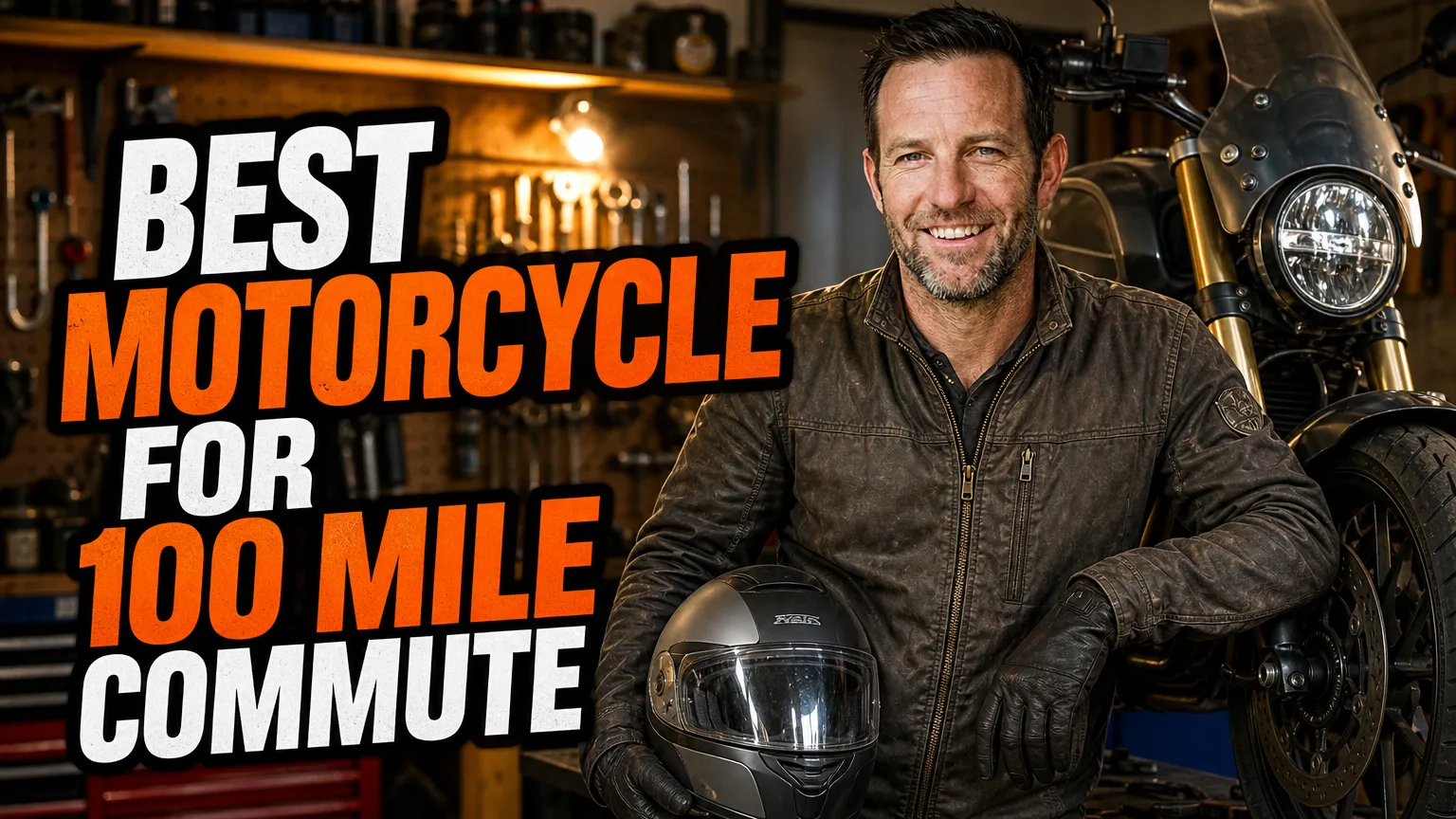
I think a 100-mile commute can be a great reason to ride, but it asks more of a motorcycle than a short trip across town. I’d pay close attention to seat comfort, wind protection, fuel range, and how relaxed the bike feels at the speeds I actually ride.
I’ve put together this list around specific, currently sold models that suit different roads, budgets, and preferences. One important detail: I’d treat a 100-mile daily round trip differently from a 100-mile ride each way, so I’ve noted where a bike’s strengths depend on your route.
- I’d start with the Honda NC750X for practical storage and efficient everyday riding.
- The Kawasaki Versys 650 is my versatile pick for comfort and value on mixed roads.
- The Yamaha Tracer 9 GT and BMW F 900 XR suit riders who want more power and premium touring features.
- I’d consider the Yamaha XMAX for a more affordable automatic commute, especially outside fast, open highways.
1. Honda NC750X — My Practical Pick for Everyday Commuting
The Honda NC750X makes a lot of sense to me when I picture a full week of commuting rather than a weekend ride. Its 745cc parallel-twin engine is tuned for useful low- and midrange power, and Honda offers versions with a conventional manual gearbox or its Dual Clutch Transmission, depending on market and model year.
My favorite practical feature is the large storage compartment where a traditional fuel tank would normally sit. On recent versions, it holds about 23 liters, enough for many full-face helmets, and it means I can leave a backpack at home for ordinary errands. I’d still check the fit of my own helmet before counting on it.
Why I’d choose it for a long ride
The NC750X has an upright riding position and a 17-inch front wheel, giving it a road-focused feel while still looking and sitting like an adventure-style bike. Its relaxed engine character is a good match for stop-and-go traffic and steady cruising, rather than aggressive high-revving riding.
I’d compare the manual and DCT versions carefully: the DCT can make dense traffic less tiring, while the manual gives me more direct control and may cost less. The bike’s seat height and overall weight are worth checking in person, particularly if I expect frequent stops or need to maneuver it in a tight garage.
What I’d consider before buying
The NC750X is practical, but I wouldn’t mistake it for a small, featherweight city bike. It’s also not the most powerful option here, so riders who regularly travel at high speeds with a passenger or luggage may prefer a stronger engine. For help thinking through capacity and experience, I’d read this guide to the best motorcycle engine size for beginners.
2. Kawasaki Versys 650 — My All-Rounder for Mixed Roads
If my route includes city streets, highway stretches, and rough patches of pavement, the Kawasaki Versys 650 would be high on my list. Its 649cc parallel twin has a strong reputation as a flexible middleweight engine, and the bike’s upright posture gives me a sensible starting point for long days in the saddle.
The Versys 650 is designed around road riding rather than serious off-roading. Its 17-inch wheels, fairing, and adjustable windscreen make it feel at home on paved commutes, while its suspension and tall stance can be helpful when the road surface is less than perfect.
Where I see its commuting strengths
I like that the Versys offers more wind protection than a naked motorcycle without stepping up to a large touring bike. Its 4-gallon fuel tank is useful for planning longer rides, though my actual range would depend on speed, weather, traffic, and riding style.
Kawasaki has offered accessories such as hard luggage and heated grips, but I’d confirm which items come with the particular trim and model year I’m considering. Those additions can make a noticeable difference when I’m carrying work essentials or riding through colder mornings.
My main trade-off
The seat height is relatively tall compared with some road bikes, so I’d sit on the Versys before buying and try a loaded stop if possible. The windscreen is adjustable, but I’d still pay attention to wind noise and buffeting on a test ride because rider height and helmet shape can change the experience.
3. Honda NX500 — My Sensible Choice for Lighter Highway Use
The Honda NX500 is a welcoming middleweight option, especially if I want a manageable motorcycle that can still handle a regular commute. It succeeded the CB500X in Honda’s lineup and uses a 471cc parallel twin, a familiar platform known for approachable power rather than intimidating acceleration.
That smaller engine can be an advantage in town, where I value smooth response and easy control. On a 100-mile round trip with moderate-speed roads, I’d consider the NX500 a sensible choice; on a 100-mile one-way ride at fast highway speeds, I’d pay closer attention to wind comfort and whether I want more passing power.
What I like about its design
The NX500 has a 19-inch front wheel and an upright riding position, which help it cope with broken pavement and everyday road imperfections. Its front and rear disc brakes use ABS, and Honda’s newer NX500 models include a five-inch TFT display with smartphone connectivity features, depending on the market and year.
I also like that it offers an adventure-bike shape without the size and cost of a large touring machine. For anyone comparing smaller engines, I’d use these explainers on how fast can a 300cc motorcycle go and how fast can a 500cc motorcycle go as starting points, then test a bike at the speeds their own commute requires.
What I’d check first
I’d take a longer test ride rather than judging the NX500 by a quick lap around a dealership. A seat that feels comfortable for 15 minutes may feel different after an hour, and I’d want to confirm that the windscreen works for my height. I’d also budget for luggage if I need to carry a laptop, change of clothes, or groceries.
4. Yamaha Tracer 9 GT — My Premium Pick for Frequent Highway Miles
If comfort and performance matter more to me than keeping the purchase price low, I’d look closely at the Yamaha Tracer 9 GT. Its 890cc CP3 inline-three engine provides substantially more performance than a small commuter bike, while the upright sport-touring layout is built for covering distance without adopting a full touring motorcycle’s bulk.
Depending on model year and market, the Tracer 9 GT can come with features such as electronically controlled suspension, cruise control, heated grips, a quickshifter, and hard side cases. I’d check the exact local specification because equipment and packages can vary, and those features can influence the price considerably.
Why it suits longer commutes
For a route with extended highway sections, I’d value the Tracer’s fairing, touring-oriented ergonomics, and stronger passing acceleration. Cruise control is particularly appealing when I’m riding long, open stretches, while luggage can make it easier to carry work gear without wearing a heavy backpack.
I’d also appreciate having a bit more engine capacity in reserve when the bike is loaded or I need to pass. The trade-off is that a powerful, well-equipped sport-tourer is more motorcycle than I need for a slow, short urban commute, and its price and running costs may be higher than those of simpler options.
5. BMW F 900 XR — My Sport-Touring Option for Fast Routes
The BMW F 900 XR is the choice I’d investigate if my commute involves fast roads and I want a sporty feel with touring-bike practicality. It uses an 895cc parallel twin and a fairing-equipped, upright chassis, giving it more highway-focused capability than a typical naked bike.
BMW has offered the F 900 XR with a range of electronic and comfort equipment, including options such as heated grips, cruise control, and adjustable suspension features depending on specification. I’d compare the actual bike’s equipment list carefully: on premium motorcycles, the options fitted to one example can make it quite different from another.
My reasons to shortlist it
I like the balance the F 900 XR aims for: a more protective riding position than a sportbike, but a more energetic character than a basic commuter. Its 895cc engine gives me plenty of room for highway merging and passing, and its wind protection makes it a better candidate for sustained faster riding than an unfaired standard.
Before choosing one, I’d compare ownership costs, insurance, service access, and luggage prices with the Japanese alternatives. I’d also make sure its seat height and weight feel manageable in the places where commuting happens most often, such as parking lots and slow traffic.
6. Kawasaki Ninja 650 — My Fairing-Equipped Road Bike for Commuting
I wouldn’t overlook the Kawasaki Ninja 650 just because it looks sportier than the adventure-style bikes on this list. Its 649cc parallel twin and full fairing make it a practical middleweight for riders who want a narrower, more road-focused motorcycle and don’t need a tall riding position.
The Ninja’s relatively approachable seat height can make it easier for some riders to manage at stops than a tall adventure bike. Its windscreen and bodywork offer more protection than a naked bike, although I’d expect less room to stretch out than on a dedicated touring model.
What I’d enjoy on my route
I’d choose the Ninja 650 for a commute with a mix of traffic and highway riding, especially if I also wanted a bike that felt enjoyable on weekend back roads. Its engine size offers more flexibility than a small-displacement scooter, while the fairing helps take some of the wind off my chest.
Kawasaki has offered ABS-equipped versions and, on some recent trims, traction control. I’d verify the specific model-year equipment before buying, then check whether I can add practical luggage. A tank bag or soft tail bag may be enough for a light workday load.
Who might prefer something else
If my commute is long, cold, or consistently fast, I might prefer the roomier ergonomics and greater wind protection of the Versys 650 or Tracer 9 GT. The Ninja is a road bike with a sportier stance, so I’d make sure the forward lean feels comfortable for my wrists and back during a proper test ride.
7. Yamaha XMAX — My Automatic Pick for Urban and Suburban Routes
For riders who want automatic operation and built-in storage, I’d put the Yamaha XMAX on the shortlist. Its 292cc single-cylinder engine, CVT transmission, under-seat storage, and step-through layout make daily errands and traffic simpler than they can be on a conventional motorcycle.
The XMAX is a premium scooter rather than a traditional motorcycle, but I think it can be a smart commuting tool. The storage area is especially useful for carrying a helmet or everyday items, and its upright seating position and bodywork offer more weather protection than many small naked bikes.
Where it works best
I’d consider the XMAX for a 100-mile round trip that includes urban streets, suburban roads, and moderate-speed highways. Its automatic transmission takes shifting out of stop-and-go traffic, and its relatively small engine can help keep the experience approachable for riders who don’t need high-speed performance.
I’d be more cautious if my route involves long stretches of high-speed motorway riding, frequent two-up travel, or a need for strong passing acceleration. In those situations, I’d test it carefully against a 500cc-class bike. I’d also read about how fast can a 150cc motorcycle go unleashing top speeds to understand why engine size and real highway conditions matter when choosing smaller commuter machines.
How I’d Choose Between These Bikes
Before choosing a model, I’d write down the actual shape of my commute: average speed, traffic density, road quality, weather, and whether those 100 miles are a round trip or one way. A comfortable bike on a slow, scenic route may not be the best fit for a long freeway slog, and a powerful sport-tourer can be unnecessary for a short urban crawl.
I’d also test the riding position with the gear I normally wear. I’d check how my knees bend, whether I can see clearly through the windscreen, and whether my wrists feel relaxed. If I’m considering an adventure-style bike but have concerns about reach or seat height, I’d consult this guide to the best adv motorcycle for short riders and then sit on the exact model I’m considering.
Don’t forget the cost of commuting
My budget would include more than the sticker price. I’d account for fuel, routine servicing, tires, insurance, protective gear, and any luggage or heated accessories I need. A more expensive motorcycle may be worth it if it genuinely reduces fatigue, but I wouldn’t pay for touring features I’m unlikely to use.
I’d also plan the commute around breaks and weather. Even a comfortable motorcycle can become tiring after repeated long days, so I’d take breaks when needed and make sure my helmet, gloves, jacket, and rain gear suit the conditions I ride in.
My Final Take
If I wanted one practical place to start, I’d compare the Honda NC750X and Kawasaki Versys 650 first. The Honda stands out for its clever storage and commuter-friendly approach, while the Kawasaki offers a versatile, upright package that can handle a wide range of paved routes.
For premium long-distance comfort and performance, I’d test the Yamaha Tracer 9 GT and BMW F 900 XR. If I wanted something lighter or more affordable, I’d look at the Honda NX500, Kawasaki Ninja 650, or Yamaha XMAX, matching the choice to my route and riding style. The best motorcycle for a long commute is the one that feels comfortable, controlled, and practical for the roads I actually ride.
Frequently Asked Questions
What type of motorcycle is best for a 100-mile commute?
I’d look for an upright riding position, wind protection, a comfortable seat, and enough engine performance for your usual roads. A middleweight touring or adventure-style bike is a strong place to start.
Is a 300cc motorcycle enough for a long commute?
It can be, especially for mixed or slower roads, but I’d check whether it can comfortably maintain your highway speed with some power in reserve. Wind protection and seat comfort matter just as much.
Should I choose a scooter or a motorcycle for commuting?
I’d choose a scooter like the Yamaha XMAX if automatic operation and built-in storage appeal to me. For frequent high-speed highway riding, I’d compare its performance and comfort with a larger motorcycle.
Does a 100-mile commute mean 100 miles each way?
Not necessarily. I’d distinguish a 100-mile round trip from a 100-mile one-way ride: the latter makes range, fatigue management, and weather protection even more important.

Related Articles

7 Best Motorcycles for Short Highway Commutes: Comfortable, Capable Picks
I compare seven commuter-friendly motorcycles for brief highway rides, covering power, comfort, seat height, wind protection, and how I’d choose…
Jake Miller
12 min read

8 Best Motorcycles for Comfortable, Confident Freeway Commuting
Compare eight freeway-ready motorcycles, from practical middleweights to luxury tourers, with real-world comfort, power, features, and buying advice for daily…
Jake Miller
13 min read

8 Best Motorcycles for Los Angeles Commuting: City Scooters to Freeway Bikes
Compare eight commuter-friendly motorcycles and scooters for Los Angeles traffic, from nimble city picks to freeway-ready bikes, with prices, specs,…
Jake Miller
11 min read