
8 Best Motorcycles for a 20-Mile Commute: Comfortable, Practical Picks
 Jake Miller
12 min read
Jake Miller
12 min read
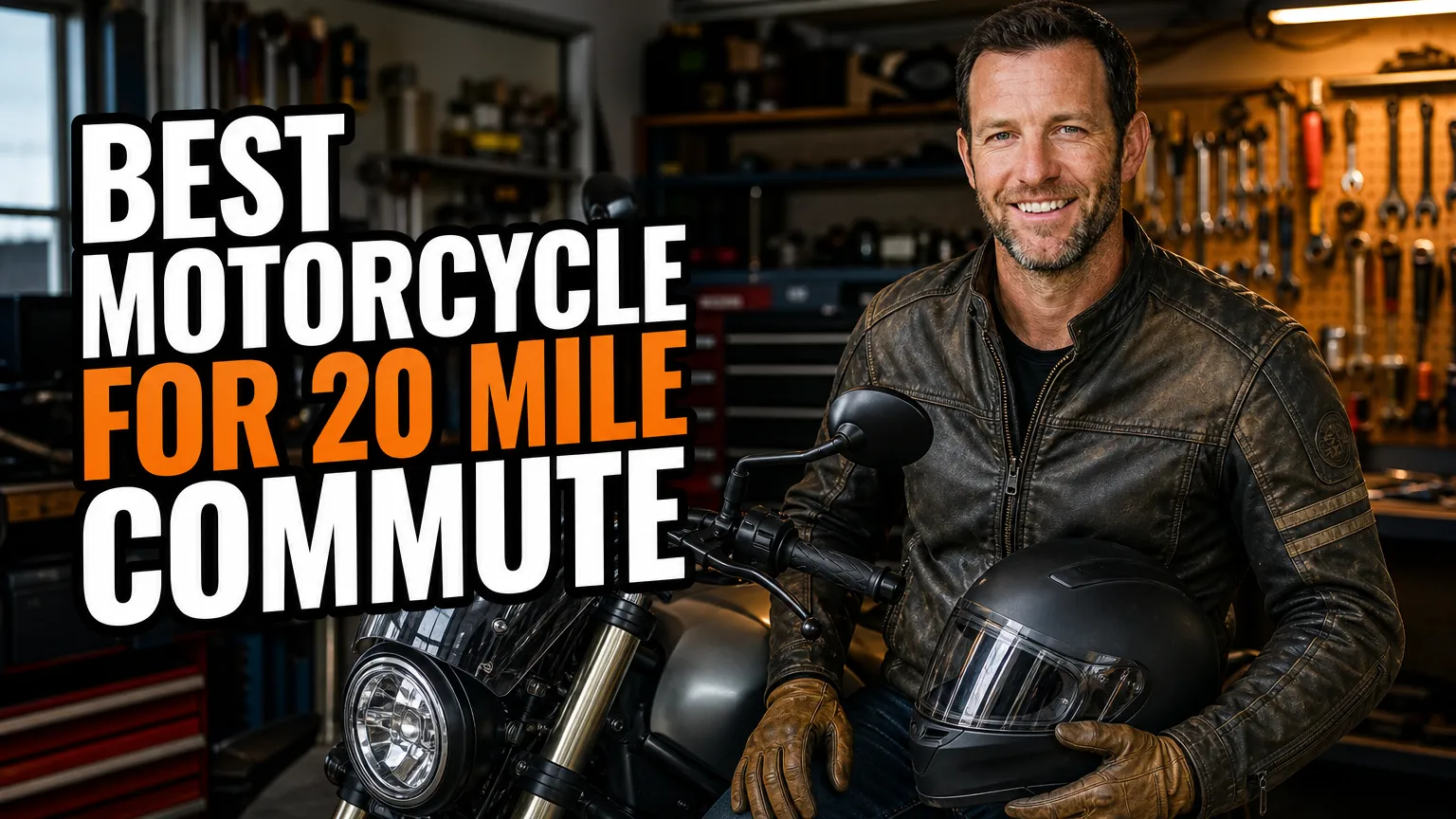
When I help someone find the best motorcycle for a 20-mile commute, I start with the ride itself: Is it mostly stop-and-go city traffic, fast highway, or a mix? Twenty miles can feel easy on a comfortable, well-matched bike and tiring on one that leaves you cramped, exposed, or constantly shifting.
I’d also think about what happens before and after the ride. Fuel costs, parking, storage, weather protection, seat height, and the time I spend in traffic all shape whether I’ll enjoy using a motorcycle every day. Below are eight real models I’d put on a commuter shortlist, from practical middleweights to an automatic scooter.
- I’d start with the Honda NC750X for practical storage and relaxed everyday riding.
- I’d consider the Honda NX500 or Kawasaki Versys 650 if I wanted more wind protection and an upright stance.
- The Yamaha XMAX 300 makes a strong case for automatic convenience and built-in storage.
- I’d match engine size, seat height, and protection to my actual route, not just the distance.
What I Look for in a Commuter Motorcycle
For a daily ride, I want a motorcycle that feels easy to live with, not merely exciting on a weekend. A relaxed posture, predictable throttle, decent range, and controls I can manage smoothly in traffic matter more to me than outright top speed.
My route determines how much engine I need. A low-speed urban commute may suit a modest-capacity motorcycle, but frequent high-speed roads call for enough reserve power to accelerate and merge comfortably. I’d compare options using this guide to the best motorcycle engine size for beginners rather than assuming bigger is automatically better.
I’d also try the bike in person before buying. Seat height figures are useful, but seat shape, width, handlebar reach, and the weight I need to manage at a stop can change how approachable a motorcycle feels. I’d check wind protection and luggage options, too, especially if I carry a laptop, rain gear, or a change of clothes.
1. Honda NC750X — My Practical All-Rounder
The Honda NC750X is the one I’d look at first if I wanted a calm, practical machine for everyday miles. Its 745cc parallel-twin engine is tuned for usable low- and midrange power rather than a high-strung feel, which I find appealing for traffic, hills, and steady cruising.
One of its most useful features is the storage compartment where a conventional motorcycle’s fuel tank would sit. Honda lists capacity at about 23 liters, enough for everyday items such as a helmet or a compact bag, depending on their shape. I’d still check the fit of my own gear before counting on it as my only luggage solution.
Why I’d choose it for a commute
The NC750X has an upright riding position and a relatively low seat for an adventure-styled motorcycle, around 802mm depending on version and market. Honda also offers its Dual Clutch Transmission on some versions, which can make stop-and-go riding easier if I’d rather not work a clutch in traffic.
I’d put the NC750X near the top of my list if my route included a mixture of city streets and faster roads. Its size and price may be more than I need for a short urban-only trip, and DCT availability and specifications vary by market, so I’d confirm the local model details before shopping.
2. Honda NX500 — My Balanced Mid-Size Pick
The Honda NX500 is a practical choice I’d consider when I want manageable power with a more protective, upright riding position. Its 471cc parallel twin is shared with other Honda models in the family, and the NX500’s fairing and windscreen give it a more touring-friendly character than a simple naked bike.
Honda has equipped recent NX500 versions with a five-inch TFT display and smartphone connectivity in many markets. It also has a 17.5-liter fuel tank and a seat height of about 830mm, making it a useful option for longer stretches between fill-ups while still being more compact than a large touring motorcycle.
Where it fits best
I’d choose the NX500 if my commute involved occasional highway travel, rougher pavement, or a need for a comfortable upright posture. It offers more flexibility for weekend rides than a stripped-down commuter, although its adventure styling doesn’t mean I’d treat it as a serious off-road machine without the right tires and preparation.
For riders comparing engine capacities, I’d read about how fast can a 500cc motorcycle go and think beyond top speed. What matters most to me is whether the engine can comfortably handle the speeds I actually ride, with enough reserve for merging and passing.
3. Kawasaki Versys 650 — My Wind-Protection Choice
The Kawasaki Versys 650 is a middleweight I’d shortlist for a commute that includes sustained faster riding. Its 649cc parallel twin gives it more passing reserve than a small-displacement bike, while the tall, upright riding position and touring-oriented bodywork are designed for comfort over distance.
Depending on model year and market, the Versys 650 includes features such as ABS, an adjustable windscreen, and a 21-liter fuel tank. Its seat is relatively tall at roughly 845mm, so I’d make a point of sitting on one and checking how confidently I can reach the ground before committing.
My reasons to consider it
I’d favor the Versys 650 if my 20 miles included freeway time, a passenger, or weekend trips beyond the daily route. It feels like a motorcycle with room to grow into, but that extra size can feel less convenient when filtering through traffic or maneuvering into a tight parking spot.
I’d also factor in the cost of accessories if I wanted luggage, hand guards, or extra wind protection. The Versys 650 is a capable platform, but the standard equipment and available packages can differ across model years, so I’d compare the exact bike rather than relying on a generic spec sheet.
4. Yamaha MT-07 — My Lively Naked-Bike Pick
The Yamaha MT-07 is the one I’d choose if I wanted a commuter that still feels playful after work. Its 689cc CP2 parallel twin has a strong reputation for accessible, flexible power, and the motorcycle’s relatively compact naked-bike layout can make it feel less cumbersome than a fully faired middleweight.
The MT-07 has a seat height around 805mm, though the exact equipment and electronics depend on year and market. Newer versions in some markets add features such as ride modes, an updated display, and revised braking or suspension equipment. I’d check the current local specification before comparing prices.
Trade-offs I’d keep in mind
The main compromise is wind protection. On a short city ride, I might not miss a large fairing, but a daily stretch of exposed highway can make wind fatigue more noticeable. I’d also plan for a separate luggage solution, since a naked bike usually doesn’t provide the same built-in storage as a scooter or the NC750X.
I’d recommend the MT-07 to someone who enjoys an engaging engine and a simple, upright layout, and who doesn’t need touring-bike protection. If my route were mostly high-speed roads, I’d compare it carefully with the NX500 or Versys 650 before choosing.
5. Honda Rebel 500 — My Low-Seat Option
The Honda Rebel 500 stands out to me for its low seat height, approximately 690mm, and approachable cruiser layout. Its 471cc parallel twin offers a useful middle ground for everyday riding, and the relaxed seat position can suit riders who feel more secure on a lower motorcycle.
I’d expect the Rebel 500 to work particularly well on urban and suburban routes where I value easy stops and a manageable feel. Its low stance doesn’t make it a scooter or a touring bike, though: luggage, passenger comfort, and wind protection require more thought than on a larger adventure-style model.
Who I think will enjoy it
I’d put the Rebel 500 on my list if I wanted a low-slung cruiser for ordinary roads and occasional longer rides. I’d pay attention to how the footpeg position fits my legs, because a low seat alone doesn’t guarantee a comfortable riding posture for every body type.
For someone moving up from a smaller motorcycle, I’d weigh manageable controls and confidence against route demands. A 500cc engine can be ample for plenty of commutes, but I’d check how the bike behaves at my regular road speeds rather than choosing by displacement alone.
6. Kawasaki Eliminator 500 — My Modern Cruiser Alternative
The Kawasaki Eliminator 500 gives me another low-seat option, with a more modern, light-feeling approach to cruiser styling. It uses a 451cc parallel twin and has a seat height of roughly 735mm, which I’d consider approachable without being as low as the Rebel 500.
I like that the Eliminator’s straightforward design can make it an appealing everyday bike without the bulk of a large cruiser. Depending on market and version, features may include ABS and a digital instrument display. I’d verify the exact trim, because equipment and availability are not identical everywhere.
Why it could work day to day
I’d consider the Eliminator 500 if I wanted an easygoing city motorcycle with enough engine for suburban roads. Its compact style could make daily parking simpler than on a full-size touring bike, while the low seat may help me feel settled at traffic lights.
My main question would be whether its riding position and limited wind protection suit my commute. For an exposed 20-mile highway run, I’d want to test it at speed and compare it with a faired option. For mixed local roads, it could be a more comfortable fit than its cruiser appearance might suggest.
7. Yamaha XMAX 300 — My Automatic, Storage-Friendly Pick
The Yamaha XMAX 300 is a maxi-scooter rather than a conventional motorcycle, but I’d include it because it can make a daily commute remarkably practical. Its 292cc single-cylinder engine and automatic CVT transmission remove routine clutch work, while the scooter format gives me a step-through layout and useful built-in storage.
Recent XMAX 300 versions in many markets include a windscreen, keyless operation, and under-seat storage large enough for everyday items; exact equipment varies by year and region. The seat height is around 795mm, so I’d still check the reach and overall width in person, especially if I’m new to scooters.
Why I’d choose a scooter
I’d lean toward the XMAX 300 if my route involved frequent stops and I wanted a place to stow commuting essentials without immediately buying luggage. The automatic transmission can simplify traffic, and the bodywork provides more leg and wind protection than a typical naked motorcycle.
I’d make sure its performance suits the fastest roads on my route. A 300cc scooter can be a very capable urban and suburban commuter, but speed, acceleration, and comfort vary by conditions. I’d use this overview of how fast can a 300cc motorcycle go as background, then take a test ride on roads like the ones I use every day.
8. Royal Enfield Himalayan 450 — My Rough-Road Commuter
The Royal Enfield Himalayan 450 is the pick I’d consider if my commute includes broken pavement, gravel access roads, or a preference for an adventure-style riding position. Its liquid-cooled 452cc single-cylinder engine makes around 40 horsepower, and the bike combines long-travel suspension with a 17-liter fuel tank.
The Himalayan 450’s seat height is about 825mm in its standard configuration, although low-seat options may be available in some markets. I’d look carefully at the bike’s weight and seat reach before choosing it, since adventure styling doesn’t automatically make a motorcycle easy to handle at a standstill.
When it makes sense for me
I’d pick the Himalayan 450 when versatility matters as much as commuting. It’s better suited than a low cruiser to rough surfaces and light exploration, but it may be more motorcycle than I need for a smooth, traffic-heavy route. I’d compare the available seat options and accessories before deciding.
Rider fit matters particularly on taller adventure motorcycles. If seat height is a concern, I’d also review this guide to the best adv motorcycle for short riders and arrange an in-person test sit rather than judging by specifications alone.
How I’d Make the Final Choice
I’d begin by mapping the route and estimating how much time I spend at city speeds versus highway speeds. A relaxed 20-mile ride on surface streets asks different things of a motorcycle than 20 miles of fast, exposed commuting. For some riders, a 150cc machine may be enough around town; I’d read about how fast can a 150cc motorcycle go unleashing top speeds while also checking whether that capacity suits the actual roads involved.
Next, I’d compare seat comfort, foot reach, handlebar position, and the effort required to push the bike around a parking area. I’d sit on several models, and if possible, take a test ride with a stretch of road similar to my commute. A motorcycle that feels comfortable for ten minutes in a showroom may feel very different after a month of daily use.
My quick shortlist by priority
- For everyday practicality: I’d start with the Honda NC750X and its useful storage compartment.
- For upright comfort and road versatility: I’d compare the Honda NX500 and Kawasaki Versys 650.
- For low seat height: I’d sit on the Honda Rebel 500 and Kawasaki Eliminator 500.
- For stop-and-go convenience: I’d give the Yamaha XMAX 300 a serious look.
- For rough roads and exploration: I’d consider the Royal Enfield Himalayan 450.
I’d include the full ownership budget in my decision, not just the sticker price. Insurance, protective riding gear, routine maintenance, tires, registration, and luggage can all add up. I’d also check local dealer support and the cost of replacement parts for the models I’m considering.
My best advice is to choose the motorcycle that makes the route feel easier and that I’ll genuinely want to ride in ordinary weather. For a 20-mile commute, I don’t need the most powerful bike in the showroom; I need a comfortable, dependable match for my roads, riding experience, and daily routine.
Frequently Asked Questions
What size motorcycle is best for a 20-mile commute?
I’d choose an engine size based on road speed, traffic, rider experience, and comfort. A 300cc to 500cc motorcycle can suit many commutes, while faster roads may favor a larger engine.
Is a 300cc motorcycle enough for commuting?
It can be, especially for city streets and moderate-speed routes. I’d check the bike’s comfort and ability to hold your usual highway speed before deciding.
Is a scooter a good choice for a 20-mile commute?
Yes. I’d consider a model such as the Yamaha XMAX 300 if I wanted automatic transmission, weather protection, and built-in storage.
What should I prioritize when choosing a commuter motorcycle?
I’d focus on a comfortable riding position, manageable weight, suitable power for my route, fuel range, weather protection, and useful storage.

Related Articles

7 Best Motorcycles for Short Highway Commutes: Comfortable, Capable Picks
I compare seven commuter-friendly motorcycles for brief highway rides, covering power, comfort, seat height, wind protection, and how I’d choose…
Jake Miller
12 min read

8 Best Motorcycles for Comfortable, Confident Freeway Commuting
Compare eight freeway-ready motorcycles, from practical middleweights to luxury tourers, with real-world comfort, power, features, and buying advice for daily…
Jake Miller
13 min read

8 Best Motorcycles for Los Angeles Commuting: City Scooters to Freeway Bikes
Compare eight commuter-friendly motorcycles and scooters for Los Angeles traffic, from nimble city picks to freeway-ready bikes, with prices, specs,…
Jake Miller
11 min read