
7 Best Youth Dirt Bikes for 11-Year-Old Riders: Safe, Size-Smart Picks
 Jake Miller
12 min read
Jake Miller
12 min read
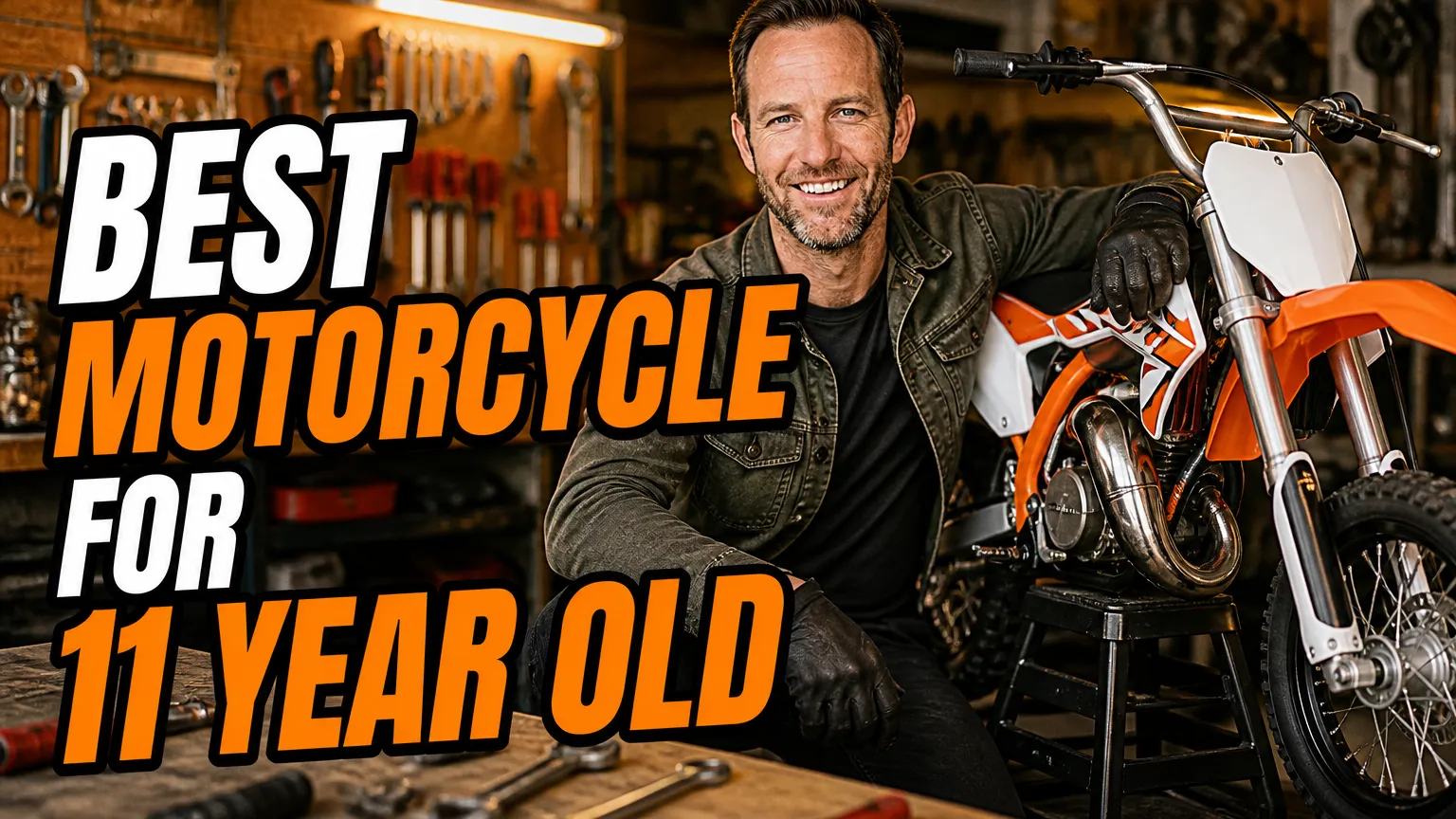
Choosing the best motorcycle for an 11 year old is less about finding the biggest engine and more about finding a bike a young rider can control. I’d start with the child’s height, inseam, experience, and confidence, then compare those with the motorcycle’s seat height, weight, controls, and intended terrain.
My list focuses on recognizable youth dirt bikes from established manufacturers. These are off-road motorcycles, not automatic street-legal choices; before buying, I’d confirm local rules, supervision requirements, and where the child is allowed to ride.
- I’d match the bike to the rider’s fit and ability, not age alone.
- The Honda CRF110F, Yamaha TT-R110E, and Kawasaki KLX110R are approachable starting points for many beginners.
- Honda CRF125F and Yamaha TT-R125LE models suit some taller or more experienced young riders.
- I’d make proper protective gear, close supervision, and approved off-road riding non-negotiable.
How I Choose a Motorcycle for a Young Rider
Before I compare models, I look at whether the child can manage the bike at a standstill. A rider should be able to reach the controls, balance the motorcycle, and handle a slow stop without feeling overwhelmed. Seat height helps, but the bike’s weight and how that weight feels when stationary matter too.
I also separate beginner-friendly features from features meant for experienced riders. An automatic clutch can make learning easier, while a manual clutch and higher performance can add complexity. For a useful overview of engine sizing, I’d also read this guide to the best motorcycle engine size for beginners.
Finally, I’d check the current model specifications, dealer pricing, and availability before buying. Manufacturers can update colors, equipment, and prices between model years, and fit can vary with tires, suspension setup, and the rider’s proportions.
1. Honda CRF110F — My Beginner-Friendly All-Rounder
The Honda CRF110F is one of the first bikes I’d consider for a newer young rider who fits its compact frame. Its 109cc, air-cooled four-stroke engine is paired with a four-speed transmission and automatic clutch, so the rider can focus on steering, braking, and throttle control without operating a hand clutch.
I also like that the CRF110F uses fuel injection and has an electric starter, features that can make day-to-day starting more straightforward. Honda lists a seat height of about 26.3 inches, though I’d still have the child sit on one before deciding. A low seat does not guarantee a good fit if the motorcycle feels heavy or awkward to balance.
Who I’d put on the CRF110F
I’d consider this model for a smaller or less experienced 11-year-old riding on suitable private trails or a supervised practice area. The automatic clutch is a practical confidence-builder, but it doesn’t replace learning smooth throttle control, braking, and safe stopping habits.
As with the other motorcycles here, I’d check current local pricing and model-year details with a Honda dealer. I would not treat the CRF110F as a road bike: I’d use it only where off-road riding is permitted and with an adult supervising.
2. Yamaha TT-R110E — A Simple, Electric-Start Learning Bike
The Yamaha TT-R110E is another compact four-stroke I’d shortlist for a child who is still developing riding fundamentals. Its 110cc air-cooled engine and four-speed transmission with an automatic clutch make it similar in spirit to the CRF110F: the rider shifts gears without having to coordinate a manual clutch lever.
The TT-R110E has electric start, which I see as a useful convenience for a new rider who may stall while practicing. Its seat height is around 26.4 inches, so it belongs in the same general fit conversation as the Honda. I’d compare their feel in person rather than assume that nearly identical seat measurements mean they fit every child equally well.
Where I think it makes sense
I’d look at the Yamaha for a young beginner who wants a conventional dirt bike from a well-known manufacturer and does not yet need a manual-clutch motorcycle. The bike is intended for off-road use, so I’d confirm the riding site’s rules and avoid public roads unless the motorcycle and rider meet every applicable legal requirement.
For a child who has already mastered a smaller bike, I’d also ask whether the TT-R110E still offers enough room to grow. A motorcycle that feels manageable today should still allow the rider to practice good posture and operate the controls comfortably.
3. Kawasaki KLX110R — A Compact Choice with a Four-Speed Gearbox
The Kawasaki KLX110R gives a young rider a 112cc air-cooled four-stroke engine, a four-speed transmission, and an automatic clutch. I’d consider it alongside the Honda and Yamaha when I want a familiar small-bike layout that lets the child work on changing gears without adding clutch coordination.
Kawasaki lists a seat height of roughly 26.8 inches for the standard KLX110R. The slightly different measurement from its competitors is worth noting, but I wouldn’t make a decision based on fractions of an inch alone. I’d check how easily the rider can reach the ground and controls, then consider the motorcycle’s overall balance and weight.
Standard KLX110R or KLX110R L?
Kawasaki also offers the KLX110R L, a version with a taller seat and manual clutch. That may suit a rider who has outgrown a small automatic-clutch bike and is ready to practice clutch control, but I’d treat the extra seat height and added skill demand as meaningful differences, not minor upgrades.
For an 11-year-old who is new to riding, my starting point would usually be the standard KLX110R if it fits. I’d only move to the L after checking the child’s experience and ability to handle a manual clutch calmly.
4. Honda CRF125F — A Step Up for Some Taller, More Confident Riders
The Honda CRF125F moves into a larger class with a 124.9cc air-cooled four-stroke engine and a four-speed transmission with a manual clutch. I’d consider it for a young rider who is tall enough to manage the motorcycle and has the skills to coordinate clutch, throttle, shifting, and braking.
Honda lists the standard CRF125F’s seat height at about 29.1 inches. That increase over a 110cc bike can make it a better fit for some growing riders, but it can also make it too tall for others. I’d have the child test the seated reach and practice balancing the bike with an adult present before purchasing.
When I’d choose the Big Wheel version
The CRF125F Big Wheel has larger wheels and a taller seat, around 30.9 inches. I’d consider it only if the rider’s height, inseam, and experience support the larger setup. Bigger wheels can suit rougher terrain and a taller rider, but they do not automatically make a motorcycle safer or easier to control.
Because this is a manual-clutch model, I’d make sure the child can operate the clutch lever comfortably and understands how to stop safely. If the rider is still learning basic balance and throttle control, I’d start with an easier-fitting motorcycle instead.
5. Yamaha TT-R125LE — A Larger Manual-Clutch Option
The Yamaha TT-R125LE is a 124cc air-cooled four-stroke with a five-speed transmission and manual clutch. It also has electric start, a feature I’d appreciate when a young rider is practicing and may need to restart after a stall. Its larger overall size makes it a candidate for a taller, more experienced child rather than a default first bike.
Yamaha lists the TT-R125LE’s seat height at approximately 31.7 inches. I’d measure the rider’s inseam and check their reach to the handlebars and controls before putting it on the shortlist. If the child cannot balance it comfortably while stopped, I’d choose a smaller model even if the engine size seems appealing.
My fit and skill check
I’d want the rider to have some experience with shifting and clutch control before moving to this model. A five-speed gearbox offers room to develop, but extra gears and a taller chassis add tasks for a beginner to manage at once.
For riders comparing engine capacity with possible speed, I’d keep context in mind: displacement alone does not tell the full story. These guides to how fast can a 150cc motorcycle go unleashing top speeds, how fast can a 300cc motorcycle go, and how fast can a 500cc motorcycle go are not substitutes for checking the actual model, terrain, and rider capability.
6. Kawasaki KLX140R L — A Trail Bike for a Taller, More Skilled Rider
The Kawasaki KLX140R L has a 144cc air-cooled four-stroke engine, a five-speed transmission, and a manual clutch. I’d view it as a step beyond small automatic-clutch bikes, aimed at riders who are already comfortable operating a motorcycle and need a larger trail-bike fit.
The “L” version has a seat height of about 31.5 inches. That may suit a taller 11-year-old, but I would not choose it just because a child is eager for a bigger engine. I’d first confirm that the rider can manage the seat height, clutch, shifting, and motorcycle weight at low speed.
Why rider experience matters here
For a young rider moving up, I’d value calm, repeatable control more than speed or displacement. I’d ask an experienced adult instructor to assess how the child handles starts, stops, turns, and uneven ground before considering a bike in this class.
The KLX140R L is not a beginner shortcut. If the child is still learning to balance or tends to grab the throttle abruptly, I’d choose a smaller, easier-to-manage model and build skills gradually.
7. KTM 85 SX — A Competition Bike for Experienced Young Riders
The KTM 85 SX is a purpose-built youth motocross motorcycle, not the bike I’d pick for a typical beginner. It uses an 84.9cc liquid-cooled two-stroke engine, a six-speed transmission, and a manual clutch. Those competition-focused components call for a rider with meaningful experience and access to suitable training and riding facilities.
KTM offers different wheel-size versions, including the 85 SX 17/14 and 85 SX 19/16, so fit depends on the specific model. I’d check current specifications with KTM and have the rider assessed by a knowledgeable coach or dealer. Its race-oriented setup and performance make it a poor match for casual first rides.
When I’d consider it
I’d only put the 85 SX on the list for an experienced young motocross rider who is training on an appropriate track with close adult supervision. For that child, the model’s competition focus may make sense; for a novice, I’d steer toward a milder four-stroke with an easier fit and more forgiving controls.
At this level, I’d also factor in maintenance, protective equipment, instruction, and track fees. The purchase price is only one part of the cost of owning and safely using a competition motorcycle.
How I’d Match the Bike to the Rider
Start with fit, then consider engine size
I’d have the child sit on the motorcycle in riding boots and check their reach to the bars, brake, and shifter. Depending on the bike and the rider’s experience, both feet may not need to sit flat, but the child must be able to balance and control the motorcycle safely. If they look strained, tiptoe insecurely, or struggle to reach a lever, I’d keep looking.
I’d also think about the rider’s weight and the terrain. A small, manageable bike can be a better learning tool than a more powerful machine that the child cannot handle confidently. For advice on matching motorcycles to a shorter inseam, I’d consult this guide to the best adv motorcycle for short riders, while remembering that an adventure bike and a youth dirt bike are different categories.
Make safety part of the buying decision
I would budget for a properly fitted, certified helmet, goggles, gloves, protective boots, long pants, and a long-sleeved jersey or jacket. I’d also consider body armor appropriate to the riding environment. A helmet that moves around or boots that do not support the ankles undermine the rest of the safety plan.
Before the first ride, I’d review the controls, agree on clear stop signals, and choose a suitable supervised practice area. I’d keep early sessions short and slow, follow the owner’s manual for setup and maintenance, and check the motorcycle before each ride.
My Final Picks by Rider Type
If I were choosing for a beginner who fits a small bike, I’d compare the Honda CRF110F, Yamaha TT-R110E, and Kawasaki KLX110R in person. Their small four-stroke engines and automatic clutches can make them less complicated starting points, although none removes the need for instruction and attentive adult supervision.
For a taller or more experienced young rider, I’d assess the Honda CRF125F, Yamaha TT-R125LE, or Kawasaki KLX140R L based on fit and clutch skill. I’d reserve the KTM 85 SX for a genuinely experienced young motocross rider. My best motorcycle for an 11 year old is ultimately the one the child can control comfortably, ride legally in an approved setting, and grow into safely.
Frequently Asked Questions
What size dirt bike is usually suitable for an 11-year-old?
It depends on the child’s height, inseam, strength, experience, and the bike’s seat height. I’d prioritize a safe, controlled fit over engine size or age recommendations.
Is a 110cc dirt bike enough for an 11-year-old?
A 110cc four-stroke can suit many new riders on private off-road terrain, but I’d check the child’s fit and experience before choosing. A more experienced rider may need a larger bike.
Should an 11-year-old ride a dirt bike on public roads?
Not unless the bike and rider are legally permitted for that use in their location. Most youth dirt bikes are designed for off-road riding, so I’d check local laws and ride only in approved areas.
What safety gear should a child wear on a dirt bike?
I’d require a properly fitted, certified helmet, goggles, gloves, boots, long sleeves, long pants, and protective body gear before every ride.

Related Articles

8 Comfortable, Confidence-Inspiring Motorcycles for Riders in Their 70s
Explore eight manageable motorcycles for riders in their 70s, with seat heights, weights, features, and practical advice for choosing a…
Jake Miller
12 min read

7 Approachable Motorcycles for Comfortable, Confident Riding at 65
Compare seven approachable motorcycles for comfort, weight, seat height, power and value, plus my practical test-ride checklist for choosing confidently…
Jake Miller
13 min read

7 Best Motorcycles for a 55-Year-Old Who Wants Comfort and Confidence
I compare seven approachable motorcycles for riders in their 50s, with real specs, comfort notes, price ranges, and practical advice…
Jake Miller
12 min read