
7 Best Dirt Bikes for 10-Year-Old Riders: Safe, Size-Smart Picks
 Jake Miller
12 min read
Jake Miller
12 min read
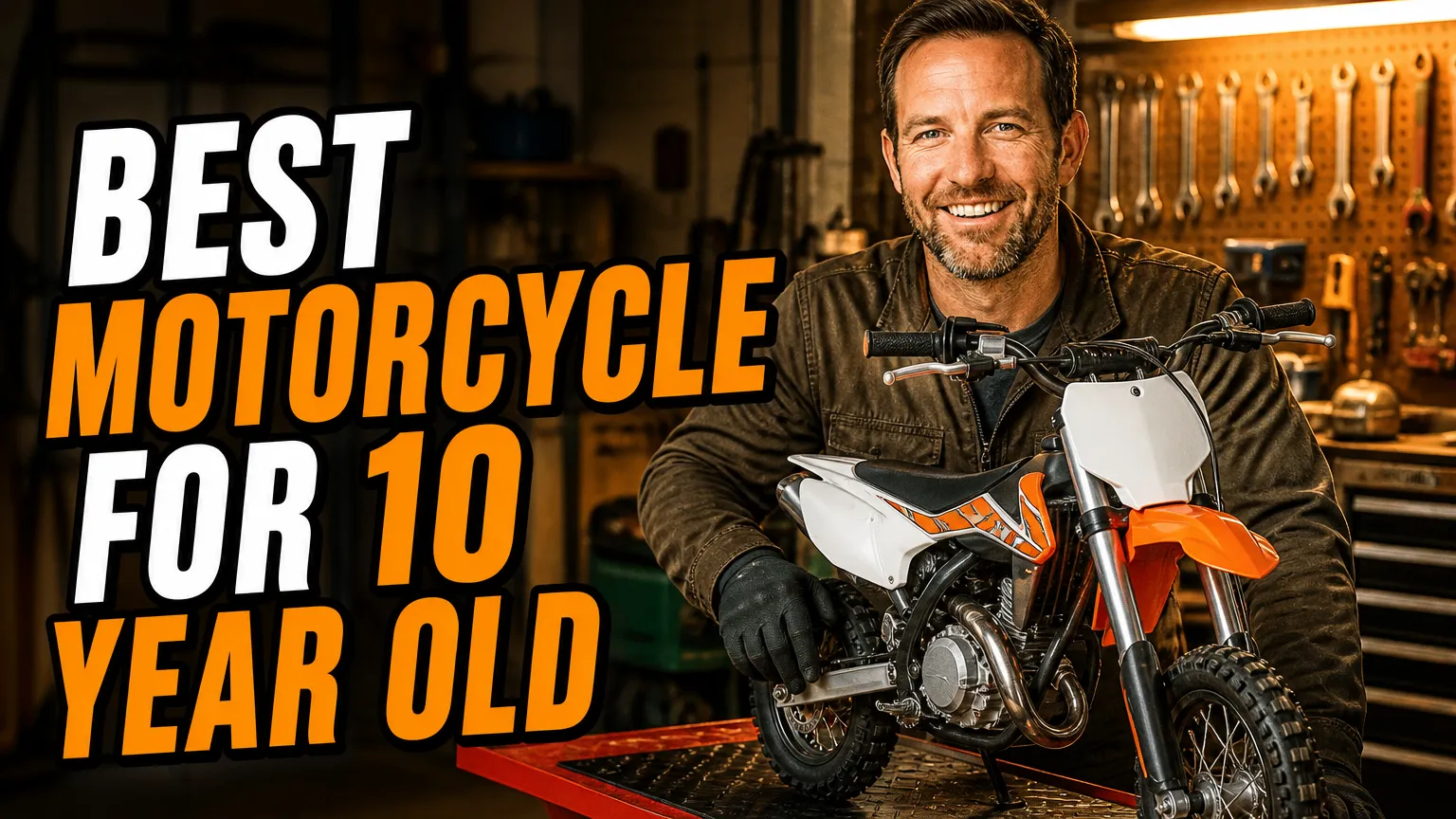
When I help a family choose a first motorcycle for a 10-year-old, I start with fit, confidence, and supervision—not engine size or top speed. A child who can balance comfortably, reach the controls, and stop the bike has a much better foundation than one perched on a machine that is simply bigger or faster.
My picks below focus on youth dirt bikes designed for off-road riding. They range from small, clutchless trail models to more demanding competition bikes, so I’d match the machine to the rider’s height, experience, and the terrain you’ll actually ride. No model makes a child automatically ready; I’d arrange proper instruction and close adult supervision before the first ride.
- I’d compare fit and control before choosing by age or engine displacement.
- The Honda CRF110F, Yamaha TT-R110E, and Kawasaki KLX110R are approachable clutchless trail-bike options.
- A smaller bike may fit a shorter beginner, while a 125cc or race bike calls for more size, skill, and experience.
- I’d budget for protective gear, training, maintenance, and a legal off-road riding area.
How I choose a motorcycle for a young rider
I use the age recommendation as a starting point, not a guarantee. Before buying, I have the rider sit on the motorcycle with suitable boots on: ideally, they can put their feet down securely, reach the brake and throttle, and hold the bike upright without struggling. Seat height, weight, and the way a bike delivers power matter just as much as its engine displacement.
I also ask what kind of riding the family plans to do. A mellow trail bike is a different tool from a motocross race bike, even if both can suit children around the same age. My overview of the best motorcycle engine size for beginners can help explain why a bigger number does not automatically mean a better first motorcycle.
Every bike here is an off-road choice, not a recommendation for public-road use. I’d check local laws, manufacturer guidance, and riding-area rules, then provide a properly fitted helmet, goggles, gloves, boots, and protective clothing. I’d also supervise closely and use a beginner training area rather than taking a new rider straight onto challenging trails.
| Model | Best suited to | Clutch experience |
|---|---|---|
| Suzuki DR-Z50 | Smaller beginners | Automatic clutch |
| Honda CRF110F | Beginner trail riding | Automatic clutch |
| Yamaha TT-R110E | Beginner trail riding | Automatic clutch |
| Kawasaki KLX110R | Clutchless trail riding | Automatic clutch |
| Honda CRF125F | Taller or more experienced riders | Manual clutch |
| Yamaha TT-R125LE | Growing riders learning a clutch | Manual clutch |
| KTM 65 SX | Experienced young racers | Manual clutch |
1. Honda CRF110F — My all-around trail-bike pick
I’d put the Honda CRF110F near the top of my list for a 10-year-old who is ready for a youth-sized trail bike. Its 109cc air-cooled four-stroke engine, four-speed transmission, and automatic clutch simplify the learning process: the rider shifts gears but doesn’t have to coordinate a hand-operated clutch at the same time.
The CRF110F has a seat height of about 25.9 inches, which can suit younger or shorter riders, though I’d still test the fit in person. Its electric starter is a welcome convenience, and Honda has included a keyed ignition and throttle limiter—useful features for a parent who wants some control over access and initial pace. New-bike pricing varies by model year and dealer, so I’d check current local quotes rather than treat a listed MSRP as the final price.
Why I’d consider it
I like the CRF110F as a practical learner because the power delivery and clutchless shifting leave fewer controls for a beginner to juggle. I would not mistake those conveniences for a reason to skip training or supervision, but they can make early practice feel more manageable. I’d also account for its weight: even a well-sized bike can be difficult for a child to pick up or maneuver alone.
2. Yamaha TT-R110E — My pick for electric-start simplicity
The Yamaha TT-R110E is another sensible option I’d compare closely with the Honda. It uses a 110cc air-cooled four-stroke engine, a four-speed gearbox, and an automatic clutch, so a young rider can learn to shift without learning clutch control at the same time. It also has electric start, which I appreciate when a child stalls during practice and needs to get going again.
With a seat height around 26.4 inches, the TT-R110E is still firmly in the small trail-bike class. I’d pay close attention to the child’s inseam and strength, because the seat measurement alone doesn’t tell me whether they can comfortably balance the bike. Pricing depends on year, location, and dealer fees, so I’d compare the complete out-the-door cost with the Honda and Kawasaki options.
Where it fits best
I’d shortlist the Yamaha for a family looking for a straightforward, established trail bike rather than a racing machine. Its clutchless setup is beginner-friendly, but it is still a powered motorcycle with gears; I’d begin in a flat, open practice area and teach smooth throttle use, braking, and stopping before attempting uneven trails.
3. Kawasaki KLX110R — My clutchless alternative
The Kawasaki KLX110R gives families a third familiar 110cc-class option. Its air-cooled 112cc four-stroke engine pairs with a four-speed transmission and automatic clutch. That combination makes it possible for a rider to change gears without operating a manual clutch lever, which I find useful when the rider is still building basic coordination.
The standard KLX110R has a seat height of roughly 26.8 inches. Kawasaki also offers the KLX110R L, a taller version with a manual clutch, so I’d be careful to compare the exact model before making a decision. The L may be more appropriate for a larger, more experienced child, but I wouldn’t choose it simply because its seat is higher.
My fit and setup advice
I’d compare the KLX110R directly with the CRF110F and TT-R110E, then let the rider sit on each one if possible. Small differences in seat height, weight, throttle response, and control reach can make one bike feel noticeably easier to manage. I’d also check the owner’s manual for maintenance intervals and make sure the adult responsible for upkeep is comfortable following them.
4. Suzuki DR-Z50 — My choice for a smaller beginner
For a child who is short, cautious, or just beginning, I’d consider the Suzuki DR-Z50 rather than jumping straight to a 110. Its 49cc four-stroke engine, three-speed transmission, and automatic clutch are aimed at youth riding. The seat is about 22 inches high, making it physically smaller than the other trail bikes on this list.
That compact fit can be a real advantage for a young beginner, but I’d also think ahead. Many 10-year-olds may outgrow a DR-Z50 relatively quickly, depending on their height and experience. I’d choose it when secure fit and a gentle learning platform matter more than getting the largest bike the child might eventually grow into.
When I would move up
I’d reassess as the child grows and develops reliable control, not according to a birthday alone. A rider who can start, stop, turn, and handle the bike calmly may be ready to try a larger model under supervision. Until then, the small size of the DR-Z50 can make it easier to focus on foundational skills.
5. Honda CRF125F — My option for a taller, more experienced rider
The Honda CRF125F is a step up from the clutchless 110s. It has a 124.9cc air-cooled four-stroke engine, a four-speed transmission, and a manual clutch. Its seat height is about 29.1 inches, and the bike is heavier than the smaller youth models, so I’d reserve it for a child who is tall and confident enough to manage those extra demands.
I like that the CRF125F can support a rider who has outgrown a small beginner bike and is ready to learn clutch control. But I wouldn’t treat 125cc as an automatic next step for every 10-year-old. Honda also sells a Big Wheel version with larger wheels and a taller seat, so I’d check that I’m comparing the standard CRF125F with the rider’s actual fit needs.
What I’d check before buying
I’d make sure the rider can reach the levers, balance the motorcycle, and operate the clutch and brakes without stretching or losing control. I’d also consider whether the child has practiced shifting and stopping on a smaller bike first. If those skills are new, I’d rather build them gradually than use a bigger motorcycle as a shortcut.
6. Yamaha TT-R125LE — My pick for learning a manual clutch
The Yamaha TT-R125LE is another 125cc-class trail bike for a rider who has the size and experience to handle a manual clutch. It uses a 124cc air-cooled four-stroke engine, a five-speed transmission, and electric start. The seat height is about 31.7 inches, making it considerably taller than the CRF125F standard model.
That extra height is why I’d be selective about recommending the TT-R125LE for a 10-year-old. It may work for a taller, capable young rider, but I’d rule it out if the child cannot support and control it comfortably at a stop. I’d treat the manual clutch and five-speed gearbox as features for someone who is ready to build on basic riding skills, not as beginner conveniences.
How I’d compare it with the Honda
I’d put the TT-R125LE and CRF125F side by side and focus on fit, not brand preference. The Yamaha’s electric start is convenient, while its taller seat and five-speed setup may be more motorcycle than a smaller beginner needs. If the rider is still learning smooth starts and stops, I’d stay with a clutchless model for now.
7. KTM 65 SX — My choice for an experienced young racer
I’d include the KTM 65 SX only for a young rider who is already committed to motocross and has the skill, coaching, and protective equipment to match. This is a purpose-built competition motorcycle, not a mellow trail bike. Its 64.9cc two-stroke engine, six-speed gearbox, and manual hydraulic clutch are designed for racing performance and require substantially more rider input than the four-stroke trail models above.
The KTM 65 SX has a seat height of roughly 29.5 inches, but I wouldn’t let that relatively manageable number distract me from its racing focus. Its two-stroke power character and competition components make it a poor first choice for a child who is still learning basic throttle and braking control. New-bike pricing is also notably higher than for many recreational youth bikes, and race-bike upkeep can add to the long-term cost.
Who I’d recommend it to
I’d consider the 65 SX when the child already rides confidently, wants to compete, and has access to knowledgeable coaching and a suitable track. For casual family trail rides, I’d choose a calmer trail model. I’d also avoid using top-speed figures as a shortcut for deciding whether a bike is right; rider control and the riding environment matter far more.
How I’d make the final choice
I’d have the child try the motorcycle in person, wearing the boots they’ll ride in. I’d check whether they can reach the controls, turn the bars freely, support the bike, and stop with confidence. If they are on tiptoe, struggling with the bike’s weight, or nervous about handling it, I’d keep looking rather than assuming they will grow into it soon.
I’d also match the transmission to the rider’s skills. An automatic-clutch bike can make early gear changes simpler, while a manual-clutch model adds another skill to learn. I’d begin with a conservative setting where the bike allows it, a clear practice area, and an adult who can intervene safely. I’d never leave a child riding without appropriate supervision.
What I’d budget for beyond the motorcycle
I’d include a properly fitted, standards-compliant motorcycle helmet, goggles, gloves, sturdy off-road boots, and protective clothing in the budget. I’d also plan for routine maintenance, fuel, transport, and any training or track fees. A used bike can reduce the purchase price, but I’d inspect its condition carefully and have a knowledgeable mechanic check it if I’m unsure.
When comparing bikes, I wouldn’t choose based on adult-bike speed articles. Questions such as how fast can a 150cc motorcycle go unleashing top speeds, how fast can a 300cc motorcycle go, or how fast can a 500cc motorcycle go concern very different machines and use cases. For a 10-year-old, I’d focus on a controllable youth bike and safe, legal riding conditions.
Seat height can matter to adult riders, too, but I wouldn’t confuse an adult adventure motorcycle with a child’s off-road bike. If I’m researching fit for a shorter adult, I might read about the best adv motorcycle for short riders; for a child, I’d stick with youth models designed for their size and skill level.
My bottom line
For many young beginners, I’d start by comparing the Honda CRF110F, Yamaha TT-R110E, and Kawasaki KLX110R, then choose the one the rider can control most comfortably. I’d look at the Suzuki DR-Z50 if a smaller bike is a better fit, and consider the CRF125F or TT-R125LE only when the rider is tall and ready for a manual clutch. I’d reserve the KTM 65 SX for experienced young racers.
There isn’t one perfect motorcycle for every 10-year-old. In my view, the best choice is the one that fits the child, suits the kind of riding planned, and leaves room to learn safely—with the right gear, adult supervision, and instruction from the start.
Frequently Asked Questions
What size dirt bike is suitable for a 10-year-old?
I’d start by checking fit and experience, not age alone. Many beginners suit a 50cc to 110cc model, while a taller, experienced rider may be ready for a 125cc bike.
Is a 110cc dirt bike too powerful for a beginner?
Not necessarily. Models such as the Honda CRF110F and Yamaha TT-R110E have manageable four-stroke engines and automatic clutches, but I’d still choose based on the child’s size, control, and training.
Can a 10-year-old ride a dirt bike on public roads?
I would not assume so. Youth dirt bikes are generally intended for off-highway use; check local age, registration, and riding-area rules before buying or riding.
What protective gear should a child wear on a dirt bike?
I’d require a correctly fitted, certified motorcycle helmet, goggles, gloves, boots, and protective clothing, with a chest protector as an added layer.

Related Articles

8 Comfortable, Confidence-Inspiring Motorcycles for Riders in Their 70s
Explore eight manageable motorcycles for riders in their 70s, with seat heights, weights, features, and practical advice for choosing a…
Jake Miller
12 min read

7 Approachable Motorcycles for Comfortable, Confident Riding at 65
Compare seven approachable motorcycles for comfort, weight, seat height, power and value, plus my practical test-ride checklist for choosing confidently…
Jake Miller
13 min read

7 Best Motorcycles for a 55-Year-Old Who Wants Comfort and Confidence
I compare seven approachable motorcycles for riders in their 50s, with real specs, comfort notes, price ranges, and practical advice…
Jake Miller
12 min read