
7 Beginner-Friendly Motorcycles I’d Consider for a 16-Year-Old Rider
 Jake Miller
12 min read
Jake Miller
12 min read
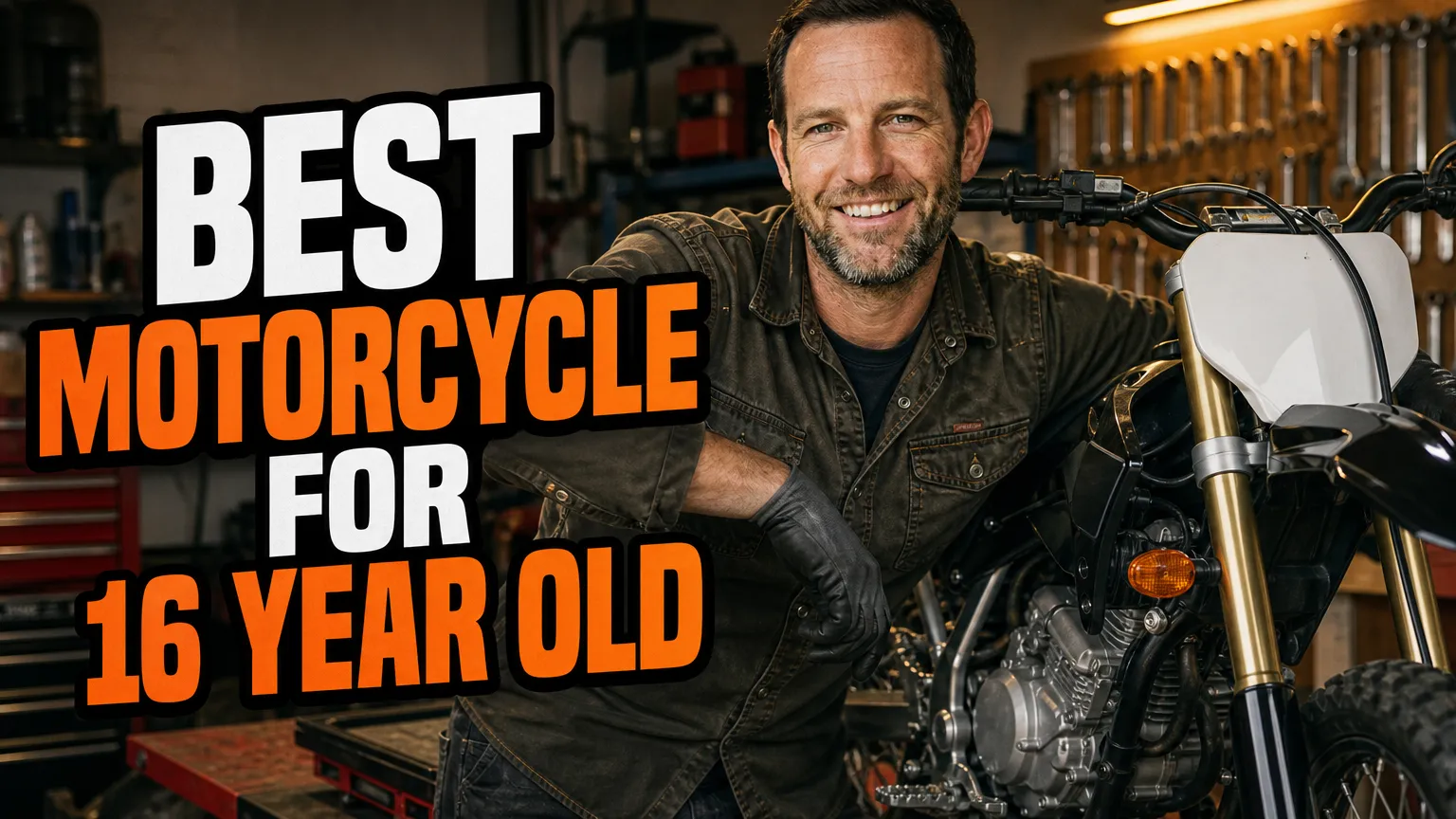
Choosing a first motorcycle for a 16-year-old is about more than finding the smallest engine or the coolest styling. I’d put licensing, rider fit, predictable handling, and access to proper training first, then look for a bike that suits where and how the teenager will ride.
I’ve included compact road bikes, dual-sport models, and one trail-only option because a good match depends on the rider’s goals. Before buying anything, I’d confirm the rules where the teenager lives: legal minimum age, learner restrictions, required training, and which motorcycles can be ridden on public roads.
- I’d choose a motorcycle that fits the rider and local licensing rules before considering style or speed.
- The Honda CB125F and Honda Grom are approachable small-displacement road-bike options where available and legal.
- I’d consider the Yamaha TW200, Yamaha XT250, and Kawasaki KLX230 S for riders who want more versatility.
- The Suzuki DR-Z125L is for off-road use, not ordinary public-road riding.
- Training, a properly fitted helmet, and protective gear matter as much as the motorcycle itself.
How I’d Choose a First Motorcycle
I start with the rulebook rather than a showroom. Minimum ages, permit requirements, engine or power limits, and road-access rules vary by location, so I would not assume that a motorcycle is legal for a 16-year-old just because it has a small engine.
Next, I’d have the rider sit on the bike with both hands on the controls. They should be able to reach the bars comfortably, operate the levers, and manage the bike’s weight at a stop. Being able to put both feet flat on the ground can help a nervous beginner, but secure control matters more than hitting a particular seat-height target.
For a closer look at displacement and beginner-friendly choices, I’d read this guide to best motorcycle engine size for beginners. I also remind new riders that a smaller engine does not automatically make a motorcycle safe: braking practice, road awareness, and restraint are essential.
1. Honda CB125F: My Pick for a Traditional Small Road Bike
When I’m looking for a conventional, practical starter motorcycle, the Honda CB125F is one I’d put on the shortlist. Its 124cc, air-cooled, fuel-injected single-cylinder engine and five-speed gearbox give it a straightforward commuter-bike layout without the bulk of a larger machine.
I like the CB125F’s upright riding position because it makes the road easier to scan than a tucked-in sport-bike posture. Honda’s specifications vary by market and model year, so I’d check the local version for details such as braking equipment, weight, and seat height before making a decision.
Why I’d consider it
The CB125F is designed for everyday road use, which makes it a sensible choice for a teenager who needs to learn basic traffic skills rather than ride trails. In markets where it’s sold, it can also be a relatively affordable way into motorcycling; I’d compare the new-bike price, insurance, registration, and service costs locally.
I’d be realistic about its limits. A 125cc machine is best suited to appropriate local roads and legal riding conditions, not to keeping pace on every fast road. For a useful perspective on small-bike performance, I’d check how fast can a 150cc motorcycle go unleashing top speeds, while remembering that top speed is not a sensible beginner buying target.
2. Honda Grom: My Choice for a Compact, Playful Road Bike
The Honda Grom is a small, street-oriented motorcycle with a 124cc, fuel-injected engine and a five-speed transmission on current versions. I find its compact proportions and upright controls appealing for a rider who wants a light-feeling bike for local trips and practice, provided the rider fits it and the local rules allow it.
Its small wheels and short overall size make it feel different from a full-size motorcycle. That can be a plus in a parking lot or at low speeds, but I’d have a new rider get comfortable with its handling before taking it into busy traffic. The Grom is still a real motorcycle that requires careful control, not a toy.
What I’d check before buying
I’d compare the Grom’s seat height and weight with the rider’s proportions, and I’d check the exact version for available ABS. Some configurations and markets differ, so I wouldn’t assume every Grom has identical equipment. I’d also budget for a quality helmet, gloves, jacket, trousers, boots, and training rather than spending the entire budget on the bike.
For me, the Grom is strongest as a fun, approachable small road bike, not as a do-everything touring motorcycle. I’d choose it for a teenager who values compact dimensions and has suitable local roads, then move up only when skills and licensing make that a sensible step.
3. Yamaha TW200: My Favorite for a Low-Stress Mix of Road and Dirt
The Yamaha TW200 has a distinctive, friendly character that I think can suit a careful beginner. It uses a 196cc air-cooled, fuel-injected four-stroke engine and a five-speed gearbox, and its unusually wide tires give it a planted feel at modest speeds on suitable surfaces.
I’d look closely at the TW200 for a rider who wants to combine local road use with gentle dirt-road exploring. Its low, narrow-feeling riding position can help some riders feel more comfortable than they would on a taller dual-sport, though I’d still have the teenager test the reach and balance in person.
Where I think it makes sense
The TW200 is not a high-speed highway bike, and I would not buy it expecting strong acceleration or fast-road performance. I see its appeal in manageable power, simple controls, and flexibility for relaxed rides. Its availability and price vary by market, so I’d check current local listings and make sure the exact model is road-legal where it will be used.
If the teenager wants to ride mostly on dirt, I’d also compare it with purpose-built off-road bikes and verify whether road equipment is required. I’d treat any transition from quiet trails to public roads as a separate skill and licensing decision, not an automatic extension of off-road experience.
4. Yamaha XT250: My Choice for a More Capable Dual-Sport
The Yamaha XT250 is a street-legal dual-sport with a 249cc, air-cooled, fuel-injected single-cylinder engine and a five-speed gearbox. Compared with the smaller road bikes on my list, it offers a more versatile platform for riders who want to explore both paved roads and suitable unpaved routes.
I’d be more cautious about recommending the XT250 as a first bike for every 16-year-old. Its seat is taller than a typical small commuter’s, and its engine size may not fit local learner rules. I’d only consider it after checking legal eligibility and confirming the rider can confidently manage the bike at a stop and during slow turns.
My fit and riding notes
I like that the XT250’s upright position gives a rider a good view of the road, and its dual-sport design opens up more route options than a small street bike. But versatility does not mean it’s automatically the right beginner choice; I’d ask whether the rider genuinely needs trail ability or would be better served by a lighter, lower-powered road model.
For riders comparing engine sizes, I’d read about how fast can a 300cc motorcycle go and how fast can a 500cc motorcycle go. I use those comparisons to frame expectations, not to encourage a teenager to chase speed.
5. Kawasaki KLX230 S: My Pick for a Lower Dual-Sport Seat
The Kawasaki KLX230 S is a street-legal dual-sport with a 233cc, fuel-injected, air-cooled engine and a six-speed transmission. The “S” version is intended to offer a lower seat height than the standard KLX230, which is why I’d consider it for a rider who wants a dual-sport but finds taller off-road-style motorcycles intimidating.
I would still check the exact year and trim carefully. Equipment, ABS availability, seat height, and pricing can differ between versions and markets, and the KLX230 S may be too large or too powerful for some teen licensing categories. My first question would be whether the rider can legally use it, not whether its specification sheet looks appealing.
Who I’d match it with
I’d consider this Kawasaki for a trained, physically comfortable young rider who wants to ride on both pavement and appropriate dirt roads. I wouldn’t treat it as a starter trail bike for someone who has never balanced a motorcycle, because a heavier road-legal dual-sport can be difficult to pick up and control on uneven ground.
Riders comparing dual-sports should pay particular attention to seat height, suspension movement, and their inseam. I’d also use this guide to the best adv motorcycle for short riders as a fit reference, while remembering that adventure motorcycles and dual-sports are not always the same thing.
6. Yamaha YZF-R125: My Sport-Bike Option for Eligible Riders
The Yamaha YZF-R125 is a fully faired 125cc sport motorcycle sold in selected markets, including parts of Europe. It has a liquid-cooled, fuel-injected single-cylinder engine and a six-speed gearbox; current specifications and features depend on model year and region.
I’d only put the YZF-R125 on the list for a teenager who is legally eligible and genuinely wants a sport-bike riding position. Its styling is exciting, but the forward-leaning posture can be less comfortable for relaxed commuting than the upright position of the CB125F or Grom. I’d also check the insurance quote before getting attached to it.
My reason for including it
I don’t think a beginner has to choose a plain-looking motorcycle, and the YZF-R125 can offer sport-bike styling in a small-displacement package. Still, I’d keep the focus on smooth throttle control, braking, and road positioning rather than speed. Availability is regional, and it may not be sold or permitted for young riders in the reader’s location.
Before choosing this or any faired motorcycle, I’d compare its price with the cost of replacement bodywork after a low-speed drop. That doesn’t mean I expect a new rider to crash; it means I plan a realistic budget and prioritize training and protective equipment.
7. Suzuki DR-Z125L: My Trail-Only Pick
The Suzuki DR-Z125L is a small off-road motorcycle with a 124cc, air-cooled, four-stroke engine and a manual transmission. Its larger-wheel “L” format is aimed at trail riding rather than ordinary street commuting, so I’d consider it only for a family with safe, permitted off-road riding access.
I want to be especially clear about this distinction: the DR-Z125L is not a substitute for a road-legal motorcycle. I would not take it onto public streets unless the exact bike has the required equipment and is legally registered for that use, which is generally not what this model is designed for.
When I’d choose it
I’d look at the DR-Z125L when the teenager’s goal is learning off-road fundamentals in an appropriate riding area with adult supervision. A dirt bike can teach balance and control, but I’d still arrange instruction, use off-road protective gear, and make sure the rider stays away from public roads and prohibited land.
If the family needs one motorcycle for everyday transport, I’d choose a road-legal model instead. I’d never let the lower price or trail-bike appearance distract me from checking registration, insurance, and local land-access rules.
Safety, Training, and the Costs I’d Budget For
I wouldn’t hand a 16-year-old a motorcycle and keys without proper training. I’d look for an approved beginner course, supervised practice in a controlled area, and any required licensing steps. After that, I’d keep early rides short, familiar, and away from difficult traffic until the rider can demonstrate consistent low-speed control, braking, and observation.
I’d also budget for a properly fitted, certified helmet, eye protection, gloves, abrasion-resistant jacket and trousers, and over-the-ankle boots. A bright or reflective layer can help visibility, but it does not replace defensive riding. I’d check that protective gear fits the teenager now and is fastened correctly every time.
Beyond the purchase price, I’d add insurance, registration, fuel, scheduled maintenance, tires, security, and possible course fees. Insurance for a young rider can be expensive, so I’d get a quote for the specific motorcycle before buying it. I’d also ask a trusted mechanic to inspect any used bike, including its tires, brakes, chain, lights, and maintenance history.
My Final Recommendation
If I were helping a 16-year-old choose today, I’d begin with the Honda CB125F or Honda Grom where those models are sold and legal. I’d favor the CB125F for a conventional upright road-bike feel and the Grom for a compact, distinctive ride. For a teenager with the right license, fit, and training, I’d consider the TW200 or one of the dual-sports.
I wouldn’t choose based on displacement, top speed, or appearance alone. I’d match the motorcycle to the rider’s size, skill, riding environment, and local rules, then spend enough on training and gear to make the whole setup safer. The best first bike, in my view, is the one the teenager can legally and confidently manage while building good habits.
Frequently Asked Questions
What size motorcycle is suitable for a 16-year-old beginner?
I’d start by checking local licensing rules, then look for a manageable motorcycle with predictable power, a comfortable reach to the ground, and a weight the rider can handle. A 125cc bike can be a sensible starting point, but engine size alone does not determine suitability.
Can a 16-year-old ride a motorcycle on public roads?
It depends on the country, state, or province. I’d confirm minimum-age rules, permit restrictions, training requirements, passenger limits, and engine-size limits with the local licensing authority before buying.
Is a Honda Grom a good first motorcycle?
I think the Honda Grom can work well for a beginner who fits it comfortably and is legally allowed to ride it. Its 124cc engine and compact size are approachable, but I’d still arrange proper training and protective gear.
Should a teenager start on a 125cc motorcycle?
A 125cc motorcycle can be a good first choice, but I wouldn’t choose by displacement alone. I’d compare seat height, weight, brakes, intended use, local rules, and the rider’s training and experience.

Related Articles

8 Best Youth Dirt Bikes for 13-Year-Old Riders: Smart Picks for Skill and Size
Compare eight youth dirt bikes for a 13-year-old, with seat heights, engine types, skill fit, price ranges, and safety-first buying…
Jake Miller
13 min read

8 Best Dirt Bikes for 15-Year-Old Riders, From First Trails to Race Tracks
Compare eight beginner-friendly dirt bikes for 15-year-olds, with fit, engine specs, price ranges, safety advice and practical tips for choosing…
Jake Miller
14 min read

7 Best Dirt Bikes for 12-Year-Old Riders: Beginner and Race-Ready Picks
Compare seven youth dirt bikes by fit, engine, clutch, safety, and price, with practical advice for choosing a motorcycle for…
Jake Miller
10 min read