
8 Best Motorcycles for Riders Over 50: Comfortable, Confidence-Inspiring Picks
 Jake Miller
11 min read
Jake Miller
11 min read
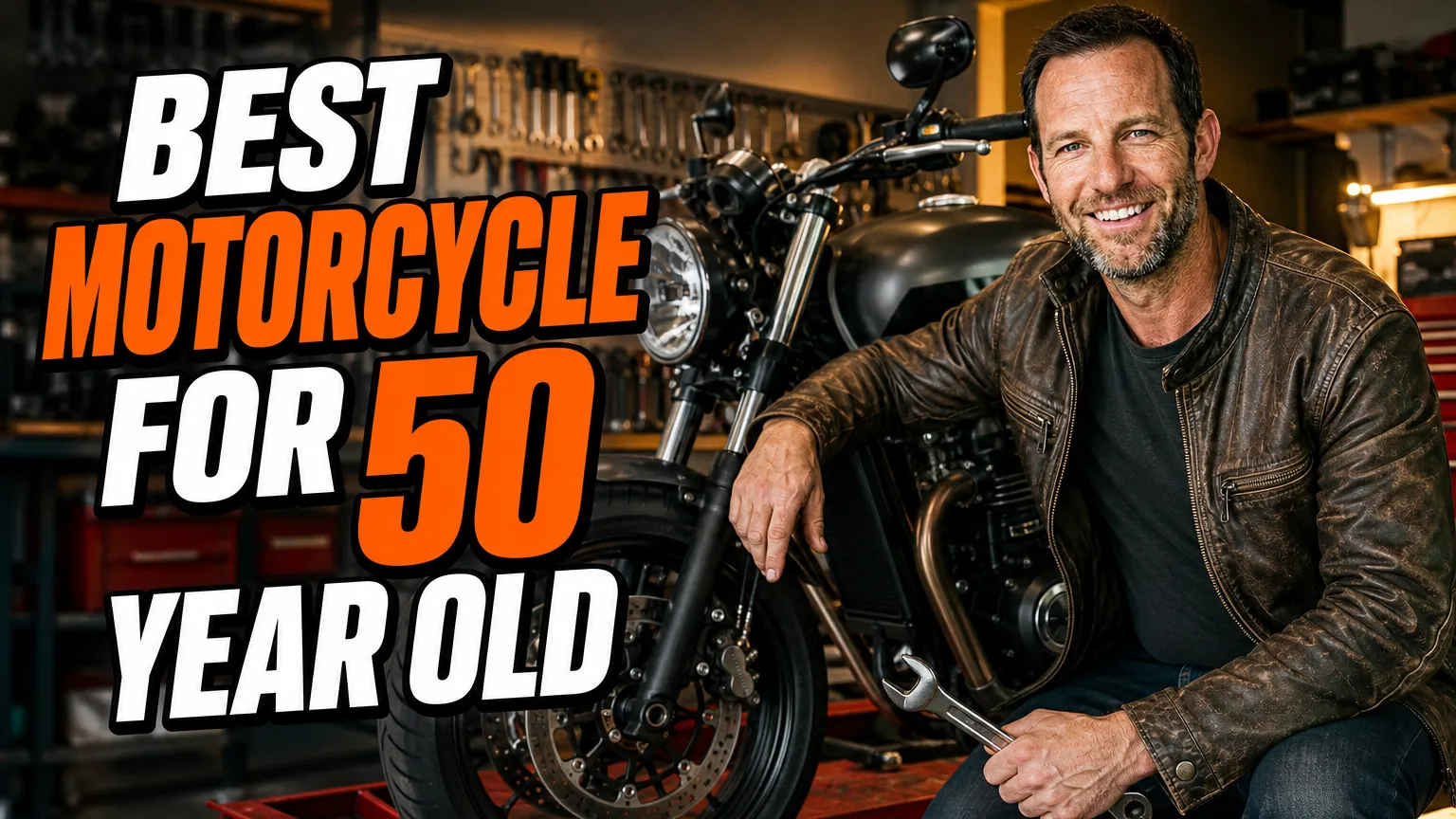
Choosing the best motorcycle for 50 year old riders is less about finding a bike with a particular engine size and more about matching a motorcycle to the way I want to ride now. Comfort, manageable weight, easy controls, and a riding position I can enjoy for more than a quick trip matter at least as much as horsepower.
I don’t think turning 50 means giving up a sporty bike, taking up touring, or automatically needing a low seat. I’d start by being honest about my experience, fitness, budget, and intended roads, then sit on and test ride a few different styles. These eight motorcycles are strong places to begin that search.
- I’d choose the Honda Rebel 500 or Kawasaki Eliminator for a low-seat cruiser feel.
- I’d look at the Honda NC750X or NX500 for upright, everyday versatility.
- The Triumph Speed 400 is a sensible smaller-capacity option; the Trident 660 and Yamaha MT-07 add more performance.
- I’d prioritize fit, weight, and a proper test ride over age or engine size alone.
How I’d choose a motorcycle at this stage of life
I’d think about how I’ll actually use the bike: weekend back roads, commuting, longer tours, gravel routes, or a bit of everything. A low, relaxed cruiser can feel reassuring in a parking lot, while an upright standard or adventure-style motorcycle may keep my back and wrists happier on a longer ride.
I’d also pay attention to weight and balance, not just seat height. A tall motorcycle can still feel manageable if its weight sits low, while a low bike may be awkward if it is wide or top-heavy. I’d practice stopping, backing up, and making slow turns somewhere safe before committing.
When I’m comparing engine sizes, I don’t assume bigger is automatically better. My guide to the best motorcycle engine size for beginners can help put displacement in context. For a smaller bike, I’d also check how fast can a 150cc motorcycle go unleashing top speeds, how fast can a 300cc motorcycle go, and how fast can a 500cc motorcycle go before deciding whether that capacity suits my roads.
1. Honda Rebel 500 — my low-seat cruiser pick
When I want a relaxed cruiser with a particularly low seat, I’d put the Honda Rebel 500 near the top of my list. Its 471cc parallel-twin engine, compact proportions, and seat height of about 27.2 inches make it approachable for many riders who prefer to have their feet close to the ground at a stop.
The Rebel 500 has a six-speed transmission and a simple, uncluttered layout that I find appealing for everyday rides. Depending on year and market, it is available with ABS, so I’d check the exact version rather than assume every used or new example has the same equipment. U.S. pricing commonly falls in the mid-$6,000 range before destination and fees, though model year and trim can change that.
I wouldn’t choose it simply because I’m over 50. I’d choose it if the low seat and cruiser posture suit my body, because the low stance can make slow stops feel less intimidating. Before buying, I’d check whether my knees feel cramped and whether my wrists and lower back stay comfortable in the riding position.
2. Kawasaki Eliminator 500 — my light-feeling cruiser alternative
I’d compare the Kawasaki Eliminator 500 directly with the Rebel if I wanted cruiser styling but a more upright feel. It uses a 451cc parallel twin and has a seat height of approximately 28.9 inches. Kawasaki lists a curb weight around 390 pounds for the standard ABS model, making it a relatively manageable choice within the cruiser category.
The Eliminator’s longer, low-slung look doesn’t mean I have to sit in an extreme feet-forward position. I like that its overall shape gives it a modern, relatively straightforward character, and its engine offers more room to grow than a very small-displacement starter bike. Pricing varies by trim and year, but I’d expect it to sit around the mid-$6,000 range in the United States before added fees.
I’d put the Eliminator on my shortlist if I wanted a cruiser that feels less imposing than a big touring machine. I’d still try it beside the Honda Rebel 500: even a small difference in bar reach, seat shape, and footpeg position can make one feel much more natural than the other.
3. Triumph Speed 400 — my approachable city-and-country choice
For a lighter, smaller-capacity motorcycle with a premium finish, I’d consider the Triumph Speed 400. Its 398cc single-cylinder engine produces about 40 horsepower, and its seat is roughly 31 inches high. At around 375 pounds wet, it’s a useful option for riders who want a manageable bike for commuting and relaxed weekend rides.
I like the Speed 400’s upright roadster layout because it feels more versatile than a dedicated cruiser without becoming a tall adventure bike. Its modern equipment includes ABS and traction control, and the simple single-cylinder engine keeps the package approachable. U.S. prices have generally been in the low-to-mid $5,000 range, but I’d check the current local listing and include dealer fees in my budget.
I’d be realistic about what a 400cc motorcycle can do. The Speed 400 can be a satisfying everyday ride, but I’d test it on the fastest roads I plan to use and see whether the wind protection and passing power meet my needs. If my usual rides include long stretches of highway with luggage, I might prefer one of the larger bikes below.
4. Honda NC750X — my practical all-rounder
When I want upright ergonomics and everyday practicality, the Honda NC750X stands out. Its 745cc parallel-twin engine is tuned for usable, relaxed power rather than an aggressive sportbike rush. The bike also has a storage compartment where a fuel tank would normally sit, which I find genuinely handy for carrying small items on daily rides.
One feature I’d seriously consider is Honda’s optional Dual Clutch Transmission, or DCT. It handles gear changes automatically while retaining the motorcycle’s familiar two-wheel layout, and it can be a welcome alternative if clutch work bothers my hand or distracts me in traffic. The NC750X’s seat is around 31.6 inches high, and U.S. pricing is typically in the upper-$9,000 range, with the DCT version costing more.
I wouldn’t call the NC750X a small motorcycle, so I’d check whether I’m comfortable maneuvering its weight at walking speed. In return, I’d get a useful mix of commuting ability, upright comfort, and touring potential. For me, that makes it a strong option if I want one motorcycle to cover several roles rather than specialize in just one.
5. Honda NX500 — my upright option for paved adventures
I’d look at the Honda NX500 if I wanted adventure-bike styling and an upright riding position but expected most of my miles to be on pavement. It uses Honda’s 471cc parallel twin, produces about 47 horsepower, and has a seat height near 32.8 inches. That extra height can offer a commanding view, but I’d make sure I can manage it confidently when stopped.
The NX500’s upright posture, windscreen, and fairing make it a sensible candidate for commuting and longer road rides. It also has ABS, and its curb weight is roughly 432 pounds, depending on specification. I’d think of it as a road-focused adventure-style bike rather than a specialist off-road machine, particularly if I’m comparing it with bikes built for rough trails.
Seat height deserves a careful check here. I’d wear my normal riding boots, sit on the motorcycle, and test how it feels to move it around rather than relying on the specification alone. Riders looking for a more trail-focused bike with fit considerations in mind can also explore my guide to the best adv motorcycle for short riders.
6. Royal Enfield Himalayan 450 — my choice for scenic mixed-surface rides
If my plans include gravel roads and scenic routes beyond the pavement, I’d consider the Royal Enfield Himalayan 450. Its 452cc liquid-cooled single makes about 40 horsepower, and its adjustable seat offers heights of roughly 31.5 or 32.3 inches, depending on the setting. It brings a straightforward adventure-bike layout without the size and power of a large touring machine.
The Himalayan 450 has a clear screen, long-travel suspension, and a riding position designed for varied surfaces. Its curb weight is around 432 pounds, so I’d still take time to judge how it feels when I’m lifting it off the side stand or turning it around. In the U.S., pricing has generally landed in the high-$5,000 range before taxes, accessories, and dealer costs.
I’d choose this bike because I wanted to explore rougher roads, not just because it looks adventurous. For mostly highway commuting, I might find a road-oriented standard or the Honda NX500 a better fit. I’d also check the seat reach and suspension feel in person, since a comfortable standing position and manageable balance matter if I plan to leave smooth pavement.
7. Triumph Trident 660 — my balanced middleweight roadster
For riders who still want a lively engine and sporty handling, I’d consider the Triumph Trident 660. Its 660cc three-cylinder engine makes around 80 horsepower, offering noticeably more performance than the smaller bikes on this list without stepping into a full superbike. The seat height is approximately 31.7 inches, and the wet weight is around 417 pounds.
I like the Trident’s compact roadster format and useful electronics, including selectable riding modes and traction control. It’s a good example of why I wouldn’t write off a fun, responsive motorcycle simply because I’m looking for comfort and confidence. U.S. prices are typically in the high-$8,000 range, though year, dealer, and equipment can shift the final figure.
I’d test the throttle response and riding position carefully. Compared with a Rebel or NC750X, the Trident is more performance-focused, and that may be exactly what I want for back roads. If I’m returning to motorcycling after a long break, I’d be honest about whether its power encourages smooth, controlled riding or tempts me into riding faster than feels sensible.
8. Yamaha MT-07 — my pick for a spirited everyday ride
The Yamaha MT-07 is one I’d consider if I wanted a lively, versatile naked bike with a strong reputation for an engaging ride. Its 689cc parallel-twin engine makes about 73 horsepower, the seat is roughly 31.7 inches high, and wet weight is around 403 pounds. That combination gives it substantial performance while keeping it more approachable than many larger, heavier motorcycles.
I find the MT-07 appealing because it can handle daily use and still feel entertaining on a winding road. Newer versions offer modern rider aids, and availability of Yamaha’s Y-AMT automated manual transmission depends on the model year and market. I’d confirm the precise equipment on the bike I’m considering; U.S. pricing for current versions is generally in the upper-$8,000 range before fees.
I’d take a careful test ride before choosing it over the milder Speed 400 or Honda NC750X. The MT-07 has a more energetic character, which I enjoy when I want a responsive roadster, but a calmer bike may suit my daily routine better. I’d also check wind exposure and seat comfort if my rides regularly last several hours.
My final checklist before I buy
I’d narrow my choices to two or three motorcycles and sit on each one in the clothes and boots I actually ride in. I’d check whether I can reach the controls comfortably, turn the handlebars without straining, and support the bike at a stop. If a dealer allows it, I’d test ride on familiar roads that include the kind of traffic and speeds I expect to encounter.
I’d budget for more than the motorcycle itself. Insurance, a properly fitted helmet, protective clothing, training, maintenance, and registration all affect the real cost of ownership. If it has been a while since I last rode, I’d consider a refresher course before making a purchase, even if I already have a motorcycle license.
My short version is simple: I’d choose the bike that fits my body, confidence, and real riding plans, not one that seems appropriate for a birthday milestone. The Honda Rebel 500 and Kawasaki Eliminator 500 are worth a look for low-seat cruiser comfort; the Honda NC750X and NX500 suit upright versatility; and the Triumph Speed 400, Himalayan 450, Trident 660, and Yamaha MT-07 each offer a distinct way to enjoy the road.
Frequently Asked Questions
What type of motorcycle is easiest to manage after 50?
I’d start with a bike that feels light at low speed, fits your reach, and has a comfortable riding position. A lower-seat motorcycle such as the Honda Rebel 500 may suit some riders, while others may prefer an upright standard.
Is a 500cc motorcycle powerful enough for highway riding?
Many 500cc motorcycles can handle highway speeds, but comfort and passing performance vary by model, rider, and conditions. I’d test ride the specific bike and consider the type of roads you use.
Should I choose a motorcycle with automatic transmission?
I’d consider one if shifting is uncomfortable or distracting. Models such as the Honda NC750X offer an optional DCT automatic transmission, but I’d try it before deciding.
How should I choose a motorcycle seat height?
I’d sit on the bike in riding boots and check whether I can support it confidently when stopped. A low seat can help, but seat shape, weight, and balance matter too.

Related Articles

7 Best Motorcycles for a 55-Year-Old Who Wants Comfort and Confidence
I compare seven approachable motorcycles for riders in their 50s, with real specs, comfort notes, price ranges, and practical advice…
Jake Miller
12 min read

8 Best Starter Motorcycles for 17-Year-Old Riders in 2026
Compare eight beginner-friendly motorcycles for 17-year-olds, with real specs, strengths, licensing cautions, and practical advice for choosing a safe first…
Jake Miller
10 min read

7 Beginner-Friendly Motorcycles I’d Consider for a 16-Year-Old Rider
I compare seven beginner-friendly motorcycles for 16-year-old riders, covering size, power, legality, prices, safety gear, and how to choose the…
Jake Miller
12 min read