
8 Best Motorcycle Steam Cleaners for a Careful, Thorough Garage Clean
 Jake Miller
13 min read
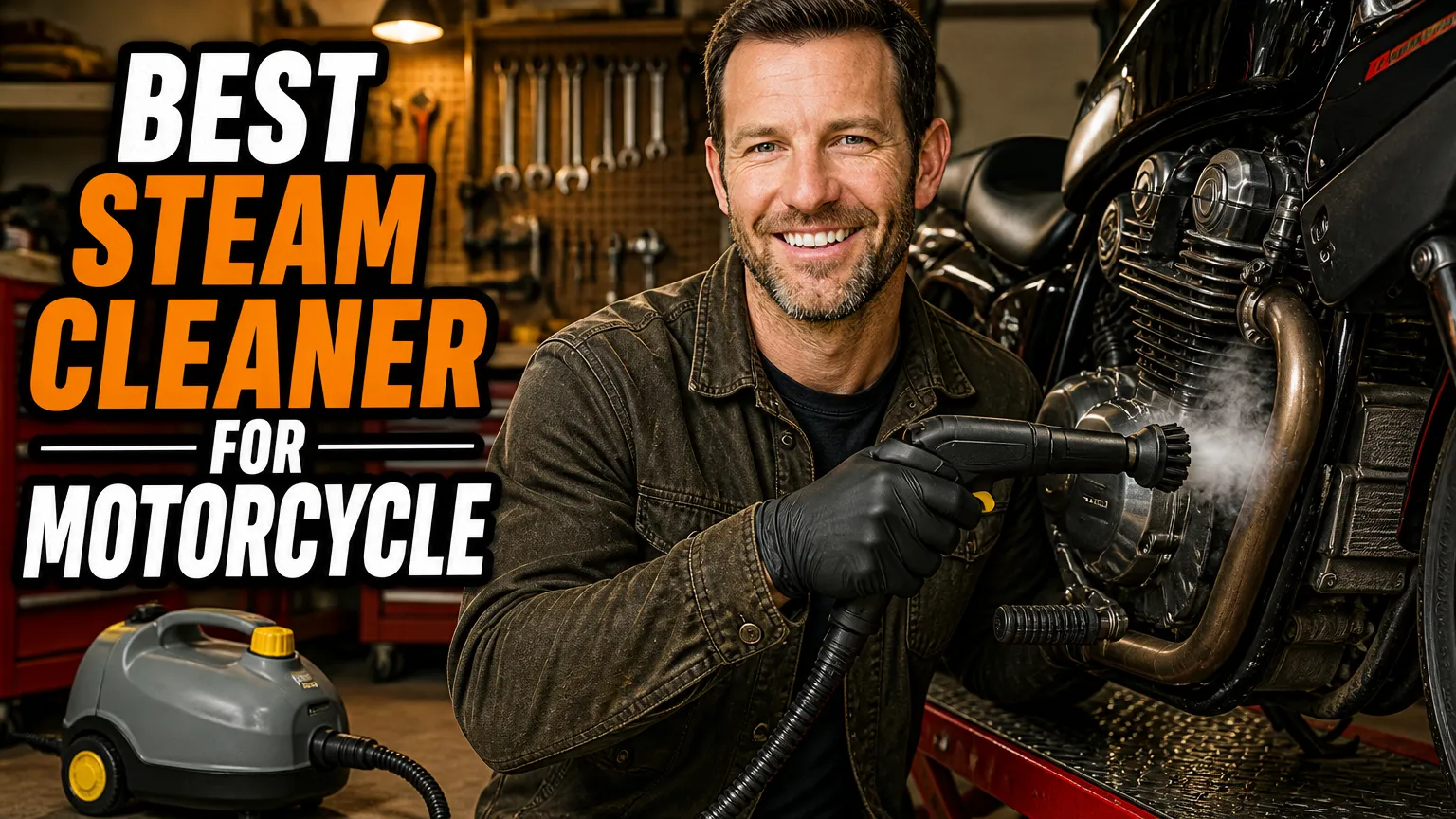
When I’m cleaning a motorcycle, I want to loosen stubborn grime without turning a careful wash into a soak around sensitive parts. A steam cleaner can help with that, but I treat it as a targeted detailing tool, not a shortcut for blasting the entire bike. My choice of the best steam cleaner for motorcycle care depends on useful attachments, manageable steam control, and how carefully I can work around finishes and components.
Disclosure: some links in this article are affiliate links. As an Amazon Associate I earn from qualifying purchases, and I may also earn a commission from RevZilla at no extra cost to you.
I also keep the rest of my maintenance routine in mind: for paint touch-ups, I refer to this guide to the best spray paint for motorcycle. In this list, I compare eight real steam-cleaner models and explain where I’d use each one, what I’d avoid, and how I’d choose between them.
- I’d choose the Dupray Neat for versatile home-garage detailing and the McCulloch MC1385 for long cleaning sessions.
- I prefer models with useful small brushes, a controllable steam output, and enough hose or cord reach to work around a bike.
- I keep steam away from chains, bearings, electrical connectors, seals, brakes, hot parts, and delicate paint or decals.
- For matte finishes, rims, saddles, and windscreens, I use surface-specific guidance and products rather than assuming steam is safe.
How I choose a steam cleaner for motorcycle detailing
I look beyond headline pressure or temperature. A long hose, a nozzle I can control, and brushes that fit cramped spaces are more useful to me than raw power when I’m cleaning around a motorcycle’s crowded engine and frame.
I also check the tank capacity and refill routine. A compact handheld can be handy for one small job, while a canister machine is more comfortable when I’m working through several areas. Prices and included accessories vary by seller and package, so I’d confirm the exact kit before ordering.
Most importantly, I use steam selectively. I start with a cool bike, test a hidden spot, hold the nozzle back from the surface, and keep it moving. If I’m uncertain about a coating, adhesive, or component, I skip steam and use a suitable cleaner and microfiber cloth instead.
1. Dupray Neat Steam Cleaner — My versatile all-rounder
The Dupray Neat is a canister-style cleaner I’d consider for a rider who wants one machine for light household jobs and occasional motorcycle detailing. It has a 1.6-liter tank, a stated heating time of about eight minutes, and up to 50 minutes of cleaning time per fill under the manufacturer’s conditions. Dupray lists steam temperatures up to 275°F at the boiler.
I like the general-purpose accessory selection for detail work: a hose, extension tubes, brushes, and nozzle attachments can help me reach around frame sections and clean removable grime from robust surfaces. The Neat is not a motorcycle-specific machine, though, so I still choose the attachment and steam setting cautiously.
Where I’d use it
I’d use the Dupray Neat for selected hard, heat-tolerant areas and stubborn grime that responds well to a little targeted steam. I would not interpret the high boiler temperature as permission to apply full heat directly to paint, plastics, rubber, or electrical parts.
In my view, this is a strong general pick if I want a useful balance of tank size, accessories, and runtime. I’d expect it to cost more than a small handheld, with exact pricing depending on the retailer and current bundle.
2. McCulloch MC1385 Deluxe Canister Steam System — My pick for longer sessions
The McCulloch MC1385 is a larger canister system built for extended cleaning jobs. Its 64-ounce water tank, 12-minute heat-up time, and stated runtime of up to 120 minutes make it appealing if I’m cleaning more than one vehicle or handling a lengthy garage chore. The kit includes a broad selection of accessories, including brushes and extension pieces.
I value the reach and accessory variety on a canister machine because I can position the unit nearby and work around the bike without repeatedly stopping to refill a small reservoir. The MC1385 is a substantial appliance, however, so I’d make sure I have room to store it and a safe place to set it while it heats.
Why I’d pick it
I’d choose the McCulloch MC1385 if long runtime and a large accessory kit matter more to me than compact storage. It can be a practical garage machine, but its advertised pressure and steam output still call for restraint around motorcycle components. I’d use short, controlled passes rather than lingering on one spot.
For careful owners, the biggest advantage is not “more power at any cost.” It’s having enough capacity to move slowly and methodically without rushing through a job because the tank is nearly empty.
3. Vapamore MR-100 Primo — My feature-rich detailing option
The Vapamore MR-100 Primo is a canister steam cleaner with a 1.6-liter boiler, a stated heat-up time of about 11 minutes, and a range of included attachments. Vapamore promotes it for multiple cleaning applications and lists a boiler temperature around 220°F. I’d check the manufacturer’s current specifications and included accessory set because package details can change.
I find the Primo interesting for a rider who wants a dedicated home machine with more reach and accessories than a handheld steamer. Small brushes and detail nozzles can help with awkward crevices, but I’d use them gently and avoid pushing grime deeper into electrical connectors or moving parts.
My practical take
I’d consider the Vapamore MR-100 Primo when I want a substantial, versatile machine and expect to use it for more than motorcycle cleaning. Its size and cost may be harder to justify if I only need to clean a few small spots on my bike a couple of times each season.
Like every model here, it needs a cautious operator. I wouldn’t use steam as a substitute for taking off parts that need proper inspection or cleaning, and I’d keep it away from lubrication points.
4. Kärcher SC 3 EasyFix — My choice for quick startup

The Kärcher SC 3 EasyFix stands out for its advertised 30-second heat-up time and continuous-refill design. It has a one-liter tank, a stated steam pressure of up to 3.5 bar, and a two-step steam-flow control on many versions. I’d confirm the precise regional model and kit because Kärcher specifications and included floor accessories can vary by market.
That quick startup is convenient when I want to handle a short cleaning task rather than plan around a long warm-up. The EasyFix floor attachment is aimed at household surfaces, so for motorcycle detailing I’d focus on the smaller accessories supplied with the particular version and avoid treating the machine like a purpose-built automotive tool.
Who I think it suits
I’d look at the SC 3 EasyFix if I value quick readiness and the option to refill during a longer session. Its compact upright format can be easier to store than a bulky canister, although the cord and hose still need thoughtful positioning around a parked bike.
I would not use a broad floor tool on motorcycle paint or delicate trim. A small, suitable attachment and a test spot are the safer approach.
5. Wagner 915e On-Demand Power Steamer — My compact canister alternative
The Wagner 915e is a pressurized, canister-style steamer with a 40-ounce tank, approximately nine minutes of heat-up time, and up to about 40 minutes of steam per fill, according to Wagner’s product information. It comes with a set of accessories for household cleaning, including detail-oriented tools that may be useful for carefully targeted jobs.
I like that the 915e is less imposing than some large-capacity machines while still offering a hose and accessory setup. That can make it a sensible middle ground if I want more reach than a handheld but don’t need the MC1385’s larger tank.
How I’d use it on a bike
I’d choose the Wagner 915e for spot cleaning on suitable, durable surfaces after I’ve checked the owner’s manual and the bike manufacturer’s care instructions. I’d keep the nozzle moving, start from farther away than I think I need, and use a cloth to catch loosened dirt rather than driving it into seams.
Because product bundles can differ, I’d check the exact accessory list before buying. I’d also compare its price with automotive-oriented options if my main purpose is vehicle cleaning.
6. Wagner AutoRight 905e Multi-Purpose Steam Cleaner — My automotive-focused option
The Wagner AutoRight 905e is marketed for automotive cleaning as well as other household tasks. It has a 40-ounce water capacity, a stated heat-up time of around nine minutes, and up to roughly 40 minutes of steam time. Its accessory set is intended to support vehicle-related cleaning, which makes the 905e especially relevant when I’m shopping with car and motorcycle jobs in mind.
I still treat “automotive” as a broad category, not a guarantee that every bike surface is steam-safe. A motorcycle has exposed connectors, lubricated components, seals, and finishes that may need more caution than a typical interior surface in a car.
What makes it different
I’d consider the AutoRight 905e if I appreciate an automotive-oriented package and want a canister format with a moderate tank. Before buying, I’d check that the model and its parts are available through a reputable seller, since stock and bundles can change over time.
For me, the key benefit is the intended vehicle-cleaning use, not permission to steam every part of the motorcycle. I’d still keep it off the chain, brakes, bearings, electrical connections, and delicate finishes.
7. Kärcher SC 2 EasyFix — My straightforward home-garage pick
The Kärcher SC 2 EasyFix is a simpler canister-style option in the SC range. Kärcher lists a one-liter tank, a heat-up time of roughly six and a half minutes, and steam pressure up to about 3.2 bar for common versions. It’s generally a more basic proposition than the SC 3, without the latter model’s quick-start advantage.
I’d consider the SC 2 if I want a familiar household steamer for occasional jobs and don’t need continuous-refill convenience. Its EasyFix floor attachment is useful around the home, but motorcycle work calls for the smaller accessories and careful positioning rather than broad floor-cleaning tools.
My buying note
I’d compare the SC 2’s current price with the SC 3 before deciding. If the price gap is small, I might prefer the faster warm-up and refill flexibility of the newer or higher-tier option; if I only steam occasionally, the SC 2 may be enough.
Either way, I’d follow the same conservative routine: cool bike, test spot, low and controlled application, and no direct steam on vulnerable components.
8. BISSELL SteamShot OmniReach — My small-job handheld choice
The BISSELL SteamShot OmniReach, commonly sold as model 2994, is a compact handheld steamer with a small water reservoir, a 1,000-watt rating, and a set of detail attachments. BISSELL lists a 20-foot power cord on this model. Its smaller capacity makes it better suited to brief tasks than to cleaning an entire motorcycle in one uninterrupted session.
I like the handheld format when storage space is limited or I want to target one small, appropriate area. The trade-off is that I have to work within a shorter runtime and keep the unit stable while it heats and produces steam.
Where I’d draw the line
I’d use the SteamShot OmniReach only for carefully selected, durable surfaces, and I’d check the manufacturer’s instructions before using any attachment on a new material. I wouldn’t use a compact steamer’s convenience as an excuse to work close to wiring, instruments, seals, or decals.
If I need extended cleaning time or more controlled reach, I’d step up to a canister model instead. For quick, occasional jobs, the SteamShot can be a space-saving option.
How I steam-clean a motorcycle without taking unnecessary risks
I begin with a cool motorcycle parked securely in a ventilated area. I remove loose grit with a gentle rinse or soft brush first, since rubbing dirt across paint can cause scratches. Then I consult the bike’s manual and the steamer’s instructions before choosing a surface to clean.
I test the steam on an inconspicuous spot and start with the nozzle held well back. I use brief passes, keep the steam moving, and wipe away loosened grime with a clean microfiber cloth. If a finish changes, a surface softens, or a decal edge lifts, I stop immediately.
I keep steam away from the chain and sprockets, wheel bearings, steering-head bearings, suspension seals, electrical connectors, instrument clusters, brake components, and any open intake or exhaust. I also avoid directing steam into gaps where water could collect. After cleaning, I dry suitable areas thoroughly and relubricate components only as directed by the motorcycle manufacturer.
When I use a different cleaner instead
Steam isn’t my automatic answer for every surface. On a matte finish, I’d follow advice specific to the coating and use a suitable product; this guide to the best motorcycle cleaner for matte paint is a helpful place to compare options.
For wheels, I’d match the cleaner to the rim material and finish rather than assuming steam will safely lift brake dust. I’d also consult a guide to the best cleaner for motorcycle rims before using a chemical product on a coated or polished wheel.
I’m equally careful with saddles and windscreens. Leather, vinyl, stitching, coatings, and plastics can react differently to heat, so I’d look at the best cleaner for motorcycle saddle and the best cleaner for motorcycle windshield rather than using steam by default.
If I’m doing a light cleanup away from a hose or simply want a low-moisture approach, I may prefer a product made for that job. I’d compare a best dry cleaner for motorcycle guide with the bike’s care instructions before choosing.
My final recommendation
For a versatile home-garage machine, I’d start my shortlist with the Dupray Neat. If long runtime and a large accessory selection matter most, I’d look closely at the McCulloch MC1385. For quick startup, the Kärcher SC 3 EasyFix has a useful advantage, while the BISSELL SteamShot OmniReach makes more sense when I want a compact tool for short jobs.
Whichever model I choose, technique matters more than the product label. I use steam selectively, respect the motorcycle’s materials and mechanical parts, and switch to a purpose-made cleaner whenever I’m unsure. That cautious approach gives me a cleaner bike without asking a steam cleaner to do a job it wasn’t designed to do.
Frequently Asked Questions
Can I use a steam cleaner on my motorcycle?
Yes, but I use it selectively on suitable surfaces and keep steam away from bearings, electrical connectors, chain components, seals, and delicate finishes.
Which steam cleaner is best for motorcycle detailing?
I’d start with the Dupray Neat for a versatile balance of heat-up time, runtime, and accessories, or choose the McCulloch MC1385 for longer cleaning sessions.
Can steam damage motorcycle paint or decals?
It can. I test an inconspicuous spot, keep the nozzle moving, use distance and low pressure, and avoid steaming hot paint, decals, matte finishes, and repaired areas.
Should I steam-clean my motorcycle chain?
No. I keep steam off the chain because heat and moisture can disturb lubricant and drive water into links; I use a chain-specific cleaner and lubricant instead.

Related Articles

6 Best Motorcycle Fork Paints for a Durable, Clean Finish
I compare six paints for motorcycle fork lowers, with practical notes on durability, finish, prep, cost, and the fork surfaces…
Jake Miller
12 min read

Remove Motorcycle Tank Badges Safely: A Rider’s Paint-Protecting Guide
Learn how I safely remove motorcycle tank emblems, loosen stubborn adhesive, protect paint, clean residue, and spot when pins or…
Jake Miller
11 min read

How I Remove Motorcycle Tank Stickers Without Damaging the Paint
Learn how I safely remove decals and sticky residue from a motorcycle tank without damaging paint, with tools, step-by-step tips,…
Jake Miller
11 min read