
7 Best Paints for Motorcycle Gas Tanks: My Real-World Picks After Years of Resprays
 Jake Miller
8 min read
Jake Miller
8 min read
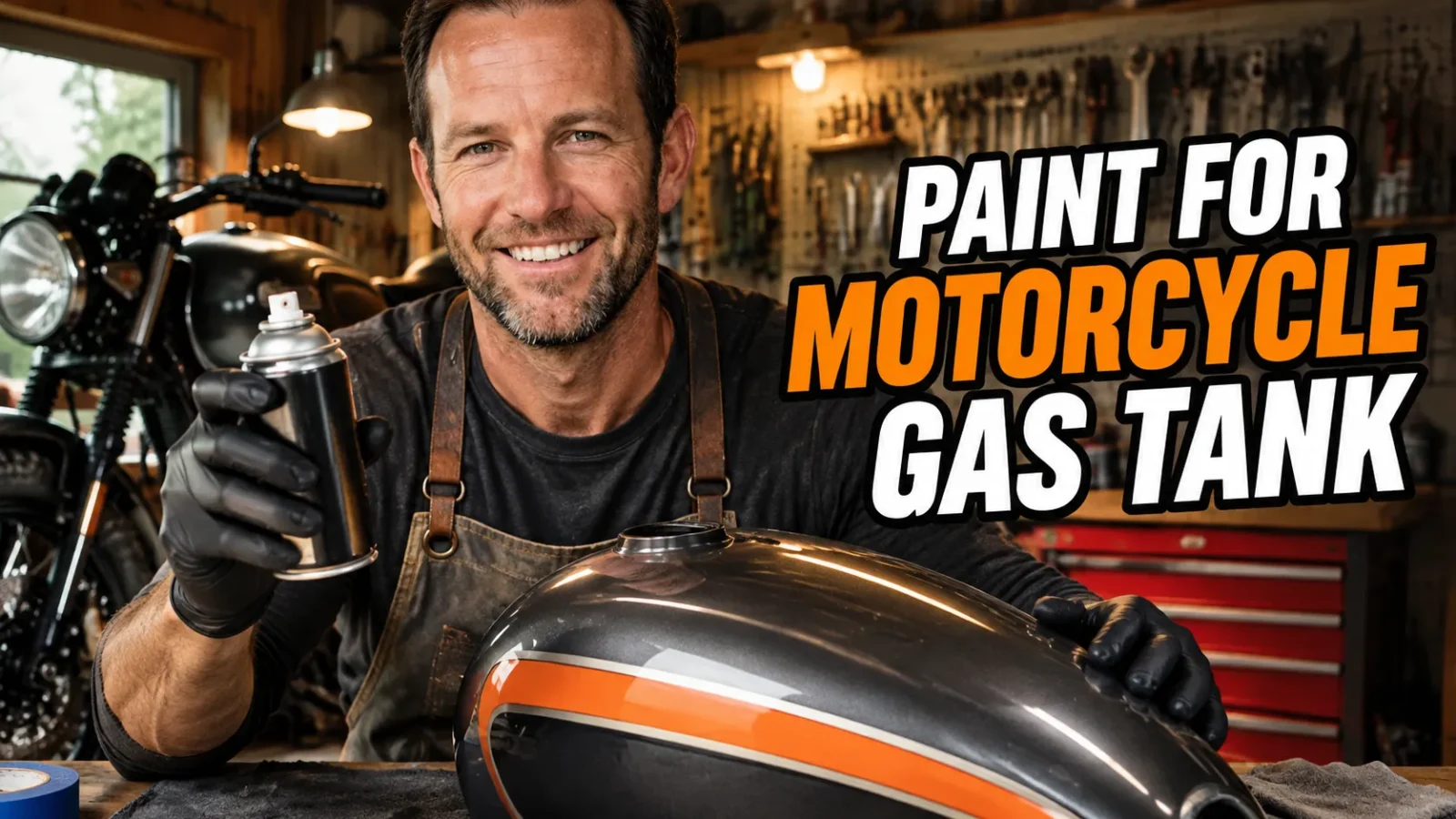
I’ve resprayed more motorcycle gas tanks than I care to admit. Some jobs came out glassy and lasted years. Others bubbled up the first time I dribbled fuel at the pump. The difference almost always came down to the paint system I chose, not my spraying skill.
A gas tank is one of the harshest places on a bike for paint to live. It flexes, it bakes in the sun, and it constantly gets splashed with a solvent that eats right through cheap finishes. So picking the right product matters more here than almost anywhere else on the bike.
Before I ever reach for a spray gun, I make sure the tank is actually ready. If yours is sitting with old fuel varnish or rust inside, start with my guide on how to clean a motorcycle gas tank before you touch the outside. And while you’re prepping, it’s worth knowing what is the average size of a motorcycle gas tank so you can budget the right amount of product.
- SprayMax 2K is my top overall pick because it delivers a true catalyzed, fuel-resistant finish from a rattle can.
- For OEM factory color matching, ColorRite is the brand I trust most.
- On a tight budget, Rust-Oleum and Eastwood give solid results if you top them with a real 2K clear.
- Any color coat is only as good as its clear coat — never skip a catalyzed clear on a gas tank.
1. SprayMax 2K Clear Coat — My Overall Pick for a Bulletproof Finish
If I had to recommend just one product to a rider who wants a professional-level finish without owning a compressor, it’s SprayMax 2K. This is an activated, two-component clear in an aerosol can, and the difference versus a standard rattle-can clear is night and day.
The can has a button on the bottom that you press to break the internal hardener vial and mix the two parts. Once activated, you have roughly 48 hours to use it before it cures in the can. That’s a real commitment, so plan your spray session before you pop it.
Why it works so well on tanks
Once cured, SprayMax 2K Clear Coat forms a chemically cross-linked film that resists gasoline, solvents, and UV far better than any 1K clear. In my experience it lays down glossy and self-levels nicely, which hides minor orange peel.
It needs proper ventilation and a real respirator, because 2K products contain isocyanates. I never spray it in a closed garage. But the durability payoff on a high-wear part like a fuel tank is absolutely worth the precautions.
2. ColorRite OEM Color Match Aerosol — Best for Factory-Correct Repaints
When I want a touch-up or full respray that matches the factory color exactly, ColorRite is my go-to. They mix paint by manufacturer, model, and year, so I can order the exact shade for something like a Honda or Yamaha tank and get a dead-on match.
The system comes as a color coat plus a separate clear. ColorRite’s color coats are available in aerosol cans and touch-up pens, which is handy because I usually only need to fix a section rather than the whole tank. For a small ding on the top of the tank, a pen and a bit of clear is often all it takes.
Real-world notes
I’ve found the color coverage is excellent, but you still want a proper primer underneath if you’ve sanded down to bare metal or filler. ColorRite also sells the matching clear, and I strongly recommend using their clear over their color rather than mixing brands.
One thing I’ll say honestly: it’s not the cheapest route per ounce, but for a factory-correct finish on a bike I care about, it’s worth every dollar.
3. Eastwood 2K AeroSpray Ceramic Clear — Best Heat and Chemical Resistance
Eastwood’s 2K AeroSpray line is another activated aerosol system, and the ceramic clear version is what I reach for when I want extra heat and chemical protection. Gas tanks can get hot sitting in the sun or above a hot engine, and this clear handles that better than a basic urethane.
Like SprayMax, it’s a true 2K product, so you activate it, use it within its window, and treat it with the same respirator precautions. The ceramic additive gives it a harder, slicker surface that fuel and road grime bead off of more readily.
When I pick this over others
If the tank lives on a bike that sits in the sun a lot, or if I’m doing a full custom job where I want maximum gloss and scratch resistance, I’ll choose the Eastwood ceramic clear. It’s slightly more demanding to spray evenly, so I keep my passes light and consistent.
4. Dupli-Color Perfect Match — Best Affordable Factory Color in a Can
Dupli-Color Perfect Match is the budget-friendly option I recommend to riders doing a quick, honest respray on a commuter or beater bike. It’s an acrylic lacquer that comes in a huge range of factory colors, and it’s stocked at most auto parts stores.
The trade-off is real. It’s a 1K product, so by itself it does not stand up to gasoline the way a 2K clear does. But if I top it with a good catalyzed clear, it performs surprisingly well for the money.
How I use it
I lay down a few thin coats, let it flash properly, and then bury it under SprayMax 2K. Done that way, a Dupli-Color color coat can look nearly factory and last a long time. Used bare, it’ll fail the first time you spill fuel.
If there’s rust to deal with inside the tank first, don’t skip that step — my piece on the best product for cleaning a rusty motorcycle gas tank covers the internal cleanup side.
5. Rust-Oleum Automotive Enamel — Best Budget DIY Option
Rust-Oleum Automotive Enamel is what I’d call the true budget starter. It’s cheap, easy to find, and forgiving for a first-time painter. It’s an alkyd enamel that cures to a reasonably tough film given enough time.
That said, this is not the paint I’d trust on a show bike or a tank that sees regular fuel spills without a strong clear on top. Enamel cures slowly and can stay soft for weeks, so I give it plenty of time before mounting it back on the bike.
My honest take
For a rat bike, a project you’re learning on, or a tank you just want to look decent for a season, Rust-Oleum does the job. Pair it with a UV-resistant clear, and it’ll hold up better than you’d expect for the price.
Before painting, I always verify the tank is fuel-free and clean inside. Knowing can i put seafoam in my motorcycle gas tank matters here too, since I sometimes run a cleaner through before sealing things up.
6. U-POL 2K Urethane Clear — Best Pro-Grade Spray Gun Clear
If you own a compressor and a gun, U-POL’s 2K urethane clear is a fantastic professional-level choice. It mixes to a high-solids film that’s tough, UV-stable, and genuinely resistant to gasoline once fully cured.
This is the kind of product a body shop would use, and it shows. It flows out flat, builds gloss fast, and takes a polish beautifully if you want to wet-sand and buff for a mirror finish.
Who this is for
This isn’t the pick for someone spraying in an apartment. It needs a compressor, a proper gun, a clean booth or a well-ventilated space, and full 2K safety gear. But for a rider doing a full custom respray who wants the best possible result, it’s hard to beat.
7. POR-15 Tank Sealer and Top Coat Combo — Best for Rusty, Aging Tanks
Sometimes the outside isn’t the whole story, and the tank needs internal help too. POR-15 is famous for its rust-preventive coatings, and their fuel tank sealer kits are something I’ve used on older bikes where the inside is compromised.
For the exterior, POR-15 also offers top coats you can apply over their rust-preventive base. On a pitted, aged tank, this layered approach gives both corrosion protection inside and a durable coating outside.
My workflow on old tanks
When I’m dealing with a genuinely rusty tank, I clean it first — sometimes with an acidic method like the one in my guide on how to clean a motorcycle gas tank with vinegar, then seal it with a kit like POR-15’s before I even think about the paint.
It’s the slowest option on this list, but for an old bike with a rough tank, it’s the most thorough. You fix the inside and the outside in one long weekend.
How I Choose Between These Paints
My rule of thumb is simple: match the product to the ambition. If I want a show-quality finish and I have the gear, I go 2K gun clear or a pro system. If I want convenience, an activated aerosol 2K clear like SprayMax is the sweet spot.
If I need factory color accuracy, ColorRite or Dupli-Color gets the call. If it’s a cheap learner project, Rust-Oleum or Dupli-Color with a good clear is plenty.
And no matter what I pick, I never skip the clear coat. The color coat is cosmetic; the clear is what actually survives the gas pump, the sun, and the years.
One last thing I always remind people: the paint is only part of the system. The prep, the primer, the cleanliness, and the internal condition of the tank all matter just as much. Sort out the inside first, then make the outside shine.
Frequently Asked Questions
Can I use regular spray paint on a motorcycle gas tank?
You can, but it will not survive gasoline spills for long. Standard enamel and lacquer rattle cans soften and lift when fuel sits on them. If you want a durable finish, use 2K products or a dedicated automotive paint system with a proper clear coat.
Do I need a clear coat over gas tank paint?
Yes, always. The color coat alone offers almost no chemical resistance. A 2K urethane or catalyzed clear coat is what actually protects the paint from gasoline, UV, and scratching.
How much paint does it take to respray a motorcycle gas tank?
For a typical 3 to 5 gallon tank, you generally need about one can of primer, one to two cans of color, and one to two cans of clear. A pro-grade 2K setup usually needs a few ounces of each component mixed to spray.
Is a 2K clear coat safe to spray at home?
2K clears contain isocyanates, which are hazardous. You must use a proper respirator with organic vapor cartridges, full skin coverage, and excellent ventilation. If you cannot meet those conditions, a high-quality 1K clear or pro shop job is the safer route.

Related Articles
5 Best Foam Cleaners for Motorcycles: My Top Picks for Ultimate Shine
I tested the best foam cleaners for motorcycles to find the top 5 picks for ultimate shine. See which foam…
Jake Miller
10 min read
7 Best Looking Silver Paints for a Motorcycle: My Honest Garage-Tested Picks
I've sprayed, sanded, and stared at more silver motorcycle paints than I can count. Here are 7 real products that…
Jake Miller
9 min read
7 Best Dry Cleaners for Motorcycle Gear: Where I Actually Trust My Leathers
I tested real dry cleaners that handle motorcycle leathers, jackets and helmets. Here are my 7 picks, what each does…
Jake Miller
7 min read