
10 Best Chain Oils for Motorcycles: Field-Tested Picks That Actually Stay Put
 Jake Miller
12 min read
Jake Miller
12 min read
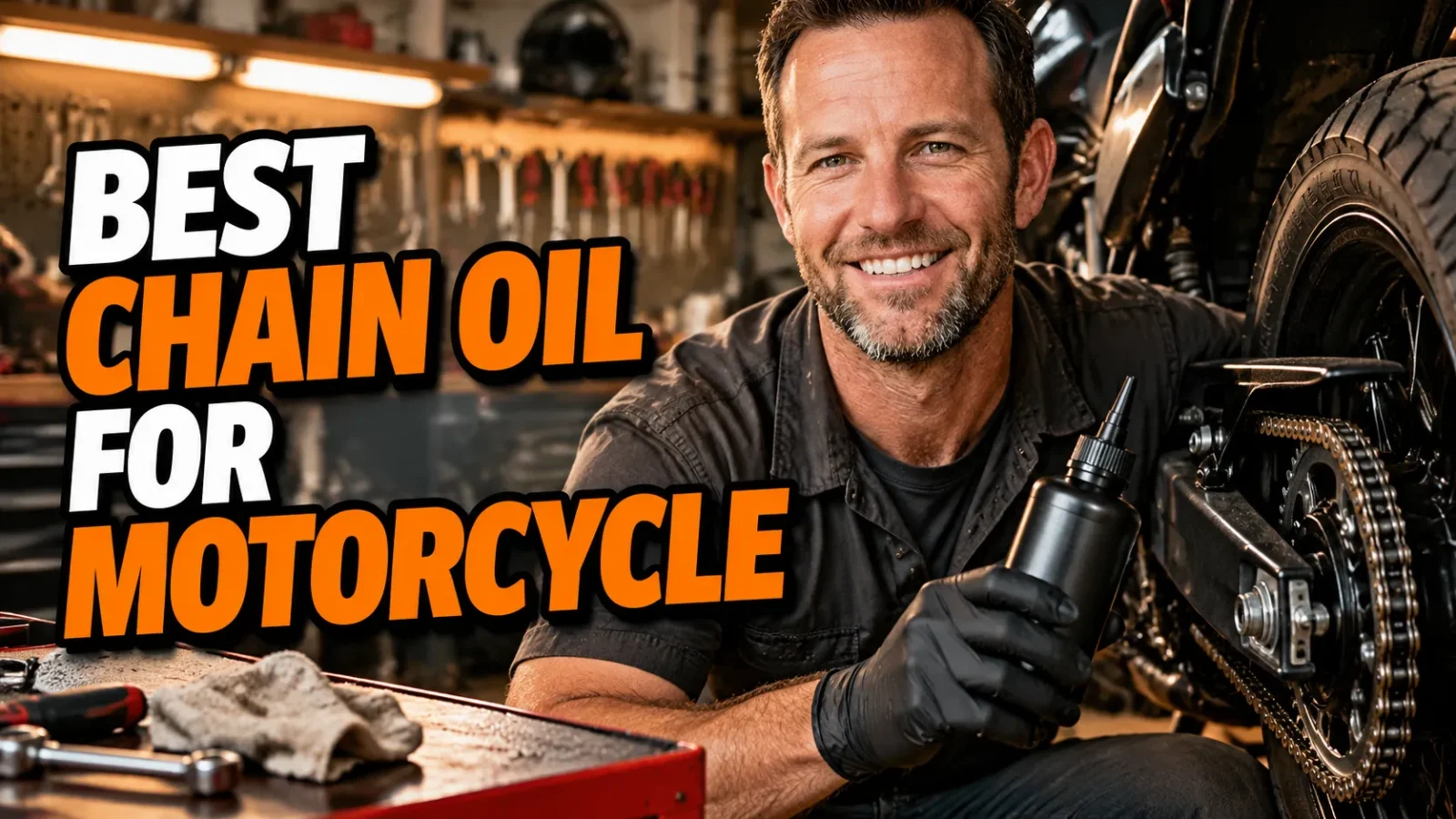
I have a confession to make: I own more cans of chain lube than I own pairs of riding gloves. Over roughly 60,000 miles of commuting, weekend touring and the occasional track day, I have watched cheap sprays fling themselves across a perfectly clean rear wheel, and I have watched a good wax keep a chain quiet and smooth for a thousand miles.
That is exactly why I am so picky about the best chain oil for motorcycle use. It is never about the flashiest label or the loudest marketing claim. It is about matching the lube to your chain type, your climate and how often you are honestly willing to get your hands dirty.
Chain lube is also the cheapest drivetrain maintenance you will ever do. A neglected chain eats sprockets, and a neglected gearbox is a whole different financial universe. Ask anyone who has chased down harley davidson transmission problems how quickly drivetrain neglect adds up.
- My overall pick is Motul Chain Paste for its zero-fling, long-lasting coverage on O-ring chains.
- For a classic aerosol, Maxima Chain Wax and Bel-Ray Super Clean are the two I trust most on the road.
- Riding in dust? Go dry with DuPont Chain-Saver. Riding in rain? Go thicker with Muc-Off All-Weather.
- Whatever you choose, apply it to a warm chain after a ride, and re-lube every 300 to 500 miles.
What I Look For in a Motorcycle Chain Oil
Before I get to the list, here is the filter I run every product through. First, seal compatibility. If it is not explicitly labelled O-ring, X-ring and Z-ring safe, it does not go anywhere near my bikes.
Second, fling resistance. I hate scrubbing lube off a rear rim almost as much as I hate buying new chains. A product that stays on the chain instead of on my wheel is worth real money to me.
Third, penetration. The lube has to actually get inside the rollers and pins, not just sit on the outer plates looking shiny. And fourth, longevity, because I would rather lube once every 500 miles than every 150.
1. Motul Chain Paste — Best Overall
If someone handed me one product and told me I could never use anything else again, this is what I would take. Motul Chain Paste comes in a 150ml tube with a built-in brush applicator, and it goes on as a thick, white grease rather than a thin spray.
Because it is a paste, it does not fling. At all. I have done 600-mile days with this stuff and my rear wheel stayed clean the whole time. It also clings to the rollers through rain in a way that most aerosols simply cannot match.
Where it shines
Touring, long-distance commuting and anyone who hates re-lubing on the road. It is O-ring, X-ring and Z-ring safe, and a single tube lasts me most of a season. The brush applicator also forces you to actually work the product into the rollers instead of spraying vaguely in the chain’s direction.
The catch
It is messier than an aerosol. You need gloves, and you need to be careful not to over-apply or you will end up with a sticky chain that collects grit. But if you can live with five extra minutes of effort, Motul Chain Paste is genuinely hard to beat.
2. Maxima Chain Wax — Best for O-Ring and X-Ring Chains
Maxima Chain Wax has been a staple in my garage for years. It is a clear, wax-based aerosol that dries to a thin waxy film instead of staying wet and tacky, which means dust and road grit do not stick to it the way they do with oily sprays.
I use Maxima Chain Wax most of the year on my street bikes. It penetrates well when you spray it on a warm chain, it is explicitly O-ring and X-ring safe, and it flings far less than a conventional oil-based spray. A can typically runs me somewhere between ten and fifteen dollars, which is excellent value.
The one habit I have learned is to apply it after a ride rather than before one. The chain is warm, the wax flashes off its carrier solvent, and by morning you have a clean, dry-feeling chain that is fully protected.
3. Motorex Chainlube Racing — Best for Track Days and Sport Bikes
Motorex is a Swiss brand with deep roots in motorsport, and Chainlube Racing is the product I reach for when I know I will be holding high speeds for long stretches. It is a white spray designed for the kind of chain speeds you only see on a track or a fast back road.
What I notice most is the fling resistance at speed. On a naked bike at highway pace, thinner lubes start migrating outward within an hour. Motorex Chainlube Racing stays put, and my chain stays quiet on downshifts.
It is not the cheapest option on this list, and it does leave a visible white residue if you over-apply. But for a sport bike that sees hard use, I think the extra cost is easy to justify.
4. Bel-Ray Super Clean Chain Lube — Best Low-Fling Spray
Bel-Ray Super Clean Chain Lube is the aerosol I recommend to riders who are tired of cleaning their wheels. The name is not just marketing. It goes on clear, penetrates nicely into the rollers, and dries down to a film that stays where you put it.
It is O-ring safe, works well on both street and dual-sport chains, and it is priced reasonably at around ten dollars a can. I keep a can in my travel kit because it works in a wide range of temperatures and does not turn into a sticky mess in the heat.
If I had to describe Bel-Ray Super Clean in one sentence, it would be this: it does 90 percent of what the premium racing lubes do, at a price that makes it easy to re-apply generously.
5. Muc-Off All-Weather Chain Lube — Best All-Season Road Lube
Muc-Off All-Weather Chain Lube is my pick for riders who deal with genuinely mixed conditions. It is a bio-based, PTFE-free formula that Muc-Off designed to hold up in wet weather without turning into a gritty paste when things dry out.
I have ridden through a full British-style winter with this on my chain, and it held up better than I expected. It is O-ring and X-ring safe, and the 400ml can lasts a decent while if you are not wasteful with it.
Muc-Off also makes a Dry Lube for dusty summer conditions and a Ceramic Lube for road riders chasing lower friction. The All-Weather version is the one I would buy first, because it covers the most ground for the most riders.
6. DuPont Chain-Saver with Teflon — Best for Dry and Dusty Conditions
DuPont Chain-Saver is the odd one out on this list, and that is exactly why I keep it around. It is a dry-film lubricant rather than a wet oil or wax, so it goes on, flashes off and leaves a slick, non-tacky coating that dust simply cannot cling to.
For adventure riders, dual-sport bikes and anyone riding in sandy or dusty terrain, that is a huge deal. A wet lube in those conditions turns into grinding paste within fifty miles. DuPont Chain-Saver stays clean and keeps the rollers slick.
The trade-off is longevity. It needs re-applying more often than a heavy wax, especially in the rain. But as a dry-condition product for a dusty trip, I have not found anything I like better.
7. PJ1 Blue Label Chain Lube — Best Budget Pick
PJ1 Blue Label has been around for decades, and there is a reason it is still on shelves. It is a straightforward, effective chain lube that costs around eight to ten dollars a can and does a perfectly respectable job on a daily-ridden commuter.
It penetrates well, it is O-ring safe, and it handles normal road use without complaint. PJ1 also makes a Black Label version that is heavier and better suited to off-road abuse, but Blue Label is the one I would hand a new rider.
My only real criticism is that it will fling if you go heavy with it. Spray it on a warm chain, give it twenty minutes, then wipe the outer plates with a rag. Do that and PJ1 Blue Label is genuinely hard to fault for the money.
8. WD-40 Specialist Motorbike Chain Lube — Most Convenient for Quick Top-Ups
I want to be very clear about one thing first: standard WD-40 is not a chain lubricant, and I would never use it as one. But the Specialist Motorbike line is a completely different animal, and the Chain Lube in that range is a legitimately good product.
It is what I keep in my tank bag for mid-tour top-ups. It sprays cleanly, penetrates quickly and does not require a long cure time, which matters when you are lubing a chain in a hotel car park at night.
WD-40 Specialist Motorbike Chain Lube will not outlast a heavy paste or a wax on a long wet ride. But as a convenient, always-with-me top-up product, it has earned its spot in my kit.
9. Silkolene Pro Chain Lube — Best for Big Bikes and Heavy Loads
Silkolene is a Fuchs brand with a serious motorsport pedigree, and Pro Chain Lube is the heaviest, most tenacious spray I keep on the shelf. It is a white, high-viscosity formula built for chains that are working hard under real load.
That makes it my go-to for big touring bikes, loaded-up adventure bikes and anything with serious torque going through the rear wheel. When you are two-up with full panniers on a hot day, a thin lube just disappears. Silkolene Pro Chain Lube does not.
It is O-ring and X-ring safe, and the fling resistance is genuinely impressive for a spray. It is not cheap, and it does leave white residue on the chain, but on a heavy bike I consider it money well spent.
10. Castrol Chain Lube Racing — Best for High-Mileage Commuters
Castrol Chain Lube Racing is the one I buy in bulk, because it is widely available, sensibly priced and consistently good. It penetrates well, it is safe on sealed chains, and it holds up to the grind of daily commuting better than most budget sprays.
I have run this through an entire winter of short, wet commutes where the chain never really gets warm, and it still kept the rollers protected. Re-apply every 300 to 400 miles and you will get serious life out of a chain.
The caveat is the same as with any thin spray: apply too much and it will fling. Two light passes, a short cure time and a wipe of the outer plates is all Castrol Chain Lube Racing needs.
Chain Oil vs Chain Wax vs Chain Paste: Which One Do You Actually Need?
Aerosol sprays and waxes
This is what most riders should buy. Sprays are fast, they penetrate well and they are easy to apply evenly. Wax-based sprays dry to a film that attracts less grit, which is why I default to them for street riding.
Pastes and gels
Pastes like Motul Chain Paste are the touring and wet-weather champions. They last longer, fling less and protect better in the rain. The trade-off is application time and a bit of mess.
Traditional oils and automatic oilers
Some riders still use plain 80W-90 gear oil, and if you own an automatic chain oiler system, you will be buying a dedicated oiler fluid rather than a spray. Just be careful about what you pour into a shared sump. If you want to understand why oil formulation matters so much on those bikes, it helps to know how does a wet clutch work and why the wrong additive package can ruin your clutch feel.
My Chain Care Routine (and Why the Rest of Your Drivetrain Matters)
The lube is only half the story. Here is the routine I actually follow, and it has kept chains on my bikes well past their expected service life.
Clean first, lube second
Lubing a dirty chain just pushes grit into the rollers. I wipe the chain down with a dedicated cleaner and a stiff brush, let it dry, then apply fresh lube.
Apply to a warm chain
Right after a ride is perfect. The chain is warm, the lube flows into the rollers, and the carrier solvent flashes off while you are putting your gear away.
Don’t neglect the rest of the drivetrain
A well-lubed chain will still feel awful if everything around it is out of spec. Check chain slack, inspect the sprockets for hooked teeth and keep an eye on the rest of your drivetrain. That goes double on a cruiser, where staying on top of things like clutch adjustment on harley davidson keeps the whole system shifting cleanly and quietly.
Replace before it fails
Measure your chain stretch regularly. A worn chain destroys sprockets fast, and sprockets are far more expensive than lube. Ten minutes of maintenance every few hundred miles is the best return on investment in motorcycling.
If I had to sum up my advice in one line, it would be this: buy Motul Chain Paste for touring, Maxima Chain Wax for everyday street riding, and re-apply whichever you choose more often than you think you need to. Your chain, your sprockets and your rear wheel will all thank you.
Frequently Asked Questions
Can I just use regular motor oil on my motorcycle chain?
You can in a pinch, but a dedicated chain lube is far better. Motor oil flings off fast and attracts grit, which chews through sprockets. On bikes with a shared sump, keep that oil in the engine where it belongs and use a proper chain product instead.
How often should I oil my motorcycle chain?
I re-lube every 300 to 500 miles, and always right after a wet ride. A wipe down plus a fresh coat takes five minutes and can easily double the life of your chain and sprockets.
Is chain wax better than chain oil?
Wax sprays dry to a film that flings less and stays cleaner, which I prefer for street riding. Oils and pastes penetrate deeper and last longer in rain, so I switch to those for touring and wet weather.
Will chain lube damage my O-ring chain?
No, as long as you pick a product labelled O-ring and X-ring safe. Avoid harsh solvents, and never blast the chain with a pressure washer, because that forces water past the seals and kills the chain from the inside.

Related Articles

Motorcycle Chain Keeps Getting Loose? Why It Happens and How I Finally Fixed It
Motorcycle chain keeps getting loose no matter how often you adjust it? I break down the causes, from worn sprockets…
Jake Miller
10 min read

Loose Motorcycle Chain Symptoms: 9 Warning Signs I Learned the Hard Way
Loose motorcycle chain? I walk through the symptoms I've felt and heard, how to measure slack in 5 minutes, and…
Jake Miller
11 min read

Motorcycle Clutch Problems Symptoms: 9 Warning Signs I Wish I’d Caught Sooner
Slipping, dragging, or a mushy lever? I break down the real motorcycle clutch problems symptoms I've found on my own…
Jake Miller
10 min read