
8 Best Motorcycle Chain Cleaners I Actually Keep on My Shelf
 Jake Miller
10 min read
Jake Miller
10 min read
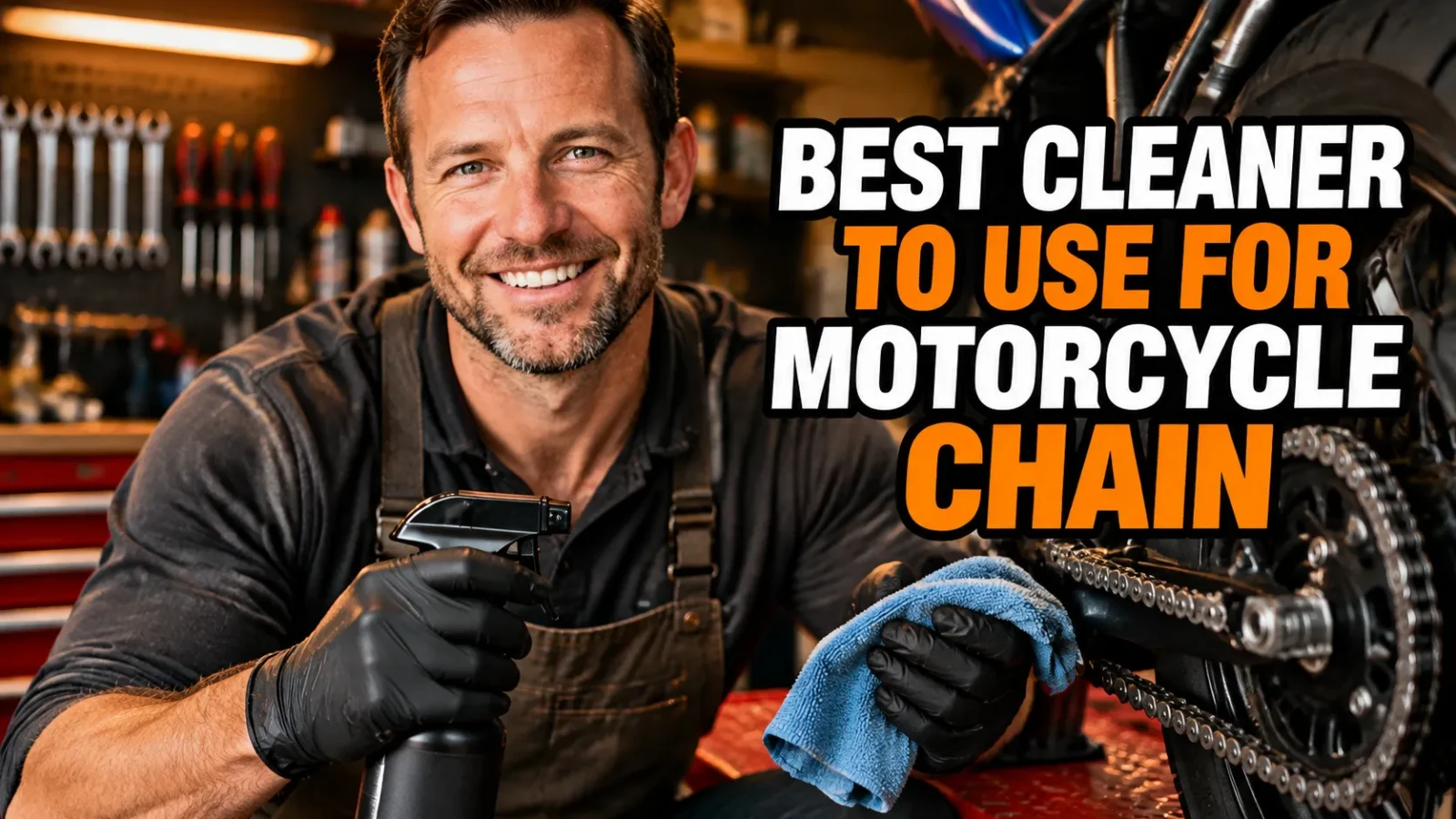
I have killed exactly one chain in fifteen years of riding, and it was not the wheelies or the missed lube intervals that did it. It was a cheap, aggressive solvent I bought because it was on sale. That stuff stripped the factory grease out from under the O-rings, the seals dried out and cracked, and about 1,500 miles later the chain had tight spots I could feel through the footpegs.
Since then I have been borderline obsessive about what I spray on my drivetrain. I have run everything from $30 dealer aerosols to a jug of kerosene sitting on my garage bench, on bikes ranging from a 125 commuter to a litre bike with a 520 conversion. Some of them were brilliant. A couple were a waste of money.
So here is the honest list: the chain cleaners I have actually bought with my own money, what each one is genuinely good at, and where each one annoys me.
- My overall pick is Motul Chain Clean — fast, seal-safe and easy to find anywhere.
- Muc-Off Motorcycle Chain Cleaner is the one I grab when I want a biodegradable, water-rinsable formula.
- WD-40 Specialist Motorbike Chain Cleaner is the best cheap option that is still safe for sealed chains.
- Never put chlorinated brake cleaner near an O-ring, X-ring or Z-ring chain — it destroys the seals.
- Clean first, wipe it down, then lube while the chain is still warm. That order matters more than the brand.
1. Motul Chain Clean — My Overall Pick for Almost Every Bike
If you forced me to keep one can on the shelf and throw the rest away, this is the one. Motul Chain Clean is a 400 ml aerosol that Motul explicitly rates for standard, O-ring, X-ring and Z-ring chains, which is exactly the reassurance I want before I point a solvent at a $150 chain.
What I love is how fast it works. I spray it into a three-sided grunge brush rather than blasting the chain directly, work the brush around the rollers, and the old chain wax and road grit lift off in one pass. It flashes off quickly and leaves no oily film, so my lube actually bonds to the metal instead of sliding off a layer of residue.
Where it earns its keep
It pairs beautifully with the rest of Motul’s chain line — Chain Paste for touring, Chain Lube Road for everyday use. Price is usually around $12 to $15 for the 400 ml can, which is mid-pack, and I have never had trouble finding it at a dealer or online.
The catch
It smells like a chemistry lab, so I always clean outside or with the garage door open. And overspray will leave a mark on paint and brake discs if you let it sit, so I wipe immediately. Neither of those is a dealbreaker for me.
2. Muc-Off Motorcycle Chain Cleaner — Best Biodegradable Formula
Muc-Off’s chain cleaner is the odd one out on this list because it is water-based and biodegradable rather than a straight solvent. That changes the workflow: you spray it on, agitate with a brush, then rinse the chain with water before you lube it.
I did not love that at first, because it adds a step. But on my adventure bike, which gets used on muddy trails and then parked in a shared garage, I genuinely appreciate not filling the air with solvent fumes. It is also the cleaner I am happiest letting a beginner use, because it is very hard to do damage with it.
It is safe on O-ring, X-ring and Z-ring chains, and a 400 ml aerosol usually runs $15 to $20. Muc-Off also sells a larger Bio Drivetrain Cleaner if you want to mix your own spray bottle and stretch the value.
3. WD-40 Specialist Motorbike Chain Cleaner — Best Value Pick
First, the thing that trips everyone up: this is not the blue-and-yellow WD-40 Multi-Use Product your dad keeps in the shed. The Specialist Motorbike line is a separate, properly formulated range, and the chain cleaner in that range is genuinely good.
It is a fast-evaporating, O-ring safe spray that leaves no residue, and at roughly $10 for a 400 ml can it is the cheapest product here that I would still trust on a sealed chain. I can also buy it at a hardware store on a Sunday afternoon, which matters more than I would like to admit.
One warning from painful experience
Be careful with overspray around the front sprocket and countershaft area. I once hosed that region down too enthusiastically, pushed grit past the output shaft seal, and spent two weeks convinced I had a gearbox problem. If your bike starts making noises you cannot place, do not immediately assume the worst — but do read up on harley davidson transmission problems so you know what an actual transmission fault feels like versus a bit of drivetrain grit.
4. Motorex Chain Clean 611 — Best for Caked-On Grime
Swiss-made and widely used in dealer workshops, Chain Clean 611 is the heavy artillery. This is the can I reach for when a bike has sat for a winter with a thick crust of dried chain wax, mud and chain lube baked onto the links.
A 500 ml aerosol runs about $18 to $22, which is at the top of this list, but you use less of it than you would expect because it dissolves gunk so quickly. Two passes with a brush and a neglected chain comes back to bare metal.
Respect it
It is aggressive. I never let it soak, I never leave it on rubber hoses or paint, and I always rinse or wipe the area afterwards. Treated with that respect, it is superb. Treated casually, it will dull a swingarm finish.
5. Maxima Clean Up — Best Concentrate for Multi-Bike Garages
Maxima Clean Up is a water-based, biodegradable degreaser rather than a chain-specific aerosol, and that is exactly why I like it. I dilute it, pour it into a spray bottle, and use it on chains, sprockets, air filters and the underside of my fenders.
A 32 oz bottle goes a very long way once diluted, so if you maintain three or four bikes the cost per clean is the lowest on this list by a mile. It is not as quick as an aerosol — you need to agitate, rinse and let the chain dry before lubing — but on a Saturday morning with the bike already on the stand, that is fine.
Why I am careful near the countershaft
Because it is a liquid you are spraying rather than a fast-flashing aerosol, it can run. On a wet-clutch bike, solvent and water migrating toward the clutch release area is not something you want. If your clutch suddenly feels grabby or vague after a deep clean, the plates are usually the culprit — understanding how does a wet clutch work explains why a little contamination changes feel so dramatically.
6. Simple Green All-Purpose Cleaner — Best Budget Dilutable
Yes, the green stuff from the supermarket. Diluted properly, Simple Green is a legitimately effective chain degreaser and a 32 oz concentrate costs about $10 and makes gallons of working solution. For a rider on a tight budget, this is the value play.
I use it diluted, agitate with a stiff brush, then rinse thoroughly and dry the chain before lubing. I also wipe the sprocket teeth and the swingarm at the same time, because the whole area is already wet.
Do not soak your chain in it
Simple Green’s own guidance is to avoid prolonged soaking of O-rings and certain rubbers, so I never leave a chain sitting in a bucket of it. Spray, brush, rinse, dry, lube. Used that way I have had no seal issues at all.
It is also a good moment to look at the rest of the drivetrain while you are down there. On my cruiser I use chain-cleaning day as a reminder to check clutch adjustment on harley davidson, since cable stretch creeps up slowly and you only notice it when the lever bite point has moved a mile.
7. Ipone Chain Cleaner — Best Gentle Formula for Sealed Chains
Ipone is a French brand with a full chain-care range, and their chain cleaner is the product I hand to friends who are nervous about damaging a sealed chain. It is a milder solvent than Motorex, designed to be used as part of a system with Ipone Chain Lube or Chain Wax.
A large aerosol usually runs around €12 to €15, and because the formula is gentler you can be a bit more relaxed about overspray on rubber and plastic. It still cuts through normal road grime and old lube without drama.
The trade-off is obvious: it takes longer on a genuinely filthy chain. For a well-maintained bike cleaned every few hundred miles, though, it is more than enough, and it is the can I pack for a multi-day trip.
8. CRC Brakleen Non-Chlorinated — Best for Non-O-Ring Chains Only
I am including this one because it is genuinely useful if you understand the limits. CRC Brakleen non-chlorinated brake parts cleaner flashes off instantly, leaves absolutely zero residue and costs about $6 a can. On my non-O-ring 520 race chain it is unbeatable — spray, wipe, done.
On any sealed chain, though, it is a chain-killer. It will dry out and shrink O-ring and X-ring seals, strip the grease out of sealed bearings, and attack paint and some plastics. Never use the chlorinated version either, which is even harsher.
How I use it safely
Only on plain non-O-ring chains, only with the rear wheel well away from painted bodywork, and only when I can immediately re-lube afterwards. It is also excellent for cleaning sprockets off the bike in a parts washer. Used with that discipline, it is a bargain.
How I Clean a Chain in About Ten Minutes
The product matters less than the process. Here is the routine I have settled into after years of trial and error.
First, get the rear wheel off the ground on a paddock stand and spin it slowly to find the tight spot. Second, spray your cleaner onto a three-sided grunge brush rather than directly onto the chain — you waste far less product and get less overspray on the tyre and rim.
Third, work the brush around the rollers, then rotate the wheel and repeat along the whole length. Fourth, wipe the chain down with a microfiber cloth. Fifth, and this is the step everyone skips, go for a two-minute ride to warm the chain, then apply your lube and wipe off the excess.
If you want the old-school route, kerosene still works beautifully and is seal-safe. It is just messier and you need a catch pan underneath.
Mistakes That Cost Me Money
Do not clean a chain with the engine running and the bike in gear. It is a shortcut that has taken fingers, and no time saving is worth that.
Do not soak a sealed chain overnight in anything. Do not clean and then skip the lube. And do not forget the sprockets — a spotless chain running on gritty sprocket teeth wears out just as fast.
Which One Should You Buy?
If you want one answer: Motul Chain Clean for everyday use on a sealed chain, backed up by Motorex Chain Clean 611 for the once-a-year deep clean. If eco-credentials matter to you, go Muc-Off. If budget is the priority, WD-40 Specialist Motorbike Chain Cleaner is a genuinely good $10 can.
Whatever you pick, buy a proper three-sided chain brush, keep a dedicated microfiber for the drivetrain, and lube after every clean. That combination has kept my chains alive far longer than any single product ever did.
Frequently Asked Questions
Can I just use regular WD-40 to clean my motorcycle chain?
You can, and plenty of riders do, but the standard blue-and-yellow can is a water displacer rather than a dedicated degreaser. WD-40 Specialist Motorbike Chain Cleaner is the product actually formulated for the job and it flashes off far cleaner.
Will a strong chain cleaner damage O-ring or X-ring chains?
Seal-safe formulas like Motul Chain Clean and Muc-Off Motorcycle Chain Cleaner are designed for O-ring, X-ring and Z-ring chains. What kills seals is chlorinated brake cleaner and leaving a chain to soak overnight in a harsh solvent.
How often should I clean my chain?
I clean every 500 to 800 km on the road, and after every muddy or wet ride off road. The order matters: clean first, wipe it down, then re-lube while the chain is still warm from a short ride.
Is kerosene still a good motorcycle chain cleaner?
Yes. Kerosene is cheap, seal-safe and works brilliantly, but it is messy and you need a brush plus a catch pan. Aerosol cleaners are simply faster for most riders.

Related Articles

Motorcycle Chain Keeps Getting Loose? Why It Happens and How I Finally Fixed It
Motorcycle chain keeps getting loose no matter how often you adjust it? I break down the causes, from worn sprockets…
Jake Miller
10 min read

Loose Motorcycle Chain Symptoms: 9 Warning Signs I Learned the Hard Way
Loose motorcycle chain? I walk through the symptoms I've felt and heard, how to measure slack in 5 minutes, and…
Jake Miller
11 min read

Motorcycle Clutch Problems Symptoms: 9 Warning Signs I Wish I’d Caught Sooner
Slipping, dragging, or a mushy lever? I break down the real motorcycle clutch problems symptoms I've found on my own…
Jake Miller
10 min read