
9 Best Motorcycle Clutch Kits for Harleys, Sportbikes and Dirt Bikes
 Jake Miller
9 min read
Jake Miller
9 min read
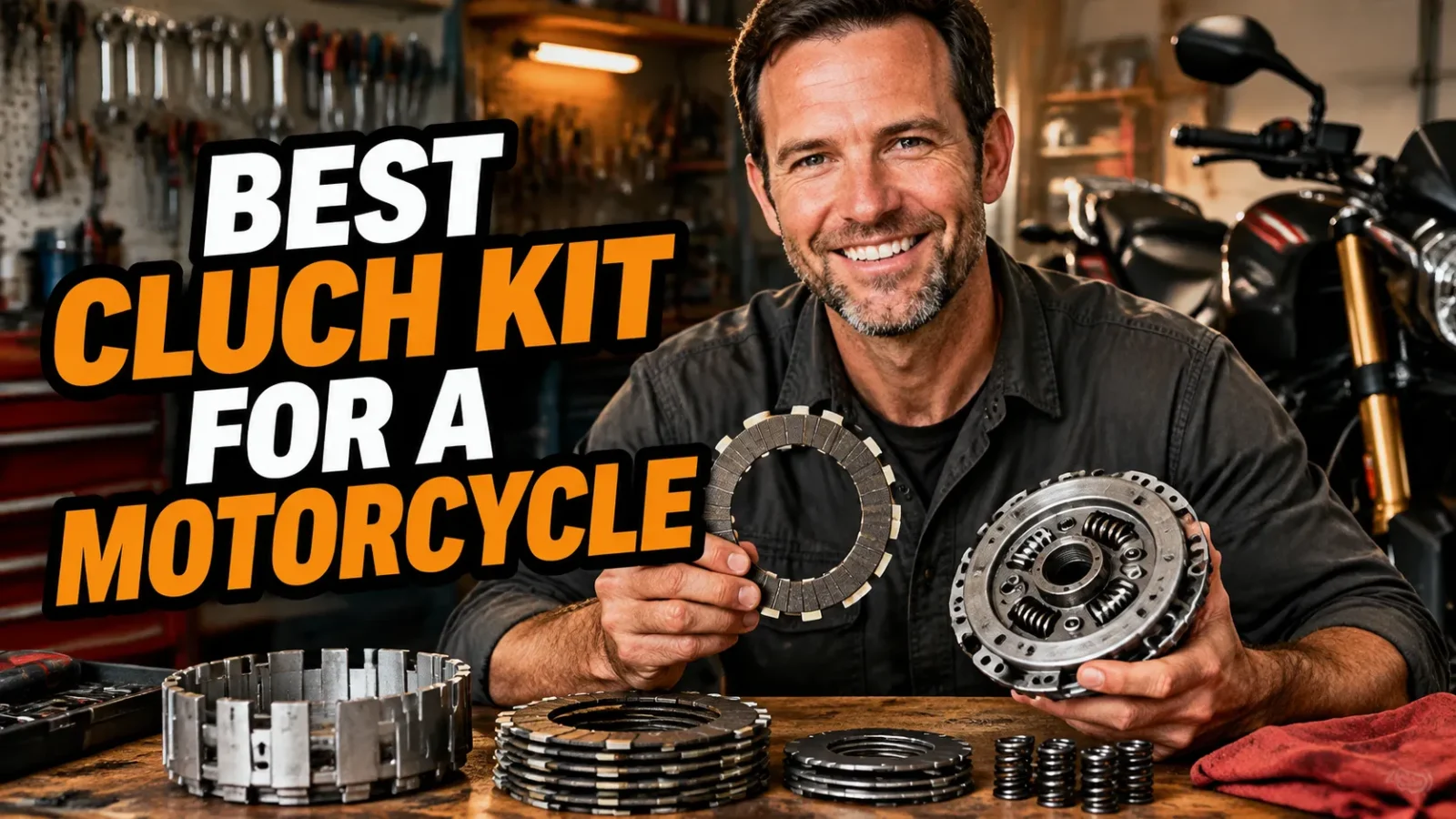
I’ve fried more clutch packs than I care to admit. Between a clapped-out Dyna that spent a decade of its life in stop-and-go traffic, a CRF450R that lived permanently near the rev limiter, and a V-Strom that hauled far more camping gear than Suzuki ever intended, I’ve learned one thing: the clutch is the single worst place to cheap out on a motorcycle.
It’s also the part most riders ignore until something slips, grabs, or starts making that horrible metallic chatter. By then, you’re not just buying plates — you’re buying a basket, a hub, springs, and possibly a gasket set.
So I put together the list I wish someone had handed me years ago. Every kit below is a real product from a real brand that I’ve either installed myself, helped a buddy install, or watched hold up over multiple seasons of abuse.
- For Harley Big Twins, the Barnett Scorpion is the gold standard and worth every penny.
- For sportbikes and dirt bikes, EBC SRK and Rekluse TorqDrive give the best bang for the buck.
- Budget riders should look hard at the Tusk Complete Clutch Kit — it genuinely works.
- Always replace springs with the plates, and re-check your cable or hydraulic free play after break-in.
1. Barnett Scorpion Clutch Kit — Best Overall for Harley Big Twins
Barnett Tool & Engineering shows up in basically every forum thread about Harley clutch upgrades, and for good reason. The Scorpion is their flagship assembly, and it’s the kit I recommend first to anyone with a built Big Twin.
What you actually get
The Scorpion is a complete replacement assembly, not just a plate stack. You get a billet aluminum basket and hub, a low-profile design that still clears the stock derby cover on most models, and a lockup-style pressure plate that adds clamping force as RPM rises.
That lockup behavior is the whole point. A stock Harley clutch is fine at 60 horsepower and starts complaining at 110. The Scorpion keeps gripping when you twist the throttle hard in third gear.
What I’d budget
Plan on roughly $700 to $1,000 depending on your model year and whether you’re buying a full assembly or a partial kit. That sounds like a lot until you price out replacing a smoked clutch twice in three years.
One thing I’ll say from experience: if your bike is slipping, grinding, or popping out of gear, don’t assume the clutch is the only culprit. I chased a “clutch problem” for two months before realizing I was dealing with harley davidson transmission problems instead. Diagnose before you buy.
2. Rekluse TorqDrive Clutch Pack — Best High-Performance Manual Upgrade
Rekluse built its reputation on auto clutches, but TorqDrive is a fully manual clutch pack — and it’s brilliant. Instead of a complete assembly, TorqDrive uses thinner friction and steel plates so you can fit more plates into the same basket.
Why more plates matters
More plates means more friction surface area. More surface area means less heat per plate, less fade, and a lighter lever pull for the same clamping force. On a 450 motocross bike, the difference in lever effort is genuinely noticeable.
TorqDrive kits exist for most modern dirt bikes, several sportbikes, and Harley Big Twins. Pricing usually sits in the $250 to $400 range depending on application.
Who it’s for
If you race motocross, do track days, or ride a big-inch V-twin hard, TorqDrive is the sweet spot between “stock replacement” and “full billet assembly.” I’ve run one for two seasons of hare scrambles and it hasn’t faded once.
3. EBC SRK Complete Clutch Kit — Best Complete Sportbike Kit
EBC’s SRK series is the kit I recommend most often to sportbike owners who just want a proper, complete rebuild without spending billet money. It’s a full kit: friction plates, matching steel plates, and a set of heavy-duty springs.
Real-world feel
The friction material in these kits grabs progressively rather than snatching, which matters a lot on a bike with a slipper clutch and a light flywheel. I’ve installed SRK kits on a CBR600RR and an older GSX-R750, and both came back feeling like new.
Expect to pay somewhere between $120 and $250 depending on the model. For a bike that sees street miles and the occasional track day, that’s excellent value.
4. Hinson Clutch Components Billet Clutch Kit — Best for Motocross Race Bikes
If you’ve ever watched a factory race bike get torn down, you’ve seen Hinson parts. They make billet clutch baskets, inner hubs, and pressure plates with tolerances a stamped factory basket simply cannot match.
Why billet beats stamped
Stamped aluminum baskets develop notches where the friction plate tabs hammer against them. Once those notches form, your clutch engagement gets grabby and your lever feel goes to hell. Hinson’s hard-anodized billet basket resists that notching far longer.
Full Hinson setups — basket, inner hub, and pressure plate — typically run $600 to $1,000. You can pair them with OEM or aftermarket plates.
Who it’s for
This is a race bike part. If you’re a weekend trail rider, it’s overkill. If you’re racing a CRF450R, YZ450F, or KTM 450 SX-F every weekend, it’s the last clutch basket you’ll buy for that bike.
5. Vesrah Complete Clutch Kit — Best OEM-Quality Replacement
Vesrah is one of those Japanese brands that quietly makes excellent stuff. Their complete clutch kits include friction plates, steel plates, and springs, and the quality control is genuinely on par with OEM in my experience.
Where it shines
For a rider who wants their bike to feel exactly like it did when new, Vesrah is my pick. Nothing about the engagement changes — it just works, quietly, for a long time.
Pricing typically lands around $90 to $180. That makes it one of the best value-per-mile options on this entire list.
6. Tusk Complete Clutch Kit — Best Budget Pick
I’m going to be honest here: I expected to be disappointed by the Tusk kit. It’s the house brand from Rocky Mountain ATV/MC, and it costs a fraction of what the premium stuff does.
Spoiler: it’s fine
I installed a Tusk complete clutch kit on a well-used trail bike that gets ridden hard in mud and sand. Friction plates, steel plates, and springs for roughly $60 to $90. Two seasons later, it’s still engaging cleanly.
Would I race a 450 with it? No. Would I put it in a dual-sport, a trail bike, or a budget commuter? Absolutely, without hesitation.
7. Alto Red Eagle Clutch Kit — Best for Built V-Twins and Cruisers
Alto Products makes the Red Eagle friction material, and it’s a favorite among guys running big-inch V-twins and metric cruisers. The compound is designed to handle heat and torque that stock-style plates struggle with.
What makes it different
Red Eagle plates bite harder and resist glazing better than a standard organic friction plate. On a high-compression, big-cube motor that makes torque right off idle, that extra bite is the difference between a clutch that holds and one that slips.
Complete kits generally run $150 to $250, and they’re often paired with heavier springs for exactly this reason.
8. Wiseco Performance Clutch Kit — Best for Dual-Sport and Trail Bikes
Wiseco is a name most riders associate with pistons, but their clutch kits are legitimately good. Each kit ships with friction plates, steel plates, and springs, all matched to the specific application.
Why I like it for dual-sports
Dual-sport clutches live a hard life. You’re slipping them constantly on technical trails, then running them at highway speed for an hour. Wiseco’s plates handle that heat cycling well, and the engagement stays consistent.
Expect around $100 to $180 for most applications. It’s a solid middle-ground option between budget kits and premium race parts.
9. Rekluse RadiusX Auto Clutch — Best Auto Clutch for Technical Trail Riding
This one’s a different animal entirely. The RadiusX is a centrifugal auto clutch. It engages automatically as RPM rises, which means you basically cannot stall the bike.
What that feels like on the trail
The first time I rode a bike with a RadiusX, it felt like cheating. On a nasty rock garden where I’d normally be feathering the lever and praying, I just… rode. It also keeps a manual override, so you can still use the lever like normal.
Pricing usually sits between $600 and $900. It’s not for everyone — some riders hate the disconnect — but for hard enduro and technical trail work, it’s transformative.
What Actually Matters When You Buy a Clutch Kit
Before you click buy on any of these, there are a few things I wish someone had told me years ago.
Know whether you have a wet or dry clutch
Most motorcycles run a wet clutch, bathed in engine or transmission oil. Some Ducatis and a handful of other bikes run dry clutches. This changes everything about what you buy and how you install it. If you’re not sure how yours works, spend ten minutes reading up on how does a wet clutch work before you order parts. It’ll save you a return shipping label.
Always replace the springs
Springs fatigue. They’re cheap. If you’re already in the clutch, replace them — every kit on this list includes a set for a reason. Fresh springs restore clamping force and lever feel that you probably didn’t realize you’d lost.
Set your free play and re-check it after break-in
New plates change the stack height slightly, which changes your cable or hydraulic free play. If you’re on a Harley, this is a step people skip constantly, and it’s the number one cause of “my new clutch slips.” Here’s a solid walkthrough on clutch adjustment on harley davidson that covers the whole process.
Change your oil at the same time
On a wet clutch bike, your clutch and your engine or transmission share oil. Fresh friction material shedding into old, contaminated oil is a bad combination. Do the oil and filter while you’re in there.
Which One Would I Buy?
If I’m spending my own money, it depends entirely on the bike. On a Harley Big Twin, I’m buying the Barnett Scorpion and not thinking twice about it.
On a sportbike, the EBC SRK kit is my default — complete, affordable, and it works. On a dirt bike that gets raced, I’m going Rekluse TorqDrive. On a trail bike that just needs to keep working, the Tusk kit is honestly good enough.
The one universal rule I’d give any rider: buy a complete kit, replace the springs, and set your free play properly. Do those three things and your clutch will outlast your tires by a wide margin.
Frequently Asked Questions
How much should I expect to pay for a good motorcycle clutch kit?
Most quality kits land between $90 and $250 for standard friction and steel plate sets. Full billet assemblies like the Barnett Scorpion or a Hinson basket kit run $600 to $1,000.
Do I need to replace the clutch springs too?
Yes, if you are already in there. Springs are cheap, they fatigue over time, and fresh springs restore lever feel and clamping force. Almost every kit I recommend includes them.
How long does a clutch kit install take?
On a dirt bike or sportbike, a competent home mechanic can do it in one to two hours. On a Harley Big Twin with a full basket swap, plan on a full afternoon or a trip to the shop.
Can I install a clutch kit without special tools?
Usually yes. You will want a torque wrench, fresh oil, and a clutch holding tool for some models. Billet basket swaps often need a hub holding tool and a press.

Related Articles

Motorcycle Chain Keeps Getting Loose? Why It Happens and How I Finally Fixed It
Motorcycle chain keeps getting loose no matter how often you adjust it? I break down the causes, from worn sprockets…
Jake Miller
10 min read

Loose Motorcycle Chain Symptoms: 9 Warning Signs I Learned the Hard Way
Loose motorcycle chain? I walk through the symptoms I've felt and heard, how to measure slack in 5 minutes, and…
Jake Miller
11 min read

Motorcycle Clutch Problems Symptoms: 9 Warning Signs I Wish I’d Caught Sooner
Slipping, dragging, or a mushy lever? I break down the real motorcycle clutch problems symptoms I've found on my own…
Jake Miller
10 min read