
How a Motorcycle Ignition Coil Works: A Rider’s Guide to Spark, Voltage, and Reliability
 Jake Miller
11 min read
Jake Miller
11 min read
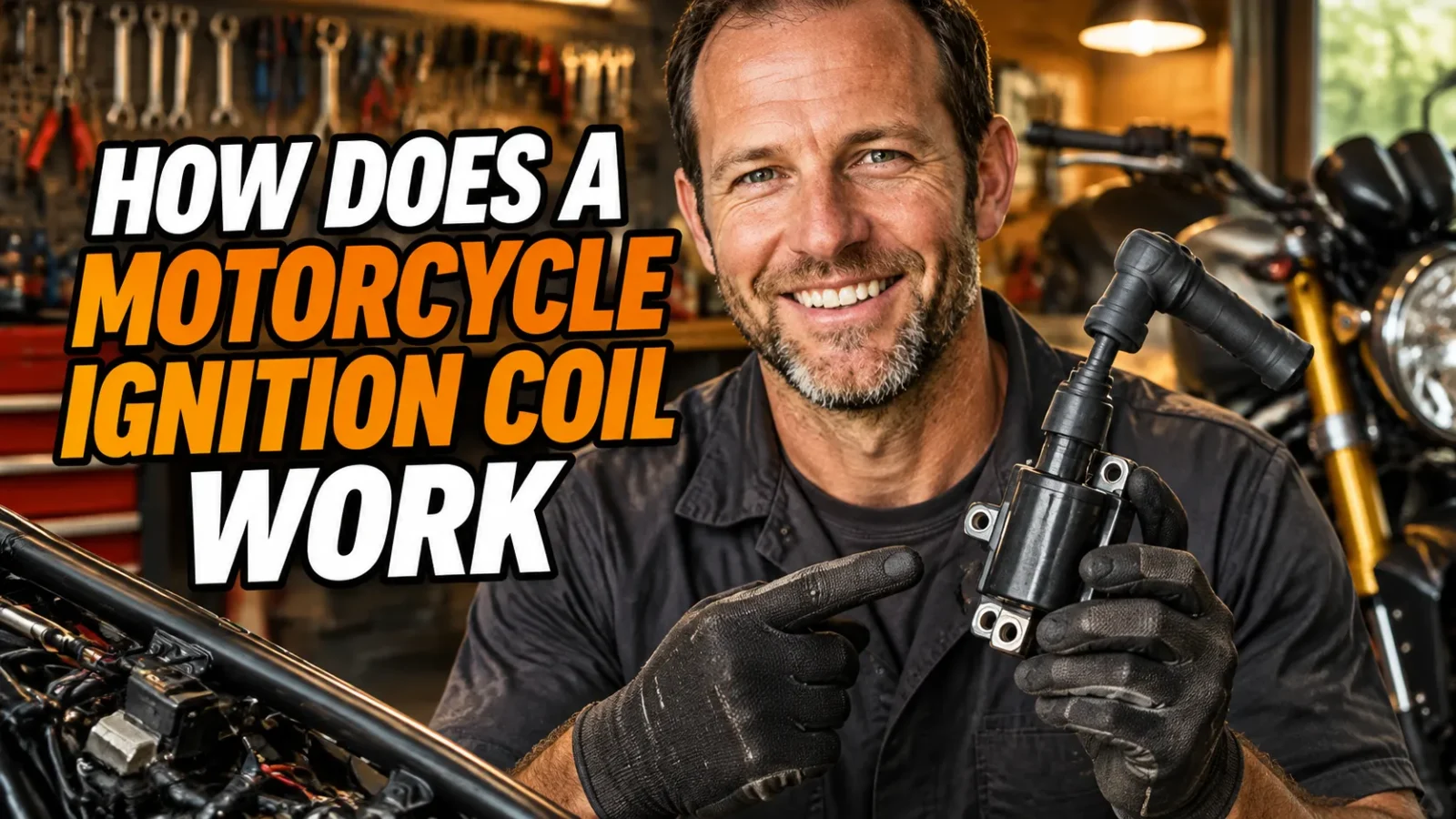
I still remember the first time a bike of mine refused to fire on a cold morning. The battery was fine, the fuel was fresh, and yet the engine just coughed and died. The culprit turned out to be a tired little component I had never given a second thought: the ignition coil.
If you have ever wondered how a motorcycle ignition coil works, you are in good company. It is one of those parts that quietly does a miraculous job until the day it stops. And because the coil depends on a healthy electrical system, it helps to understand your power source too, which is why I often point riders to this what are the different types of motorcycle batteries ultimate guide before they start chasing spark problems.
In this article, I will walk you through the science in plain language, share what I have learned from diagnosing weak spark, and help you decide when it is time to replace or upgrade.
- An ignition coil is a step-up transformer that turns about 12 volts into 15,000 to 40,000+ volts.
- It works through electromagnetic induction: a collapsing magnetic field in the primary winding induces a huge voltage in the secondary winding.
- Weak batteries, heat, vibration, and worn plug caps are the most common reasons coils underperform.
- A simple multimeter test can tell you a lot about coil health in minutes.
- Quality replacement coils are one of the best value upgrades for reliability.
The Big Picture: Why Your Bike Needs an Ignition Coil
Your motorcycle’s battery supplies roughly 12 volts. That is nowhere near enough to make a spark leap across the tiny gap in a spark plug, which typically needs somewhere between 15,000 and 40,000 volts depending on compression, gap, and mixture.
The ignition coil bridges that enormous gap. Think of it as a voltage amplifier that takes a gentle electrical push and turns it into a lightning bolt in miniature.
In my experience, once riders grasp this single idea, the rest of the ignition system suddenly makes sense. Everything upstream of the coil is about timing and triggering. Everything downstream is about delivering that burst of energy to the plug.
The Basic Anatomy of an Ignition Coil
Crack open a coil (or look at a cutaway diagram) and you will find a surprisingly simple design. I always say the elegance of it is what makes it so reliable.
The Iron Core
At the center sits a laminated soft-iron core. Its job is to concentrate and channel the magnetic field so the coil can store energy efficiently.
The Primary Winding
Wrapped around the core is the primary winding, made of relatively thick copper wire with a small number of turns, often a couple hundred. This is the side that receives current from your battery or charging system.
The Secondary Winding
Around the primary sits the secondary winding, made of extremely fine wire wound thousands of times, commonly 10,000 to over 100,000 turns. This is where the high voltage is born.
The Insulation and Housing
Everything is encased in insulating material, either epoxy resin or oil in older designs. Good insulation matters because the voltages involved will happily escape through any weakness they find.
How the Magic Happens: Electromagnetic Induction
Here is the part I find genuinely fascinating. The coil works on a principle discovered in the 1800s: when a magnetic field changes around a wire, it induces voltage in that wire.
Step 1: Current Builds the Magnetic Field
When the ignition system allows current to flow through the primary winding, a magnetic field builds up around the iron core. The coil is effectively storing energy in that field, much like winding up a spring.
Step 2: The Circuit Is Suddenly Interrupted
At precisely the right moment, the ignition system cuts the current. On older bikes, this was done by mechanical breaker points. On modern machines, an electronic switch (a transistor or igniter inside the ECU or CDI/TCI module) does it with extreme precision.
Step 3: The Field Collapses and Voltage Spikes
When the current stops, the magnetic field collapses almost instantly. That rapid collapse sweeps across the secondary winding’s thousands of turns and induces a very high voltage.
Because the secondary has so many more turns than the primary, the voltage is multiplied dramatically. The turns ratio is what makes a 12-volt supply produce a spark capable of jumping a gap.
Step 4: The Spark Fires
That high voltage travels to the spark plug, ionizes the air-fuel mixture in the gap, and creates the spark that starts combustion. The whole sequence repeats thousands of times per minute at high revs.
Types of Motorcycle Ignition Systems and Coils
Not every bike handles this process the same way. Over my years of riding and wrenching, I have encountered several setups, and each has its quirks.
Points-and-Condenser Systems
Classic bikes use mechanical contact points to interrupt the primary current, along with a condenser to reduce arcing. These systems are charming and simple, but they need regular adjustment and the points wear over time.
CDI (Capacitor Discharge Ignition)
CDI systems charge a capacitor to a few hundred volts and then dump it through the coil’s primary winding. The coil then steps that up further. Many smaller bikes, scooters, and dirt bikes use CDI because it delivers a crisp, fast spark.
TCI (Transistor Controlled Ignition)
TCI systems use transistors to switch the coil’s primary current. They are common on many street bikes and offer reliable, maintenance-free operation with precise timing.
Coil-on-Plug (COP) and Pencil Coils
Many modern bikes have a dedicated coil sitting directly on each spark plug. This removes the plug wire entirely, which cuts energy loss and improves reliability. I am a big fan of this layout for its simplicity and strong spark.
Wasted Spark Systems
On some twins and multi-cylinder engines, one coil fires two plugs at the same time. One spark lands on the compression stroke where it matters, and the other lands on the exhaust stroke where it is “wasted.” It sounds odd, but it works well and keeps parts count down.
Where the Coil Gets Its Power
The coil can only be as good as the electrical supply feeding it. A sagging battery or a failing charging system means less energy stored in the magnetic field, which means a weaker spark.
I have seen plenty of riders replace perfectly good coils when the real issue was a neglected battery. If your bike sits for long stretches, understanding how does a battery tender work can save you a lot of headaches and money.
Likewise, if you are not sure whether your battery has had enough juice, it is worth knowing how long does it take to charge a 12v motorcycle battery before you blame the ignition. A fully charged battery is the foundation of strong starting spark.
The Charging System Matters Too
Once the engine is running, the stator and regulator/rectifier keep the electrical system topped up. If voltage drops or fluctuates, your coil and everything else on the bike will suffer.
Interestingly, the same logic applies on four wheels. If you are curious about how charging works in other vehicles, how does a battery tender work is a good starting point, and so is learning how long does it take to charge a car battery while driving to appreciate how alternators replenish power.
Symptoms of a Failing Ignition Coil
Coils rarely die dramatically. More often, they fade, and the signs can be subtle at first. Here is what I watch for.
- Misfiring or stumbling under acceleration, especially when the engine is hot.
- Hard starting or long cranking before the engine catches.
- Rough idle that smooths out at higher revs.
- Poor fuel economy caused by incomplete combustion.
- Backfiring or popping from unburned fuel igniting in the exhaust.
- A dead cylinder on multi-cylinder bikes.
Heat is a particularly sneaky cause. I have dealt with coils that worked perfectly cold but broke down once the engine warmed up, because the insulation inside the windings degraded under temperature.
Don’t Confuse Electrical Gremlins
Not every electrical problem points to the coil. Weird symptoms can come from grounds, connectors, or wiring faults. For example, if you have ever puzzled over why does only one headlight work on motorcycles, you know how a single bad connection or ground can masquerade as a bigger failure.
My rule is to check the simple stuff first: battery voltage, connectors, kill switch, and plug caps. Only then do I start condemning the coil.
How I Test an Ignition Coil at Home
You do not need a professional shop to get a good idea of coil health. A basic multimeter and your bike’s service manual will take you most of the way.
Check Primary Resistance
Disconnect the coil, then measure resistance across the primary terminals. Most coils read somewhere between 0.5 and 3 ohms, but always compare against your manual’s spec.
Check Secondary Resistance
Next, measure across the secondary output (the spark plug wire terminal or plug cap connection). Typical values range from several thousand to well over 10,000 ohms. A reading of infinity or wildly out of spec suggests an open winding.
Do a Spark Test Carefully
With a spare plug grounded against the engine, crank the motor and look for a strong blue-white spark. Be careful here. Ignition voltage is no joke, and you should never hold the plug wire with bare hands or test near fuel vapors.
Know the Limits of the Test
A coil can pass a static resistance test and still fail under heat or load. If everything checks out on paper but the symptoms persist, swapping in a known-good coil is often the quickest, most conclusive test.
Keeping Your Ignition Coil Healthy
The good news is that coils are low-maintenance. A few habits go a long way toward extending their lives.
- Use the correct spark plug gap. An overly wide gap forces the coil to work harder.
- Replace worn plugs and cracked plug caps promptly.
- Keep connectors clean, dry, and tight.
- Maintain a healthy battery and charging system.
- Avoid pressure-washing directly at coils and plug boots.
In my experience, the plug and cap are the most overlooked culprits. A bad cap can mimic a failing coil perfectly, so I always inspect those before spending money.
Choosing a Replacement or Upgrade
When a coil does give up, you have options. OEM replacements restore factory behavior, while quality aftermarket coils can offer improved insulation, stronger spark, or better value.
If you are shopping around, I put together my thoughts on the best ignition coil for motorcycle options so you can compare with confidence.
What I Look For
- Correct resistance specs for your ignition module, since a mismatch can damage the igniter.
- Quality construction with solid epoxy potting and good insulation.
- Proper fitment and connector compatibility.
- A reputable brand with real-world feedback from other riders.
I would steer clear of ultra-cheap, no-name coils. Saving a few dollars is never worth being stranded on a back road with a dead cylinder.
Common Myths I Hear from Fellow Riders
“A Bigger Spark Always Means More Power”
Not exactly. Your stock coil already produces more than enough voltage for normal operation. A fatter spark can help in modified, high-compression, or forced-induction engines, but on a stock bike the gains are usually modest.
“If It Sparks, the Coil Is Fine”
Sadly, no. A coil might spark in open air but fail under compression, where the required voltage is much higher. That is why intermittent misfires can persist even when a bench test looks fine.
“Coils Never Wear Out”
They are tough, but not immortal. Heat cycles, vibration, and moisture slowly take their toll, especially on bikes that see hard use or sit outdoors.
Final Thoughts from My Garage
The ignition coil is a beautiful example of simple physics doing heavy lifting. A couple of wire windings, an iron core, and a well-timed interruption of current are enough to turn a humble 12 volts into a spark that brings your engine to life.
Once you understand how it works, troubleshooting becomes far less mysterious. You learn to look at the whole chain: battery, charging system, triggering signal, coil, plug cap, and plug.
Take care of that chain, and your bike will reward you with crisp starts, smooth power, and miles of reliable riding. And if a coil ever does fail, you will now know exactly what it is doing, why it matters, and how to get back on the road.
Frequently Asked Questions
How does a motorcycle ignition coil work?
An ignition coil is a step-up transformer. It takes the battery’s roughly 12 volts and, through electromagnetic induction between a primary and secondary winding, boosts it to 15,000 to 40,000+ volts so the spark plug can jump its gap and ignite the air-fuel mixture.
What are the symptoms of a bad motorcycle ignition coil?
Common signs include misfiring, rough idle, hard starting, poor throttle response, reduced fuel economy, backfiring, and a cylinder that seems dead. In severe cases the engine will not start at all.
How long does a motorcycle ignition coil last?
A healthy coil can last many years and tens of thousands of miles, but heat, vibration, moisture, worn spark plug wires, and a weak battery can shorten its life considerably.
Can a weak battery damage an ignition coil?
A weak or failing battery will not usually destroy a coil outright, but low voltage can cause weak spark and hard starting, while an unstable charging system can stress the coil over time. Keeping your battery healthy is cheap insurance.

Related Articles

How to Fix a Short Circuit on a Motorcycle: A Rider’s Step-by-Step Guide
Learn how to find and repair a motorcycle short circuit step by step, from blown fuses to chafed wires, with…
Jake Miller
11 min read

What Does a CDI Unit Do on a Motorcycle? Purpose, Symptoms and Fixes
Wondering what a CDI does on your bike? I explain how the capacitor discharge ignition works, signs of failure, testing…
Jake Miller
10 min read

How to Test a 6 Volt Motorcycle Battery and Charging System (Step-by-Step)
Learn how to test a 6 volt motorcycle battery and charging system step by step, with multimeter readings, load tests,…
Jake Miller
10 min read