
Bad Ignition Coil on Your Bike? 9 Warning Signs I Never Ignore
 Jake Miller
11 min read
Jake Miller
11 min read
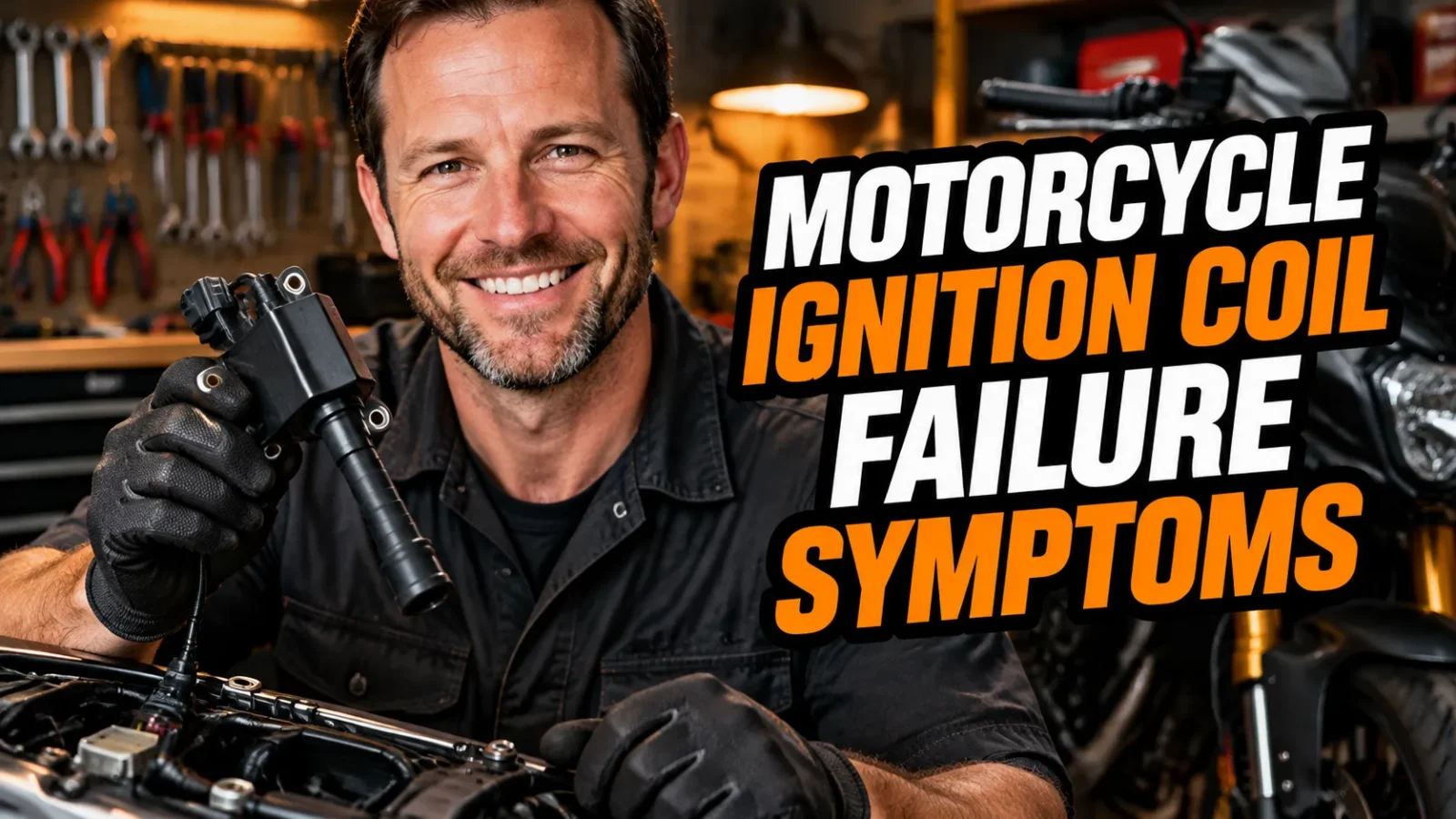
There’s a particular kind of dread that hits when your bike coughs, stumbles, and dies at a red light. I’ve been there more than once, and nine times out of ten the culprit lived somewhere in the ignition system. Often, it was the coil.
Over the years, I’ve learned that the coil rarely dies without warning. It whispers before it screams, and if you know what to listen for, you can fix the problem in your garage instead of on the shoulder of the highway.
Before we dive in, a quick word on the bigger picture. Your ignition system depends on a healthy electrical foundation, and the battery is a huge part of it. If you want to brush up, I put together what are the different types of motorcycle batteries ultimate guide to help you understand what’s powering your spark in the first place.
- A failing coil usually shows up as misfires, hard starts, rough idle, and stalling, especially when the engine is hot.
- Many “coil problems” are actually weak batteries, bad pickup coils, blown fuses, or worn spark plugs, so diagnose before you buy parts.
- A multimeter and your service manual specs are enough to test most coils at home.
- Replace coils with quality parts, and check your plugs and wiring at the same time.
What an Ignition Coil Actually Does
Think of the coil as a tiny transformer. It takes the low voltage from your battery, typically around 12 volts, and steps it up to many thousands of volts. That jolt jumps the gap at your spark plug and lights the air-fuel mixture.
If the coil can’t build or deliver that voltage, the fire never happens, or it happens weakly and at the wrong moment. That’s when your bike starts telling you something is wrong.
Some bikes use a single coil for each cylinder, while older or simpler machines may share one coil between two. Newer bikes often use coil-on-plug designs, where each plug has its own dedicated coil. Knowing which setup you have makes diagnosis much easier.
The Warning Signs I Watch For
Here are the symptoms I’ve personally run into or helped other riders chase down. Not every bad coil will show all of them, but even two or three together should raise your eyebrows.
1. Engine Misfires
This is the classic. You’ll feel a stumble, a hiccup, or a sudden flat spot as the engine drops a beat. On a twin, it can feel like the bike is suddenly running on one cylinder.
Misfires often get worse under load, such as when you’re climbing a hill or rolling on the throttle hard. That’s because the coil has to work harder to deliver spark under higher cylinder pressure.
2. Hard Starting or No Starting
If your bike cranks happily but refuses to fire, a dead coil is high on my suspect list. A weak coil may still start the engine occasionally, which makes the problem maddeningly inconsistent.
I once had a bike that started perfectly cold but wouldn’t restart after a fuel stop. That’s a textbook sign of a coil that fails when heat soaks into its windings.
3. Rough or Unstable Idle
A healthy engine settles into a smooth, steady idle. When a coil is on its way out, the idle may hunt, shake, or surge as one cylinder fires inconsistently.
You might also notice extra vibration through the bars and pegs. If your bike suddenly feels like it’s shaking itself apart at a stoplight, don’t dismiss it.
4. Stalling
Random stalling, particularly when the engine is warm, is a big red flag. The coil’s insulation can break down as temperatures rise, causing the spark to cut out entirely.
Then the engine cools a bit and the bike fires back up like nothing happened. That intermittent behavior is exactly why heat-related coil failure is so frustrating to diagnose.
5. Loss of Power and Poor Acceleration
When a cylinder isn’t firing properly, you lose power. The bike feels sluggish, hesitates when you twist the throttle, and struggles to pull through the rev range.
I’ve noticed this most during highway passes, when the bike simply doesn’t deliver what I’m asking for. It’s unnerving, and it can be genuinely unsafe.
6. Worse Fuel Economy
Unburned fuel is wasted fuel. If you notice you’re stopping for gas more often without any change in your riding habits, a weak spark could be the reason.
Track your mileage over a few tanks. A sudden drop is one of the easiest early indicators to catch, and it costs you nothing to monitor.
7. Backfiring or Popping
When unburned fuel makes it into the exhaust, it can ignite there instead of in the cylinder. The result is a pop or bang from the pipes, especially on deceleration.
A little popping can be normal on some tuned bikes, but if it’s new behavior, pay attention. Combined with other symptoms, it points toward a spark problem.
8. Check Engine or Fault Lights
Fuel-injected bikes with an ECU often log misfire codes when a coil goes bad. If your warning light comes on, plug in a code reader or visit a shop that can pull the codes for you.
Codes won’t tell you everything, but a cylinder-specific misfire code is a strong clue that the coil, plug, or wiring on that cylinder deserves a close look.
9. Visible Damage or a Burning Smell
Sometimes the evidence is right in front of you. Cracks in the coil housing, melted plastic, oil residue, or corrosion on the terminals all signal trouble.
A faint burning or electrical smell near the coil is worth investigating immediately. Overheating coils can fail suddenly, and I’d rather catch it on a Saturday in the garage than on a Sunday ride.
Why Coils Fail in the First Place
Understanding the cause helps you prevent a repeat failure. In my experience, a handful of culprits show up again and again.
- Heat and vibration: Constant thermal cycling and engine shaking wear down internal windings and insulation.
- Worn spark plugs: A badly gapped or worn plug forces the coil to push harder, shortening its life.
- Moisture and corrosion: Water getting into connectors or plug boots can cause shorts and weak spark.
- Bad plug wires or caps: Cracked insulation lets voltage leak before it ever reaches the plug.
- Age: Even a well-treated coil eventually gives up after tens of thousands of miles.
Don’t Blame the Coil Too Fast
Here’s where I see riders waste money. They notice a misfire, order a new coil, and the problem stays exactly the same. Several other components create very similar symptoms, so I always rule them out first.
Battery Trouble Can Look Like Coil Trouble
A coil can only deliver spark if it receives proper voltage. When the battery is struggling, you might get weak spark, slow cranking, and starting problems that mimic a failing coil.
If you suspect this, read up on motorcycle bad battery symptoms and motorcycle weak battery symptoms. Testing your battery is quick, cheap, and can save you from replacing parts you didn’t need to.
A Failing Pickup Coil
The pickup coil (or trigger) tells the ignition system exactly when to fire. If it fails, you may get no spark at all, even with a perfectly healthy ignition coil.
The symptoms overlap heavily, so it’s worth checking out bad pickup coil symptoms motorcycle riders commonly report. Knowing the differences can point you to the right part the first time.
A Blown Fuse
Sometimes the answer is embarrassingly simple. A blown ignition fuse cuts power to the system, and the bike may refuse to start or die mid-ride.
Before you pull anything apart, review motorcycle blown fuse symptoms and check your fuse box. It takes two minutes and could save you an afternoon.
Spark Plugs and Wiring
Fouled, worn, or incorrectly gapped plugs cause misfires all by themselves. Pull them and inspect the color and condition of the electrodes.
Check the plug caps and wires too. A cracked boot or loose connection is a very common cause of what feels like coil failure.
How I Test an Ignition Coil at Home
You don’t need a professional shop for a basic coil check. A multimeter, your service manual, and a little patience will get you most of the way.
Step 1: Inspect Visually
Start with the obvious. Look for cracks, burn marks, oil leaks, loose connectors, and corrosion. Wiggle the wiring harness gently with the engine off and see if anything is loose.
Step 2: Measure Primary Resistance
Set your multimeter to ohms and measure across the primary terminals. Compare your reading to the specification in your service manual.
Readings far outside the listed range, either too high or showing an open circuit, suggest an internal fault. Always test with the engine off and the coil disconnected.
Step 3: Measure Secondary Resistance
Next, measure between the primary terminal and the high-tension output, following the manual’s instructions. The secondary resistance is much higher than the primary, often several thousand ohms or more.
Again, the exact numbers vary by bike, so rely on your manual rather than generic figures you find online.
Step 4: Try a Swap or Spark Test
If your bike has multiple coils, swap a suspect coil with a known good one. If the misfire follows the coil to the other cylinder, you’ve found your culprit.
You can also use an inline spark tester to see the quality of the spark. Look for a strong, consistent blue spark rather than a weak, orange, or intermittent one.
Safety note: Ignition systems carry high voltage. Never touch live components while the engine is cranking, and keep fuel and flammable materials away from where you’re testing.
Choosing a Replacement Coil
When I confirm a coil is bad, I don’t go hunting for the cheapest option on the internet. Bargain coils can fail early, and then you’re doing the whole job again.
I look for a coil that matches my bike’s resistance specs, fits properly, and comes from a reputable manufacturer. If you need help picking, I’ve rounded up the best ignition coil for motorcycle options worth considering.
OEM replacements are a safe bet, and quality aftermarket coils can deliver excellent performance, sometimes with a hotter spark. Just avoid unknown no-name parts with vague specs.
Replace Smart: Plugs, Wires, and Connections
Here’s a habit that has saved me a lot of repeat repairs. When I replace a coil, I also inspect or replace the spark plugs and check the plug caps and wiring.
If worn plugs caused the coil to overwork in the first place, a fresh coil will just suffer the same fate. Treat the whole ignition circuit as a system rather than a single part.
Apply a little dielectric grease to the connectors to help block moisture. Make sure everything clicks in securely and nothing rubs against hot engine surfaces or the frame.
Can You Keep Riding With a Failing Coil?
My honest answer is: not for long. You might limp home, but a misfiring engine can foul plugs, dilute oil with unburned fuel, and damage a catalytic converter on bikes that have one.
More importantly, a sudden loss of power in traffic or in a corner is a safety issue. I’d rather park the bike and fix it than gamble on a ride that might end badly.
Preventing Future Ignition Problems
A little routine care goes a long way. I make these checks part of my regular maintenance schedule so small issues never turn into roadside breakdowns.
- Replace spark plugs at the recommended intervals and keep the gap correct.
- Keep your battery healthy and your charging system in good shape.
- Inspect connectors, wiring, and plug boots for wear, cracks, or moisture.
- Wash your bike carefully, avoiding direct high-pressure spray at electrical connectors.
- Address small symptoms early rather than hoping they’ll go away.
My Final Take
An ignition coil is a small, unglamorous part, but when it fails, your whole ride suffers. Misfires, hard starts, stalling, and sluggish power are your bike’s way of asking for attention.
The trick is to diagnose methodically. Rule out the battery, fuse, pickup coil, and spark plugs, test the coil with a multimeter, and replace it with a quality part if it fails.
Do that, and you’ll spend far more time enjoying the road and far less time staring at a silent engine. Stay safe out there, and keep the spark strong.
Frequently Asked Questions
What are the most common signs of a failing motorcycle ignition coil?
The most common signs are engine misfires, hard starting, rough idle, stalling, poor fuel economy, and loss of power under acceleration. A weak or missing spark is the underlying cause of all of them.
Can I ride my motorcycle with a bad ignition coil?
It’s not a good idea. A failing coil can leave you stranded, and unburned fuel from misfires can damage your catalytic converter (on equipped bikes) and foul your spark plugs. Replace it as soon as you can.
How do I test a motorcycle ignition coil?
Use a multimeter to measure primary and secondary winding resistance, then compare the readings to your service manual specs. You can also swap in a known good coil or check for spark with a spark tester.
How long does a motorcycle ignition coil last?
Many coils last 50,000 miles or more, but heat, vibration, moisture, and worn spark plugs can shorten their life considerably. Inspect them whenever you service your plugs.

Related Articles

How to Fix a Short Circuit on a Motorcycle: A Rider’s Step-by-Step Guide
Learn how to find and repair a motorcycle short circuit step by step, from blown fuses to chafed wires, with…
Jake Miller
11 min read

What Does a CDI Unit Do on a Motorcycle? Purpose, Symptoms and Fixes
Wondering what a CDI does on your bike? I explain how the capacitor discharge ignition works, signs of failure, testing…
Jake Miller
10 min read

How to Test a 6 Volt Motorcycle Battery and Charging System (Step-by-Step)
Learn how to test a 6 volt motorcycle battery and charging system step by step, with multimeter readings, load tests,…
Jake Miller
10 min read