
How Does a Motorcycle Kill Switch Work? A Rider’s Complete Guide
 Jake Miller
11 min read
Jake Miller
11 min read
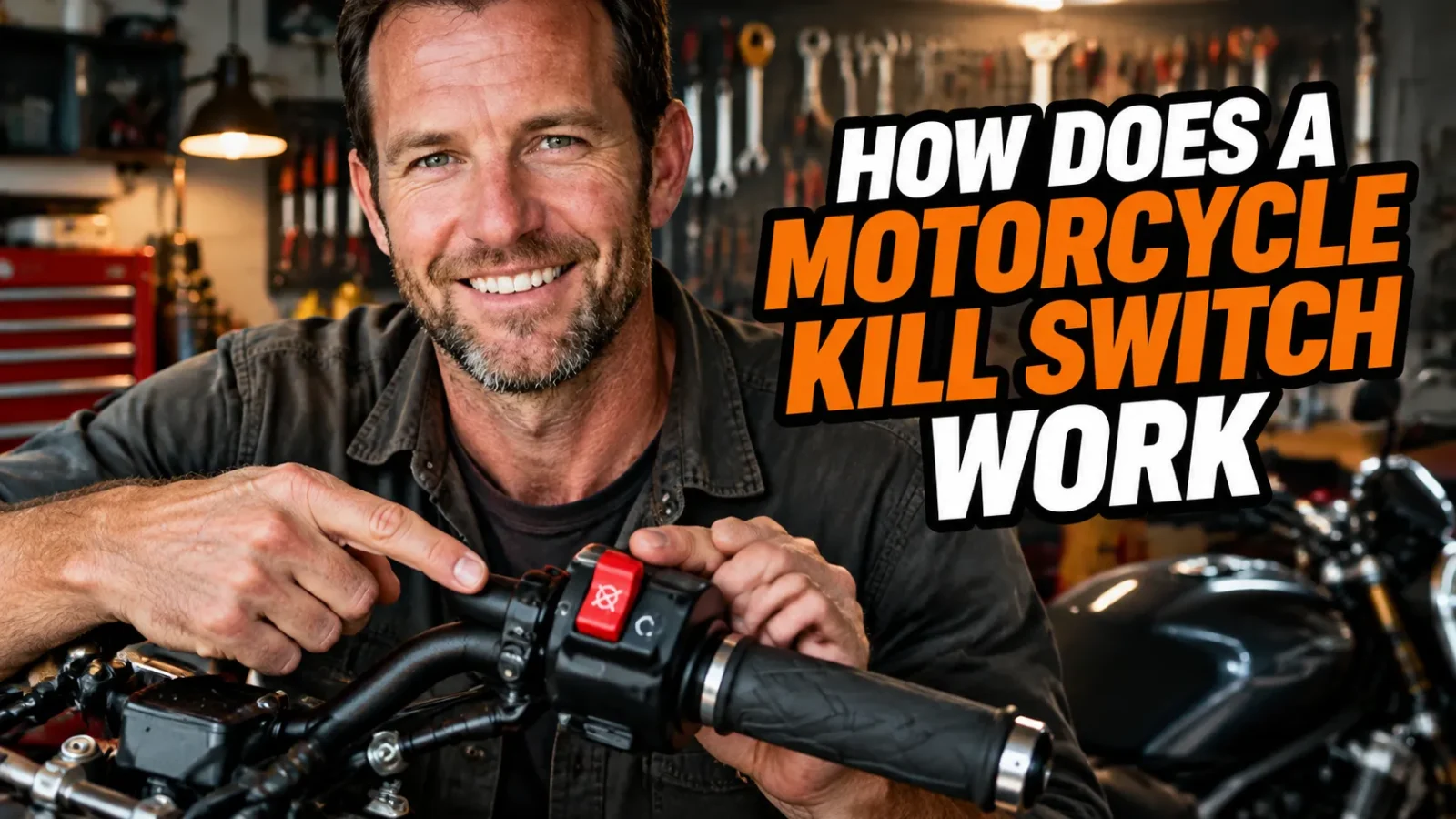
I still remember the first time I accidentally flipped my kill switch at a stoplight. The engine died, I panicked for a second, and then I felt a little silly. That tiny red rocker on the right handlebar is one of the simplest controls on a bike, yet most riders never think about how it actually works.
In this guide, I’ll walk you through what the kill switch does inside your electrical system, why it’s built the way it is, and how to diagnose it when it misbehaves. Since the switch is part of your bike’s electrical backbone, it helps to understand the power source behind it too. If you want a deeper look at that side of things, I recommend what are the different types of motorcycle batteries ultimate guide.
- A kill switch is a simple on/off switch that interrupts the ignition circuit (and on many bikes the fuel pump or ECU feed) to stop the engine instantly.
- It does not disconnect the battery, so lights and accessories can still run with the key on.
- Most “no start” problems tied to the switch come from dirty contacts, loose connectors, or a switch left in the OFF position.
- A multimeter and a bit of contact cleaner will solve most kill switch faults in minutes.
What a Kill Switch Is Really For
The kill switch exists for one reason: to stop the engine fast. If your throttle sticks, you drop the bike, or you need to shut down in an emergency, you can do it with your thumb without taking your hand off the grip.
In my experience, riders underestimate how useful that is. On a track day or a dirt trail, being able to cut the engine instantly is a real safety feature. On the street, it’s the quickest way to kill a runaway engine without fumbling for the key.
Where You’ll Find It
On nearly every street bike, the kill switch sits on the right handlebar housing, just above the starter button. It’s usually red, and it’s labeled with RUN and OFF positions or a simple engine symbol.
Some scooters, ATVs, and off-road bikes use a different version: a lanyard-style tether clipped to your wrist or jacket. If you’re thrown off, the clip pulls free and the engine shuts down automatically.
The Basics: How the Switch Works Electrically
At its core, a kill switch is just a single-pole switch placed in a circuit. When it’s in the RUN position, the circuit is complete and current flows. When you flip it to OFF, the circuit is broken, and the engine loses what it needs to keep firing.
The clever part is where the switch sits in the circuit. Different manufacturers wire it in slightly different ways, but the goal is always the same: interrupt spark, fuel, or both.
Method One: Cutting Power to the Ignition
On many carbureted bikes, the kill switch interrupts the power feed to the ignition system. Without that supply, the coil can’t generate the high voltage needed for the spark plug.
If you want to understand what happens on the other side of that circuit, I explain the spark-making process in my breakdown of how does a motorcycle ignition coil work. Once the coil stops receiving its signal, the engine simply stops firing.
Method Two: Grounding the Ignition Signal
Some older and smaller engines, especially those with CDI (capacitor discharge ignition) systems, work the opposite way. Instead of cutting power, the kill switch shorts the ignition signal to ground.
That grounding prevents the CDI box from sending a pulse to the coil. The result is the same: no spark, no combustion, engine off.
Method Three: Cutting the ECU or Fuel Pump Feed
Modern fuel-injected bikes usually run the kill switch through the ECU or the fuel pump relay. When you flip it to OFF, the ECU stops commanding the injectors and ignition, and the pump relay drops out.
This approach is cleaner because it shuts down fuel delivery as well as spark. It also means the engine management system can recognize the switch state and refuse to start the engine when it’s in the OFF position.
What the Kill Switch Does Not Do
This is where I see the most confusion. A kill switch is not a battery disconnect. Flipping it to OFF doesn’t isolate your battery from the rest of the bike.
Depending on your wiring, the headlight, dash, and accessories may remain powered as long as the key is on. That’s why I always turn the ignition key off after using the kill switch to stop the engine.
The Battery Drain Trap
I’ve seen riders kill the engine, hop off, and leave the key in the ON position for an hour. The engine isn’t running, but the electrical system is still pulling current, and the battery slowly drains.
If you ride infrequently or park for long stretches, a smart maintainer helps a lot. I cover this in detail in how does a battery tender work, and it’s one of the cheapest ways to protect your battery.
Kill Switch vs. Other Safety Cutoffs
Your bike probably has more than one switch that can stop the engine. Understanding the differences makes troubleshooting much easier, because a “dead” bike isn’t always the kill switch’s fault.
- Sidestand switch: Prevents the bike from running in gear with the stand down.
- Clutch switch: Requires the clutch lever to be pulled before the starter will engage.
- Neutral switch: Tells the system whether the transmission is in neutral.
- Tip-over (lean angle) sensor: Cuts the engine automatically if the bike falls over.
The tip-over sensor is the closest thing to an automatic kill switch. It uses a tilt or accelerometer sensor to detect when the bike is lying on its side and shuts down the fuel pump and ignition to reduce fire risk.
Common Kill Switch Problems I’ve Run Into
Kill switches are simple, but they live in a harsh environment. They get rained on, sprayed with road grime, and flipped thousands of times. Here are the issues I see most often.
The Bike Cranks but Won’t Start
This is the classic symptom. The starter motor spins, the engine turns over, but nothing fires. Before I touch anything else, I always check that the kill switch is in the RUN position.
It sounds obvious, but I’ve watched experienced riders spend an hour troubleshooting fuel and spark when the switch was bumped to OFF in the garage. Check the simplest thing first.
The Engine Cuts Out Randomly
If your bike stutters or dies on bumps, a worn kill switch or loose connector is a prime suspect. The internal contacts can lose connection momentarily, which briefly interrupts the ignition.
Wiggle the switch housing with the engine running at idle. If the engine stumbles, you’ve found your culprit.
The Starter Won’t Engage at All
On some models, the OFF position also disables the starter circuit. If you press the starter button and get nothing at all, no click and no crank, confirm the kill switch is on RUN.
If that doesn’t fix it, you may be dealing with a weak battery rather than a switch fault. My guide on how long does it take to charge a 12v motorcycle battery will help you recover one that’s gone flat.
How I Test a Kill Switch with a Multimeter
Testing the switch takes about ten minutes and requires only a basic multimeter. I like this process because it takes the guesswork out of the diagnosis.
- Turn the ignition off and remove the key.
- Locate the switch connector, usually inside the right handlebar housing or behind the headlight shell.
- Unplug the connector and set your multimeter to continuity mode.
- Probe the switch terminals with the switch in RUN. You should hear a beep or see near-zero resistance.
- Flip the switch to OFF. The continuity should break (or change, depending on the wiring design).
If the readings don’t change when you flip the switch, the contacts are worn or contaminated. A shot of electrical contact cleaner often brings them back to life, but replacement is cheap if it doesn’t.
Checking the Wiring
Don’t stop at the switch itself. Wires running through the handlebar can chafe, pinch, or break from repeated steering movement. I always inspect the harness near the steering head for cracked insulation.
Connectors are another weak spot. Corrosion on the pins can mimic a failed switch, so I clean them and add a dab of dielectric grease before reassembling.
Electrical Gremlins That Look Like Kill Switch Trouble
Because the kill switch shares wiring with other systems, a failure elsewhere can look like a switch fault. Electrical problems rarely announce themselves clearly, so I try to think in terms of circuits.
For example, if you notice lighting oddities along with ignition trouble, a ground issue may be at play. I walk through similar diagnostics in my article on why does only one headlight work on motorcycles, and many of the same troubleshooting habits apply here.
Charging System Health
A weak charging system can also cause intermittent stalling that feels like a switch problem. If the stator or regulator isn’t keeping the battery topped up, voltage sag can interrupt the ignition at low RPM.
Riders who also drive cars sometimes compare the two. If you’re curious about the car side of that equation, take a look at how long does it take to charge a car battery while driving. The principles are similar, though a motorcycle’s smaller alternator has less margin for error.
Best Practices for Using Your Kill Switch
After years of riding, I’ve settled on a few habits that keep me safe and keep my bike happy. None of them are complicated, but they make a real difference.
Use It in Real Emergencies
If your throttle sticks or the engine revs wildly, your thumb should flip the kill switch before your brain finishes the thought. I recommend practicing this motion in a parking lot until it’s automatic.
Many riders I know have never touched theirs while riding. In a real emergency, muscle memory is everything, so it’s worth building.
Don’t Rely on It as an Anti-Theft Device
A kill switch will not stop a determined thief. Anyone who knows bikes can flip it back to RUN in a second. Think of it as a safety control, not a security feature.
If you want theft protection, add a disc lock, a chain, or a hidden aftermarket immobilizer. Those are built for the job, and the kill switch isn’t.
Keep It Clean and Lubricated
Once or twice a season, I spray the switch with contact cleaner and work it back and forth a few times. This clears out dust and moisture that can cause sticky or intermittent operation.
Avoid heavy grease or WD-40 on the contacts, since they can attract dirt. A light electrical-safe lubricant is all you need.
Aftermarket and Custom Kill Switches
Custom builders and track riders often install additional kill switches or replace the stock one. A common upgrade is a lanyard-style cutoff, which gives you the safety benefit of an automatic shutdown if you separate from the bike.
If you go this route, use a switch rated for the current in the circuit, and solder or crimp your connections properly. A sloppy install can cause more problems than it solves, including random stalling and blown fuses.
A Quick Word on Wiring Safety
Always disconnect the negative battery terminal before working on electrical components. It prevents accidental shorts, and it protects sensitive electronics like the ECU.
If you’re not confident reading a wiring diagram, the factory service manual for your model is your best friend. I keep a digital copy of mine on my phone for roadside fixes.
My Final Thoughts
The kill switch is one of those small parts that rarely gets credit until something goes wrong. It’s a simple switch, but it ties directly into your ignition, fuel, and electrical systems, so understanding it makes you a more capable rider.
My advice is to learn where yours sits in the circuit, test it periodically, and keep the contacts clean. Do that, and it will quietly do its job for years. When the day comes that you need it, you’ll be glad you took the time to know how it works.
Frequently Asked Questions
Does a motorcycle kill switch drain the battery?
No. A kill switch only interrupts the ignition or fuel circuit. It does not drain the battery, but accessories like lights can still draw power if the key is on.
Can I ride with the kill switch in the OFF position?
No. On most bikes the engine will not start, or will stall immediately, because the ignition circuit is interrupted. Always check the switch first if your bike cranks but will not fire.
Is it okay to use the kill switch to shut off my engine every time?
Yes, it is safe, but it is better habit to turn the ignition key off afterward. Leaving the key on with the engine killed keeps the electrical system powered and can slowly drain the battery.
Why does my motorcycle crank but not start when the kill switch is on RUN?
The switch contacts may be dirty, corroded, or worn, or a wire may be loose. Test the switch with a multimeter for continuity, and clean the contacts with electrical contact cleaner.

Related Articles

How to Fix a Short Circuit on a Motorcycle: A Rider’s Step-by-Step Guide
Learn how to find and repair a motorcycle short circuit step by step, from blown fuses to chafed wires, with…
Jake Miller
11 min read

What Does a CDI Unit Do on a Motorcycle? Purpose, Symptoms and Fixes
Wondering what a CDI does on your bike? I explain how the capacitor discharge ignition works, signs of failure, testing…
Jake Miller
10 min read

How to Test a 6 Volt Motorcycle Battery and Charging System (Step-by-Step)
Learn how to test a 6 volt motorcycle battery and charging system step by step, with multimeter readings, load tests,…
Jake Miller
10 min read