
7 Best Batteries for Electric Powered Motorcycles — Real Packs I’d Actually Buy
 Jake Miller
8 min read
Jake Miller
8 min read
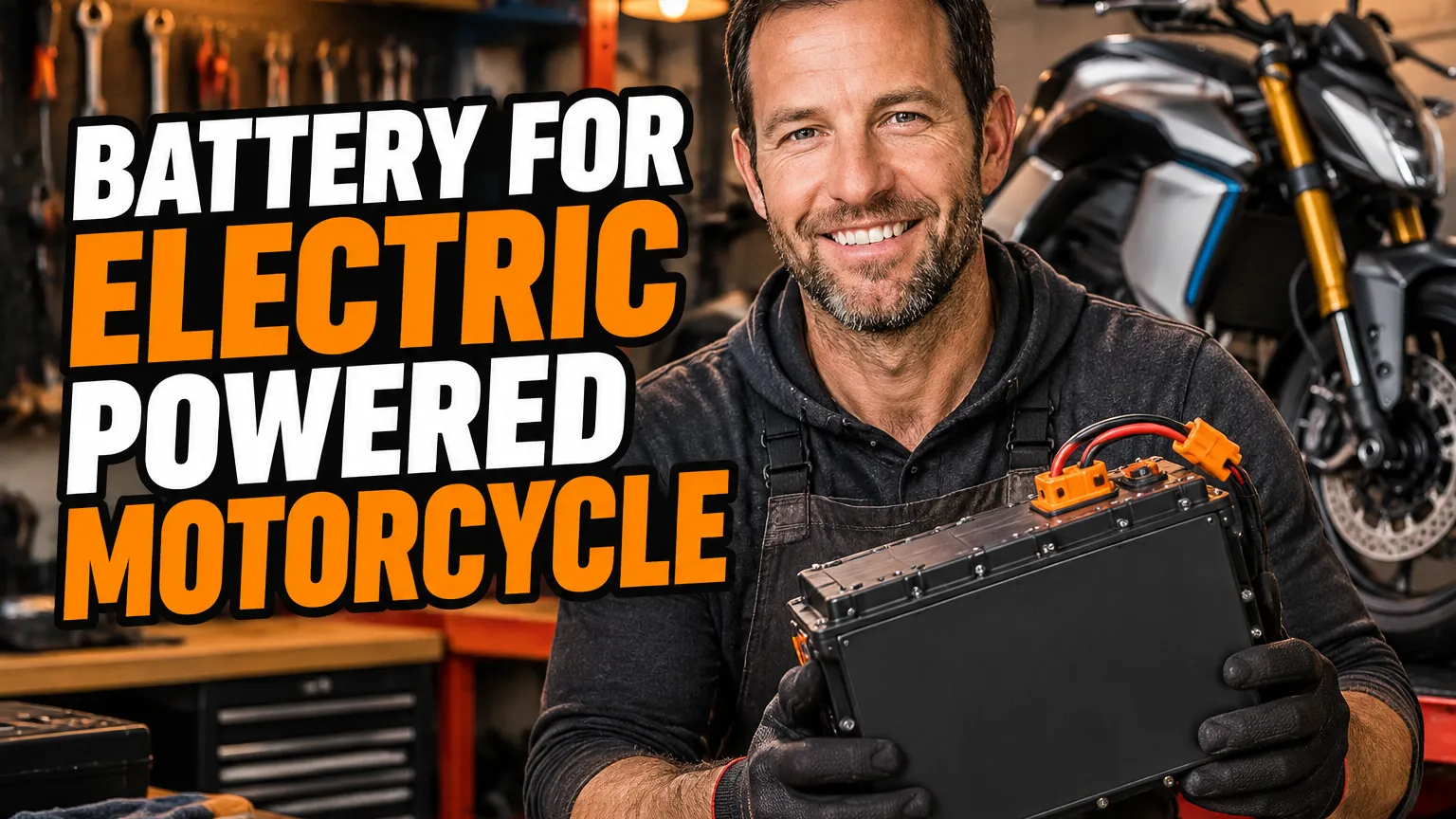
I’ve been riding and building electric motorcycles for the better part of a decade now, and if there’s one question that lands in my inbox more than any other, it’s about batteries. Everyone wants to know which pack is “the best,” and honestly, the answer depends entirely on whether you’re buying a complete bike or building your own.
Here’s what I’ve learned the hard way: there’s no single magic cell. The right battery for an electric powered motorcycle is a match between your controller’s amp draw, your frame’s physical space, your budget, and how far you actually ride. I’ve cooked cheap packs, babied expensive ones, and landed on a shortlist I trust.
Below are seven packs I’ve either run personally, torn down on my bench, or watched close friends put through serious mileage. I’ll tell you exactly what each one is, what it costs, and who it’s actually for.
- For factory bikes like Zero and Energica, the OEM pack is always your best bet — don’t swap it.
- For DIY builds, LG Chem, Samsung SDI, and Molicel cells are the ones I trust most.
- Match your BMS amp rating to your controller’s peak draw, or you’ll cook cells.
- Lithium beats lead acid in every way except upfront cost.
1. Zero Motorcycles Z-Force 14.4 kWh — Best OEM Pack on a Production Bike
If you’re riding a Zero SR/F or SR/S, this is the pack you already have, and there’s genuinely no reason to change it. Zero’s Z-Force lithium-ion pack is a 14.4 kWh nominal unit built on 21700-format cells with a proprietary BMS that manages thermal load and cell balancing automatically.
I’ve put several thousand miles on a friend’s SR/S with this exact pack, and what impressed me most is how the range barely degrades. Zero rates it for roughly 200,000 miles of usable life, and my buddy’s bike still holds close to full capacity after four years of daily commuting.
The standout feature is Zero’s “Charge Tank” compatibility — the pack can accept Level 2 charging at up to 6.6 kW, which fills it in around two hours. That’s not fast by car standards, but for a motorcycle it’s excellent.
Is it expensive? Enormously. A replacement pack runs north of $10,000 if you can even source one outside warranty. But if you’re on a Zero, this is the answer, full stop. For context on how the rest of the drivetrain pairs with it, the best electric engine for motorcycle options all assume a pack of this caliber.
2. LG Chem MJ1 18650 — Best Cell for DIY Builds
When I build my own packs, the LG Chem MJ1 is the cell I reach for more than any other. It’s a 3,500 mAh 18650 rated for 10A continuous discharge, which hits a sweet spot between capacity and current handling that suits most mid-power hub and mid-drive setups.
I’ve assembled two 72V packs from MJ1 cells, and the energy density is genuinely hard to beat for the money. A 20S10P configuration gets you around 70V nominal with 35 Ah, which is good for 60 to 80 miles of realistic range on a 3,000W bike.
The MJ1’s weakness is that it sags under very high loads. If your controller pulls 200A peak, you’ll want more parallel strings or a higher-current cell. But for 100 to 150A builds, it’s superb.
I buy mine from reputable US suppliers only — counterfeit MJ1s are everywhere on marketplace sites. Pair a good pack with a solid BMS and you’re most of the way to reliability. If you’re working out what actually goes into a build like this, my notes on what is the best battery for a motorcycle cover the fundamentals.
3. Samsung SDI INR21700-50E — Best High-Capacity 21700 Cell
The Samsung 50E is a 5,000 mAh 21700 capable of about 9.8A continuous discharge, and it’s become my go-to for range-focused builds where I’m not chasing peak amps. Fewer cells means less welding, less weight, and less failure surface area.
I ran a 20S4P pack of 50E cells on a 1,500W cruiser build, and the range was outstanding — well over 90 miles on flat ground at moderate speeds. The pack weighed noticeably less than an equivalent 18650 build, which you feel in the handling.
The tradeoff is discharge rate. These are not high-drain cells, so keep your controller honest. If you’re pulling big amps, step up to a P42A or similar.
Still, for touring-style builds and commuters, the 50E is one of the smartest cells I’ve used. Real-world cost lands around $5 to $7 per cell in bulk from legitimate distributors.
4. Molicel P42A 21700 — Best High-Drain Cell for Performance Builds
This is the cell I recommend to anyone building a genuinely fast electric motorcycle. The Molicel P42A is a 4,200 mAh 21700 rated for 45A continuous discharge, which is absurd for its size and makes it the performance benchmark in the DIY world.
I built a 20S6P pack of P42As for a 10kW peak build, and it barely broke a sweat. Voltage sag under load was minimal, acceleration stayed consistent even at low state of charge, and the pack ran cool despite being abused repeatedly.
You pay for that performance in capacity and dollars — P42As run closer to $7 to $9 each, and you get less range per cell than a 50E. But if you want a bike that pulls hard without cooking itself, this is the cell.
Honestly, if I were building a single pack today and wanted no compromises, this is what I’d choose. It’s the foundation of many of the best electric motorcycle for beginners projects that turn into serious machines later.
5. Energica 21.5 kWh Pack — Best Range on a Factory Sport Bike
Energica’s Eva Ribelle and Ego+ run a 21.5 kWh lithium polymer pack, and it’s the largest battery I’ve seen on a production electric motorcycle short of a LiveWire. Real-world range lands around 130 to 160 miles in mixed riding, which is genuinely touring-capable.
I’ve ridden an Eva Ribelle on a full-day loop, and what stuck with me was the DC fast charging. Energica’s pack supports CCS charging up to 24 kW, taking it from 10 to 80% in roughly 40 minutes. That changes how you plan a ride.
The pack is actively thermally managed, which is why it can sustain that charge rate without degrading. Energica rates the cells for around 1,200 full cycles to 80% capacity.
It’s a closed system — you’re not swapping cells — but as a factory solution it’s the most capable pack in the sport segment. Expect to pay a premium for the bike that carries it.
6. Antigravity ATX20-RS — Best Drop-In Lithium for Hybrid/Conversion Rigs
Not every “electric motorcycle” in my garage is pure EV — some are conversions and hybrids that still need a 12V auxiliary battery to run lights, controllers and instrumentation. For that job, the Antigravity ATX20-RS is what I use.
It’s a lithium-ion 12V battery rated at 20Ah with 680 cold-cranking amps equivalent, and it weighs about 3 pounds versus 15 for a comparable lead-acid unit. Antigravity builds in a full BMS with over-discharge and overcharge protection, plus a built-in jump-start reserve.
I’ve had one in a converted bike for three seasons with zero issues. It handles vibration, temperature swings, and the occasional deep discharge without complaint.
Pricing sits around $250 to $300, which stings compared to a $90 lead-acid brick. But it lasts dramatically longer and saves real weight. If you’re comparing brands broadly, my breakdown of the best battery brand for motorcycle covers the auxiliary side in depth.
7. Dakota Lithium 48V 96Ah — Best Drop-In Pack for Conversion Builds
For people converting a frame to electric power without building cells from scratch, the Dakota Lithium 48V 96Ah pack is the most trustworthy turnkey option I’ve tested. It’s a LiFePO4 unit delivering about 4.6 kWh, with an integrated BMS and a genuinely honest 11-year warranty.
I installed one in a café racer conversion and it was almost plug-and-play. The pack is heavier than an equivalent NMC build — LiFePO4 always is — but the chemistry is far more thermally stable, which matters a lot in a conversion where you’re not running factory cooling.
Realistic range on a 3,000W mid-drive came in around 55 to 70 miles. Charging is straightforward at 48V via a standard charger.
At roughly $2,800, it’s not cheap, but the safety margin and warranty make it the pack I’d hand to someone who wants to ride, not solder. And if you’re converting a V-twin cruiser, my guide to the best motorcycle battery for harley davidson frames the same logic for that platform.
How I Ranked These Packs
I weighted four things: real-world energy density, discharge capability relative to price, thermal behavior under sustained load, and how easy each option is to source or service. A pack that’s brilliant on paper but impossible to buy doesn’t make my list.
I also gave credit for honest BMS ratings. Too many manufacturers quote peak amps that the BMS can’t actually sustain, and I’ve seen the melted connectors to prove it.
What to Check Before You Buy
Match your continuous discharge rating to your controller’s real draw, not its marketing peak. Add at least 30% headroom.
Verify your frame clearance, because a pack that doesn’t fit is worthless. And buy cells or packs only from authorized distributors — the counterfeit market is brutal.
Finally, budget for a proper BMS and charger. Skimping there is how good packs die young.
My Honest Bottom Line
If you already own a factory electric motorcycle, stick with the OEM pack — Zero and Energica both build excellent ones. If you’re building, start with LG MJ1 cells for balance, Molicel P42A for performance, or a Dakota Lithium pack if you’d rather skip the bench work entirely.
Frequently Asked Questions
What is the best battery for an electric powered motorcycle?
For factory bikes, the OEM pack is always best. For DIY builds, LG Chem, Samsung SDI and Molicel 18650/21700 cells assembled into a properly BMS-managed pack are the gold standard.
How long does an electric motorcycle battery last?
Most modern lithium packs are rated for 1,000 to 3,000 full charge cycles, which translates to roughly 8 to 12 years of normal riding before capacity drops below 80%.
Can I build my own battery pack for an electric motorcycle?
Yes, but it’s not beginner work. You need matched cells, a spot welder, nickel strip, and a BMS rated for your controller’s peak amps. Mistakes here cause fires, not just dead bikes.
Is lithium better than lead acid for electric motorcycles?
Absolutely. Lithium packs weigh 60 to 70% less for the same usable energy and last 5 to 10 times longer. The only reason to run lead acid is a rock-bottom budget.

Related Articles

Scooters vs Motorcycles: My Honest, First-Hand Comparison After Riding Both for Years
After thousands of miles on both scooters and motorcycles, I break down cost, comfort, maintenance, and safety to help you…
Jake Miller
10 min read

7 Scooters That Look Like Motorcycles for Riders Who Want Style and Storage
Explore my top 7 scooters that look like motorcycles, from adventure crossovers like the Honda X-ADV to sporty maxis like…
Jake Miller
9 min read

How Long Do Honda Motorcycles Last? My 20-Year Owner’s Reality Check
Discover how long Honda motorcycles really last from an owner with 100k+ miles of experience. Learn maintenance secrets, high-mileage examples,…
Jake Miller
10 min read