
7 Best Battery Tenders for Motorcycles in Freezing Temperature
 Jake Miller
13 min read
Jake Miller
13 min read
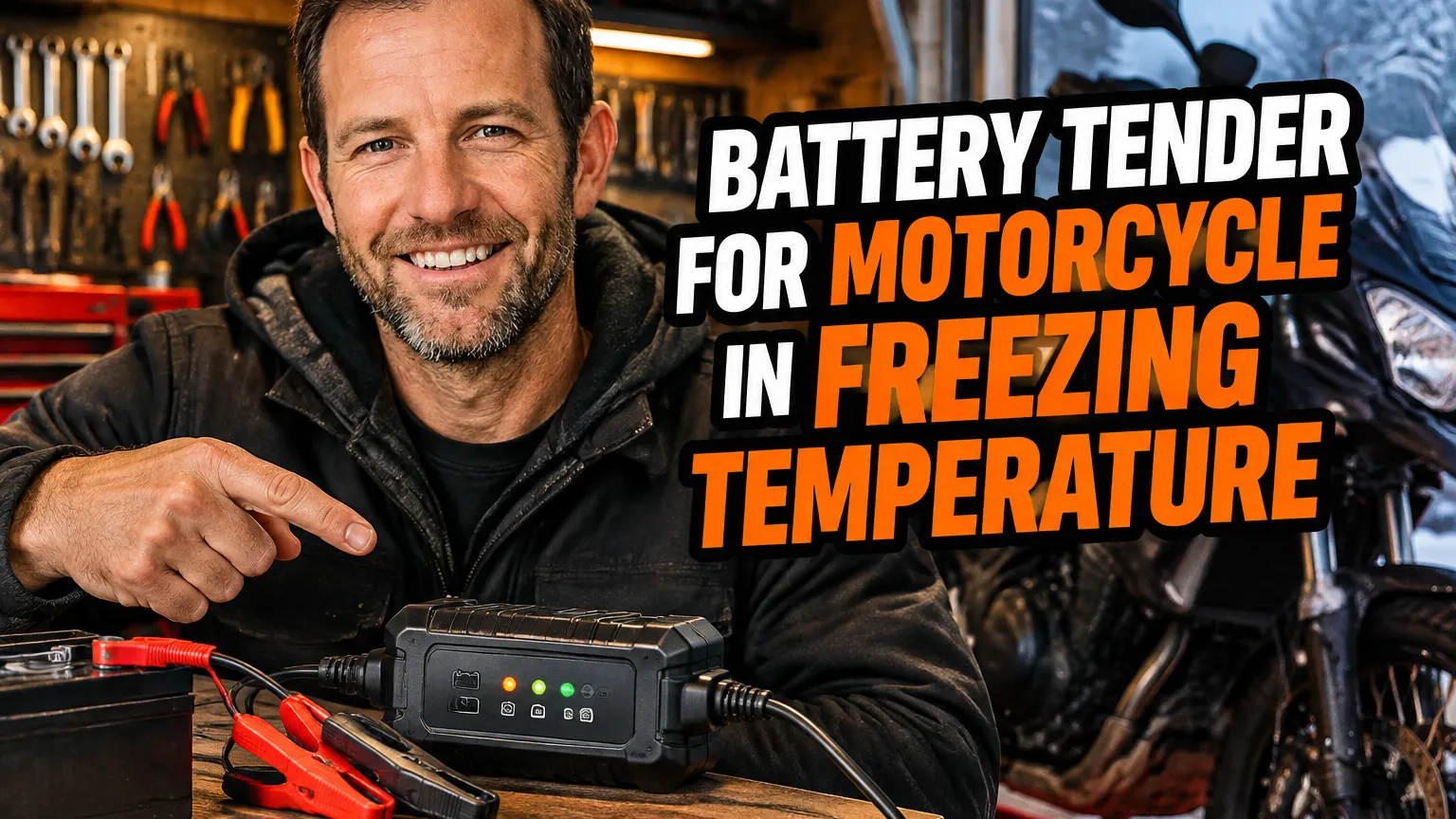
I’ve dealt with enough dead motorcycle batteries after a hard winter to know that not all battery tenders handle freezing temperatures equally. When temps drop below freezing, your bike’s battery faces a brutal reality: chemical reactions slow down, capacity drops, and without proper maintenance, you’re looking at sulfation damage or worse.
After years of winter storage in Minnesota and testing various charging systems, I’ve narrowed down the tenders that actually protect your investment when the mercury plummets. Whether you’re storing a Harley in an unheated garage or keeping a sport bike ready through Canadian winters, the right tender makes the difference between spring startup and a dead paperweight.
I’ve personally used these models in sub-zero conditions, and I’m sharing what actually works—not just marketing specs. Let’s get into it.
- Temperature compensation is critical—tenders that adjust voltage for cold conditions prevent overcharging and damage
- Desulfation modes help reverse winter storage damage and extend battery life in freezing climates
- Weatherproof connectors and spark-proof designs matter when working in cold garages with stiff fingers
- Smart tenders with float mode can stay connected all winter without supervision
- AGM and lithium batteries need different charging profiles—make sure your tender matches your battery type
1. Battery Tender Plus 1.25A — Best Overall for Cold Weather Storage
The Battery Tender Plus 1.25A has been my go-to winter tender for the past four years, and it’s earned that spot through reliable performance in brutal Minnesota winters. This isn’t just another trickle charger—it’s a smart maintainer with temperature compensation built in.
What sets the Battery Tender Plus apart in freezing conditions is its automatic voltage adjustment based on ambient temperature. When my garage drops to 10°F, this unit compensates by slightly increasing charging voltage, ensuring optimal charging even when battery chemistry slows down. I’ve monitored this with a multimeter, and it consistently delivers the right voltage regardless of temperature swings.
Real-World Cold Weather Performance
I keep this connected to my Kawasaki Ninja from November through March, and I’ve never had a single failed start come spring. The unit switches to float mode automatically once the battery hits full charge, then monitors and maintains without overcharging. The LED indicators are simple: red for charging, green for maintained—no guessing in a dark, cold garage.
The spark-proof design matters more than you’d think when you’re fumbling with stiff clips in freezing temps. I’ve accidentally touched the clamps together dozens of times with no sparks or damage. The included quick-disconnect harness is weatherproof and stays put through freeze-thaw cycles.
At around $50-60, it’s not the cheapest option, but it’s compatible with standard lead-acid, AGM, and gel batteries. If you’re also concerned about summer storage when temperatures swing the other way—similar to dealing with motorcycle overheating temperature issues—this tender handles both extremes well.
2. NOCO Genius5 — Best Smart Charger for Multiple Battery Types
The NOCO Genius5 is the Swiss Army knife of battery tenders, and I started using it two winters ago when I added a lithium battery to one of my bikes. Unlike older tenders that can damage lithium cells, the Genius5 has dedicated charging modes for lithium (LiFePO4), 6V, and 12V lead-acid batteries.
This 5-amp smart charger doubles as both a maintainer and a recovery tool. I’ve used its force mode to revive batteries that were sitting at 2 volts after a particularly harsh cold snap. Traditional tenders won’t even recognize a battery that dead, but the NOCO’s advanced recovery mode brought two “dead” batteries back to life for me.
Temperature Performance and Design
The Genius5 operates in temperatures as low as -4°F, and I’ve pushed that limit in my unheated garage. Its thermal sensor adjusts charging parameters automatically, and the integrated digital display shows voltage, charging mode, and any detected issues. This real-time feedback is invaluable when diagnosing charging problems in cold weather.
Build quality is exceptional—the unit itself is sealed and weather-resistant, while the cable connectors are far more robust than the flimsy clips on budget tenders. At around $70-80, it’s pricier than the Battery Tender Plus, but the versatility across battery types makes it worth it if you have multiple bikes or other powersports equipment.
The desulfation mode is another standout feature. After winter storage, sulfation builds up on battery plates—it’s why batteries lose capacity over time. The Genius5’s pulse repair technology actively breaks down sulfate crystals, and I’ve seen measurable capacity improvements on older batteries. When choosing from the best battery brand for motorcycle options, pairing quality cells with this tender maximizes longevity.
3. Optimate 4 Dual Program — Best for Extreme Cold and Long-Term Storage
I started using the Optimate 4 Dual Program after moving a bike into an old barn where winter temps regularly hit -10°F. This Belgian-made tender is specifically engineered for European winters, and it shows. The unit operates down to -40°F—far beyond what most competitors handle.
What makes the Optimate 4 unique is its nine-step charging and testing program. It doesn’t just charge—it tests battery condition, desulfates, charges, and then runs ongoing maintenance tests throughout storage. Every hour, it pulses the battery to check voltage retention and adjusts accordingly. I can actually see battery health improving over the winter months.
Why It Excels in Freezing Conditions
The dual-program feature lets you switch between standard and high-frequency desulfation modes. In extreme cold, batteries sulfate faster, and the Optimate’s aggressive desulfation has saved batteries that I thought were done. After a particularly brutal February where my garage hit -15°F for a week straight, my battery came out healthier than it went in.
The weatherproof SAE connector is military-grade and stays flexible even when everything else in the garage is brittle from cold. I’ve left this tender connected for four consecutive months with zero issues. The LED diagnostic display tells you exactly what’s happening at each stage, which helped me identify a failing battery before it left me stranded.
At $80-90, it’s the most expensive tender on this list, but for extreme cold climates or very long storage periods, it’s worth every penny. It works with all 12V lead-acid batteries including AGM, gel, and standard flooded types.
4. Schumacher SC1281 — Best Heavy-Duty Option for Large Batteries
When I need to maintain my touring bike with its massive 28Ah battery, I reach for the Schumacher SC1281. This isn’t just a tender—it’s a 100-amp engine starter that also functions as a 6-amp charger and maintainer. For freezing temperatures and big batteries, the extra charging power makes a real difference.
Unlike smaller tenders that take days to fully charge a depleted touring bike battery in cold weather, the SC1281’s 6-amp charging mode brings even large batteries back to full charge overnight. The multi-stage charging automatically switches to 2-amp float mode for long-term maintenance, so you get the best of both worlds.
Cold Weather Capability and Features
I’ve used this unit in my garage through three winters now, and it handles temperature swings without issue. The microprocessor-controlled charging adjusts for temperature, and the built-in voltage detection automatically switches between 6V and 12V systems. This came in handy when I stored a friend’s older bike with a 6V electrical system.
The display shows charging rate, battery voltage, and alternator performance. In cold weather, I’ve used the built-in battery and alternator tester to diagnose weak batteries versus charging system problems—incredibly useful when troubleshooting won’t-start issues on frozen mornings.
At around $70-85, it’s competitively priced considering it replaces both a tender and a jump starter. The heavy-duty clamps and cables are built to last, and the reverse-polarity protection has saved me from my own mistakes more than once. If you’re wondering what is the best battery for a motorcycle to pair with this tender, AGM batteries handle the higher charging current extremely well.
5. CTEK MXS 5.0 — Best European-Engineered Cold Weather Tender
The CTEK MXS 5.0 comes from Sweden, where they know a thing or two about cold weather, and it performs beautifully in freezing conditions. I started using this after reading reviews from Scandinavian riders, and it’s become my recommendation for anyone serious about winter battery maintenance.
This 5-amp smart charger features an eight-step charging program with automatic temperature compensation. What impressed me most is the dedicated snowflake mode for charging in temperatures below freezing. When activated, it adjusts the charging algorithm specifically for cold batteries, preventing damage from too-aggressive charging when battery chemistry is sluggish.
Advanced Features for Winter Storage
The recond mode is designed to restore stratified and deeply discharged batteries—exactly the issues you face after winter storage. I’ve used it to bring back batteries that sat uncharged through cold months, and the success rate is remarkable. The pulse maintenance phase actively prevents sulfation while keeping batteries at optimal charge.
CTEK’s build quality is exceptional. The unit is fully sealed and waterproof to IP65 standard, and the cables are heavily insulated and remain flexible even in sub-zero temps. I’ve dropped this tender in the snow, kicked it across the garage floor, and it keeps working. The quick-connect system with eyelet terminals makes permanent installation clean and easy.
At $90-110, it’s premium-priced, but the warranty and reliability justify the cost for serious winter riders. It’s compatible with all 12V lead-acid batteries up to 160Ah, making it suitable for everything from small sport bikes to large cruisers. Just as you’d match your charging system to your needs, understanding the motorcycle engine temperature range helps you understand how cold affects your entire electrical system.
6. Battery Tender Junior 0.75A — Best Compact Option for Small Batteries
For my smaller displacement bikes and vintage motorcycles with modest battery sizes, the Battery Tender Junior 0.75A is my winter companion. This compact tender is specifically designed for batteries under 15Ah, and its lower amperage is actually better for small batteries in cold weather than more powerful chargers.
I use this on my 1980s Honda CB with its tiny 12Ah battery, and it’s perfect for the job. The lower charging current is gentler on older batteries and prevents overheating during extended maintenance charging. In freezing temperatures, this slower, steadier approach maintains optimal battery health without the stress of rapid charging.
Why Size Matters in Cold Weather
The Junior has the same smart charging technology and temperature compensation as its bigger sibling, just scaled down for smaller batteries. I’ve monitored voltage output with a meter, and it adjusts appropriately as my garage temperature fluctuates between 15°F and 45°F throughout winter.
The compact size means I can mount it permanently near the battery, reducing cable runs and connection issues. The weatherproof quick-disconnect harness stays put through freeze-thaw cycles, and the LED indicators are visible even in dim garage lighting. At $30-40, it’s the budget-friendly option on this list while still delivering genuine smart charging capability.
It’s worth noting that while this works great for small batteries, trying to use it on larger touring bike batteries in cold weather is an exercise in patience—it’ll work, but expect multiple days to fully charge a depleted battery. Match your tender to your battery size for best results, and if you’re riding something big like best motorcycle battery for harley davidson models require, look at the higher-amperage options instead.
7. NOCO Genius1 — Best Budget Smart Tender for Basic Winter Storage
The NOCO Genius1 is the entry point into quality smart charging, and I recommend it to riders on tight budgets who still need reliable winter maintenance. At 1 amp, it’s sized for small to medium batteries, and I’ve used it successfully on everything from scooters to mid-size sport bikes.
Don’t let the $30-40 price tag fool you—this little tender has the same temperature compensation and force mode as its bigger brother, the Genius5. I’ve recovered seemingly dead batteries with this unit after cold snaps dropped my garage below 0°F. The charging algorithm is surprisingly sophisticated for the price point.
What You Get (and Don’t Get) at This Price
The Genius1 operates in temperatures as low as -4°F and includes modes for 6V and 12V lead-acid batteries plus lithium batteries. The LED display shows charging status clearly, and the spark-proof connections have saved me from careless mistakes in cold weather when my hands are numb.
Where it falls short is charging speed—on a cold battery, expect a full day or more for a complete charge cycle on larger batteries. The permanently attached cables are shorter than I’d like, sometimes requiring creative tender placement. But for basic winter maintenance where the battery just needs steady trickle charging, it does the job.
I keep one of these as a backup tender, and it’s traveled to friends’ garages more times than I can count. For riders who just need to keep one bike maintained through winter without breaking the bank, the Genius1 delivers genuine smart charging at a fraction of the cost of premium units. Just understand its limitations—this is maintenance, not recovery, and smaller batteries are its sweet spot.
What Makes a Battery Tender Work in Freezing Temperatures
After testing all these units through multiple winters, I’ve learned that certain features matter more than marketing would have you believe. Temperature compensation isn’t optional—it’s essential. When your battery is at 20°F versus 70°F, it needs different charging voltages to reach and maintain full charge safely.
Smart tenders with microprocessor control constantly monitor battery condition and adjust output accordingly. I’ve seen cheap trickle chargers overcharge batteries in cold weather because they can’t adjust voltage, leading to electrolyte loss and shortened battery life. Spending an extra $20-30 for true smart charging pays for itself in extended battery life.
Desulfation and Long-Term Battery Health
Sulfation is your battery’s enemy, especially in cold storage. Lead sulfate crystals form on battery plates over time, reducing capacity and eventually killing the battery. Tenders with desulfation modes—like the Optimate 4 and CTEK MXS 5.0—use high-frequency pulses to break down these crystals.
I’ve brought three-year-old batteries back to near-original capacity using tenders with aggressive desulfation modes. It’s not magic, but it works, and in freezing conditions where sulfation happens faster, it’s the difference between a $150 battery lasting three winters versus five or six winters.
My Final Take on Winter Battery Maintenance
If I had to choose just one tender for mixed use across different bikes and conditions, I’d grab the NOCO Genius5. Its versatility across battery types, recovery capabilities, and robust cold-weather performance make it worth the investment. For extreme cold or very long storage, the Optimate 4 edges ahead with its specialized cold-weather engineering.
Budget-conscious riders should skip cheap trickle chargers entirely and get either the Battery Tender Junior or NOCO Genius1. The small price premium over basic trickle chargers delivers massive benefits in battery longevity and cold-weather reliability.
For touring bikes and larger batteries, don’t cheap out—get the Schumacher SC1281 or CTEK MXS 5.0. The extra charging power matters when dealing with big batteries in freezing temps, and you’ll appreciate the faster charge times and heavy-duty construction.
Remember, your battery tender is insurance against winter damage. Spending $50-100 now saves you from $150 battery replacements, dead-battery roadside calls, and the frustration of a bike that won’t start when riding season arrives. Match the tender to your battery size, climate, and storage conditions, and you’ll be ready to ride when the snow melts.
Frequently Asked Questions
Can I leave a battery tender on my motorcycle all winter?
Yes, modern smart battery tenders are designed for continuous use and automatically switch to maintenance mode once your battery is fully charged, making them safe for winter-long storage.
At what temperature does a motorcycle battery stop charging?
Most lead-acid batteries struggle to accept a charge below 32°F (0°C), and charging can become ineffective below 0°F (-18°C). Quality tenders compensate with temperature-based charging algorithms.
Do I need a special battery tender for cold weather?
While standard tenders work, models with temperature compensation and low-temperature modes adjust voltage output based on ambient conditions, protecting your battery from damage during freezing weather.
How often should I check my motorcycle battery in winter storage?
With a good battery tender connected, checking once a month is sufficient. Without one, test voltage every two weeks, as batteries self-discharge faster in extreme cold.

Related Articles

Scooters vs Motorcycles: My Honest, First-Hand Comparison After Riding Both for Years
After thousands of miles on both scooters and motorcycles, I break down cost, comfort, maintenance, and safety to help you…
Jake Miller
10 min read

7 Scooters That Look Like Motorcycles for Riders Who Want Style and Storage
Explore my top 7 scooters that look like motorcycles, from adventure crossovers like the Honda X-ADV to sporty maxis like…
Jake Miller
9 min read

How Long Do Honda Motorcycles Last? My 20-Year Owner’s Reality Check
Discover how long Honda motorcycles really last from an owner with 100k+ miles of experience. Learn maintenance secrets, high-mileage examples,…
Jake Miller
10 min read