
7 Best Gel Battery for Motorcycle Picks I Trust for Reliable Starts
 Jake Miller
7 min read
Jake Miller
7 min read
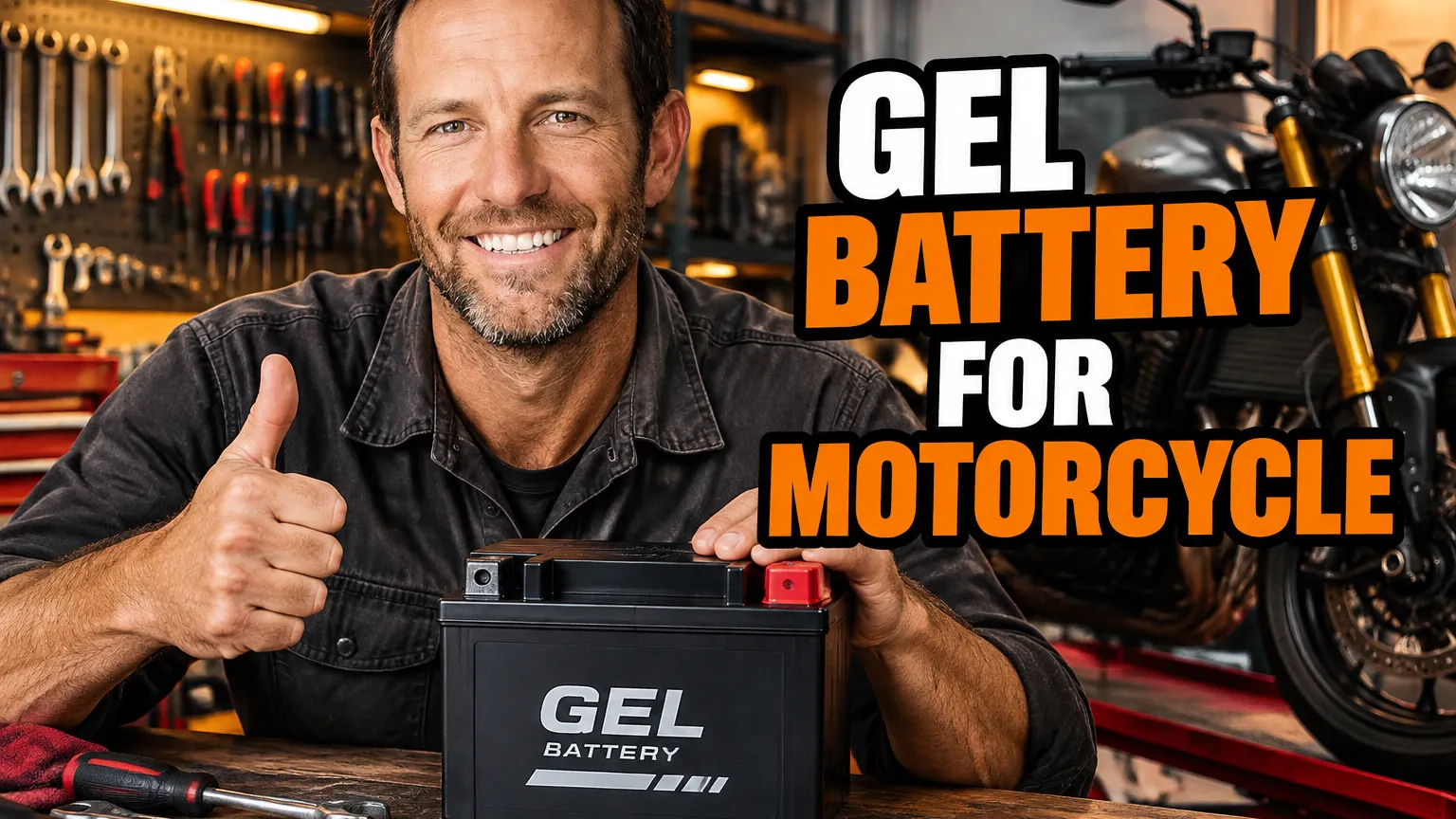
I have replaced more motorcycle batteries than I care to admit. Early on, I grabbed whatever was cheapest and paid for it with dead starts and a few roadside pushes. Once I started paying attention to battery chemistry, everything got easier.
Gel batteries are a niche within the sealed battery world, but they suit certain riders very well. In this guide, I share the seven gel and gel-style batteries I would actually put on my own bike, and why.
- Gel batteries excel in heat, vibration, and deep-discharge recovery, and they never spill.
- My overall pick is the Yuasa YTX14-BS style sealed unit for most street bikes, with Deka and Motobatt as strong alternatives.
- Match CCA, size, and terminal layout to your bike before you buy.
- Pair any gel battery with a smart charger that has a gel or AGM mode.
Why I Choose Gel Over Other Battery Types
Gel batteries use a silica-thickened electrolyte instead of free liquid acid. That makes them vibration resistant and spill-proof. It also makes them more forgiving if a bike sits for a few weeks.
The tradeoff is cranking power. Gel typically delivers a bit less burst current than AGM, and it is fussier about charging voltage. I always tell riders that the right charger matters as much as the battery itself.
If you are still comparing chemistries, my guide on what is the best battery for a motorcycle walks through lead-acid, AGM, gel, and lithium side by side.
1. Deka ETX14L Gel Battery — Best Overall Gel Pick
The Deka ETX14L is where I start for most mid-size and large street bikes. East Penn builds Deka in Pennsylvania, and the quality control shows. Mine has held a charge through long winters without complaint.
Key Specs
- 12V, roughly 12 Ah capacity
- About 200 CCA, depending on the exact ETX spec
- Sealed, maintenance-free, spill-proof design
- Typical price range: $90 to $130
What I Like
The Deka ETX14L recovers well after I let a bike sit. It also tolerates vibration from big twins without the plate damage I have seen in cheaper units.
Check the terminal orientation before you order. The ETX14L is a common fitment for cruisers and sport-tourers, but a wrong-side terminal will not reach your cables.
2. Yuasa YTX14-BS — Best Trusted Brand Choice
Yuasa is probably the first name most riders know. The Yuasa YTX14-BS is a factory-activated sealed battery, and it is an OEM fitment on many Honda, Suzuki, and Kawasaki models. It is technically an AGM-style sealed unit, but it is the benchmark I compare every gel battery against.
Key Specs
- 12V, 12 Ah
- Around 200 CCA
- Pre-filled and sealed, ready to install
- Typical price range: $85 to $120
Why It Earns a Spot
I include the Yuasa YTX14-BS because it is the safest, most widely available replacement. If you want to understand how it stacks up against competitors, see my breakdown of the best battery brand for motorcycle owners.
3. Odyssey PC680 — Best for Small Bikes and Hard Use
The Odyssey PC680 is a compact dry-cell battery that packs serious punch for its size. Odyssey uses pure lead plates, which is why these batteries are known for high cranking power and deep-cycle resilience. It is a sealed, non-gel construction, but it is what I recommend when a rider wants gel-like durability in a small case.
Key Specs
- 12V, about 16 Ah
- Around 170 CCA
- Pure lead plate construction
- Typical price range: $100 to $140
Where It Shines
I have seen the Odyssey PC680 outlast batteries that cost half as much by several seasons. It handles cold starts and repeated short rides better than most.
The downside is price. For a casual weekend bike, it may be more battery than you need.
4. Motobatt MBTX20U — Best for Big Cruisers and Tourers
Big V-twins demand serious cranking amps. The Motobatt MBTX20U is a sealed, maintenance-free battery with strong CCA and a reputation among Harley riders. It is my go-to when a bike has heavy electrical loads like heated grips and auxiliary lights.
Key Specs
- 12V, 18 Ah
- Around 310 CCA
- Spill-proof sealed design
- Typical price range: $110 to $150
Touring Use
If you run accessories on long trips, capacity matters. Take a look at my picks for the best 6 battery for touring motorcycle setups for more options in that category.
5. Interstate Batteries CTX14-BS — Best Easy-to-Find Replacement
The Interstate CTX14-BS is the battery I recommend when someone needs a replacement today. Interstate has retail locations across the country, so you can pick one up locally and avoid shipping delays.
Key Specs
- 12V, about 12 Ah
- Roughly 200 CCA
- Sealed, maintenance-free, factory activated
- Typical price range: $90 to $125
My Take
It is not flashy, but it starts reliably and fits many popular models. Warranty support is easy to use, which I appreciate.
6. Shorai LFX14L2-BS12 — Best Lightweight Upgrade
I include the Shorai LFX14L2-BS12 as the honest alternative. It is lithium iron phosphate, not gel, but many riders considering gel really want less weight and longer life. This Shorai weighs roughly a third of a comparable lead-acid battery.
Key Specs
- 12V, lithium iron phosphate chemistry
- Around 240 CCA
- Weight of about 2 to 3 pounds
- Typical price range: $130 to $170
Things to Watch
Lithium dislikes deep cold starts and needs a compatible charger. The Shorai LFX14L2-BS12 is excellent on a sport bike where saving weight matters, but I would not use it on a bike I store for months without a maintainer.
7. Antigravity ATX-30-RS — Best for Indian and Large Twins
The Antigravity ATX-30-RS is a lithium battery with a built-in Re-Start feature, which gives you a second chance if you leave your lights on. It is designed for big-displacement bikes and has strong cranking output.
Key Specs
- 12V, lithium chemistry
- Around 480 CCA
- Built-in battery management and Re-Start reserve
- Typical price range: $220 to $260
Fitment
For riders of large American twins, see my notes on the best battery for indian motorcycle models, since fitment varies by year and model.
How I Choose the Right Gel Battery
Match Size and Terminals
Start with your owner’s manual. Confirm the battery group size, terminal polarity, and physical dimensions. A battery that is even a quarter inch too large will not fit the tray.
Check CCA and Capacity
Cold cranking amps tell you how well the battery starts the bike in cold weather. Amp hours tell you how long it can run accessories. Match or slightly exceed your original specification.
Consider Your Riding Style
If you ride daily, almost any quality sealed battery works. If your bike sits for weeks at a time, gel or a high-quality AGM with a maintainer is my recommendation.
Charging and Care Tips From My Garage
Gel batteries are sensitive to overcharging. I always use a smart charger with a gel or AGM profile and keep the voltage within the manufacturer’s range. A bad charger ruins a good battery quickly.
I covered my favorites in the guide to the best battery charger for a motorcycle. It is worth reading before you install anything new.
Storage Habits That Help
- Keep the battery charged above about 12.4 volts.
- Store the bike in a cool, dry place when possible.
- Clean the terminals and check connections each season.
- Use a battery maintainer during winter storage.
Common Mistakes I See Riders Make
The most frequent error is buying on price alone. A $50 battery that fails in a year costs more than a $110 battery that lasts five. I learned that lesson the hard way.
Another mistake is ignoring the charging system. If your stator or regulator is failing, even the best battery will die early. Test the charging voltage at the terminals with the engine running. You should see roughly 13.5 to 14.5 volts.
My Final Thoughts
If I had to choose one battery for most riders, I would go with the Deka ETX14L for a true gel experience. For a trusted name with easy availability, the Yuasa YTX14-BS is hard to beat.
Big cruisers and tourers do well with the Motobatt MBTX20U, while weight-conscious riders should look at the Shorai LFX14L2-BS12. Whatever you choose, confirm fitment and pair it with a quality charger. Your bike will reward you with reliable starts for years.

Related Articles

Scooters vs Motorcycles: My Honest, First-Hand Comparison After Riding Both for Years
After thousands of miles on both scooters and motorcycles, I break down cost, comfort, maintenance, and safety to help you…
Jake Miller
10 min read

7 Scooters That Look Like Motorcycles for Riders Who Want Style and Storage
Explore my top 7 scooters that look like motorcycles, from adventure crossovers like the Honda X-ADV to sporty maxis like…
Jake Miller
9 min read

How Long Do Honda Motorcycles Last? My 20-Year Owner’s Reality Check
Discover how long Honda motorcycles really last from an owner with 100k+ miles of experience. Learn maintenance secrets, high-mileage examples,…
Jake Miller
10 min read