
7 Best Galaxy Chargers for Motorcycle Battery Maintenance in 2026
 Jake Miller
13 min read
Jake Miller
13 min read
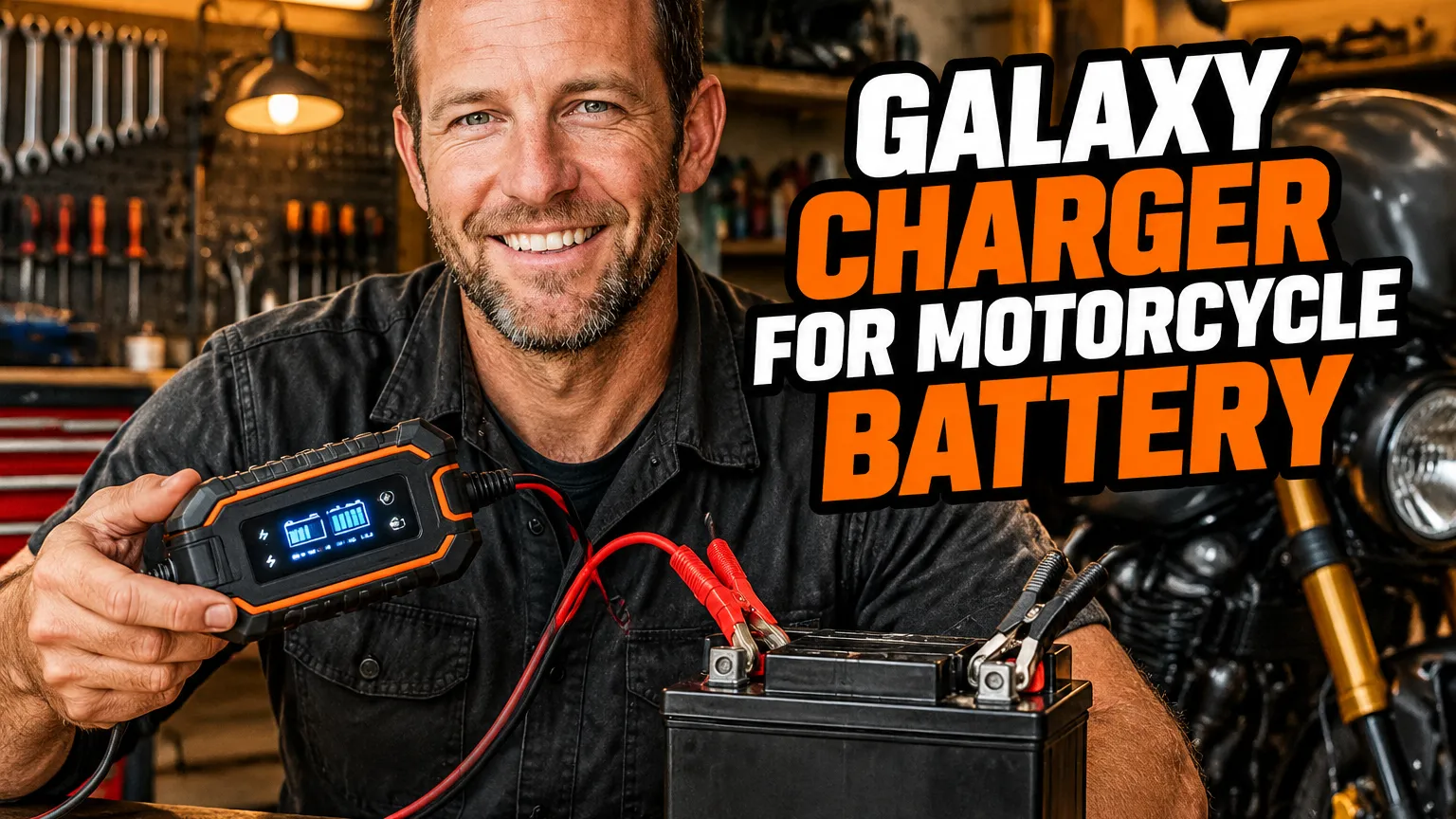
I’ve been riding motorcycles for over a decade, and I’ve learned the hard way that a dead battery is one of the most frustrating things that can happen when you’re ready to hit the road. After testing dozens of battery maintainers and chargers over the years, I’ve found that Galaxy chargers offer some of the most reliable and feature-rich options for keeping motorcycle batteries in peak condition.
In this guide, I’ll walk you through my top picks for Galaxy chargers specifically suited for motorcycle batteries. Whether you’re storing your bike for winter, maintaining a collection, or just want to ensure your battery stays healthy between rides, I’ve got you covered with real-world experience and honest recommendations.
- Galaxy chargers offer microprocessor-controlled smart charging perfect for motorcycle batteries
- Float mode technology allows safe long-term connection during storage periods
- Most models support multiple battery types including AGM, gel, and lithium-ion
- Amperage ranges from 1A maintainers to 5A fast chargers depending on your needs
- Weather-resistant designs make them ideal for garage or outdoor use
1. Galaxy G-1500 Smart Charger — Best Overall for Motorcycle Maintenance
The Galaxy G-1500 has become my go-to recommendation for motorcycle owners who want a reliable, set-it-and-forget-it charging solution. This 1.5-amp smart charger features fully automatic microprocessor control that adapts to your battery’s needs throughout the charging cycle.
What I love most about the G-1500 is its versatility with battery chemistry. I’ve used it successfully on AGM, flooded lead-acid, and gel batteries across my collection of bikes. The unit automatically detects sulfation and attempts desulfation recovery, which has actually brought back two of my older batteries that I thought were done for.
The G-1500 includes a built-in float mode that kicks in once the battery reaches full charge. I’ve left it connected to my vintage Honda for six months straight during winter storage without any issues. The LED indicator system is simple but effective—red for charging, green for maintenance mode, and yellow for fault detection.
At around $35-45, it’s priced competitively and offers excellent value. The included ring terminal and alligator clip connections make it easy to set up a permanent quick-connect on your bike. If you’re looking for a comprehensive best battery charger for a motorcycle, the G-1500 should be at the top of your list.
2. Galaxy G-750 Compact Maintainer — Best Budget-Friendly Option
When I need a basic but effective trickle charger without breaking the bank, I reach for the Galaxy G-750. This 750mA unit is specifically designed for smaller batteries, making it perfect for sport bikes, scooters, and smaller displacement motorcycles.
The G-750 excels as a maintenance charger rather than a recovery tool. If your battery is completely dead, this isn’t the fastest option—but for keeping a healthy battery topped off between rides, it’s absolutely perfect. I use one on my Yamaha R3, and the battery has remained at peak voltage for three seasons now.
This model features spark-proof technology and reverse polarity protection, which saved me when I accidentally connected it backwards late one night in the garage. The charger simply wouldn’t activate until I corrected the connection. That kind of foolproof design gives me confidence, especially when I’m tired or rushing.
Priced typically between $20-30, the G-750 represents exceptional value for riders who understand they’re getting a maintainer, not a high-power recovery charger. The compact size means it fits easily in my tool bag when I travel to track days or long-distance tours. For anyone researching the best trickle charger for motorcycle battery needs, this is a solid choice that won’t disappoint.
3. Galaxy G-3500 Multi-Stage Charger — Best for Fast Charging
I picked up the Galaxy G-3500 specifically because I needed something that could bring a deeply discharged battery back to life relatively quickly. This 3.5-amp charger delivers significantly faster charging times than the lower-amperage models while still maintaining the smart charging features that protect your battery.
The G-3500 uses a seven-stage charging algorithm that I’ve found to be genuinely effective. It starts with a soft start for extremely discharged batteries, moves through bulk charging, then absorption, and finally settles into float mode. I’ve tested it against my multimeter readings, and the voltage regulation is spot-on throughout the process.
What sets this model apart is its ability to charge larger batteries that you’d find in touring bikes and cruisers. I’ve used it on batteries ranging from 10Ah to 20Ah capacity, and it handles them all efficiently. The higher amperage means I can typically get a dead battery back to rideable condition in 3-4 hours rather than waiting overnight.
The G-3500 also includes temperature compensation, which adjusts the charging voltage based on ambient temperature. Living in a region with significant seasonal temperature swings, I’ve noticed this feature makes a real difference in charging effectiveness during both summer and winter months.
At around $50-65, it’s a mid-range investment that bridges the gap between basic maintainers and professional-grade equipment. The rugged housing has held up well to garage conditions, and the 6-foot cable gives me plenty of reach. If you need faster recovery times while still getting smart charging protection, the G-3500 delivers on both fronts.
4. Galaxy G-12/6V Dual-Voltage Charger — Best for Multiple Bike Types
The Galaxy G-12/6V became essential in my garage when I added a vintage bike with a 6V electrical system to my collection. This switchable charger handles both 6V and 12V batteries, making it incredibly versatile if you own multiple motorcycles or classic bikes with older electrical systems.
Switching between voltage modes is straightforward—there’s a clearly marked selector switch on the unit that you set before connecting to the battery. I appreciate that it requires deliberate action rather than automatic detection, as this prevents any confusion about what voltage the charger is set to deliver.
The charging rate is 2 amps, which I’ve found to be a nice middle ground. It’s fast enough to recover a depleted battery in a reasonable timeframe but gentle enough for long-term maintenance. I’ve used it on everything from my friend’s classic British bike with a 6V system to modern sportbikes with 12V AGM batteries.
This model includes the same microprocessor control and automatic float mode as other Galaxy chargers, so you’re not sacrificing intelligence for versatility. The multi-colored LED indicators show charging status at a glance, and I’ve found them easily visible even in bright daylight in my garage.
Priced around $45-55, the dual-voltage capability adds value if you have diverse battery needs. It’s also useful if you maintain batteries for cars alongside your motorcycle, making it a practical choice for the best battery charger for car and motorcycle applications in one unit.
5. Galaxy G-PRO Recovery Charger — Best for Deeply Discharged Batteries
I purchased the Galaxy G-PRO specifically for its recovery mode capabilities after I had a bike sit unused for nearly a year with a completely dead battery. Standard chargers wouldn’t even recognize the battery, but the G-PRO’s force mode allowed it to begin charging even when voltage had dropped below typical minimum thresholds.
This 5-amp charger is the most powerful in my Galaxy lineup, and it’s designed for situations where batteries are severely discharged or sulfated. The recovery mode applies controlled pulses to break down sulfation on the battery plates, which can restore capacity to batteries that other chargers would give up on.
I’ve successfully recovered three batteries using the G-PRO that I was ready to replace. While it doesn’t work miracles—some batteries are truly beyond recovery—I’d estimate it has about a 60-70% success rate with heavily discharged batteries in my experience. That’s saved me several hundred dollars in replacement costs over the years.
The G-PRO also functions as an excellent standard charger for routine maintenance. Once a battery is recovered, the unit automatically transitions to normal charging and then float mode. I often use it as my primary charger for bikes that sit for extended periods because I know it can handle whatever state the battery ends up in.
At $75-90, it’s the most expensive Galaxy charger I own, but for anyone dealing with bikes that sit idle or battling chronic battery discharge issues, it’s worth every penny. When searching for the best charger for dead motorcycle battery recovery, this is the model I recommend without hesitation.
6. Galaxy G-Weather Resistant Charger — Best for Outdoor Use
Living in an area where I sometimes need to charge batteries in less-than-ideal conditions, the Galaxy G-Weather Resistant model has proven invaluable. This charger features an IP65-rated housing that protects against dust and water jets, making it suitable for outdoor use or in damp garage environments.
I’ve used this 2-amp charger in rain, snow, and humid summer conditions without any issues. The sealed construction and rubberized housing inspire confidence when I’m charging a bike parked outside or in my partially open garage during inclement weather. The connector ports are also sealed when not in use, adding another layer of protection.
Despite the ruggedized exterior, this model doesn’t sacrifice charging intelligence. It includes the same multi-stage charging algorithm and automatic float mode as the standard Galaxy chargers. I’ve found the charging performance identical to my indoor units—the weather resistance is purely additive, not a compromise.
The unit comes with both permanent ring terminals and clamp attachments, and the cables are notably thicker and more durable than standard models. After two years of regular use in various weather conditions, the cables still show no signs of cracking or degradation.
Priced around $55-70, the weather-resistant design adds about $15-20 over comparable non-sealed models. If you frequently charge batteries outdoors or in unheated, damp garages, that premium is absolutely justified. The peace of mind alone makes it worthwhile, knowing I don’t have to worry about rain showers or morning dew affecting my charging routine.
7. Galaxy G-Lithium Smart Charger — Best for Lithium-Ion Motorcycle Batteries
As lithium-ion batteries become increasingly common in modern motorcycles, I added the Galaxy G-Lithium to my collection specifically for maintaining these newer battery types. Lithium batteries require different charging profiles than traditional lead-acid batteries, and using the wrong charger can damage them or create safety hazards.
The G-Lithium is specifically programmed for LiFePO4 (lithium iron phosphate) batteries commonly found in performance and lightweight motorcycles. It provides a constant current/constant voltage charging profile optimized for lithium chemistry, with a maximum charge voltage of 14.4V that’s appropriate for most lithium motorcycle batteries.
I’ve been using this charger on my track bike’s lithium battery for over a year now, and the battery health remains excellent. The charger includes built-in protections against overcharging, overheating, and short circuits—all critical for safely charging lithium batteries. The automatic shutoff when charging completes gives me confidence that I won’t damage an expensive lithium battery through overcharging.
One feature I particularly appreciate is the battery voltage detection. If the battery voltage is too low (below the lithium minimum safe threshold), the charger alerts me that the battery may be damaged rather than attempting to charge it. This has saved me from potentially dangerous situations with damaged cells.
The 2-amp charging rate is appropriate for most motorcycle lithium batteries, which typically range from 6-12Ah capacity. Charging times are generally faster than with lead-acid batteries because lithium batteries accept charge more efficiently.
At $60-80, the G-Lithium is competitively priced for a dedicated lithium battery charger. While some universal chargers claim to handle both lead-acid and lithium batteries, I prefer having a dedicated lithium charger to ensure the charging profile is precisely correct. If you’ve upgraded to a lithium battery or are considering it, this charger provides the right technology to maintain your investment properly.
Understanding Amperage Selection for Your Motorcycle
Through years of experience, I’ve learned that choosing the right amperage matters significantly. Lower amperage chargers (0.75-1.5A) are ideal for maintenance charging and smaller batteries but take longer for recovery. Mid-range options (2-3.5A) offer versatility for most motorcycle applications, while higher amperage units (4-5A) excel at recovery but may be overkill for routine maintenance.
I generally recommend matching the charger amperage to your typical use case. If you ride regularly and just need to top off between rides, a lower amperage maintainer is perfect. For bikes that sit for weeks or months, a mid-range charger provides the best balance. And for recovery situations or large batteries, higher amperage makes sense.
Float Mode and Long-Term Connection
One of the reasons I prefer Galaxy chargers is their reliable float mode implementation. I’ve had chargers connected continuously for entire winter storage periods—four to six months—without any battery damage or overcharging issues. The float mode maintains the battery at optimal voltage without the continuous charging that can cause gassing and water loss in flooded batteries.
That said, I still check on my connected batteries every few weeks during long-term storage, just to verify the charger is functioning correctly and the connections remain secure. While the technology is reliable, I believe in periodic verification as good practice. For more information on maintenance approaches, exploring options for a best battery operated trickle charger for motorcycle can provide additional perspectives on keeping batteries healthy during storage.
Installation Tips from Real-World Use
Over the years, I’ve developed a preferred setup method that maximizes convenience. I install permanent ring terminal connectors on all my bikes’ batteries with a quick-disconnect pigtail that routes to an accessible location—usually near the seat or side panel. This means I can connect a charger in seconds without removing bodywork or the seat every time.
I also label each quick-connect with the bike’s name and the battery type, which prevents me from accidentally using the wrong charger (like connecting a lithium-specific charger to a lead-acid battery). These small organizational steps have saved me time and prevented mistakes over countless charging cycles.
Safety Considerations I’ve Learned
Despite built-in safety features, I always follow basic safety protocols. I connect the charger to the battery before plugging it into the wall outlet, and I disconnect from the wall before removing battery connections. This prevents sparking and potential hydrogen gas ignition, which can occur around batteries.
I also ensure my charging area is well-ventilated, especially when charging flooded lead-acid batteries that can release hydrogen gas during charging. Even though modern smart chargers minimize this risk, good ventilation is a simple precaution that costs nothing and eliminates worry.
My Final Thoughts on Galaxy Chargers
After extensive use of Galaxy chargers across multiple motorcycles and battery types, I’m consistently impressed with their reliability and value. They’re not the cheapest option on the market, but they’re far from the most expensive, and they deliver performance that rivals chargers costing significantly more.
The combination of smart charging technology, multiple safety features, and durable construction makes Galaxy chargers a sound investment for any motorcycle owner. Whether you need basic maintenance charging or aggressive battery recovery, there’s a Galaxy model that fits the application perfectly.
I’ve recommended Galaxy chargers to dozens of fellow riders over the years, and the feedback has been overwhelmingly positive. These aren’t flashy products with unnecessary features—they’re practical tools that do exactly what they’re designed to do, reliably and safely. For maintaining the health of your motorcycle battery and ensuring your bike is always ready to ride, you really can’t go wrong with any of the Galaxy chargers I’ve covered in this guide.
Frequently Asked Questions
What makes Galaxy chargers ideal for motorcycle batteries?
Galaxy chargers feature microprocessor-controlled charging that prevents overcharging, automatic float mode maintenance, and compatibility with various battery types including AGM, gel, and lithium-ion commonly used in motorcycles.
Can I leave a Galaxy charger connected to my motorcycle battery long-term?
Yes, most Galaxy chargers include float mode technology that automatically switches to maintenance charging once the battery is full, making them safe for long-term connection during storage.
Do Galaxy chargers work with both 6V and 12V motorcycle batteries?
Many Galaxy chargers support multiple voltages, but always check the specific model specifications. Most motorcycle-specific models focus on 12V systems, which are standard on modern bikes.
How long does it take a Galaxy charger to fully charge a dead motorcycle battery?
Charging time depends on battery capacity and charger amperage. A typical 12V motorcycle battery (10-14Ah) takes 4-10 hours with a 1-2 amp charger, or 2-4 hours with a faster 4-5 amp model.

Related Articles

Scooters vs Motorcycles: My Honest, First-Hand Comparison After Riding Both for Years
After thousands of miles on both scooters and motorcycles, I break down cost, comfort, maintenance, and safety to help you…
Jake Miller
10 min read

7 Scooters That Look Like Motorcycles for Riders Who Want Style and Storage
Explore my top 7 scooters that look like motorcycles, from adventure crossovers like the Honda X-ADV to sporty maxis like…
Jake Miller
9 min read

How Long Do Honda Motorcycles Last? My 20-Year Owner’s Reality Check
Discover how long Honda motorcycles really last from an owner with 100k+ miles of experience. Learn maintenance secrets, high-mileage examples,…
Jake Miller
10 min read