
8 Best Japanese Motorcycles for New Riders: Honest Picks From My Garage
 Jake Miller
9 min read
Jake Miller
9 min read
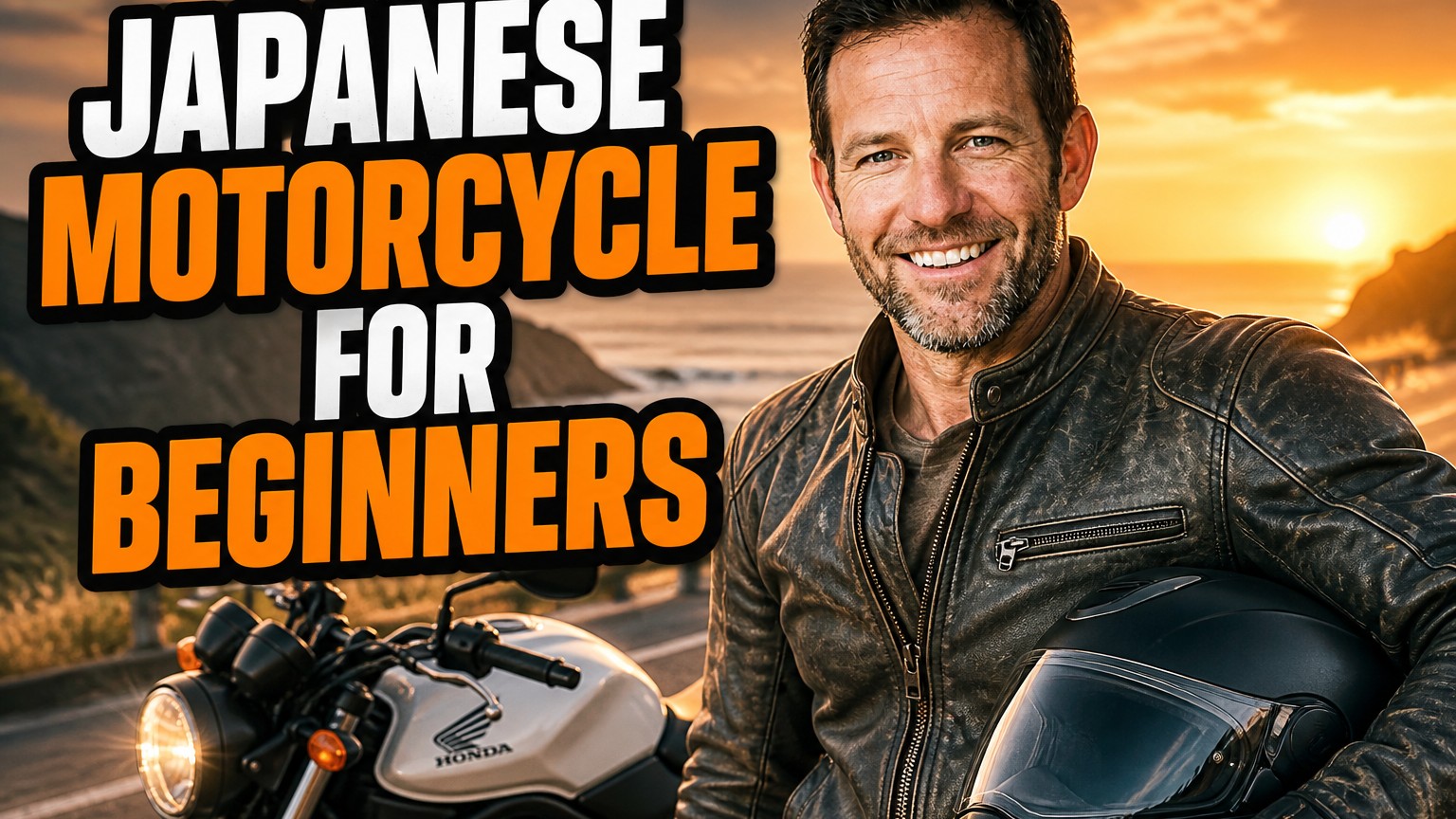
I still remember the first time I swung a leg over a Japanese bike. It was a small, forgiving machine that let me focus on learning instead of fighting the motorcycle. That feeling is what I want for you.
Japanese manufacturers have spent decades perfecting approachable bikes. They start easily, run reliably, hold their value and don’t cost a fortune to maintain. Over the years I’ve ridden, borrowed or helped friends buy most of the bikes on this list.
Below are my picks for the best Japanese motorcycle for beginners, organized by riding style, with real specs and honest opinions. I’ll also share how I’d choose between them.
- My top overall pick for first-timers is the Honda Rebel 300: low, light and easy to ride.
- For sportier looks, I’d choose the Yamaha YZF-R3 or Kawasaki Ninja 500.
- If you want a bike you won’t outgrow quickly, the Suzuki SV650 is surprisingly beginner-friendly.
- Prioritize seat height, weight, ABS and a smooth throttle over raw horsepower.
1. Honda Rebel 300 — Best Overall for First-Timers
If a friend asked me for one bike recommendation with no other details, I’d say the Honda Rebel 300. It’s the bike I point most nervous beginners toward. Everything about it says “relax, you’ve got this.”
Why I Love It
The Rebel 300 has a 27.2-inch seat height, which lets almost every rider plant both feet firmly. Its curb weight is roughly 364 lbs, and the low center of gravity makes parking-lot maneuvers far less scary.
The 286cc single-cylinder engine makes around 27 hp. That’s gentle enough that I never felt the throttle was trying to bite me. ABS is available and I’d absolutely pay extra for it.
Things to Consider
Pricing generally starts around $4,700 to $5,000. The cruiser riding position is relaxed, but highway passing takes planning. If you’re weighing displacement, my guide to the best 300cc motorcycle for beginners goes deeper on this class.
2. Kawasaki Ninja 500 — Best Sportbike Look With Friendly Manners
The Kawasaki Ninja 500 is the successor to the long-running Ninja 400, and it keeps the same beginner-friendly spirit. I find it one of the easiest ways into sportbike riding without a punishing riding position.
Specs That Matter
It uses a 451cc parallel-twin making roughly 45 hp. Weight is around 375 to 380 lbs, and the seat height is about 30.9 inches. The clutch is light, and the slip-assist design makes downshifts smoother.
Pricing typically lands around $7,000 to $7,500, depending on the trim. Kawasaki’s styling looks far more expensive than the price suggests.
My Take
I love how the Ninja 500 feels planted at highway speeds. It’s confident for commuting yet still exciting on a back road. If you’re deciding between engine sizes, my breakdown of the best 400cc motorcycle for beginners covers the Ninja’s rivals.
A used Ninja 400 is also a fantastic budget alternative. I’ve seen clean ones for a lot less than the new bike.
3. Yamaha YZF-R3 — Best Entry-Level Sportbike for Learning
The Yamaha YZF-R3 is the bike I recommend to new riders who want to look like they’re riding an R1. It has real track-bike styling, but the engine is tame and forgiving.
What Stands Out
The 321cc parallel-twin makes about 42 hp and revs happily. Curb weight is around 375 lbs and seat height is 30.7 inches. It has a 37mm KYB fork, ABS and a full fairing.
Expect to pay somewhere around $5,300 to $5,600 new. I think that’s one of the best values in the whole Japanese lineup.
Who It Fits
The R3 suits riders who want to grow their skills and maybe try a track day. The riding position leans forward, which can be tiring in traffic. If you’re curious about smaller engines, take a look at my guide to the best 250cc motorcycle for beginners too.
4. Honda CB300R — Best Naked Bike for City Riding
I’ve always had a soft spot for the Honda CB300R. It’s the bike I’d pick for city commuting because it’s agile, upright and rather stylish with its neo-retro design.
Key Specs
The 286cc single-cylinder engine makes roughly 31 hp. The bike weighs about 313 lbs, making it one of the lightest on this list. Seat height is around 31.7 inches, and you get an inverted fork, LED lighting and standard ABS.
Pricing generally sits near $4,900 to $5,200. That’s a lot of premium feel for the money.
My Experience
The upright seating and wide bars make slow-speed traffic simple. It’s also very light, which helps when you’re learning to U-turn. The only drawback is the taller seat, so shorter riders should sit on one before buying.
5. Honda CRF300L — Best for Dual-Sport and Dirt Adventures
Not every beginner wants a street bike. If you dream about fire roads and weekend trails, the Honda CRF300L is where I’d start. It’s tough, simple and very easy to live with.
Why It Works
The 286cc engine produces around 27 hp with a smooth, linear pull. The bike weighs about 309 lbs, and ABS is available as an option. Long-travel suspension swallows potholes and gravel alike.
Expect to pay about $5,300 to $5,800. I think that’s reasonable for a street-legal machine that can also tackle trails.
The Catch
The seat height is roughly 34.7 inches, and that’s tall. I’ve watched shorter riders struggle with it. If you can lower it or you’re comfortable on tiptoes, it’s wonderful. Otherwise, choose something lower.
6. Honda Rebel 500 — Best for Growing Into Your Bike
The Honda Rebel 500 is my pick for riders who want a cruiser but worry about outgrowing a 300 in a year. It keeps the low, comfy stance and adds real highway muscle.
Specs and Feel
It has a 471cc parallel-twin making roughly 46 hp. The seat height is the same 27.2 inches as the smaller Rebel, and the bike weighs about 408 lbs. Price usually runs around $6,500 to $7,000.
The twin has a lovely, torquey character. It pulls cleanly from low rpm, which makes shifting less stressful for beginners.
Who Should Buy It
If you’re confident and want one bike for years, this is a smart choice. If you’re nervous about weight, start with the 300. Either way, you’ll be riding a Honda that holds its resale value well.
7. Suzuki SV650 — Best Step-Up Bike With Smooth Power
This one surprises people. The Suzuki SV650 has a legendary reputation as a beginner-friendly middleweight. I’ve ridden several over the years, and its manners are consistently excellent.
Why a V-Twin Works
The 645cc V-twin makes about 75 hp, but the delivery is smooth and linear instead of explosive. Weight is around 434 lbs, and seat height is 31.9 inches. Suzuki’s Low RPM Assist and Easy Start features help prevent stalls, which is a real confidence booster.
Pricing generally falls around $7,500 to $7,800. For that you get a bike that stays fun well beyond your first year.
My Advice
I’d only suggest the SV650 to beginners who are disciplined with the throttle. If that’s you, it’s fantastic. For more options in this class, check my roundup of the best 650cc motorcycle for beginners.
8. Kawasaki Z650 — Best Naked Middleweight for Confidence
The Kawasaki Z650 is a stylish, aggressive-looking naked bike that rides much nicer than it looks. I think it’s the best choice here for riders who want something a bit larger and more exciting.
Quick Specs
It has a 649cc parallel-twin making around 67 hp. Curb weight is about 410 lbs, and seat height is 31.5 inches. A slim chassis and light clutch make it feel smaller than the numbers suggest.
Price usually runs about $8,000 to $8,200. You also get a TFT display with Bluetooth connectivity on newer models.
Is It Too Much?
For a total beginner, I’d say it’s the upper limit. The Z650 is not intimidating, but it rewards respect. If you’re drawn to bigger engines, I’d also read my guide on the best 600cc motorcycle for beginners before you commit.
How I Choose a Beginner Motorcycle
I’ve seen new riders buy the wrong bike for the wrong reasons. Here’s the checklist I use whenever a friend asks for advice. It helps cut through the marketing fast.
Seat Height and Weight
Being able to flat-foot or nearly flat-foot your bike builds confidence immediately. Weight matters just as much, since you’ll be pushing it around in the garage. Anything under about 400 lbs feels manageable to most new riders.
Power Delivery
Horsepower numbers can mislead you. Smooth, predictable power is far more important than a big peak figure. A 40 hp bike that pulls cleanly is better than a 70 hp bike that surges.
ABS and Safety Features
I strongly recommend choosing a bike with ABS. It’s one of the best safety upgrades you can buy. Slipper clutches and traction control are nice extras but not essential.
Cost of Ownership
Remember insurance, gear, tires and maintenance. Japanese bikes are usually affordable on all of these fronts. A budget of $1,000 for quality gear is very reasonable.
Common Beginner Mistakes I Want You to Avoid
Buying Too Much Bike
It’s tempting to buy a 1000cc supersport because it looks amazing. In my experience, that approach leads to fear and bad habits. Skill comes first, and power can wait.
Skipping a Safety Course
A rider course teaches braking, cornering and traffic awareness in a controlled setting. I took one before my first ride, and it was worth every penny. Many insurers even give discounts for completing one.
Ignoring Gear
A helmet, jacket, gloves, pants and boots are non-negotiable for me. Gear costs less than a hospital visit. Buy it before you buy accessories.
Final Thoughts: Which One Should You Buy?
If you want the safest, friendliest start, I’d choose the Honda Rebel 300. For sportier riders, the Yamaha YZF-R3 and Kawasaki Ninja 500 are hard to beat. And if you want a bike to last for years, the Suzuki SV650 is a classic for a reason.
Sit on a few bikes before you decide. Your comfort and confidence matter more than any spec sheet. Whatever you pick, take it slow, wear your gear and enjoy the ride.
Frequently Asked Questions
What is the best Japanese motorcycle for a complete beginner?
For most new riders I recommend the Honda Rebel 300. It has a low 27.2-inch seat, a light 364 lb curb weight, gentle power and a friendly price. If you prefer a sportier look, the Yamaha YZF-R3 is a great alternative.
Is a 300cc bike enough for a first motorcycle?
Yes. A 250cc to 400cc bike has enough power for city streets and highway commuting. It is also forgiving when you make mistakes, and it is cheaper to insure, maintain and eventually resell.
Should I buy a new or used beginner motorcycle?
Both can work. A used Japanese bike is a smart way to save money because you will probably drop it at least once. A new bike gives you a warranty and modern features like ABS, which I value highly.
Are 650cc bikes too powerful for beginners?
Not necessarily. Bikes like the Suzuki SV650 have smooth, predictable power delivery that many new riders handle well. They do require more discipline with the throttle than a 300cc bike, so take a rider safety course first.

Related Articles
7 Best Batteries for Motorcycles I’ve Tested and Trust in 2026
I've tested dozens of motorcycle batteries to find the best performers. From AGM to lithium, here are my top picks…
Jake Miller
15 min read

The Perfect Battery for Your Harley Davidson Softail: A Rider’s Complete Guide
Discover the perfect battery for your Harley Davidson Softail. I've tested multiple options and share real-world performance data, maintenance tips,…
Jake Miller
14 min read

The Best Battery for Your Harley Davidson: My Complete Guide After Years of Testing
Discover which battery truly performs best for Harley Davidson motorcycles. Real rider experience with AGM, lithium, and OEM options to…
Jake Miller
12 min read