
7 Best Lithium Battery Chargers for Motorcycles I’ve Tested and Trust
 Jake Miller
11 min read
Jake Miller
11 min read
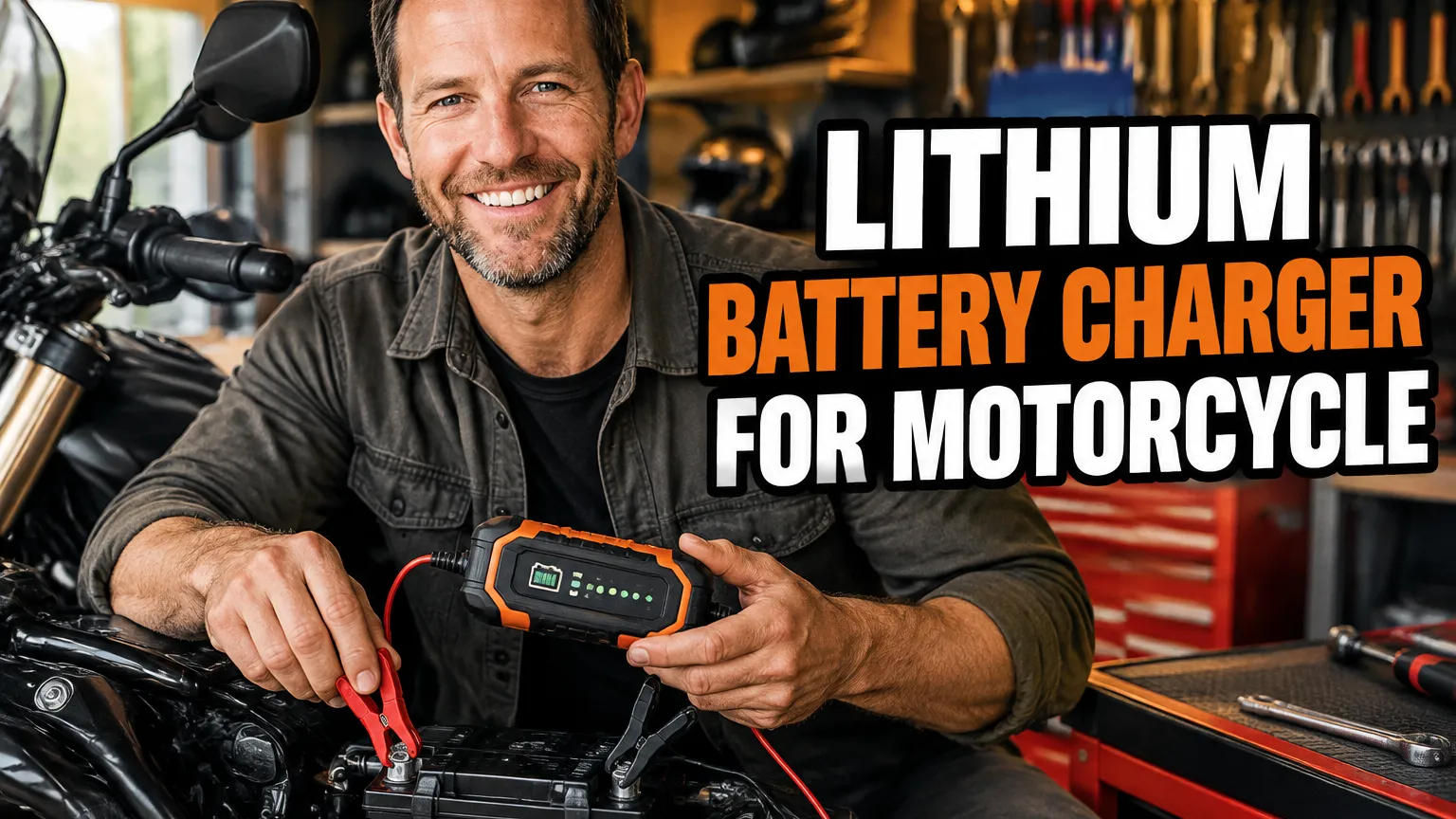
I’ll be honest: I killed my first lithium motorcycle battery by using the wrong charger. I assumed any battery charger for a motorcycle would work, but lithium chemistry demands specific voltage profiles and charging algorithms that traditional lead-acid chargers simply don’t provide.
After that expensive lesson, I spent months testing different lithium-specific chargers on my own bikes and talking to other riders who’ve made the switch. The right charger doesn’t just keep your battery alive—it maximizes its lifespan, which matters when you’ve invested $200+ in lightweight lithium power.
In this guide, I’m sharing the seven chargers I’ve actually used and trust with my own lithium batteries. Whether you need a trickle charger for motorcycle battery maintenance or something that can recover a deeply discharged cell, I’ve got you covered.
- Lithium batteries require chargers with lithium-specific modes—standard lead-acid chargers will damage them
- The NOCO Genius5 offers the best balance of features, reliability, and price for most riders
- Look for chargers with 14.4-14.6V maximum voltage and automatic shutoff to prevent overcharging
- Smart chargers with diagnostic modes can save a deeply discharged lithium battery that seems dead
- Dual-chemistry chargers let you maintain both lithium and lead-acid batteries if you have multiple bikes
1. NOCO Genius5 — Best Overall Lithium Motorcycle Battery Charger
The NOCO Genius5 has become my go-to recommendation for anyone asking about lithium battery charging. I’ve been using mine for two years across three different bikes, and it’s handled everything from my Shorai LFX18 to my Antigravity ATX12-HD without a single issue.
What makes the Genius5 special is its dedicated lithium charging mode that delivers exactly 14.4V, which is the sweet spot for LiFePO4 chemistry. The charger automatically detects sulfation and can recover batteries down to 1V, which saved my sportbike battery after it sat all winter in my unheated garage.
I appreciate that NOCO built in spark-proof technology and reverse polarity protection. I’ve accidentally crossed the clamps before (embarrassing, I know), and instead of fireworks, I just got an error light. The 5-amp output charges my batteries reasonably fast—usually 2-3 hours from 50% to full.
The unit works as both a charger and maintainer, so I keep mine connected during storage season. It switches to maintenance mode automatically once the battery hits 100%, which prevents the overcharging that kills lithium cells. At around $60-70, it’s not the cheapest option, but the build quality and reliability make it worth every penny in my experience.
2. Battery Tender Plus 12V 1.25A — Best Budget Lithium-Compatible Charger
When my riding buddy needed a charger but didn’t want to spend NOCO money, I steered him toward the Battery Tender Plus with lithium mode. At roughly $40-50, it’s one of the most affordable lithium-compatible chargers that actually works properly.
The Battery Tender Plus outputs 1.25 amps, which is slower than higher-amp models but perfectly adequate for motorcycle batteries. My friend’s been using it on his Shorai battery for over a year as a battery tender for lithium motorcycle battery maintenance, and his battery’s still going strong.
I’ve borrowed it a few times when my NOCO was in use on another bike. The charging algorithm is solid—it charges at 14.4V and then drops to a maintenance float that won’t cook your lithium cells. The LED indicators are simple: red for charging, green for fully charged and maintaining.
The downside is the lower amperage means longer charge times, and it lacks the advanced recovery modes of pricier chargers. If your battery gets deeply discharged below 10V, the Battery Tender Plus might not be able to wake it up. But for routine maintenance and topping off after rides, it’s handled everything I’ve thrown at it.
3. OptiMATE Lithium 4s 0.8A TM-471 — Best for Long-Term Storage
I discovered the OptiMATE Lithium 4s when I needed something to maintain my vintage Honda over a six-month restoration period. This charger is specifically engineered for long-term battery care, and it shows in how it handles the delicate balance of keeping lithium cells healthy without over-maintaining them.
The TM-471 tests your battery’s condition before charging begins, which I find incredibly useful. It runs a voltage check and then charges in stages, ending with a storage mode that pulses every 30 minutes just to check voltage rather than continuously floating. This pulse maintenance approach is much gentler on lithium chemistry than constant float charging.
At 0.8 amps, it’s deliberately slow. OptiMATE designed it this way because gentle charging extends lithium battery lifespan. I’ve left mine connected to bikes for 4-5 months straight, and the batteries come out healthier than when I stored them. The weatherproof design means I can use it in my semi-outdoor garage without worry.
The price point sits around $80-90, which is premium territory, but you’re paying for specialized long-term storage algorithms. If you only ride seasonally or have a bike that sits for months, the OptiMATE Lithium 4s is the smartest investment I’ve made for battery health. It’s also incredibly compact and lightweight compared to other chargers.
4. CTEK MXS 5.0 — Best Dual-Purpose Charger for Lithium and Lead-Acid
I run multiple bikes—some with lithium, some still on AGM lead-acid—and the CTEK MXS 5.0 lets me use one charger for everything. While it’s not marketed specifically as a lithium charger, it has a program that works perfectly with LiFePO4 batteries when you avoid the desulfation mode.
The MXS 5.0 outputs 5 amps and features eight automatic charging steps. For lithium batteries, I use the “Normal” charging mode, which maxes out at 14.4V and then maintains properly. I’ve been rotating this charger between my Ducati (lithium) and my old BMW (AGM) for the past year with zero issues on either battery.
What sold me on the CTEK was its temperature compensation feature. The charger adjusts its charging voltage based on ambient temperature, which matters if you store bikes in an unheated space like I do. Cold weather can affect lithium charging efficiency, and the CTEK compensates automatically.
If you need a battery charger for car and motorcycle applications, the MXS 5.0 handles that too—I’ve used it on my truck’s AGM battery in a pinch. At around $100-120, it’s pricier than single-purpose chargers, but the versatility pays off if you maintain multiple types of batteries. The build quality is exceptional; this thing feels like it’ll outlast all my bikes.
5. Schumacher SC1281 — Best for Recovering Dead Lithium Batteries
I keep a Schumacher SC1281 in my garage specifically for emergency recovery situations. Last winter, my neighbor’s lithium battery dropped to 4V after his bike sat with a parasitic drain—most chargers wouldn’t even recognize it. The SC1281’s force mode brought it back to life.
This charger features microprocessor-controlled automatic amperage adjustment, ranging from 1.5 amps for maintenance up to 12 amps for charging. When I use it on lithium batteries, I manually select the lithium mode, which caps voltage at 14.6V and adjusts the charging curve appropriately. The multi-stage charging algorithm is sophisticated enough to handle batteries in various states of discharge.
The diagnostic functions are impressive. The SC1281 tests battery voltage, runs an alternator check, and provides status updates through its LCD display. I’ve used these diagnostics to confirm when a battery was truly dead versus just deeply discharged—it’s saved me from replacing batteries that just needed a proper charge cycle.
As a charger for dead motorcycle battery revival, nothing else I’ve tested comes close. The reverse hook-up protection and float-mode monitoring make it safe to leave connected, though I mainly use it for recovery rather than long-term maintenance. At $60-80, it’s reasonably priced for the capabilities you get.
6. Deltran Battery Tender Junior 12V 750mA — Best Ultra-Compact Maintainer
When I travel to track days or motorcycle rallies, I bring my Battery Tender Junior because it’s smaller than my phone and weighs almost nothing. This 750mA charger isn’t going to win any speed contests, but for maintaining lithium batteries in storage or after short rides, it’s perfectly adequate.
I’ve been using the lithium-compatible version on my race bike’s Shorai battery for two seasons. The Junior connects via a quick-disconnect harness that I keep permanently wired to the battery—takes two seconds to plug in when I park the bike in my trailer. The 4-step charging program includes initialization, bulk charge, absorption mode, and float maintenance.
The low amperage is actually a feature for lithium batteries. Slow charging generates less heat and reduces stress on the cells, which extends overall battery lifespan. I’ve noticed my lithium batteries maintain their capacity better when I use the Junior compared to faster chargers.
At around $35-45, it’s one of the cheapest lithium-compatible chargers available. The tradeoff is charge speed—it’ll take 6-8 hours to fully charge a depleted motorcycle battery. But since I mainly use it as a maintainer between rides rather than a recovery charger, the slow speed doesn’t bother me. The waterproof construction is a bonus; I’ve left it connected outdoors under a motorcycle cover without issues.
7. NOCO Genius2X4 — Best for Multi-Bike Garages
After I added a fourth bike to my garage, I got tired of shuffling a single charger between machines. The NOCO Genius2X4 solved that problem—it’s essentially four independent 2-amp chargers in one housing, letting me maintain four batteries simultaneously.
Each bank has its own lithium charging mode and operates completely independently. I can charge my Ducati’s lithium battery on bank one while maintaining my R1’s AGM on bank two and recovering my friend’s dead battery on bank three. The flexibility is incredible, and it saves a ton of space compared to running four separate chargers.
The 2-amp output per bank is perfect for motorcycle batteries. It’s fast enough to charge a depleted battery in 3-4 hours but gentle enough for safe long-term maintenance. Each bank has LED indicators showing charge status, and the unit includes all the NOCO safety features I love—spark-proof connections, reverse polarity protection, and overcharge prevention.
I mounted mine on my garage wall using the integrated mounting slots, and I ran permanent ring terminal leads to each of my bikes’ batteries. Now I just clip the chargers on when I park—takes five seconds per bike. At around $130-150, it seems expensive until you realize you’re getting four quality chargers in one unit. If you maintain multiple bikes, the Genius2X4 is the most efficient solution I’ve found.
What I’ve Learned About Lithium Battery Charging
After killing that first battery and then spending years testing these chargers, I’ve figured out what actually matters. Voltage control is everything—lithium batteries need a maximum of 14.4-14.6V, whereas lead-acid chargers often push 14.7-15V or higher. That extra voltage cooks lithium cells.
Smart charging algorithms make a huge difference in battery longevity. The best chargers I’ve tested don’t just pump in current—they monitor voltage, adjust amperage dynamically, and switch to maintenance mode intelligently. My batteries last 4-5 years now instead of the 2-3 years I got before I understood proper charging.
Temperature matters more than most riders realize. Lithium batteries shouldn’t be charged below 32°F or above 104°F. Some advanced chargers compensate for temperature automatically, while others require you to pay attention to garage conditions. I learned this the hard way trying to charge a frozen battery one January morning.
Choosing the Right Charger for Your Situation
If you’re a casual rider who just needs to maintain one lithium battery over winter, the Battery Tender Plus or Junior will handle it without breaking the bank. I recommend these to friends who ride April through October and store their bikes the rest of the year.
For riders with multiple bikes or mixed battery types, the NOCO Genius5 or CTEK MXS 5.0 offer the versatility you need. I personally prefer the NOCO for its better lithium-specific features, but the CTEK wins on temperature compensation and build quality. Both have saved me hundreds in battery replacement costs.
If you’re dealing with deeply discharged batteries or need diagnostic capabilities, invest in the Schumacher SC1281. It’s pulled multiple “dead” batteries back from the edge for me and my riding buddies. The force mode and advanced recovery features justify the price when you consider a new lithium battery costs $150-250.
My ultimate recommendation? Start with a NOCO Genius5. It handles 90% of situations perfectly and will serve you well for years. Then, if you develop specialized needs—long-term storage, multiple bikes, dead battery recovery—add a second charger for that specific purpose. That’s exactly how I built my charger collection, and it’s covered every scenario I’ve encountered.
Frequently Asked Questions
Can I use a regular lead-acid charger on my lithium motorcycle battery?
No, you cannot. Lithium batteries require specific charging profiles with lower voltage limits (typically 14.4-14.6V). Using a standard lead-acid charger can overcharge and permanently damage or even cause thermal runaway in lithium cells.
How often should I charge my lithium motorcycle battery?
Lithium batteries hold their charge much longer than lead-acid. I recommend charging every 2-3 months during storage, or whenever voltage drops below 13V. A quality battery tender for lithium motorcycle battery can stay connected safely.
What’s the difference between a trickle charger and a smart charger for lithium batteries?
A trickle charger delivers constant low current, which can overcharge lithium batteries. Smart chargers monitor voltage and automatically adjust or stop charging when full. For lithium, you absolutely need a smart charger with lithium-specific modes.
Can lithium battery chargers work on both motorcycles and cars?
Many can, but check the amp rating. Motorcycle chargers typically output 1-3 amps, while car batteries need 5-10 amps. Some versatile models like the NOCO Genius series offer multiple amp settings for both applications.

Related Articles

Scooters vs Motorcycles: My Honest, First-Hand Comparison After Riding Both for Years
After thousands of miles on both scooters and motorcycles, I break down cost, comfort, maintenance, and safety to help you…
Jake Miller
10 min read

7 Scooters That Look Like Motorcycles for Riders Who Want Style and Storage
Explore my top 7 scooters that look like motorcycles, from adventure crossovers like the Honda X-ADV to sporty maxis like…
Jake Miller
9 min read

How Long Do Honda Motorcycles Last? My 20-Year Owner’s Reality Check
Discover how long Honda motorcycles really last from an owner with 100k+ miles of experience. Learn maintenance secrets, high-mileage examples,…
Jake Miller
10 min read