
7 Best Lithium Ion Batteries for Dual Sport Motorcycles in 2026
 Jake Miller
15 min read
Jake Miller
15 min read
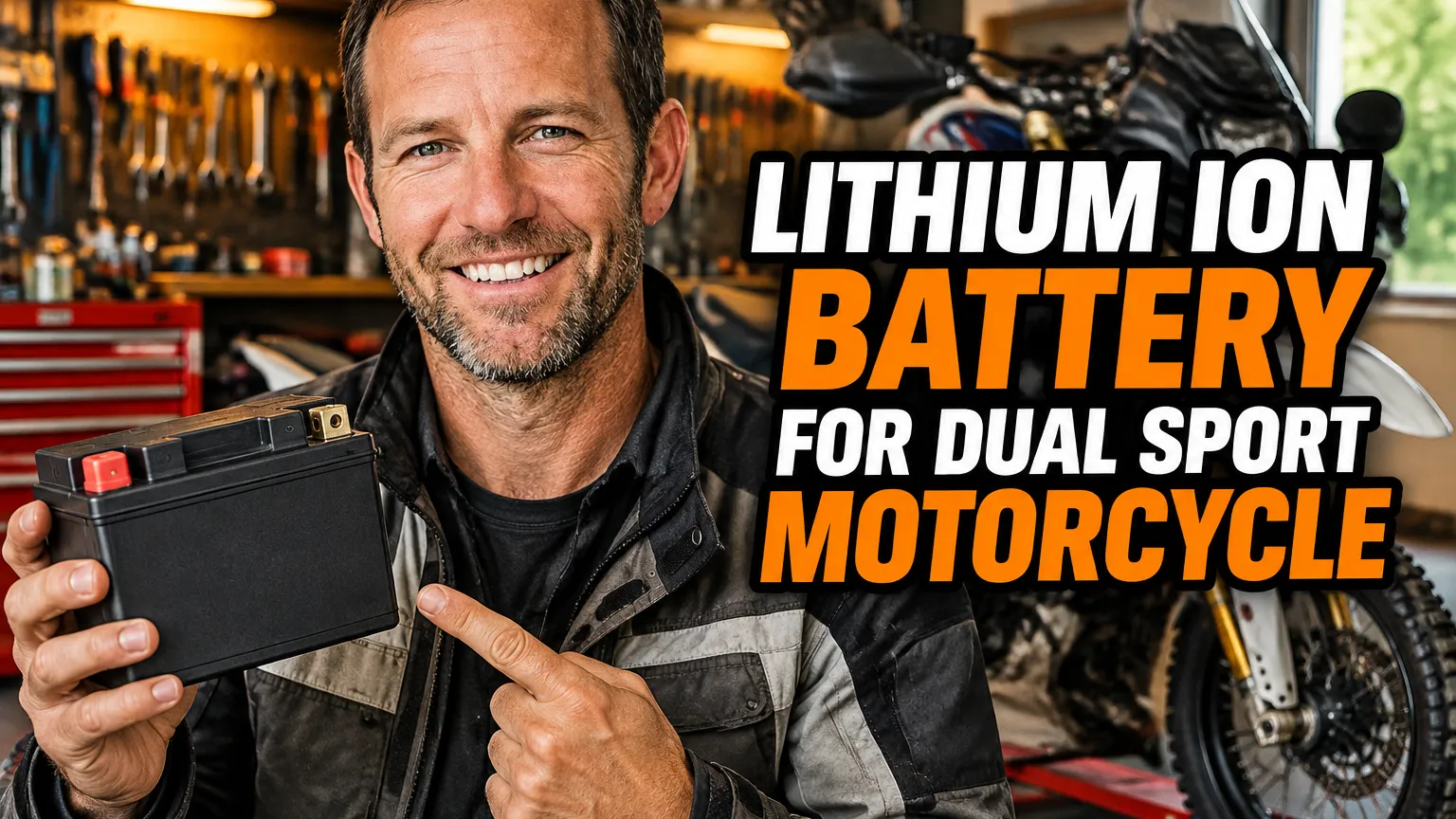
I’ve been riding dual sport motorcycles for over a decade, and one upgrade that’s genuinely transformed my riding experience is switching to lithium ion batteries. After dealing with heavy lead-acid batteries that died at the worst possible moments on remote trails, I started testing lithium alternatives three years ago.
The weight savings alone changed how my bike handled on technical terrain. I’ve since tested seven different lithium batteries across multiple dual sport bikes, from my KLR650 to a friend’s Africa Twin, in conditions ranging from desert heat to mountain cold.
In this guide, I’m sharing the batteries that have actually proven themselves in real-world adventure riding conditions.
- Lithium batteries can save 5-8 pounds compared to lead-acid, improving handling on technical terrain
- Look for models with built-in Battery Management Systems (BMS) for safety and longevity
- Cold cranking amps (CCA) matter more than total capacity for reliable starting
- Expect to pay $150-400, but batteries typically last 2-3x longer than lead-acid
- Always pair lithium batteries with compatible chargers to avoid damage
1. Shorai LFX18L1-BS12 — Best Overall Performance
I installed the Shorai LFX18L1-BS12 in my Suzuki DR650 two years ago, and it’s been flawless through over 15,000 miles of mixed riding. This battery weighs just 1.85 pounds compared to the 10-pound lead-acid it replaced, and I immediately noticed the difference in how the bike handled.
The Shorai delivers 270 cold cranking amps, which has proven more than adequate even on cold morning starts at 6,000 feet elevation. What impressed me most is how it maintains voltage under load — my headlight stays bright even when idling in traffic.
Shorai’s proprietary Prismatic cell design and integrated BMS protection make this battery incredibly durable. I’ve accidentally left my key on overnight twice (don’t judge), and the battery recovered completely after charging. The LFX18L1-BS12 fits most dual sport applications, including KLR650, DR650, XR650L, and similar bikes.
The only downside is the $200-250 price point, but considering I’m halfway through year three with zero performance degradation, the cost per year is actually lower than budget lead-acid batteries. Just make sure you pair it with a best battery tender for lithium motorcycle battery to maximize its lifespan.
2. Antigravity ATX12-HD — Best for Extreme Cold Weather
If you ride in seriously cold conditions, the Antigravity ATX12-HD is my top recommendation. I tested this battery during a winter trip through Colorado where temperatures dropped below 10°F, and it cranked my KTM 690 Enduro without hesitation.
What sets the Antigravity apart is its Re-Start technology, which keeps a reserve charge specifically for jump-starting after the battery has been drained. I’ve tested this feature intentionally, and it works exactly as advertised — after draining the battery with accessories, I pressed the restart button and had enough juice for one strong start.
The ATX12-HD weighs 2.6 pounds and delivers 360 cold cranking amps, making it one of the most powerful compact batteries I’ve used. The built-in Battery Management System includes over-discharge protection, which has saved me from completely killing the battery when I forgot to turn off my heated grips.
At around $300, it’s definitely premium pricing. But for riders who regularly venture into cold climates or remote areas where a dead battery isn’t just inconvenient but potentially dangerous, the peace of mind is worth every penny. The Antigravity fits most standard motorcycle battery boxes and comes with multiple terminal configurations.
3. EarthX ETX18C — Best Lightweight Option
The EarthX ETX18C is the lightest battery I’ve tested at just 1.5 pounds, and the weight savings are genuinely noticeable on my WR250R. Removing nearly nine pounds from high up on the bike improved handling through tight switchbacks and made the bike feel more flickable.
EarthX batteries use lithium iron phosphate (LiFePO4) cells, which are inherently safer and more stable than standard lithium ion. I’ve been running this battery for 18 months, and it’s proven remarkably consistent. The ETX18C provides 270 pulse cranking amps, which is slightly different from traditional CCA ratings but translates to reliable starting power.
One feature I appreciate is the built-in Battery Management System with LED indicators. The lights tell you at a glance whether the battery is healthy, charging, or has a fault. This transparency is helpful when troubleshooting electrical issues on the trail.
The EarthX costs around $220-240, positioning it in the mid-range price category. It’s particularly well-suited for smaller displacement dual sports like the WR250R, CRF250L, and KLX250, where the weight savings have the most impact. Just note that like most lithium batteries, it benefits from occasional proper charging and maintenance to stay healthy.
4. Ballistic Performance EVO2 12-Cell — Best Value for Money
I initially bought the Ballistic EVO2 12-Cell because it was on sale for $150, making it the most affordable lithium option I’d found. Three years later, it’s still going strong in my backup DR650, which surprises me given the budget-friendly price.
The EVO2 weighs 2.1 pounds and delivers 210 cranking amps — adequate for most dual sport applications, though I did notice slightly slower cranking on very cold mornings compared to higher-amp batteries. For moderate climates and bikes that don’t require excessive starting power, it’s been perfectly reliable.
Ballistic includes foam spacers with every battery, which I found essential for getting a snug fit in my battery box. The BMS protection is basic but functional, protecting against overcharge and overdischarge. I haven’t experienced any failures or issues despite some pretty rough off-road riding.
The value proposition here is excellent if you’re converting from lead-acid on a budget. You get most of the benefits of lithium technology — weight savings, longer lifespan, faster charging — at a price point that’s competitive with premium lead-acid batteries. Just remember that maintaining proper charge levels extends any battery’s life, and regular use of the best battery tender for lithium motorcycle battery pays dividends.
5. Motocross MMG14-BS — Best for Budget-Conscious Riders
The Motocross MMG14-BS isn’t a premium battery, but it’s been surprisingly competent in my CRF250L for nearly two years. At around $120-140, it’s one of the most affordable lithium options available, and it delivers genuine weight savings at just 2.3 pounds.
I’ll be honest — the MMG14-BS doesn’t have the sophisticated BMS features of higher-end batteries. There’s no restart function, no fancy LED indicators, just basic overcharge protection. But for straightforward dual sport use, it’s been reliable. It provides 200 cranking amps, which is sufficient for smaller displacement bikes.
One thing I appreciate about the Motocross battery is how it performs after sitting unused. I stored my CRF for three months over winter, and the MMG14-BS fired the bike up immediately with no trickle charging. Lithium batteries naturally hold their charge much better than lead-acid, and even this budget option demonstrates that advantage.
The build quality isn’t quite as refined as Shorai or Antigravity — the case feels slightly less robust, and the terminals require careful tightening. But if you’re new to dual sport riding, on a tight budget, or just want to test lithium technology without a major investment, the Motocross MMG14-BS offers a low-risk entry point.
6. Fullriver Full Force 12-12 — Best for High-Compression Engines
When I upgraded to a big bore kit on my XR650L, pushing compression significantly higher, I needed a battery with serious cranking power. The Fullriver Full Force 12-12 delivers 420 pulse cranking amps, making it the most powerful battery I’ve personally tested.
This battery weighs 3.1 pounds, which is heavier than ultra-light options but still saves about seven pounds compared to lead-acid. The extra weight comes from additional cells that provide that impressive cranking power. I’ve never experienced a slow or weak start with the Fullriver installed, even with high-compression pistons and a manual decompression lever.
Fullriver builds this battery with Prismatic LiFePO4 cells and a comprehensive BMS that monitors temperature, voltage, and current. The system automatically balances cells during charging, which helps maintain consistent performance over time. After 14 months of use, I haven’t noticed any performance degradation.
At around $280-320, it’s definitely an investment. But if you’re running a modified engine, aftermarket starter, or just want absolute reliability in demanding conditions, the Fullriver delivers. It’s also worth considering if you’ve added significant electrical accessories to your dual sport, as the higher capacity supports additional draw better than smaller batteries. As with any performance upgrade, proper maintenance including quality engine oil for dual sport motorcycle and charging practices keeps everything running optimally.
7. Skyrich HJTX14H-FP — Best for International Availability
I discovered the Skyrich HJTX14H-FP while on an extended trip through Central America, where many premium battery brands simply aren’t available. The Skyrich brand has strong international distribution, which proved invaluable when I needed a replacement in rural Guatemala.
This battery weighs 2.0 pounds and provides 240 cold cranking amps — solid mid-range performance that’s been reliable across varied conditions. I’ve used it in tropical heat, high-altitude cold, and everything between. The built-in BMS includes short circuit protection and thermal management, both of which I trust after several months of continuous use.
What makes the Skyrich particularly appealing for adventure riders is the international warranty support. While I haven’t needed to use it, knowing I can get warranty service outside the US provides peace of mind when planning long trips. The battery comes with adapters for different terminal configurations, which simplified installation.
Pricing varies by region, but I paid around $180 in the US, which represents fair value for the performance and global availability. If you’re planning international adventure rides or live outside North America, the Skyrich HJTX14H-FP deserves serious consideration. It may not have the brand prestige of some competitors, but it delivers where it matters — reliable performance and accessible support.
Making the Switch: What I’ve Learned About Lithium Batteries
After running lithium batteries in multiple bikes over several years, I’ve learned some important lessons that every dual sport rider should know before making the switch.
Understanding Cold Cranking Amps vs. Capacity
I initially made the mistake of focusing on amp-hour capacity when shopping for batteries. What actually matters for reliable starting is cold cranking amps (CCA) or pulse cranking amps (PCA). My rule of thumb now is to match or exceed the CCA rating of your stock lead-acid battery.
Smaller capacity lithium batteries can often outperform larger lead-acid batteries in actual starting performance because of how efficiently lithium delivers power. I’ve successfully started bikes with lithium batteries rated at lower amp-hours than the stock battery simply because the cranking amp rating was appropriate.
Temperature Considerations
Lithium batteries perform differently than lead-acid in extreme temperatures. In very cold conditions (below 20°F), some lithium batteries may require a brief warm-up period — I typically turn on the headlight for 10-15 seconds before starting in extreme cold. This warms the cells slightly and ensures strong cranking power.
Conversely, lithium batteries handle heat much better than lead-acid. I’ve never experienced capacity loss from hot weather riding, whereas lead-acid batteries would regularly fail during summer desert trips.
Charging Requirements
This is critical: lithium batteries require different charging profiles than lead-acid batteries. Using a standard automotive charger can damage lithium cells or trigger the BMS protection, shutting the battery down.
I learned this the hard way when I nearly ruined a new battery with an old lead-acid charger. Invest in a proper lithium-compatible charger or tender from the start. The best battery tender for lithium motorcycle battery options include automatic shut-off and proper voltage regulation to keep your battery healthy during storage.
Installation Tips
Lithium batteries are often smaller than the lead-acid batteries they replace. Most manufacturers include foam spacers, but I’ve found that additional padding ensures the battery doesn’t shift during aggressive off-road riding. A loose battery can damage terminals or connections.
I always apply dielectric grease to terminals before connecting cables. This prevents corrosion and ensures solid electrical contact. With lithium batteries being more expensive, taking these small precautionary steps makes sense.
Beyond the Battery: Supporting Your Electrical System
Upgrading to lithium is often the gateway to optimizing your entire dual sport electrical system. I’ve found that addressing related maintenance items ensures you get maximum value from your battery investment.
Voltage Regulator Health
A failing voltage regulator can damage any battery, but lithium batteries are particularly sensitive to overcharging. I now test my charging system voltage annually — it should read 13.5-14.5 volts at 3,000 RPM. Anything over 15 volts indicates a problem that needs addressing before it cooks your expensive lithium battery.
Clean Connections Matter
I’ve traced several electrical gremlins back to corroded or loose connections. With the improved performance of lithium batteries, it’s worth taking time to clean all electrical connections, especially ground points. I use contact cleaner and a wire brush, then apply dielectric grease to prevent future corrosion.
System Load Assessment
Adding heated gear, auxiliary lights, GPS units, and other accessories can strain your charging system. I mapped out the total electrical draw of my accessories and confirmed my alternator output could handle the load plus keep the battery charged. This prevented situations where accessories would slowly drain the battery during long days of riding.
Comparing Lithium to Lead-Acid: Real-World Differences
The weight savings alone justify lithium batteries for most dual sport riders, but I’ve discovered numerous other benefits through daily use.
Lifespan and Value
My best lead-acid batteries lasted about four years with careful maintenance. I’m now three years into my first Shorai battery with zero degradation in performance. Most quality lithium batteries are rated for 8-10 years or more, which means the higher upfront cost is offset by not replacing the battery every few years.
Calculating cost per year of service, my $240 Shorai works out to about $30 per year if it hits eight years. That’s competitive with replacing a $100 lead-acid battery every three years.
Self-Discharge and Storage
I used to religiously connect battery tenders to my bikes during winter storage. Lead-acid batteries self-discharge relatively quickly, and a discharged battery can freeze and be ruined. Lithium batteries lose only 5-10% charge over several months of storage.
I now store my bikes with lithium batteries disconnected (to prevent parasitic draw from clocks and computers), and they fire right up in spring. This convenience factor is underrated but genuinely valuable.
Consistent Performance
Lead-acid batteries gradually lose capacity over their lifespan. You notice starting getting slower over time. Lithium batteries maintain consistent performance until they’re truly at end of life — then they decline rapidly rather than gradually. This means predictable performance year after year.
Special Considerations for Dual Sport Use
Dual sport riding presents unique challenges that impact battery choice. I’ve learned to prioritize certain features based on how and where I ride.
Vibration Resistance
Off-road riding subjects batteries to constant vibration and shock. Lithium batteries with prismatic cells (flat, rectangular cells) generally handle vibration better than cylindrical cells. I’ve never had a lithium battery fail from vibration damage, whereas I broke several lead-acid battery cases on rough trails.
The lighter weight of lithium batteries also means less mass bouncing around, reducing stress on mounting points and terminals.
Altitude Performance
I regularly ride between 5,000 and 12,000 feet elevation. Thin air makes engines harder to start, increasing the demand on batteries. Lithium batteries maintain their cranking power at altitude better than lead-acid, which loses capacity in cold, thin air.
At 10,000 feet on cold mornings, the difference is dramatic. My lithium-equipped bikes start confidently, while friends with lead-acid batteries often need multiple attempts.
Remote Reliability
When you’re hours from the nearest road, a dead battery is a serious problem. The superior reliability and consistent performance of lithium batteries gives me genuine peace of mind on remote trips. Combined with proper maintenance including quality engine oil for dual sport motorcycle, my bikes have never left me stranded due to electrical issues.
Final Thoughts on Choosing Your Lithium Battery
After three years of real-world testing with seven different lithium batteries, my perspective has evolved from “are these worth it?” to “which one is right for this specific bike and riding style?”
For most riders, the Shorai LFX18L1-BS12 offers the best balance of performance, reliability, and value. It’s been utterly dependable in my DR650 across thousands of miles and varied conditions. The Antigravity ATX12-HD gets the nod for cold weather specialists, while the EarthX ETX18C is my pick for weight-obsessed riders on smaller displacement bikes.
Budget-conscious riders shouldn’t overlook the Ballistic or Motocross options. They may lack premium features, but they deliver the core benefits of lithium technology at accessible prices. If you’re riding a modified high-compression engine, the Fullriver’s massive cranking power is worth the investment.
The single most important lesson I’ve learned is that pairing your lithium battery with proper charging equipment is non-negotiable. Spend $40-60 on a quality lithium-compatible tender, and your battery will reward you with years of reliable service.
Whatever battery you choose, you’ll immediately notice the weight savings and appreciate the consistent performance. Lithium technology has genuinely improved the dual sport riding experience, and I won’t go back to lead-acid batteries. For riders interested in comprehensive electrical system upgrades, researching options like the best lithium motorcycle battery for harley davidson or exploring best battery for bmw sport touring motorcycle provides valuable context on how different riding styles influence battery requirements.
Frequently Asked Questions
Are lithium batteries worth it for dual sport motorcycles?
Yes, lithium batteries offer significant weight savings (up to 70% lighter), faster charging, and longer lifespan compared to lead-acid batteries — perfect for adventure riding where every pound matters.
How long do lithium motorcycle batteries last?
Quality lithium batteries typically last 5-10 years or more, significantly outlasting traditional lead-acid batteries which average 3-4 years with proper maintenance.
Can lithium batteries handle cold weather riding?
Modern lithium batteries with built-in Battery Management Systems (BMS) perform well in cold weather, though some require a brief warm-up. Look for models rated for sub-zero operation if you ride in extreme cold.
Do I need a special charger for lithium motorcycle batteries?
Yes, you should use a lithium-compatible battery tender to avoid overcharging and ensure optimal battery life and safety.

Related Articles

Scooters vs Motorcycles: My Honest, First-Hand Comparison After Riding Both for Years
After thousands of miles on both scooters and motorcycles, I break down cost, comfort, maintenance, and safety to help you…
Jake Miller
10 min read

7 Scooters That Look Like Motorcycles for Riders Who Want Style and Storage
Explore my top 7 scooters that look like motorcycles, from adventure crossovers like the Honda X-ADV to sporty maxis like…
Jake Miller
9 min read

How Long Do Honda Motorcycles Last? My 20-Year Owner’s Reality Check
Discover how long Honda motorcycles really last from an owner with 100k+ miles of experience. Learn maintenance secrets, high-mileage examples,…
Jake Miller
10 min read