
6 Best Valve Spring Compressors for Motorcycle Engines (Hands-On Picks)
 Jake Miller
9 min read
Jake Miller
9 min read
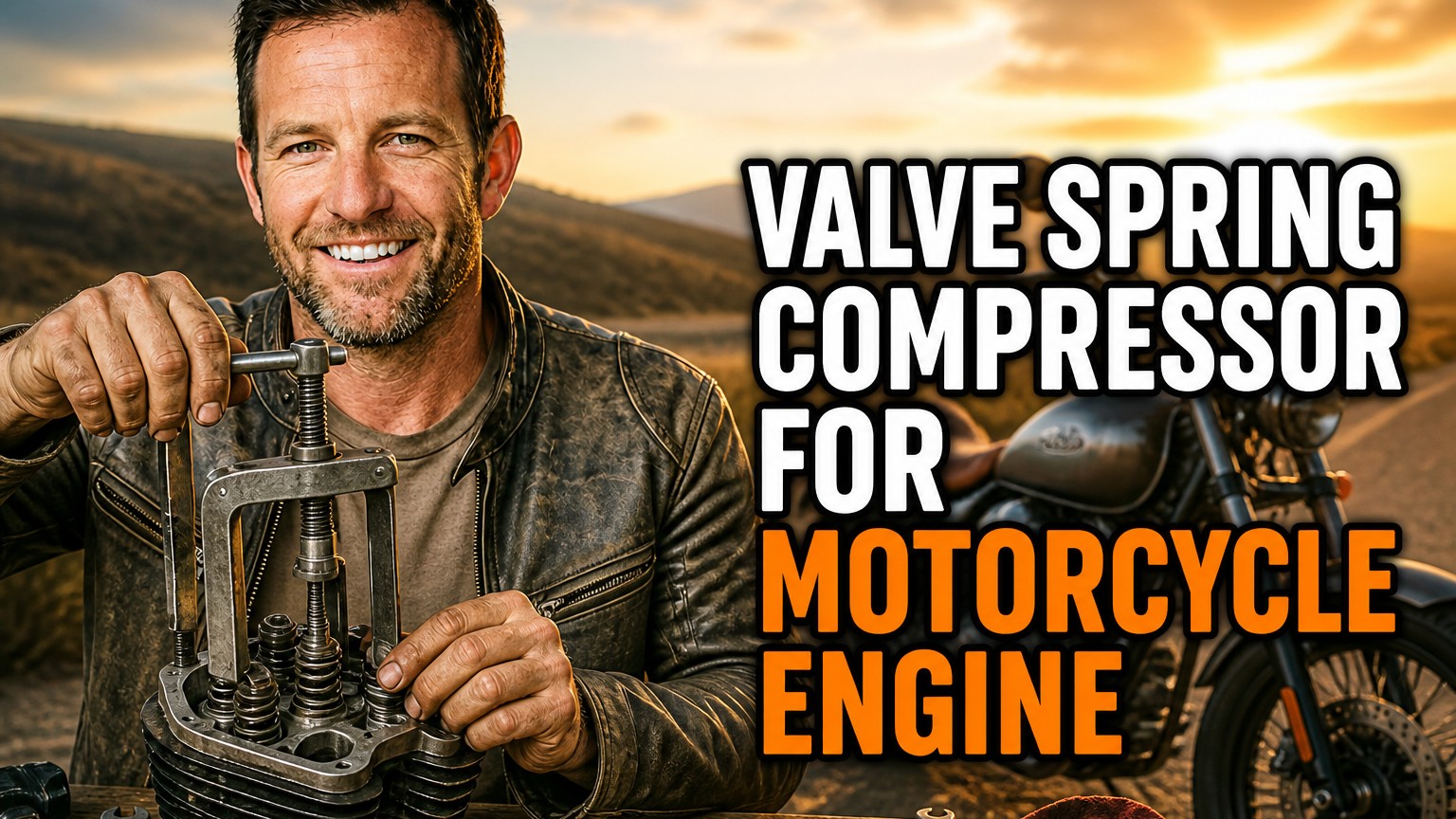
I still remember the first time I pulled a cylinder head off my own bike. Everything went smoothly until I reached the valves and realized my garage had no way to compress those tiny, stubborn springs.
I tried a borrowed car-style compressor and nearly launched a keeper into another dimension. That day taught me that finding the best valve spring compressor for motorcycle engine work is about fit and clearance, not just raw clamping power.
Over the years I’ve used a handful of these tools on everything from a single-cylinder dirt bike to an inline-four sportbike. Below are the six I’d actually trust in my own garage, plus the buying advice I wish I’d had on day one.
- My top pick is the Motion Pro Valve Spring Compressor, because it’s purpose-built for tight motorcycle and ATV heads.
- Budget riders can get the job done with the Pittsburgh Automotive or ABN C-style compressors if the cups fit.
- Cup size, throat depth, and bucket clearance matter more than brand name or price.
- Always support the valves, wear eye protection, and use fresh oil on reassembly.
Why Motorcycle Valve Springs Need a Different Tool
Car engines usually give you plenty of room. Motorcycle heads are compact, with small retainers, short valve stems, and bucket-over-shim designs that leave very little clearance.
That’s why a compressor made for a V8 often won’t fit. The cup is too wide, the frame too bulky, or the throat too shallow to reach the valve on a DOHC head.
What I Look For Before Buying
I judge every compressor on four things: cup size range, throat depth, frame rigidity, and how easily it releases the keepers. If a tool fails on any of these, it ends up in the back of my toolbox.
I also check whether the tool has a slot or window to access the keepers. Fiddling with magnets and tweezers through a solid cup is how keepers go missing.
1. Motion Pro Valve Spring Compressor — Best Overall
When someone asks me what to buy, the Motion Pro Valve Spring Compressor is my first answer. Motion Pro designed it specifically for motorcycle, ATV, and small-engine heads, and it shows in the details.
It’s a C-style tool with a threaded screw and interchangeable cups or adapters. That lets you match the retainer size on bikes ranging from dirt singles to street twins and fours.
Why I Like It
The Motion Pro feels solid in the hand. The frame doesn’t flex noticeably under spring load, and the screw action is smooth enough to feel the spring seating.
The cup openings make keeper removal straightforward. I can usually pop the keepers out with a small magnet pick in seconds.
What Could Be Better
It costs more than the generic C-clamps, typically somewhere in the mid-double-digit to low-triple-digit range depending on the kit. If you only rebuild one head ever, that may feel steep.
Still, if you wrench regularly, this is the tool I’d buy once and keep for years.
2. Tusk Valve Spring Compressor — Best for Dirt Bikes and ATVs
The Tusk Valve Spring Compressor is a favorite among off-road riders I know. It’s sold through powersports retailers and aimed squarely at the kinds of heads you find on dirt bikes, quads, and small-displacement machines.
It uses the same C-style principle as the Motion Pro, with swappable adapters so you can match different retainer sizes.
Where It Shines
On compact four-stroke dirt bike heads, the Tusk Valve Spring Compressor reaches in without hitting the cam towers. I appreciate that it’s easy to find, easy to understand, and typically priced below the premium names.
For top-end rebuilds on trail bikes, it’s a very sensible choice.
Limitations
On some large-bore sportbike heads, I found the throat depth tighter than I’d like. Measure your head first, and make sure the adapters you get cover your retainer diameter.
3. Pittsburgh Automotive Valve Spring Compressor — Best Budget Pick
I’ll be honest: I was skeptical of the Pittsburgh Automotive Valve Spring Compressor from Harbor Freight at first. Then I used it on a small-bore twin and it simply worked.
It’s a basic C-style tool, usually under the price of a couple of tanks of gas. For a one-time job, that’s hard to beat.
What You Get for the Money
The frame is plain steel, and the finish isn’t pretty. But it compresses springs reliably when the cup matches the retainer.
My advice: test-fit the cups on the retainer before you start. If the fit is loose, don’t force it.
The Trade-Offs
The screw action is rougher than the Motion Pro, and the cup selection is less tailored to motorcycles. I’d use it for an occasional rebuild, not daily shop work.
4. ABN Valve Spring Compressor Tool — Best for Versatility
The ABN Valve Spring Compressor Tool is a popular online-order option that covers a range of small engines. I picked one up for a project where I was working on several different machines.
Its C-style design and included fittings make it flexible enough for motorcycles, lawn equipment, and even small outboard heads.
Pros
- Multi-purpose: handy if you also wrench on non-motorcycle engines.
- Affordable: sits in the budget-to-mid price range.
- Easy to find: widely available online with fast shipping.
Cons
Since it isn’t built only for bikes, you’ll want to verify the adapter diameters against your retainers. On a couple of heads I had to be patient to align everything cleanly.
5. Powerbuilt Valve Spring Compressor — Best for Garage Generalists
Powerbuilt is a name you’ll see in a lot of home garages, and their Powerbuilt Valve Spring Compressor is a decent all-rounder if you work on cars and bikes alike.
It’s a straightforward, sturdy design with a good reputation for durability in the budget-to-mid range.
My Experience
I used the Powerbuilt on a mid-size parallel twin, and the frame handled the spring load without any trouble. The screw threads stayed smooth, which I always appreciate.
As with any non-motorcycle-specific tool, though, I had to confirm the cups would fit before I trusted it.
Who Should Buy It
If you’re a DIYer with a mixed fleet of vehicles, this one makes sense. If you only touch motorcycles, I’d lean toward the Motion Pro or Tusk instead.
6. Performance Tool Valve Spring Compressor — Best Shop-Style Alternative
The Performance Tool Valve Spring Compressor rounds out my list. Performance Tool (a Wilmar brand) makes a range of affordable hand tools, and this compressor is a reasonable choice for hobby mechanics.
It follows the familiar C-style layout, with a screw drive and adapter cups for different valve sizes.
Where It Fits
I’d call it a solid backup tool. It handles basic rebuilds and gets you through the job without drama if the fit is right.
It’s not the tool I’d grab first for tight DOHC sportbike heads, but it’s perfectly workable on larger, more open designs.
How to Choose the Right Compressor for Your Bike
Before you click “buy,” spend ten minutes measuring. It saves a lot of frustration later.
Check Retainer and Bucket Clearance
Measure the retainer diameter and the opening of the bucket or rocker. Your compressor cup must fit inside that opening without scraping the walls.
On many sportbikes, this is the tightest spec you’ll face. A cup that’s even slightly too big simply won’t work.
Think About Throat Depth
Throat depth is the distance from the screw to the frame. Too shallow, and you can’t reach the valve from outside the cam towers.
If you’re unsure, look at photos of the tool on a similar head, or ask in a forum for your bike model.
Decide How Often You’ll Use It
For a once-in-a-blue-moon job, a budget pick is fine. If you rebuild heads every season, spend more for smoother action and better cup selection.
That’s my honest rule of thumb, and it’s rarely steered me wrong.
How I Safely Compress Valve Springs
Even the best tool is only as safe as the person using it. Here’s the routine I follow every time.
Step-by-Step Process
- Remove the head and clean the area so debris doesn’t fall into the ports.
- Support the valve from the combustion side so it can’t drop.
- Seat the compressor cups squarely on the retainer and the spring base.
- Tighten slowly until the keepers loosen, then remove them with a magnet or pick.
- Release tension gradually and keep your face clear of the tool.
I always wear safety glasses. A keeper or spring under tension can fly farther than you’d expect, and I’ve learned that lesson once is enough.
A Few Mistakes to Avoid
Don’t over-compress the spring. Go only far enough to free the keepers, because extra force can bend a retainer or mar the valve stem.
Also, never use impact tools on a compressor. It’s a precision job, and slow, steady pressure gives you the best result.
Don’t Forget Fresh Oil After the Rebuild
Once the head is back together and the engine is buttoned up, a fresh fill of oil is the last step to protect all that careful work. If you’re not sure what to run, my guide to the best engine oil for motorcycle use covers the essentials.
If you want to compare labels, I also put together a rundown of the best motorcycle engine oil brand options, and a helpful explainer on which engine oil is best for motorcycle engines in different riding conditions.
Special Cases
Working on a two-stroke? The valve train isn’t your concern there, but lubrication still matters. Take a look at my picks for the best engine oil for 2 stroke motorcycle models.
And if your rebuilt head is going on a track bike, read up on the best engine oil for motorcycle racing. Higher stress calls for a more deliberate oil choice.
My Final Verdict
If you want one tool that just works, the Motion Pro Valve Spring Compressor is my pick. It’s built for motorcycle heads, it feels solid, and it makes keeper removal painless.
For off-road work, the Tusk Valve Spring Compressor is a great value. For a tight budget, the Pittsburgh Automotive and ABN compressors will get you through a rebuild if you verify the fit first.
Whichever you choose, measure twice, work slowly, and protect your eyes. A clean valve job is one of the most satisfying garage wins you can have, and the right compressor makes it far less stressful.
Frequently Asked Questions
Can I use a regular automotive valve spring compressor on a motorcycle?
Sometimes, but it is rarely ideal. Most motorcycle heads have small, deep-set valves and tight bucket clearances, so a compact C-style compressor with small cups works far better than a big pushrod-engine tool.
Do I need to remove the cylinder head to compress valve springs on a motorcycle?
In most cases, yes. Removing the head gives you full access and lets you support the valves properly. A few bikes allow in-frame work with the right tool and air or rope in the cylinder, but it is riskier.
What size valve spring compressor do I need for a motorcycle?
Look for a tool with cups or adapters in roughly the 15 to 30 mm range and a throat deep enough to reach across your head. Always check the retainer diameter and bucket depth on your specific engine first.
Is a cheap valve spring compressor good enough for a one-time rebuild?
Often it is, provided the cups fit your retainers and the frame does not flex under load. Budget tools work for occasional jobs, but a better tool is worth it if you service multiple bikes.

Related Articles
7 Best Batteries for Motorcycles I’ve Tested and Trust in 2026
I've tested dozens of motorcycle batteries to find the best performers. From AGM to lithium, here are my top picks…
Jake Miller
15 min read

The Perfect Battery for Your Harley Davidson Softail: A Rider’s Complete Guide
Discover the perfect battery for your Harley Davidson Softail. I've tested multiple options and share real-world performance data, maintenance tips,…
Jake Miller
14 min read

The Best Battery for Your Harley Davidson: My Complete Guide After Years of Testing
Discover which battery truly performs best for Harley Davidson motorcycles. Real rider experience with AGM, lithium, and OEM options to…
Jake Miller
12 min read