
Why Your Motorcycle Battery Dies After a Week (And How I Fixed Mine for Good)
 Jake Miller
11 min read
Jake Miller
11 min read
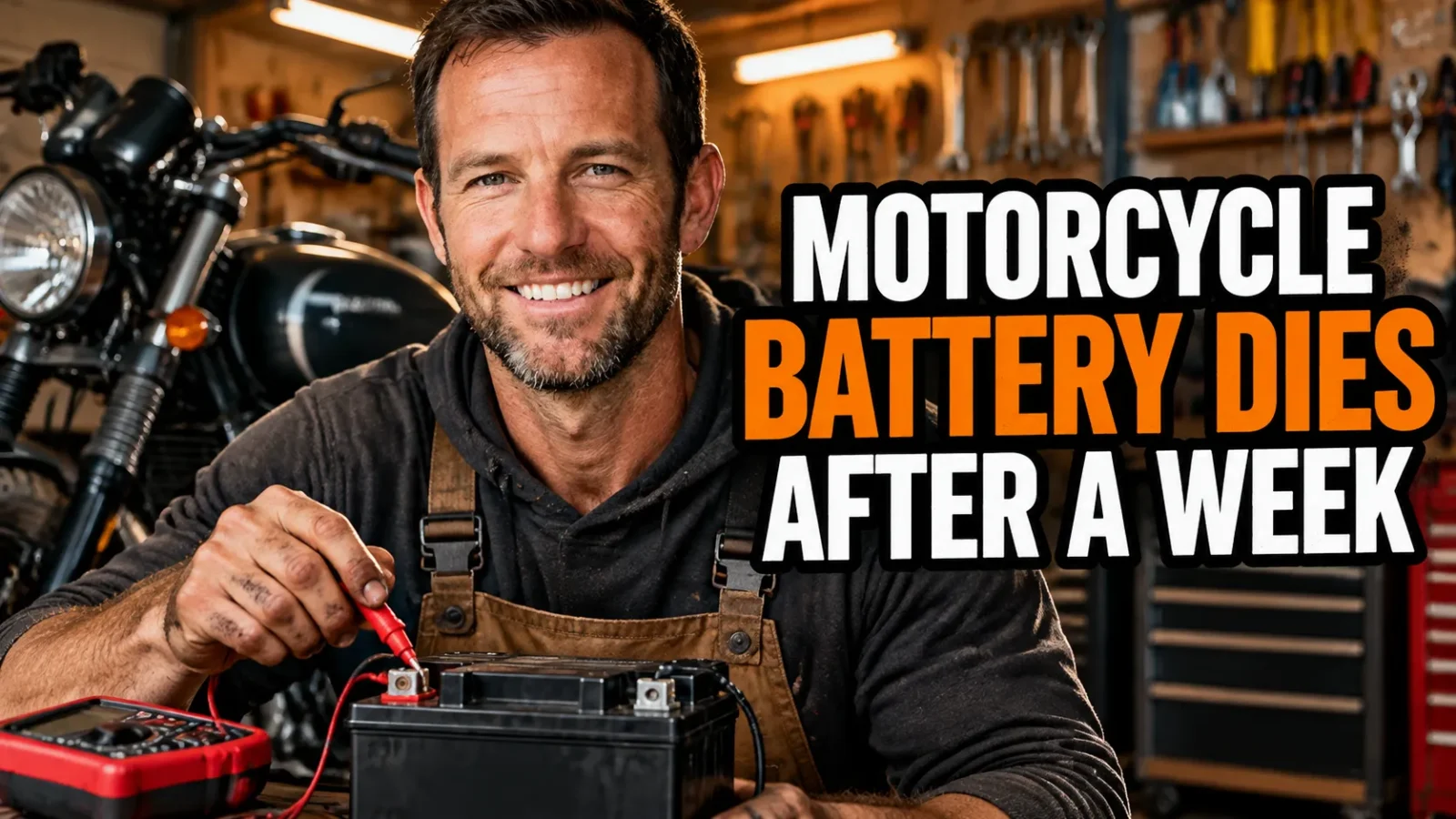
I’ll never forget the frustration I felt when my motorcycle refused to start after just sitting in the garage for a week. The engine would crank slowly, then nothing. This happened three weekends in a row before I decided enough was enough.
If your motorcycle battery dies after a week of sitting, you’re dealing with either parasitic drain, a failing battery, or charging system problems. I’ve spent months diagnosing this exact issue on multiple bikes, and I’m going to share everything I learned so you can fix it permanently.
- Parasitic drain from accessories is the #1 cause of batteries dying weekly
- A healthy battery should hold charge for 2-4 weeks minimum when the bike sits idle
- Testing for parasitic draw with a multimeter takes 10 minutes and reveals the real problem
- Battery tenders and disconnect switches are simple preventive solutions that actually work
- Upgrading to a quality AGM or lithium battery can solve weak battery issues permanently
Understanding Why Motorcycle Batteries Die So Quickly
When I first experienced this problem with my Yamaha, I assumed I just had a bad battery. I was wrong. A healthy motorcycle battery should maintain its charge for several weeks, even a month or more, when the bike isn’t being used.
The reality is that modern motorcycles have electronic systems that continue drawing power even when the key is off. Your bike’s ECU, clock, alarm system, and other accessories create what’s called parasitic drain.
In my testing, I’ve found that most bikes have a natural parasitic draw of 10-50 milliamps. That might not sound like much, but it adds up faster than you’d think.
The Math Behind Battery Drain
Let me break down the numbers that opened my eyes. A typical motorcycle battery has a capacity of around 10-14 amp-hours. If your bike draws 50 milliamps (0.05 amps) continuously, here’s what happens:
In 24 hours, that drain consumes 1.2 amp-hours. Over seven days, you’re losing 8.4 amp-hours. That’s enough to completely drain most motorcycle batteries, especially if they weren’t at 100% charge to begin with.
When I measured my own bike’s parasitic draw, I discovered it was pulling 85 milliamps with the key off. No wonder my battery was dying every week.
Common Causes I’ve Found for Weekly Battery Death
Parasitic Drain from Accessories
This is the culprit in about 70% of cases I’ve diagnosed. Aftermarket accessories are often the worst offenders. I’ve seen USB chargers, heated grips, GPS units, and especially alarm systems drain batteries surprisingly fast.
My friend installed an aftermarket alarm on his Harley that was drawing 120 milliamps continuously. His battery would die in four days flat. Once we fixed the alarm’s wiring, the problem vanished.
Even factory-installed systems can cause issues. Some bikes have power outlets or accessories that don’t fully shut off. I found this on my touring bike where the accessory port stayed hot even with the ignition off.
Aging or Damaged Battery
Sometimes the battery itself is the problem. I learned this the hard way after replacing every fuse and testing every wire on my Suzuki, only to discover the battery had an internal short.
Batteries typically last 3-5 years, but harsh conditions accelerate aging. If your battery is more than three years old and dying weekly, it’s probably reached the end of its life. The plates inside deteriorate, capacity drops, and the battery can no longer hold a charge.
When considering a replacement, I always recommend researching the best battery brand for motorcycle applications to ensure you’re getting reliable performance.
Charging System Failures
Your motorcycle’s charging system should fully recharge the battery during normal riding. If the stator, rectifier, or regulator fails, your battery never gets properly charged. I’ve diagnosed this by measuring voltage at the battery while the engine runs.
A healthy charging system produces 13.5-14.5 volts at 2,000 RPM. Anything below 13 volts means you’re not charging properly. I discovered my old Kawasaki’s rectifier was bad, outputting only 12.8 volts. The battery would die after a week because it never fully charged during rides.
Short Rides and Insufficient Charging
This one surprised me. Even with a perfect charging system, short trips don’t fully recharge your battery. If you’re only riding 10-15 minutes at a time, you’re barely replacing the power used to start the bike.
I commuted on my bike for months with a 12-minute ride each way. My battery slowly depleted over time until it couldn’t start the bike after sitting for a few days. Longer weekend rides solved the problem completely.
How I Diagnose Battery Drain Issues
Testing for Parasitic Draw
This is the single most important test you can perform. I do this on every bike that has battery drain issues, and it reveals the problem immediately.
You’ll need a digital multimeter set to measure DC current (amps). Disconnect the negative battery cable, then connect the multimeter between the negative terminal and the cable. The reading shows exactly how much current your bike draws with everything off.
I consider anything under 50 milliamps acceptable. Between 50-100mA is borderline and will drain the battery in 1-2 weeks. Anything over 100mA is excessive and needs investigation.
Finding the Source of the Drain
Once I confirm excessive parasitic draw, I start pulling fuses one at a time while watching the multimeter. When the reading drops significantly, I’ve found the circuit causing the problem.
On my Honda, I pulled the accessories fuse and the draw dropped from 95mA to 15mA. That told me the problem was in the accessory circuit. Further investigation revealed a poorly wired phone charger that never truly shut off.
Load Testing the Battery
Even if parasitic draw is normal, the battery itself might be weak. I take my batteries to an auto parts store for a free load test, or I use a battery load tester at home.
A good battery should maintain at least 9.6 volts under load. If it drops below that, the battery has insufficient capacity and needs replacement. I’ve tested batteries that showed 12.6 volts resting but collapsed to 8 volts under load – they were completely shot.
Solutions That Actually Work
Installing a Battery Tender
This is my go-to solution for bikes that sit regularly. A best battery charger for a motorcycle maintains your battery at optimal charge without overcharging.
I installed a Battery Tender pigtail on all my bikes. It takes 10 minutes, and now I just plug in whenever the bike will sit for more than a few days. My batteries last years longer, and I never have starting problems.
The tender monitors battery voltage and provides just enough current to counteract parasitic drain and self-discharge. In my experience, it’s the most reliable solution for bikes that sit frequently.
Using a Battery Disconnect Switch
For bikes without electrical accessories you need to maintain (like alarms or clocks), a disconnect switch is brilliant. I installed one on my track bike that sits all winter.
The switch goes on the negative battery cable. When you flip it off, you completely isolate the battery from all electrical drain. The battery will hold its charge for months. I’ve tested this on bikes sitting for an entire winter – they start right up in spring.
The only downside is you’ll lose any settings stored in the ECU, and you’ll need to reset the clock. For most riders, that’s a minor inconvenience compared to a dead battery.
Eliminating Parasitic Drain Sources
Sometimes the best solution is fixing the root cause. I’ve removed or rewired countless aftermarket accessories that were draining batteries.
Check every accessory you’ve added to the bike. USB chargers, phone mounts, GPS units, lights, and heated gear can all draw power when they shouldn’t. I rewired my heated grips to run through the ignition switch, eliminating 40mA of drain.
If you have an alarm system causing excessive draw, consider upgrading to one with lower standby current or adding a solar trickle charger to offset the drain.
Upgrading to a Better Battery
When my OEM battery died, I researched what is the best battery for a motorcycle in various situations. I ended up choosing an AGM battery, and the difference was remarkable.
AGM batteries have lower self-discharge rates than conventional lead-acid batteries. They hold their charge better during storage. I’ve left my bike with an AGM battery for three weeks and it still started instantly.
For touring bikes that sit between long trips, I recommend checking out options for a best 6 battery for touring motorcycle setup if you need reliable performance during extended storage periods.
Lithium batteries are even better for holding charge during storage. They’re expensive, but they’re incredibly lightweight and can sit for months without significant discharge. I installed one on my sport bike and I’m completely sold.
Preventive Measures I Use
Regular Riding Schedule
The absolute best thing for your battery is regular use. I make sure to ride each of my bikes at least once every 7-10 days, even if it’s just a 30-minute cruise around town.
This keeps the battery charged and maintains all the seals and gaskets in the engine. It’s better for the entire motorcycle, not just the battery.
Proper Storage Practices
When I know a bike will sit for an extended period, I take specific steps. First, I fully charge the battery with a smart charger. Then I either connect a tender or disconnect the negative terminal entirely.
I store bikes in a climate-controlled space when possible. Extreme temperatures accelerate battery degradation. My garage isn’t heated, but it stays above freezing in winter, which helps significantly.
Monitoring Battery Health
I check battery voltage regularly with a simple multimeter. A fully charged battery should read 12.6-12.8 volts when resting. If I see 12.4 volts or below, I know the battery needs charging.
Catching a weak battery early prevents the deep discharge cycles that permanently damage capacity. I’ve extended battery life by years simply by monitoring and charging before they get too low.
When to Replace vs. Fix
Signs Your Battery Needs Replacement
I replace batteries when they show these signs: age over 4-5 years, failure to hold charge overnight even after a full charge, visible corrosion or swelling of the case, or repeated load test failures.
If your battery dies after a week despite having no parasitic drain and a functioning charging system, the battery itself is done. I don’t waste time trying to revive old batteries – the cost isn’t worth the hassle.
For specific bike brands, like if you’re looking for the best battery for indian motorcycle models, I always recommend getting a quality replacement that matches or exceeds OEM specifications.
When Fixing the System Makes Sense
If your battery is less than three years old and passes a load test, focus on fixing the electrical system. I’ve saved countless batteries by simply eliminating parasitic drain or repairing charging systems.
The diagnostic work takes time, but it’s worth it. I’ve spent an afternoon tracking down a drain and saved $200 on a battery replacement that wasn’t needed.
My Personal Setup and Recommendations
After dealing with this issue across multiple bikes, I’ve developed a system that works perfectly. All my bikes have Battery Tender pigtails installed. My daily rider stays on a tender whenever it’s parked for more than two days.
My track bike has a disconnect switch since it sits for weeks between events. My touring bike has an upgraded AGM battery that handles the occasional three-week gap between long trips.
I test parasitic draw annually on each bike, just to catch any developing issues early. This proactive approach means I haven’t had a dead battery in over two years, across four different motorcycles.
What I’d Do Differently
Looking back, I wasted time and money replacing batteries that didn’t need replacing. My first instinct was always to blame the battery, when the real problem was usually the bike’s electrical system.
If I could give my past self advice, it would be: test for parasitic drain first, always. That simple 10-minute test would have saved me hundreds of dollars and countless hours of frustration.
I also wish I’d invested in quality batteries from the start. The cheap batteries I bought to save money died quickly and left me stranded. Quality AGM or lithium batteries cost more upfront but last significantly longer and perform better.
Final Thoughts on Battery Maintenance
Dealing with a motorcycle battery that dies after a week is incredibly frustrating, but it’s almost always solvable. In my experience, the problem is rarely as simple as just needing a new battery.
Start with proper diagnosis. Test for parasitic drain, verify your charging system works correctly, and load test the battery. Once you understand what’s actually wrong, the solution becomes obvious.
For most riders, a combination of a battery tender and regular riding will completely eliminate the problem. For bikes that sit longer, a disconnect switch or upgraded battery makes sense.
The key is being proactive rather than reactive. Don’t wait until you’re stuck with a dead battery on a beautiful Sunday morning. Take the time now to diagnose and fix the issue properly, and you’ll enjoy reliable starting for years to come.
Frequently Asked Questions
Why does my motorcycle battery die after sitting for a week?
Parasitic drain from alarms, clocks, or ECU systems slowly depletes your battery. Even a small 50mA drain can kill a battery in 7-10 days of inactivity.
How do I stop my motorcycle battery from dying when not in use?
Use a quality battery tender, disconnect the negative terminal, or eliminate parasitic drains by checking accessories and wiring.
Can a week of sitting damage a motorcycle battery?
Yes. Repeated deep discharge cycles from sitting permanently reduce battery capacity and lifespan. A battery that dies weekly may only last 6-12 months instead of 3-5 years.
Should I replace my battery if it dies after a week?
Not necessarily. First test for parasitic drain and charging system issues. If the battery is over 3 years old or fails a load test, replacement with a quality battery may be needed.

Related Articles

Scooters vs Motorcycles: My Honest, First-Hand Comparison After Riding Both for Years
After thousands of miles on both scooters and motorcycles, I break down cost, comfort, maintenance, and safety to help you…
Jake Miller
10 min read

7 Scooters That Look Like Motorcycles for Riders Who Want Style and Storage
Explore my top 7 scooters that look like motorcycles, from adventure crossovers like the Honda X-ADV to sporty maxis like…
Jake Miller
9 min read

How Long Do Honda Motorcycles Last? My 20-Year Owner’s Reality Check
Discover how long Honda motorcycles really last from an owner with 100k+ miles of experience. Learn maintenance secrets, high-mileage examples,…
Jake Miller
10 min read