
Can a Dead Motorcycle Battery Be Recharged? My Complete Testing Guide
 Jake Miller
15 min read
Jake Miller
15 min read
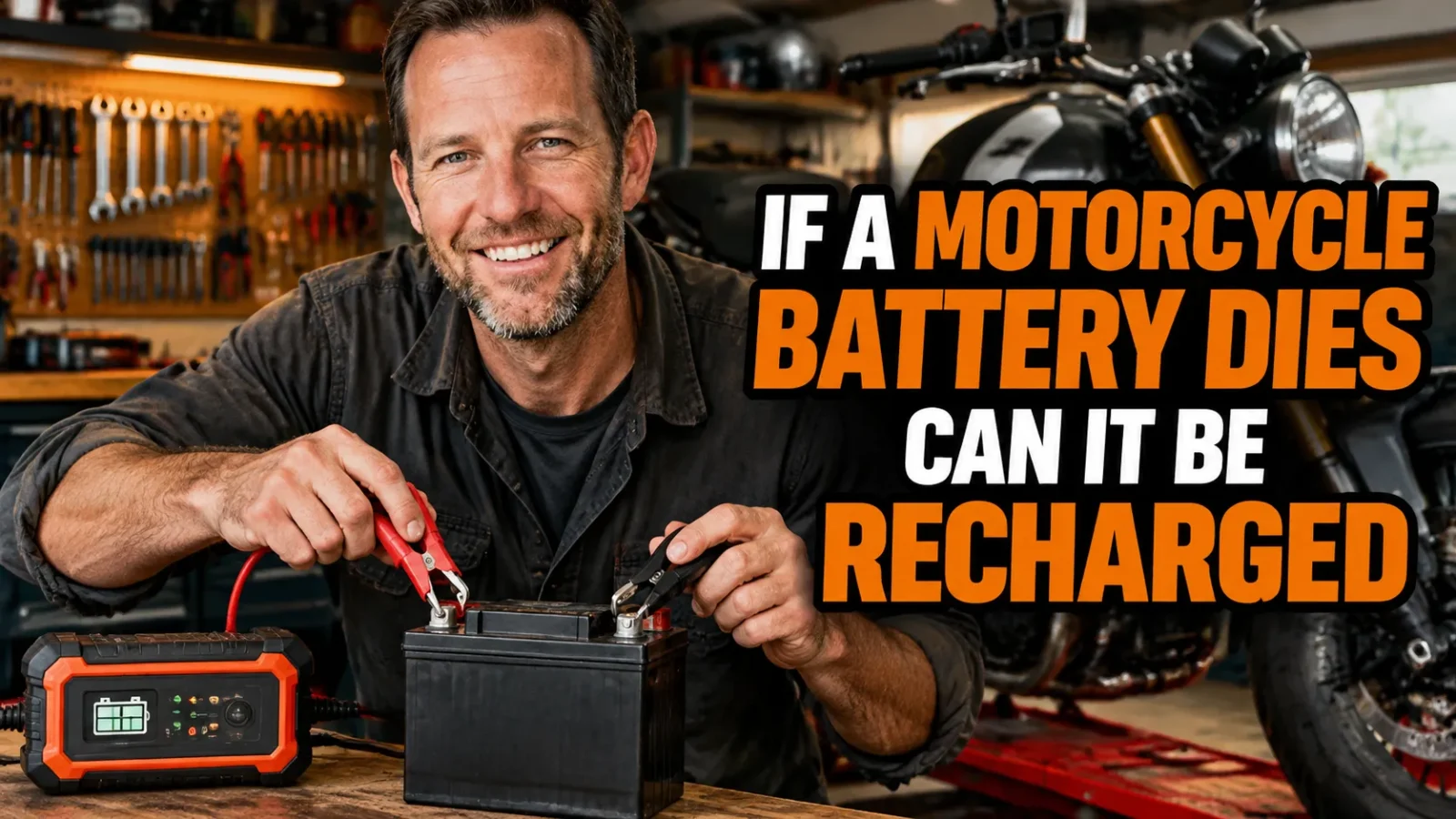
I’ve been riding for over a decade, and I can’t count how many times I’ve walked into my garage only to find my motorcycle completely dead. That sinking feeling when you hit the starter button and hear absolutely nothing is something every rider experiences eventually.
The good news? I’ve learned that most dead motorcycle batteries can absolutely be recharged. But there’s more to it than just hooking up a charger and hoping for the best. Through countless batteries and plenty of trial and error, I’ve figured out what works, what doesn’t, and when you’re better off replacing the battery entirely.
- Most dead motorcycle batteries can be recharged if they haven’t suffered permanent internal damage
- Use a smart charger with a desulfation mode for best results—I’ve revived batteries that seemed completely gone
- Batteries over 4 years old or showing physical damage should be replaced, not recharged
- A proper recharge takes 4-12 hours; quick fixes like jump-starting don’t restore full capacity
- Regular maintenance charging prevents the deep discharge that kills batteries permanently
Understanding Why Motorcycle Batteries Die
Before I dive into recharging methods, let me explain what actually happens when a motorcycle battery dies. I’ve found that understanding the root cause makes a huge difference in knowing whether recharging will work.
Motorcycle batteries die for several reasons, but the most common culprit in my experience is simply sitting unused. When a bike sits for weeks or months, the battery slowly self-discharges. Even disconnected, a lead-acid battery loses about 1% of its charge per day at room temperature.
I’ve also killed batteries by leaving accessories on—heated grips, GPS units, or even just the ignition in the “on” position overnight. These parasitic drains can completely flatten a battery in hours, not days.
The Chemistry Behind Battery Death
Here’s what I’ve learned about what happens inside a dying battery. As a lead-acid battery discharges, lead sulfate crystals form on the plates. This is normal and reversible when you recharge quickly.
But when a battery sits dead for extended periods, those crystals harden into a permanent coating called sulfation. I’ve opened up old batteries and seen this white, crusty buildup—it’s the kiss of death for battery capacity.
The longer a battery sits in a discharged state, the worse the sulfation becomes. That’s why I always tell fellow riders to recharge immediately after their battery dies, not weeks later.
My Method for Testing if a Battery Can Be Recharged
I never just hook up a charger and hope for the best anymore. I’ve learned to test the battery first to avoid wasting hours on a lost cause.
First, I check for physical damage. I look for cracks in the case, bulging sides, or any signs of leaking. If I see any of these, the battery goes straight to recycling—no amount of recharging will fix physical damage.
Next, I measure the voltage with a multimeter. A completely dead battery might read anywhere from 0V to 11V. In my experience, anything above 10V has a decent chance of being recharged successfully.
The Load Test That Changed Everything
Here’s a trick I learned from an old mechanic: even if a battery takes a charge, it might not hold it under load. I now do a load test after every recharge attempt.
I charge the battery fully, let it rest for an hour, then measure the voltage. It should read 12.6V to 12.8V. Then I turn on the headlight (without starting the engine) and watch the voltage. If it drops below 12V within a minute, the battery has lost capacity and won’t be reliable.
This simple test has saved me from getting stranded multiple times. A battery might seem fine at first but fail under the actual load of starting your engine.
The Right Way to Recharge a Dead Motorcycle Battery
I’ve tried everything from trickle chargers to solar panels, and I’ve learned that the charging method makes all the difference. Using the wrong charger can actually damage a recoverable battery.
My go-to method now is using a smart charger with multiple charging modes. These chargers automatically adjust their output based on the battery’s condition. I’ve had success with models that include a desulfation or reconditioning mode specifically.
Step-by-Step Charging Process I Follow
First, I remove the battery from the motorcycle. I know some people charge in place, but I’ve found that removing it gives better results and is safer. Plus, it lets me inspect the battery thoroughly and work in a well-ventilated area.
I clean the terminals before connecting the charger. Corrosion can prevent proper charging, and I’ve seen batteries that appeared dead simply because of dirty connections. A wire brush and some baking soda solution work wonders.
Then I connect the charger: positive to positive, negative to negative. I double-check this every time because reversing polarity can destroy both the battery and the charger—I learned that lesson the expensive way early in my riding career.
Choosing the Right Charging Rate
I typically charge at 2 amps for a standard motorcycle battery. Higher rates like 10 amps might seem faster, but I’ve found they can damage a deeply discharged battery and reduce its overall lifespan.
For a completely dead battery, I expect the initial charge to take 8-12 hours. I always charge overnight and check progress in the morning. Smart chargers make this easy since they automatically stop when the battery is full.
If the battery is only partially discharged, the process is much quicker—usually 2-4 hours. The charger’s indicator lights tell me when we’re getting close to full capacity.
When Jump-Starting Makes Sense (and When It Doesn’t)
I’ve jump-started my bikes countless times, and while it gets you running, it’s not the same as properly recharging. Many riders wonder if can a car battery jump start a motorcycle essential guide, and yes, it absolutely can—but with important precautions.
Jump-starting provides just enough power to fire up the engine. Once running, the motorcycle’s charging system (the stator and regulator/rectifier) takes over and begins recharging the battery. However, this recharge is often incomplete.
I use jump-starting when I need to move the bike or ride somewhere immediately. But I always follow up with a proper bench charge later. The alternator isn’t designed to recover a deeply discharged battery—it’s meant to maintain an already-charged battery.
The Jump-Start Method I Trust
When I jump-start from a car, I leave the car engine off. Car batteries produce 12V like motorcycle batteries, but a running car alternator can push 14V+ and potentially damage motorcycle electronics. I’ve seen riders fry expensive ECUs this way.
I connect the cables carefully: positive to positive first, then negative to a ground point on the motorcycle frame (not the battery negative terminal). This reduces sparking risk near the battery.
Once the bike starts, I let it run for at least 20 minutes before shutting off. This gives the charging system time to put some juice back into the battery. But again, this doesn’t replace a full recharge with a proper charger.
Special Considerations for Different Battery Types
Not all motorcycle batteries are created equal, and I’ve learned that different types require different recharging approaches. The battery type is usually printed right on the label.
Traditional lead-acid batteries (the ones with removable caps) are the most forgiving. I can usually recover these even after sitting dead for months. Before charging, I check the electrolyte levels and top them off with distilled water if needed.
AGM (Absorbed Glass Mat) batteries are sealed and maintenance-free. I’ve had good luck recharging these, but they’re more sensitive to overcharging. I always use a smart charger with an AGM mode—regular chargers can cook them.
Lithium Batteries: A Different Beast Entirely
Lithium motorcycle batteries are becoming more popular, and they require special handling. I killed my first lithium battery by using a standard lead-acid charger on it. Expensive mistake.
Lithium batteries need a specific lithium-compatible charger. They also have a quirk: if the voltage drops below a certain threshold (usually around 5V), many chargers won’t recognize them and refuse to charge.
I’ve successfully recovered lithium batteries that fell below this threshold using a “wake-up” technique. I apply a brief charge from a standard charger (30 seconds to a minute) just to bump the voltage, then switch to the proper lithium charger. This is risky though—I only try it on batteries I’m ready to replace anyway.
Signs Your Battery Needs Replacement, Not Recharging
I’ve wasted time trying to resurrect batteries that were already beyond saving. Now I know the warning signs that mean it’s time to invest in a replacement.
Age is the biggest factor. In my experience, motorcycle batteries last 3-5 years with proper care. If your battery is over four years old and dies, I’d lean toward replacement rather than recharging. The internal degradation has usually progressed too far.
Physical damage is an automatic disqualifier. Bulging cases, cracks, or leaking electrolyte mean internal failure. I’ve never successfully recharged a battery showing these signs—it’s not safe to try.
The Voltage Test That Tells All
Here’s my go-to diagnostic: I fully recharge the battery, then let it sit disconnected for 24 hours. After that rest period, I measure the voltage. If it’s below 12.4V, the battery has excessive self-discharge and won’t hold a charge reliably.
I also watch how quickly the voltage drops during the load test I mentioned earlier. A healthy battery maintains voltage under load. If voltage plummets immediately when I turn on the lights, the battery’s internal resistance is too high—usually from sulfation.
Another telltale sign is when charging takes an abnormally long time or never reaches full voltage. I’ve had batteries that would charge to only 11.5V even after 24 hours on a charger. That’s a clear indicator of dead cells.
Preventing Future Battery Deaths
After dealing with dead batteries so many times, I’ve developed a maintenance routine that’s dramatically extended my battery life. Prevention is genuinely easier than resurrection.
I use a battery tender (maintenance charger) whenever my bike sits for more than a week. These devices provide a tiny trickle charge that exactly matches the battery’s self-discharge rate. I’ve had batteries last 6+ years with this simple practice.
For bikes I don’t ride regularly, I disconnect the negative terminal. This eliminates parasitic draws from the bike’s electronics. Even in standby mode, ECUs and alarms slowly drain the battery. I’ve measured draws up to 50 milliamps on modern bikes—enough to kill a battery in a month.
The Best Battery Brands I’ve Tested
After going through countless batteries, I’ve learned that quality matters enormously. Cheap batteries often can’t be successfully recharged even once, while premium batteries bounce back multiple times.
I’ve had excellent experiences with Yuasa, Shorai (for lithium), and Antigravity batteries. These brands consistently survive deep discharges and recharge to full capacity. When researching options, I found this guide on best battery brand for motorcycle incredibly helpful.
For riders trying to determine what is the best battery for a motorcycle, I always recommend considering your riding habits. Daily commuters can use budget options, but if you’re like me and bikes sometimes sit for weeks, invest in a quality battery that handles deep discharge better.
My Recommended Tools and Equipment
Having the right gear makes recharging dead batteries dramatically easier. Here’s what I keep in my garage and actually use regularly.
A quality smart charger is non-negotiable. I use one with at least four charging modes: standard, AGM, lithium, and desulfation/reconditioning. The reconditioning mode has saved batteries I thought were completely gone by pulsing high-frequency current to break up sulfation.
I also keep a basic multimeter handy. Digital meters are cheap now—mine cost $20 and provides accurate voltage readings. I check voltage before charging, during charging, and 24 hours after to assess battery health.
The Battery Tender vs. Regular Charger Debate
I own both, and they serve different purposes. A regular smart charger is for recovering dead batteries—it provides higher amperage to recharge quickly. A battery tender is for maintenance—it keeps a healthy battery topped off.
Some chargers combine both functions, switching automatically between charge mode and maintenance mode. These are ideal if you’re only buying one device. I leave mine connected to my bikes during winter storage and never worry about dead batteries come spring.
For touring riders with larger batteries, I found this resource on best 6 battery for touring motorcycle options particularly useful. Touring batteries have higher capacity and different charging requirements.
Can You Ride Without a Battery at All?
Here’s an interesting question that came up when my battery died mid-ride once: some riders wonder if can motorcycle run without battery at all. The answer depends on your bike.
Older motorcycles with simple electrical systems (points ignition, kickstart) can run without a battery. The magneto generates power directly. I’ve ridden vintage bikes this way—though you have no lights or signals, which isn’t exactly street legal.
Modern fuel-injected motorcycles absolutely require a battery. The ECU needs stable power to control injection and ignition timing. I tried bump-starting my FI bike with a dead battery once—it fired for about two seconds then died immediately.
Emergency Recharging When You’re Away From Home
I’ve been stuck with a dead battery miles from home more times than I’d like to admit. Here’s what I’ve learned about emergency solutions that actually work.
Most auto parts stores will charge your battery for free while you wait. I’ve used this service in several states. Remove your battery, walk or Uber to the nearest parts store, and they’ll usually have it charged in 30-45 minutes with their high-amp chargers.
If you’re truly in the middle of nowhere, push-starting (bump-starting) can work on manual transmission bikes. I need to be rolling at least 5-10 mph, pull in the clutch, shift to second gear, then dump the clutch. The engine spins from the wheel momentum and hopefully fires.
The Portable Jump Starter That Saved Me
After one too many stranded situations, I invested in a lithium jump starter pack. These compact devices are smaller than a hardcover book and provide enough current to start most motorcycles several times on a single charge.
I keep mine in my saddlebag on longer rides. It’s saved me twice and helped other riders three times. For about $70, it’s the best investment I’ve made in motorcycle gear. Just remember to keep it charged—I check mine monthly.
How Often Should You Recharge vs. Replace?
This is where experience has taught me some hard lessons about false economy. Just because you can recharge a battery doesn’t always mean you should.
I’ll recharge a battery once or twice if it’s relatively new (under 3 years old) and the cause was something temporary like leaving the key on. But if I’m recharging the same battery every few months, that’s a sign it’s lost capacity and needs replacement.
Each deep discharge cycle reduces a battery’s total lifespan. Lead-acid batteries are typically rated for 200-300 cycles. Once you’ve deeply discharged and recharged a battery multiple times, you’re burning through that cycle life quickly.
The Cost-Benefit Analysis I Use
A quality motorcycle battery costs $60-150 depending on type and capacity. A smart charger costs $40-80. If you need to recharge frequently, you’re investing time and dealing with unreliability.
I replace rather than recharge when the battery is over 3 years old, has been deeply discharged more than twice, or fails my 24-hour voltage retention test. The peace of mind from a fresh battery is worth the cost compared to getting stranded or damaging other electrical components.
Weak batteries strain your charging system. I’ve seen failing batteries take out stators and regulator/rectifiers because the system constantly works overtime trying to charge an uncooperative battery. Replacing a $100 battery is cheaper than replacing a $300 stator.
Final Thoughts on Battery Recharging
After years of experience with dead batteries, I can confidently say that yes, most dead motorcycle batteries can be recharged. But success depends on the battery’s age, how deeply it was discharged, and how long it sat in that discharged state.
I’ve successfully recovered batteries that seemed completely hopeless by using a quality smart charger with a desulfation mode and being patient with the charging process. The key is acting quickly—the longer a battery sits dead, the worse the permanent damage becomes.
That said, I’ve also learned to recognize when a battery is truly finished. Age, physical damage, and repeated deep discharges all contribute to permanent capacity loss. At that point, replacement is the only real solution.
My advice? Invest in a good smart charger and a battery tender. Use the tender for regular maintenance, and you’ll rarely need the charger for emergency recharges. This approach has extended my battery life significantly and saved me money in the long run.
Most importantly, test your battery after recharging. Don’t just assume it’s fine because it took a charge. The load test and voltage retention test I described will tell you whether that battery is truly ready for reliable service or just limping along until it leaves you stranded.
Frequently Asked Questions
Can you recharge a completely dead motorcycle battery?
Yes, in most cases you can recharge a dead motorcycle battery if it hasn’t suffered internal damage. I’ve successfully recharged batteries that sat for months using a smart charger, though deeply sulfated batteries may need special reconditioning modes.
How long does it take to recharge a dead motorcycle battery?
A fully dead motorcycle battery typically takes 4-12 hours to recharge with a standard 2-amp charger. I use a smart charger with automatic shutoff to prevent overcharging and ensure the battery reaches full capacity safely.
Should I replace or recharge my motorcycle battery?
Recharge your battery if it’s under 3 years old and holds voltage above 12.4V after charging. Replace it if the battery is over 4 years old, shows physical damage, or drops below 12V within 24 hours of charging—these are signs I’ve learned indicate permanent failure.
Can I jump-start my motorcycle instead of recharging the battery?
Yes, you can jump-start a motorcycle to get running immediately, and many riders wonder can a car battery jump start a motorcycle. However, this is a temporary solution—I always follow up with a proper recharge to restore full battery capacity.

Related Articles

Scooters vs Motorcycles: My Honest, First-Hand Comparison After Riding Both for Years
After thousands of miles on both scooters and motorcycles, I break down cost, comfort, maintenance, and safety to help you…
Jake Miller
10 min read

7 Scooters That Look Like Motorcycles for Riders Who Want Style and Storage
Explore my top 7 scooters that look like motorcycles, from adventure crossovers like the Honda X-ADV to sporty maxis like…
Jake Miller
9 min read

How Long Do Honda Motorcycles Last? My 20-Year Owner’s Reality Check
Discover how long Honda motorcycles really last from an owner with 100k+ miles of experience. Learn maintenance secrets, high-mileage examples,…
Jake Miller
10 min read