
7 Best Supersport Motorcycles for Beginners Who Want Sharp Looks Without the Scare
 Jake Miller
9 min read
Jake Miller
9 min read
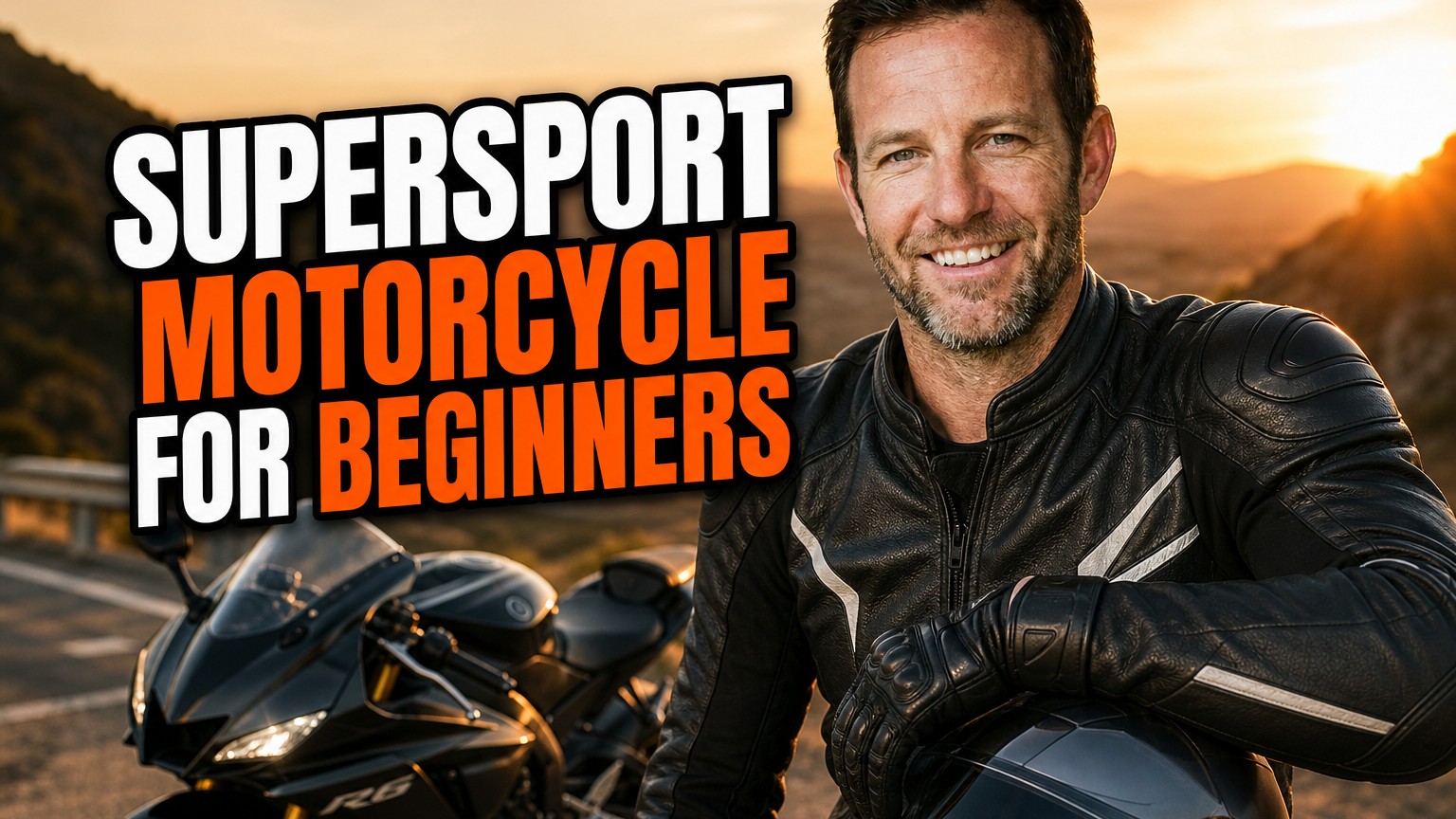
I still remember the first time I swung a leg over a fully faired sportbike. I was equal parts thrilled and terrified, and honestly, that mix of feelings is exactly why this topic matters so much to me.
Supersports look incredible, but the wrong one can punish a new rider fast. The right one, though, makes you a sharper, smoother and more confident rider from day one.
Over the years I’ve ridden, borrowed and helped friends buy a lot of these machines. This list is my honest take on which ones deserve a spot in a new rider’s garage, and why.
- My top overall pick is the Yamaha YZF-R3: light, cheap, reliable and easy to ride.
- For the best modern tech, look at the Aprilia RS 457 or KTM RC 390.
- Stick to roughly 300cc to 500cc if you’re brand new. Bikes near 650cc suit riders with a little experience.
- Budget for gear, insurance and maintenance, not just the sticker price.
What I Look For in a Beginner Supersport
Before the list, here’s how I judge these bikes. A great first supersport isn’t the fastest one. It’s the one that lets you make mistakes without punishing you for them.
Manageable Power and Weight
I look for bikes that are light, with smooth, predictable power delivery. If you can’t comfortably pick the bike up off its side stand or feel nervous at a walking-pace U-turn, it’s not a good fit.
Rider Aids and Forgiving Ergonomics
ABS is non-negotiable in my book. Traction control, slipper clutches and ride modes are bonuses that make the learning curve far friendlier.
I also weigh how aggressive the riding position is. A sportbike you can’t tolerate for an hour won’t get ridden, and seat time is what makes you better.
1. Yamaha YZF-R3 — Best Overall for Beginners
If a friend asked me for one answer, I’d say the Yamaha YZF-R3. It has been the benchmark entry-level supersport for years, and for good reason.
Why I Love It
The R3 uses a 321cc parallel-twin that makes roughly 42 horsepower. It revs happily, pulls cleanly and never feels intimidating. At around 375 pounds wet with a seat height of about 30.7 inches, it’s easy to flick around and easy to plant your feet on.
The R3 is also brilliant for learning. Its chassis is communicative, so you feel exactly what the tires are doing. That feedback built a lot of my early cornering confidence.
Things to Consider
Pricing sits roughly between $5,000 and $5,600 new, and used examples are everywhere. The only real downsides are a basic feature set and highway power that feels modest once you’re confident.
If you’re torn between small displacements, my guide to the best 250cc motorcycle for beginners is a good companion read. The best 300cc motorcycle for beginners list covers the R3’s closest rivals.
2. Kawasaki Ninja 500 — Best Balance of Power and Friendliness
The Kawasaki Ninja 500 replaced the long-running Ninja 400, and I think it’s one of the smartest all-rounders in the class. It keeps what made its predecessor great and adds a bit more muscle.
Real-World Specs
Its 451cc parallel-twin makes roughly 45 horsepower and pulls strongly from low revs. Curb weight is about 392 to 400 pounds, and the seat height is a friendly 30.9 inches. ABS is available, and the SE trim adds extras like a TFT-style display and Bluetooth connectivity.
Prices typically run from about $5,500 to $7,000 depending on trim. That’s strong value for what you get.
My Experience
I find the Ninja 500 more relaxed on the highway than the R3. The extra torque means you’re not constantly rowing through gears to pass a truck.
The clutch is light, the fueling is smooth and the bike simply feels planted. If you want a first bike you won’t outgrow in a year, this is it. If you’re weighing options at this size, check the best 400cc motorcycle for beginners roundup too.
3. Aprilia RS 457 — Best Tech and Premium Feel
The Aprilia RS 457 surprised me more than any other small sportbike in recent memory. It feels like a mini superbike, with real Italian polish.
Standout Features
Its 457cc parallel-twin produces about 47.6 horsepower and 32.8 lb-ft of torque. Aprilia packs in three-level traction control, multiple ride modes, cornering-aware ABS and a TFT-style display. An optional quickshifter is also available, which is almost unheard of at this price.
Expect to pay around $6,800 to $7,000. Weight is roughly 415 pounds wet.
Is It Too Much for a Beginner?
Not at all, in my opinion. Power is progressive, and the electronics are a genuine safety net. The seat height of roughly 31.9 inches and the sportier riding position are the main trade-offs.
Shorter riders should sit on one before committing. If you can flat-foot or nearly flat-foot it, I’d happily recommend it.
4. KTM RC 390 — Best for Riders Who Want Sharp Handling
The KTM RC 390 is the livewire of this list. It’s light, loud in personality and very focused on handling.
What Sets It Apart
It runs a 373cc single-cylinder engine with around 44 horsepower, and its trellis frame and adjustable WP suspension give it track-day sharpness. Modern versions add a TFT display, ride modes and cornering ABS. Pricing generally lands around $6,000 to $6,500.
The seat height is about 32.5 inches, which is taller than most rivals. That’s worth checking if you’re on the shorter side.
My Take
The RC 390 teaches you to ride properly. Corner entry speed, braking points and line choice all matter more on a light single. It is also buzzier at highway speeds than the twins above.
I’d recommend it to someone who plans to attend track days early on. For pure commuting comfort, I’d pick a twin instead.
5. Honda CBR500R — Best for Comfort and Reliability
The Honda CBR500R is the sensible, grown-up option, and I mean that as a compliment. It’s the bike I’d point a nervous, practical buyer toward.
Why It Works
Its 471cc parallel-twin makes roughly 47 horsepower with smooth, linear delivery. Weight is around 420 pounds, with a seat height near 30.9 inches. The riding position is more upright than most supersports, so wrists and shoulders get a break.
New pricing usually runs around $6,500 to $7,000. Honda’s reputation for reliability and low running costs is very real, in my experience.
The Trade-Offs
It’s not the most exciting bike here. The suspension is basic, and the styling is toned down compared with the Aprilia or KTM.
But if you plan to commute, tour a bit and learn at your own pace, the CBR500R is hard to fault. I’ve never heard an owner complain about it breaking down.
6. Triumph Daytona 660 — Best Step-Up for Confident Newcomers
The Triumph Daytona 660 sits at the upper edge of “beginner,” so I want to be clear: it’s best for riders with some discipline or prior experience. For the right person, though, it’s fantastic.
Specs That Matter
Its 660cc inline-triple makes around 93 horsepower, with a wonderfully linear power curve and a signature three-cylinder growl. Weight is around 440 pounds wet, and the seat height is about 32.3 inches. Riders get switchable traction control, ride modes and a slip-assist clutch, and a quickshifter is available as an accessory.
Pricing is around $9,500, so it’s a notable jump from the 300 to 500cc crowd.
Who Should Buy It
I’d recommend the Daytona 660 to someone who’s finished a safety course, has some saddle time and wants one bike for a few years. The power is friendly, but it’s easy to get carried away.
Curious about this size class? My breakdown of the best 650cc motorcycle for beginners compares it with its closest rivals.
7. Yamaha YZF-R7 — Best Long-Term Supersport Investment
The Yamaha YZF-R7 is the most serious bike on this list, and I include it with a caveat. It’s best for a rider who’s careful and wants a bike to grow into.
What You Get
Its 689cc CP2 twin, borrowed from the MT-07, makes roughly 72 horsepower with a torquey, easy-going character. It weighs around 414 pounds wet, with a seat height of about 33 inches. Pricing typically sits around $9,000 to $9,500.
The riding position is aggressive, with low clip-ons and high pegs. Suspension is fully adjustable and far better than the entry-level bikes above.
My Honest Advice
The R7’s engine is surprisingly tame, which is why it makes the list at all. Still, the seat height and sporty ergonomics can intimidate newer riders.
If you want to see how it stacks up against bigger-displacement options, check out the best 600cc motorcycle for beginners guide. It will help you decide whether to stay smaller or step up.
How to Choose the Right Bike for You
Here’s my simple decision process. It’s saved a few friends from expensive mistakes.
Match the Bike to Your Body
Sit on every bike you’re considering. Seat height, reach to the bars and how well you can handle the bike at a standstill matter far more than a spec sheet.
If you can’t comfortably touch the ground with both feet, or at least one foot firmly, keep looking.
Be Honest About Your Riding
Mostly commuting? Choose the CBR500R or Ninja 500. Planning track days? The RC 390 or RS 457 will reward you.
Want a bike to keep for five years? The Daytona 660 or R7 might make sense, as long as you’re patient with yourself.
Budget for Everything
Gear and Training
Set aside a few hundred dollars for a quality helmet, jacket, gloves, pants and boots. Never skimp here. A rider safety course is also the best money I ever spent on motorcycling.
Insurance and Running Costs
Sportbike insurance can be pricey, especially for younger riders. Get quotes before you buy, and factor in tires, chain maintenance and servicing.
Common Beginner Mistakes I See Constantly
The biggest one is buying too much bike. A 600cc or liter-class machine looks cool in the driveway, but it teaches bad habits because you can’t use even half its performance safely.
The second is skipping practice. Spend time in an empty parking lot working on low-speed control, braking and clutch feel. Those skills make everything else easier.
Finally, don’t rush upgrades. Most of these bikes are fantastic as-is, and the best “mod” is more seat time.
Final Thoughts
If I had to start over today, I’d probably choose the Yamaha YZF-R3 for its price and simplicity, or the Aprilia RS 457 for its tech. Both teach the right habits while staying approachable.
Whichever you choose, ride within your limits and enjoy the learning curve. The best first supersport is the one that makes you want to keep riding, and every bike on this list can do that.
Frequently Asked Questions
Is a supersport motorcycle a good first bike?
It can be, as long as you pick the right one. Small and mid-displacement models like the Yamaha YZF-R3 or Kawasaki Ninja 500 have manageable power, light weight and forgiving handling. Full-size 600cc and 1000cc race replicas are a poor first choice.
What engine size is best for a beginner supersport?
For most new riders, 300cc to 500cc is the sweet spot. You get enough power for highways and enough forgiveness to learn braking, cornering and clutch control safely. Bikes around 650cc to 700cc suit riders with some experience or strong self-discipline.
Are supersport bikes comfortable for daily riding?
Beginner-focused supersports are much more comfortable than their race-bred cousins. Models like the Honda CBR500R use a relaxed riding position, while the Aprilia RS 457 and Yamaha R7 are more aggressive and can tire your wrists on long rides.
Should I buy a new or used beginner supersport?
A lightly used bike is often the smartest buy, since most beginners drop or scuff their first motorcycle. Check the service history, tires and frame sliders, and make sure it has not been raced or stunted. New bikes do bring warranty coverage and modern rider aids.

Related Articles
7 Best Batteries for Motorcycles I’ve Tested and Trust in 2026
I've tested dozens of motorcycle batteries to find the best performers. From AGM to lithium, here are my top picks…
Jake Miller
15 min read

The Perfect Battery for Your Harley Davidson Softail: A Rider’s Complete Guide
Discover the perfect battery for your Harley Davidson Softail. I've tested multiple options and share real-world performance data, maintenance tips,…
Jake Miller
14 min read

The Best Battery for Your Harley Davidson: My Complete Guide After Years of Testing
Discover which battery truly performs best for Harley Davidson motorcycles. Real rider experience with AGM, lithium, and OEM options to…
Jake Miller
12 min read