
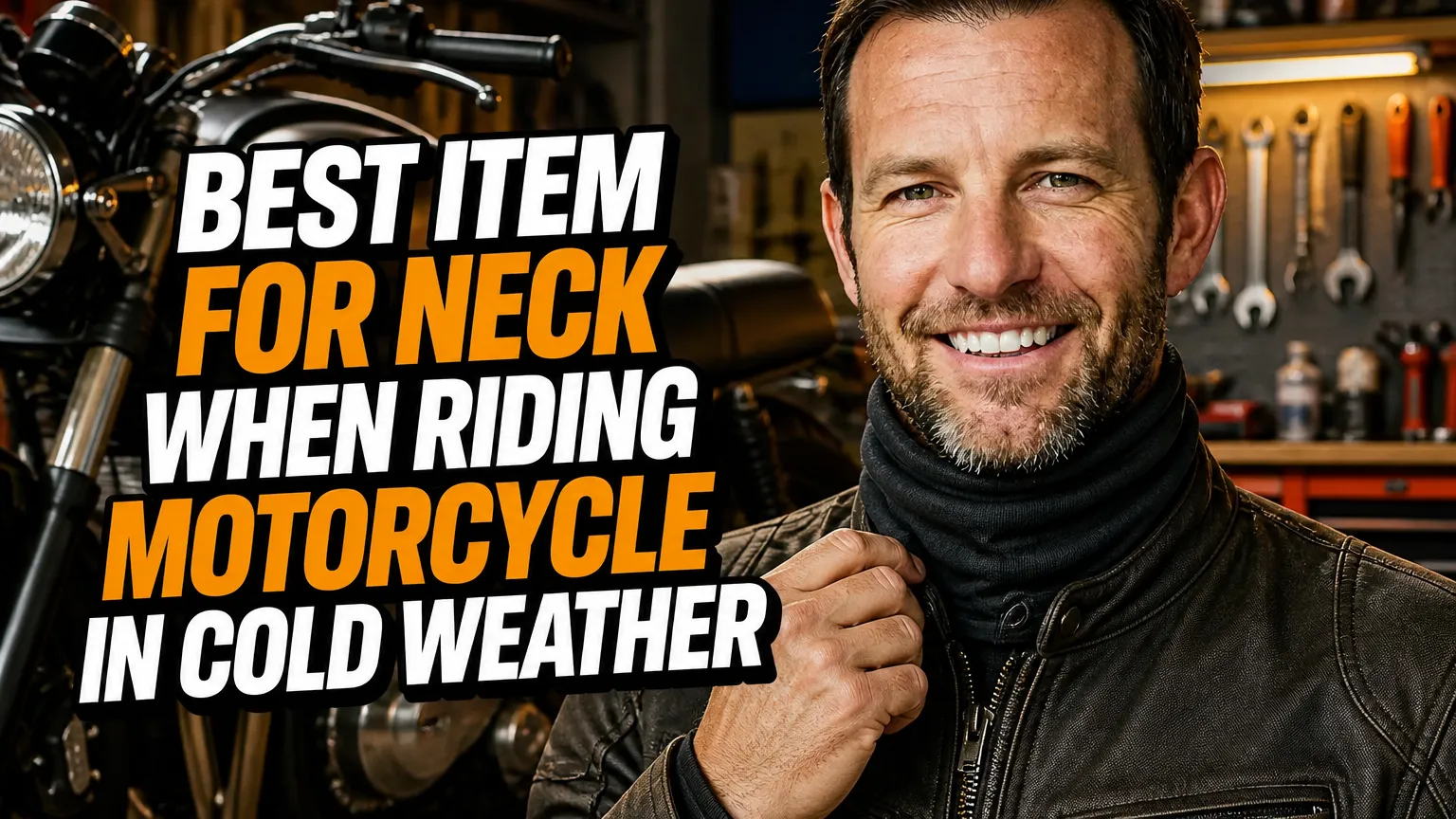
Cold air sneaking in around my collar can turn an otherwise enjoyable motorcycle ride into a miserable one. After trying different neck tubes, balaclavas, and fleece layers, I’ve found that the right choice depends on the temperature, wind, helmet fit, and how much coverage I want.
Below, I’ve picked specific products I’d consider for different winter riding needs, from lightweight moisture-wicking neckwear to fuller-coverage balaclavas. I also share the fit and breathing checks I use, because staying warm matters, but not at the expense of a secure helmet or clear vision.
- I choose a wind-blocking neck warmer for cold, exposed rides and a lighter tube for milder weather.
- My top picks include the KLIM Arctic Balaclava, REV’IT! Micro 2 WB, and BUFF ThermoNet Neckwear.
- I always check helmet fit, breathing comfort, and visor fogging before setting off.
- I layer neckwear with a properly closed jacket collar rather than relying on a thick scarf.
How I Choose Neckwear for a Cold Ride
When I compare cold-weather neckwear, I look first at whether it blocks wind across the front of my neck and upper chest. I also consider breathability: fabric that traps too much warm, damp air near my face can feel clammy and may contribute to visor fogging.
Fit is just as important as warmth. I prefer a close, smooth layer that sits comfortably beneath my helmet and jacket collar, without bunching around my chin or creating pressure points. Before riding, I make sure my helmet still fits securely and that I can turn my head freely.
For riders building a complete kit, I’d pair a neck layer with well-fitting base layers and protective outerwear. My guide to best motorcycle clothing for beginners covers the wider gear basics I consider important before spending on extra cold-weather accessories.
1. KLIM Arctic Balaclava — My Pick for Full-Face Coverage
When I want coverage beyond a simple neck tube, I look at the KLIM Arctic Balaclava. Its balaclava shape covers more of my head and face, so I can tuck the lower section into my jacket and reduce the gaps where cold air tends to creep in.
KLIM’s Arctic range is designed for cold-weather use, and the balaclava’s wind-resistant construction makes it a useful option for exposed rides. I find this style most appealing when the temperature is low enough that an uncovered cheek or jaw becomes uncomfortable, rather than for a short trip on a mild day.
What I like and what I check
I like the extra coverage, but I take care not to pull any face panel over my nose in a way that restricts breathing or directs exhaled air toward my visor. Balaclavas can feel warmer than neck gaiters, so I check for a comfortable fit under my helmet before committing to a long ride.
Prices can vary by season and retailer, but I’d generally expect a technical winter balaclava like the KLIM Arctic to cost roughly $40–$60. For me, it’s a strong choice when face and neck coverage matter more than packability.
2. REV’IT! Micro 2 WB — My Wind-Blocking Neck Warmer
The REV’IT! Micro 2 WB is one I’d reach for when wind is the main problem. The “WB” in its name refers to wind-blocking construction, which is the feature I value most when cold air is pushing through the gap between my jacket and helmet.
I like this style because it focuses coverage around the neck without necessarily adding the bulk of a full balaclava. That makes it easier for me to tuck the lower edge into my jacket, while keeping the fabric close to the skin and out of the way of my helmet straps.
When I’d wear it
I’d choose the Micro 2 WB for commutes and longer rides where steady airflow makes an ordinary thin tube feel inadequate. It’s also a sensible option for riders who want a motorcycle-oriented layer rather than a general-purpose scarf.
Depending on the retailer and color, I’d expect to see it around $30–$45. I’d still try it with my own helmet and jacket, because even a well-designed warmer can bunch if the collar opening is tight.
3. BUFF ThermoNet Neckwear — My Lightweight, Packable Pick
For a lightweight layer that I can stash in a pocket, I like BUFF ThermoNet Neckwear. BUFF makes this style for active use, and its thin, stretchy construction gives me a comfortable option when I want warmth without a thick fleece tube around my neck.
I find it most useful on cool rides, changeable days, or as a first layer beneath a separate wind-blocking jacket collar. Its low bulk is a practical advantage under a helmet, especially when a heavier gaiter would press against my jaw or make the collar feel crowded.
My use for a thinner tube
I wouldn’t expect a lightweight tube to stop a strong, cold wind as effectively as a dedicated windproof model. Instead, I treat the ThermoNet as a versatile layer for moderate conditions, and I add a more protective outer layer when the route is fast or exposed.
Prices often land around $25–$35, though patterns and availability change. I’d pick the BUFF ThermoNet when I value easy packing, stretch, and light coverage more than maximum insulation.
4. Dainese D-Core Balaclava — My Close-Fitting Technical Layer
The Dainese D-Core Balaclava is a technical option I’d consider when I want head and neck coverage in one piece. Dainese’s D-Core line is built around functional base-layer apparel, and the balaclava format gives me a neat layer that can sit beneath my helmet and jacket.
I appreciate that a close-fitting design is less likely to flap around or bunch into a bulky roll at my collar. For me, that makes it a good candidate for regular winter use, especially if I already wear a thermal base layer and want a coordinated, low-profile layer around my head and neck.
Fit and comfort notes
I check that the opening sits comfortably around my face and doesn’t interfere with my helmet padding. I also make sure the fabric doesn’t cover my mouth in a way that makes breathing feel restricted or sends warm breath straight up toward my visor.
I typically see technical balaclavas in this category priced around $30–$50. I’d choose the D-Core when I want a purpose-built, close-fitting layer and don’t need a thick fleece hood.
5. Alpinestars Winter Touring Balaclava — My Touring-Ready Option
The Alpinestars Winter Touring Balaclava is aimed at riders who want more than a simple neck tube. I like the idea of its fuller coverage for touring, where I may spend hours in changing weather and want to limit exposed skin around my neck and lower face.
With any touring balaclava, I pay attention to how the face opening sits once I put my helmet on. I want the material to stay smooth under the cheek pads, leave my breathing comfortable, and avoid adding awkward bulk where the helmet meets my jacket collar.
Why I’d consider it for longer days
I’d pack this style for a cold-weather tour because it covers more area than a neck gaiter and can be useful when temperatures drop unexpectedly. I’d still carry a lighter alternative if I expected big temperature swings, since full coverage can feel too warm once the day improves.
Retail pricing commonly falls somewhere around $25–$45, although I’d check current stock and model details before buying. I’d pick it for its touring-oriented coverage, not as a substitute for a properly insulated jacket and gloves.
6. BUFF Polar Neckwear — My Cozy Fleece-Backed Choice
When I want a soft, warmer feel against my neck, I consider BUFF Polar Neckwear. This style pairs a tube-like neck covering with a fleece section, giving me more insulation than a thin multifunctional tube while remaining simpler to wear than a full balaclava.
I like fleece-backed neckwear for cold, ordinary rides where I want comfortable coverage without covering my whole head. The extra fabric can help seal the jacket opening, but I make sure it doesn’t bunch up or press uncomfortably against my helmet when I turn my head.
Where it works best for me
I’d use the BUFF Polar on chilly rides when comfort and warmth are the priority. If strong wind is the bigger issue, I’d look for a specifically wind-blocking model instead, or combine the Polar with an outer layer that closes securely around my neck.
I’d budget roughly $30–$45, with price depending on the current version and retailer. I like it as a comfortable middle ground between a light tube and a highly covering winter balaclava.
7. Smartwool Merino 250 Neck Gaiter — My Natural-Fiber Pick
The Smartwool Merino 250 Neck Gaiter is a straightforward option I’d consider when I want a soft merino layer. Its 250-weight merino construction is intended for warmth, and I value merino for its comfortable feel and ability to manage moisture during active use.
I like a merino gaiter as a next-to-skin layer, especially when I’m wearing it for a long day and want to avoid the feel of scratchy or stiff fabric. It’s also easy to pull up or down as conditions change, provided I keep it clear of my breathing and visor.
What I’d pair it with
Merino isn’t automatically windproof, so I wouldn’t rely on the Smartwool gaiter alone in a biting headwind. I’d tuck it beneath a well-sealed jacket collar or pair it with an outer wind-blocking layer when my route includes sustained highway speeds.
Prices are often around $30–$40. I’d choose the Merino 250 for soft, warm everyday layering, particularly when I want a natural-fiber option rather than a synthetic technical balaclava.
8. Turtle Fur Chelonia 150 Fleece Neck Warmer — My Simple Fleece Option
The Turtle Fur Chelonia 150 Fleece Neck Warmer is a simple, specific fleece neck warmer I’d consider for cold rides when I want a soft layer that’s easy to pull on. Its lightweight fleece construction provides a cozy feel without the complexity of a hooded balaclava.
I like this type of neck warmer because I can adjust how much fabric sits above my jacket collar. That flexibility is handy when I stop for a break or move between sheltered streets and colder open roads, though I still take care to keep the fabric from riding up over my mouth.
My practical caveat
Fleece warmth and comfort are useful, but a simple fleece tube may not block wind as effectively as a membrane-backed motorcycle neck warmer. I’d use the Chelonia 150 for comfort and insulation, then rely on my jacket’s collar and other layers to handle strong airflow.
I’d expect a basic fleece warmer like this to cost roughly $15–$25. For me, it’s a practical choice when I want an uncomplicated, soft layer and don’t need full head coverage.
My Final Fit and Safety Checks
Before I ride, I put on my neckwear, fasten my jacket, and then check my helmet fit. I make sure the warmer doesn’t interfere with the chin strap, force the helmet upward, or leave fabric folded beneath a pressure point.
I also check my breathing and vision. If the fabric covers my nose or mouth, I test that I can breathe comfortably, and I position it so my exhaled breath is less likely to fog my visor. I never accept a warm layer that compromises a clear view of the road.
My quick rule is simple: I choose a wind-blocking product for cold, exposed rides; a technical balaclava when I want broad coverage; and a light or merino tube when the weather is cool but not severe. The best choice for me is the one that stays comfortable, works with my helmet and jacket, and lets me ride with a secure fit and an unobstructed view.
Frequently Asked Questions
What is the best type of neck warmer for riding a motorcycle in cold weather?
I prefer a wind-blocking gaiter or balaclava for cold, fast rides, and a breathable neck tube for milder conditions.
Can a neck warmer affect my motorcycle helmet fit?
Yes. I check that the material is thin and smooth enough to sit comfortably under my helmet without changing its secure fit.
Is merino wool a good choice for motorcycle neckwear?
I like merino for comfort and odor resistance, but I add a windproof outer layer when the ride is especially cold or exposed.
How should I stop my neck warmer from fogging my visor?
I position the fabric below my nose or use a design that directs exhaled air away from the visor, then check that my vision stays clear before riding.

Related Articles

5 Motorcycle Wrist Braces and Guards I’d Choose for Confident Riding
Compare five wrist braces and guards I’d consider for street and dirt riding, with fit, support, glove compatibility, and buying…
 Jake Miller
11 min read
Jake Miller
11 min read

7 Under Armour Base Layers I’d Choose for Comfortable Motorcycle Rides
Discover seven Under Armour base layers for hot and cold rides, plus my fit tips and safety advice for wearing…
Jake Miller
10 min read

8 Best Motorcycle Base Layers for Staying Warm on Cold Rides
Compare eight rider-ready thermal base layers, from merino to synthetic options, with fit, warmth, layering advice, and picks for cold-weather…
Jake Miller
11 min read