
8 Best Motorcycle Gear for a Safer, More Comfortable Daily Commute
 Jake Miller
11 min read
Jake Miller
11 min read
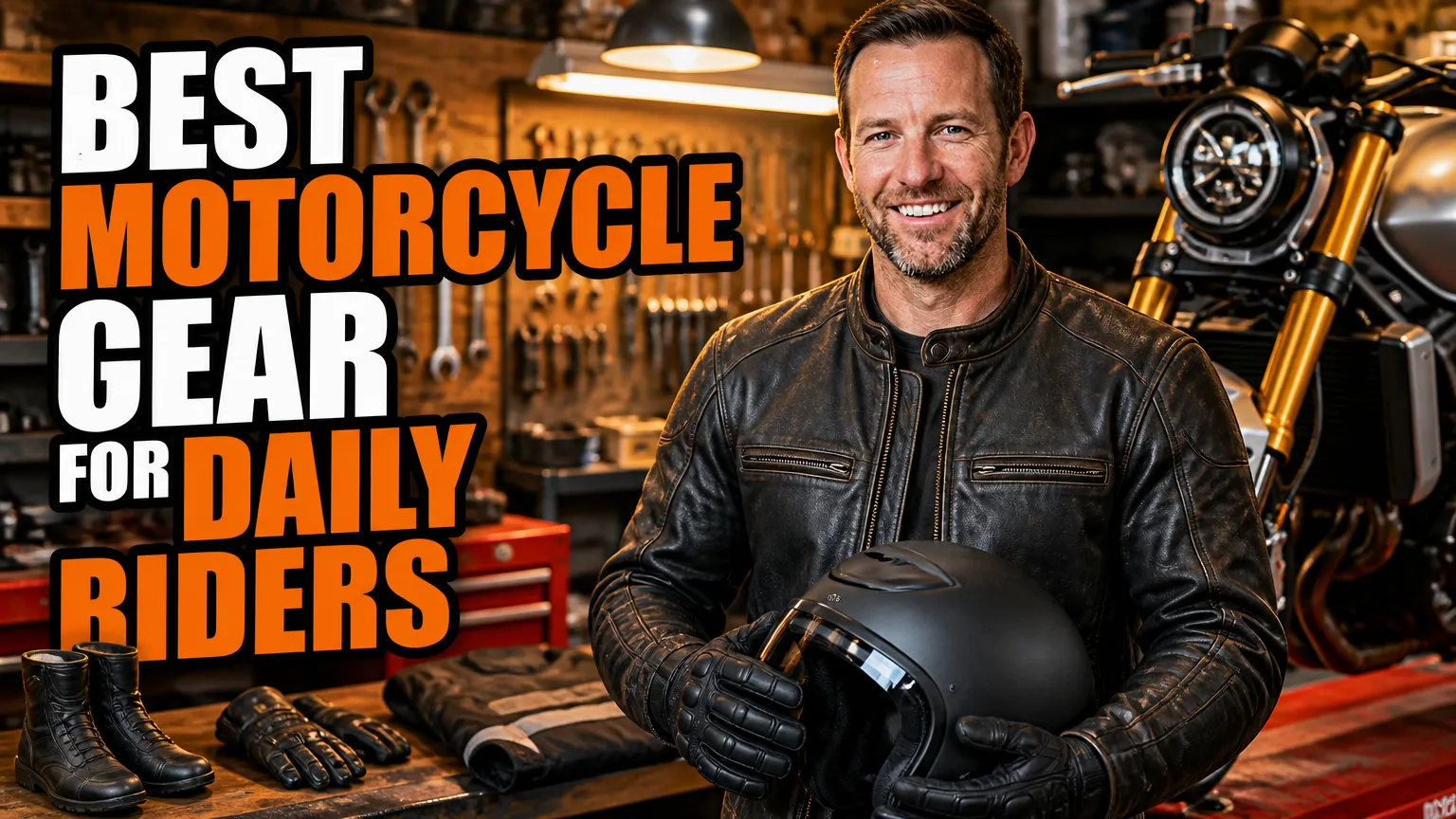
When I ride every day, the right gear has to do more than protect me in a slide. It needs to fit comfortably through stop-and-go traffic, cope with changing weather, and be easy enough to put on that I do not talk myself out of wearing it. I focus on certified protection, practical comfort, and pieces that work together across a normal week.
My picks below cover the essentials: a helmet, jackets for different conditions, riding jeans, gloves, footwear, and a rain layer. Fit and certification can vary by size, year, and market, so I always check the product label and try gear on before relying on it.
- I start with a correctly fitted, certified helmet and wear gloves, protective pants, and riding footwear on every trip.
- I choose a ventilated jacket for hot commutes and a waterproof, insulated option when my weather demands it.
- I check garment certification, armor placement, and fit rather than judging protection by appearance alone.
- I keep a compact rain layer available so a change in the forecast does not leave me unprepared.
1. Shoei RF-1400 — My Everyday Full-Face Helmet Pick
I put the helmet first because it is the piece I never compromise on, even for a short ride. The Shoei RF-1400 is a well-known full-face option with a multi-ply fiberglass-based AIM shell, a snug touring-oriented fit, and a face shield designed to seal against wind and weather.
For the U.S. version, I check the helmet’s own label for applicable certifications, including DOT and Snell approval where marked. Certification details can differ between markets and production versions, so I would never assume a helmet has a particular rating based on its name alone.
Why I like it for commuting
The full-face design gives me coverage around my jaw as well as my head, and the RF-1400’s ventilation and removable, washable interior make it practical for regular use. I also value its range of shield and fit options, since a helmet that presses painfully on my forehead or shifts around at speed is not the right helmet for me.
The main drawback is cost: it sits in the premium price bracket, and its fit will not suit every head shape. I would visit a helmet retailer, try it on for at least 15 minutes, and check that it stays level and secure without creating painful pressure points.
2. REV’IT! Eclipse 2 — My Pick for Warm-Weather Commuting
For hot days and slow-moving traffic, I want airflow without giving up motorcycle-specific construction. The REV’IT! Eclipse 2 is a textile jacket built around mesh panels, with abrasion-resistant fabric in key areas and pockets for shoulder and elbow protectors.
Its light, airy design is the reason I would reach for it in warm weather, rather than a heavy touring coat. The Eclipse 2 is typically positioned as an entry-level, warm-weather jacket, so I check the garment’s label for its EN 17092 class and confirm which protectors are included in the exact version I am buying.
What I check before riding
I make sure the shoulder and elbow armor sits over the joints when I assume my riding position, not just when I stand upright in a shop. I also check whether the jacket has a compatible back protector installed; a pocket alone does not mean a back protector is included.
Mesh works best when the air is warm. On cool mornings or in sustained rain, I would add a suitable mid-layer or choose a more weatherproof jacket. For more hot-weather clothing ideas, I also recommend browsing this guide to best motorcycle gear for summer.
3. Alpinestars Andes v3 Drystar — My Choice for Changeable Weather
When I expect cooler temperatures or a wet commute, I prefer a jacket designed for broader weather protection. The Alpinestars Andes v3 Drystar is a touring-style textile jacket with a waterproof Drystar membrane, a removable thermal liner, and armor at the shoulders and elbows.
I like the flexibility of being able to remove the liner as conditions warm up. Its touring cut and storage make it useful for regular errands as well as longer rides, though I would check the fit carefully over the layers I actually plan to wear.
Where it fits in my gear rotation
I see the Andes v3 as a practical alternative to owning one jacket for every season, especially for riders who face cool starts and unpredictable showers. It will still feel warmer and bulkier than a mesh jacket, so I would not choose it as my only option for consistently hot, humid weather.
As with any jacket, I verify the protective garment rating and the exact armor supplied in my market. I also inspect the cuffs, collar, and closures: a waterproof membrane is useful, but the way the jacket seals at the openings matters when rain is blowing sideways.
4. REV’IT! Lombard 3 RF Jeans — My Everyday Alternative to Regular Denim
I do not treat ordinary jeans as riding pants. The REV’IT! Lombard 3 RF is a motorcycle-specific denim option designed for a more casual look, with abrasion-resistant reinforcement and pockets for knee and hip protectors, depending on the version and fit.
For commuting, I value riding jeans that I can wear off the bike without feeling like I am in bulky track pants. The Lombard 3 RF is a model I would consider for that balance, but I always confirm the garment’s EN 17092 class and whether knee and hip armor are included before buying.
Getting the fit right
I test riding jeans while seated on a motorcycle or in a similar crouched position. The knees should still cover the protectors when I bend my legs, and the waist should not pull down or leave a gap when I lean forward.
Motorcycle denim often feels heavier or less flexible than everyday jeans, and protective layers may make it warmer. I would choose the right length and armor placement over a fashion fit, then check the maker’s care instructions so I do not damage the protective materials in the wash.
5. Alpinestars SMX-1 Air v2 Gloves — My Warm-Weather Hand Protection
I wear gloves on every ride because my hands are exposed to wind, road debris, and the instinct to reach out during a fall. The Alpinestars SMX-1 Air v2 is a short-cuff glove aimed at warm-weather riding, with ventilated construction, a protective knuckle area, and reinforced palm materials.
I like the short cuff for its ease of use with a casual jacket, especially when I am making several stops. But I pay close attention to how it overlaps the jacket sleeve; I do not want a large gap at my wrist when I reach for the handlebars.
My fit and certification checks
I need enough finger length to avoid pulling the glove tight across my knuckles, while keeping the palm snug enough that it does not bunch around the controls. I also check the product label for its protective certification, such as the applicable EN 13594 marking on the version sold in my market.
Because this glove is ventilated, I would pair it with a warmer, longer-cuff option in cold or wet weather. One glove rarely handles every season well, and I would rather keep a second pair ready than ride with numb fingers.
6. TCX Street 3 WP — My Practical Riding Shoe
For a daily ride that includes walking around at work or running errands, I appreciate footwear that does not feel like a race boot. The TCX Street 3 WP is a motorcycle riding shoe with a waterproof T-Dry membrane, ankle-area protection, and a ZPLATE insert intended to balance flexibility with reinforcement.
Its sneaker-inspired shape makes it an approachable choice for urban riding, while its motorcycle-specific features set it apart from ordinary trainers. I would still check the shoe’s CE certification and protective markings on the label, since model details and standards can vary between versions.
Why I choose riding footwear over sneakers
A regular sneaker is comfortable for walking, but it usually lacks motorcycle-oriented reinforcement and secure ankle coverage. With the Street 3 WP, I look for a secure fit around the heel and ankle, plus a sole that feels stable on the footpegs and when I put a foot down.
The waterproof membrane is useful when roads are damp, but it can make footwear feel warmer than a non-waterproof shoe. I would try the TCX Street 3 WP with the socks I normally wear and confirm there is enough room without allowing my heel to lift.
7. REV’IT! Cyclone 4 H2O — My Packable Rain Layer
Even with a waterproof touring jacket, I like having a dedicated rain shell available for an unexpected downpour. The REV’IT! Cyclone 4 H2O is a lightweight waterproof over-jacket designed to be worn over riding gear, and it can be paired with the matching Cyclone 4 H2O rain pants.
I value an over-layer because it can extend the usefulness of lighter gear when the forecast changes. I check that the shell fits over my jacket without restricting shoulder movement, and I practice putting it on before I am standing beside a wet road.
How I use a rain shell
I pack the rain layer somewhere I can reach without unpacking my whole bag. Before a longer commute, I also check the closures and seams, and make sure cuffs and the hem can be adjusted over my gloves and trousers.
A rain shell is weather protection, not a replacement for abrasion-resistant motorcycle clothing. I wear it over proper riding gear, and I remember that wet roads can reduce grip even when my own clothes stay dry.
8. D3O Viper Stealth Back Protector — My Jacket Upgrade
Many jackets include shoulder and elbow armor but leave the back protector as an optional extra. When my jacket accepts it, I consider the D3O Viper Stealth as a low-profile upgrade, provided its shape and size match the jacket’s back pocket.
The Viper Stealth is a specific back-protector insert, not a universal fit for every jacket. I check the jacket maker’s compatibility guidance and the protector’s size before ordering, then confirm the protector sits flat and covers the intended area without bunching.
Why I pay attention to the insert
I look for the protector’s own certification and markings rather than assuming all foam inserts offer the same protection. A back protector can add useful coverage, but it cannot make an ill-fitting jacket safe or compensate for missing armor elsewhere.
I also avoid trimming or modifying an insert to force it into a pocket. If it does not fit properly, I choose the jacket manufacturer’s recommended option or another compatible certified protector.
How I Build a Daily Riding Kit
I buy gear in the order I am most likely to use it: helmet, gloves, protective jacket and pants, and secure riding footwear. Then I add weather-specific pieces based on my commute, rather than buying a closet full of equipment that is too uncomfortable to wear consistently.
Fit is part of protection. I sit in my normal riding posture, check that armor stays over the joints, and make sure cuffs and hems do not ride up. If I am new to motorcycling, I find it useful to compare the fundamentals in this guide to the best motorcycle clothing for beginners.
My quick pre-ride check
- I check the helmet fit, visor, and chin-strap fastening before setting off.
- I make sure my jacket and pants close securely and their armor has not shifted.
- I fasten my gloves and footwear, and check for exposed skin between layers.
- I pack rain protection when the forecast or route makes it sensible.
I also inspect my gear regularly for damaged seams, worn closures, cracked armor, or a helmet that has taken an impact. When something no longer fits or functions as intended, I replace it instead of hoping it will be fine for one more ride.
The best daily setup is the one that suits my actual climate and routine while giving me protective coverage I will wear consistently. I would rather choose a well-fitted, certified jacket and comfortable riding shoes than an impressive-looking kit that stays at home because it is awkward to use.
Frequently Asked Questions
What motorcycle gear should I wear for a daily commute?
I prioritize a correctly fitted, certified helmet, abrasion-resistant jacket and pants, gloves, over-the-ankle footwear, and weather protection suited to my route.
Are motorcycle jeans safe enough for commuting?
I look for motorcycle-specific jeans with certified impact protectors and a verified abrasion-resistance class. Ordinary denim is not a substitute.
How much should I spend on daily motorcycle gear?
I start with a properly fitted helmet and protective clothing, then buy pieces I can wear consistently. Prices vary, so I compare certification, fit, ventilation, and durability rather than choosing by price alone.
Can I wear regular sneakers while riding?
I avoid regular sneakers because they usually lack motorcycle-specific ankle coverage and reinforcement. I prefer certified riding footwear that I can still walk in comfortably.

Related Articles

5 Motorcycle Wrist Braces and Guards I’d Choose for Confident Riding
Compare five wrist braces and guards I’d consider for street and dirt riding, with fit, support, glove compatibility, and buying…
Jake Miller
11 min read

7 Under Armour Base Layers I’d Choose for Comfortable Motorcycle Rides
Discover seven Under Armour base layers for hot and cold rides, plus my fit tips and safety advice for wearing…
Jake Miller
10 min read

8 Best Motorcycle Base Layers for Staying Warm on Cold Rides
Compare eight rider-ready thermal base layers, from merino to synthetic options, with fit, warmth, layering advice, and picks for cold-weather…
Jake Miller
11 min read