
8 Best Red Wing Boots for Motorcycle Riding: What I Actually Wear on the Bike
 Jake Miller
11 min read
Jake Miller
11 min read
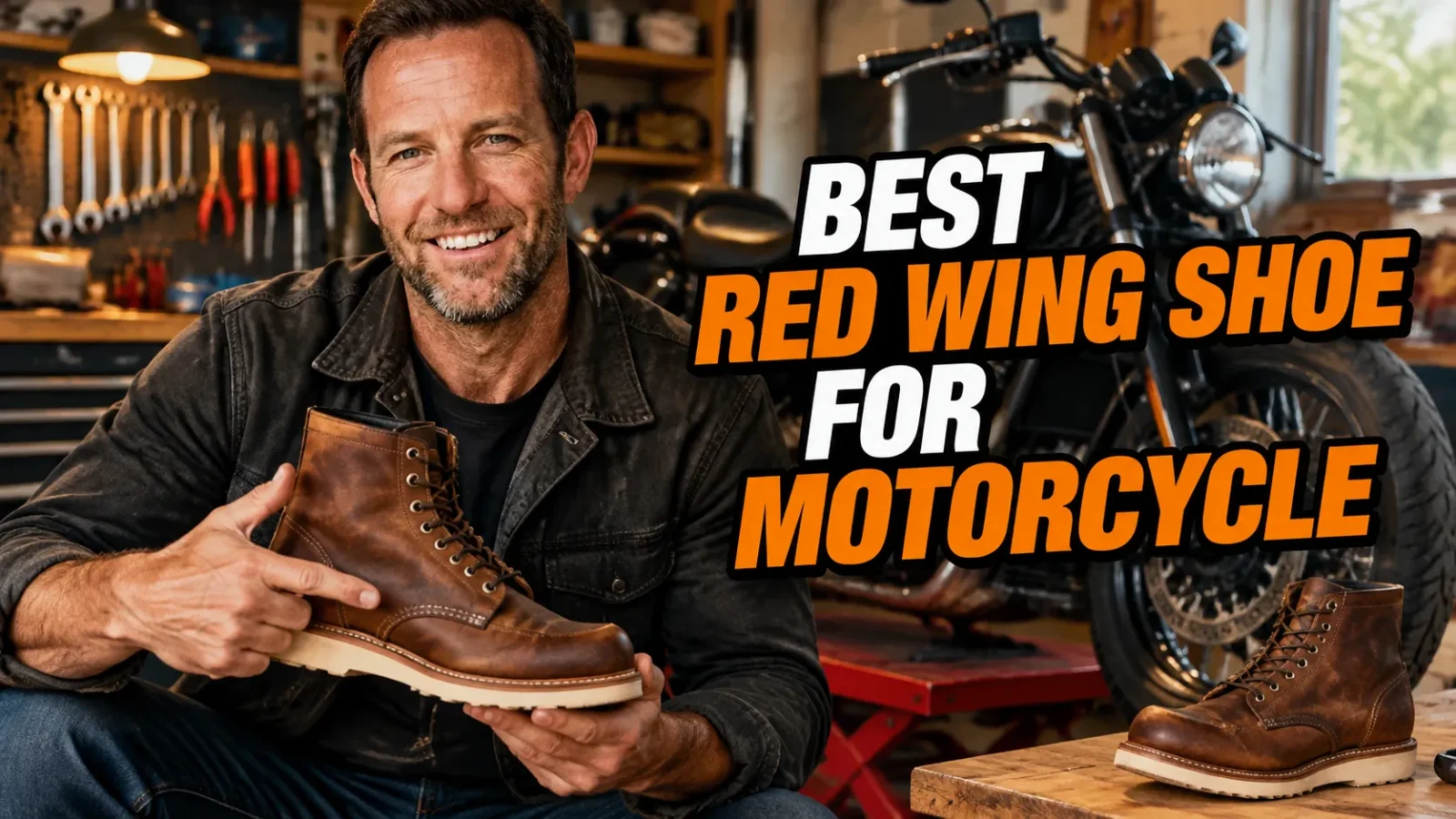
I have been riding for well over a decade, and I have burned through more boots than I care to admit. Race boots, touring boots, ADV boots, cheap online specials that fell apart in a season. But the pair I keep reaching for on a Tuesday morning commute or a Sunday backroad cruise is almost always a Goodyear-welted Red Wing.
Here is the honest disclaimer I give every rider who asks me this question: Red Wing does not build a motorcycle boot. There is no CE certification, no molded ankle armor, no shift pad, no reflective panel. What Red Wing builds is a full-grain leather boot with a steel shank, a stitched-on sole, and a shape that happens to work beautifully on a bike.
If you want the full framework for what actually protects your feet in a crash, start with my Ultimate Guide to Motorcycle Boots. That covers armor ratings, sole compounds, shaft heights and materials in depth. This article is narrower and much more personal.
Below are the eight Red Wing models I would genuinely lace up before a ride, ranked from my overall favorite down to the one I only wear for short city hops.
- Red Wing makes zero CE-certified motorcycle boots, but their welted, steel-shanked construction still works well for street riding.
- My overall pick is the Iron Ranger 8111 for its reinforced cap toe and Vibram 430 mini-lug sole.
- The Engineer Boot 2269 is the best no-lace option, and the 877 Moc Toe gives the most ankle coverage.
- Laces, low tread, and thin leather are the three things I avoid on a bike.
What I Look For in a Red Wing Boot for Riding
Before the list, I want to explain my filter. Not every Red Wing belongs on a motorcycle, and a couple of the most hyped models are honestly mediocre once you are moving at 60 mph. Here is what I actually check.
Sole Compound and Tread
Grip on the peg and on the pavement is everything. I want a rubber compound that stays soft in the cold and a tread pattern with enough bite to shed water without being so aggressive that my boot snags when I move my foot.
The Vibram 430 Mini-Lug that Red Wing uses on the Iron Ranger and Blacksmith is close to ideal. Deep enough for wet roads, shallow enough that I can slide my foot along the peg without fighting it.
Shaft Height and Ankle Coverage
A 6-inch boot is my floor for anything above 40 mph. The 3-inch chukkas are lovely footwear, but they leave your ankle entirely exposed, and that is exactly the joint that gets crushed in a low side.
Taller is generally better for coverage, but taller also means stiffer and hotter. I compromise at 6 to 8 inches for most riding.
Leather Thickness and Welt Construction
Full-grain, oil-tanned leather takes abrasion far better than the split leather you find on budget boots. And a Goodyear welt means the sole is stitched, not glued, so it will not peel off mid-ride the way cemented soles sometimes do.
If you want a broader shortlist before diving in, I have a companion piece on the best red wing boots for motorcycle use that covers a few more models.
1. Red Wing Iron Ranger 8111 — Best Overall
The Iron Ranger 8111 in Amber Harness leather is the boot I recommend to almost everyone. Six-inch shaft, full-grain oil-tanned leather, a double-layer cap toe, Goodyear welt construction, a steel shank, and a Vibram 430 Mini-Lug outsole. It runs around $350 to $370 depending on the retailer.
The cap toe is the reason it wins for me. That reinforced toe box sits exactly where the shifter presses, so instead of wearing a hole through soft leather in a season, you get a scuff that polishes out. Mine have taken thousands of shifts and the toe is still structurally intact.
The mini-lug sole grips pegs and pavement without being grabby, and the leather insole molds to your foot after a few weeks. It is also the most versatile boot here. I wear mine to the office, to dinner, and on the bike, which is rare for anything with real protection.
What I Do Not Love
The laces are the weak point. Long laces can whip around the peg area, so I double-knot mine and tuck the ends inside the shaft. And there is no ankle armor at all, which is why I would not take these to a track day.
2. Red Wing Engineer Boot 2269 — Best No-Lace Classic
The Engineer 2269 is the boot that made Red Wing famous with bikers in the first place. Black Harness leather, an 11-inch shaft, a single buckled instep strap, no laces anywhere, Goodyear welt, and the same Vibram 430 Mini-Lug outsole. Expect to pay around $400.
No laces is the entire point on a motorcycle. There is nothing to snag on a peg, nothing to come untied at highway speed, nothing to catch in a chain or a hot exhaust. You pull them on, buckle the strap, and go.
The tall shaft also gives you more leather between your leg and the engine case, which I appreciate on air-cooled bikes that run hot in traffic.
What I Do Not Love
Fitting an engineer boot is a project. The shaft is stiff, the instep is unforgiving, and break-in took me nearly a month of daily wear. They are also genuinely hot in summer, and the tall shaft limits how much your ankle can flex when you are walking around off the bike.
3. Red Wing 877 Classic Moc Toe — Best Ankle Coverage
The 877 is the 8-inch version of Red Wing’s iconic moc toe, built in Oro Legacy leather with a Traction Tred white wedge sole. Triple-stitched, Goodyear welted, no defined heel. It usually sells for around $300 to $330.
That extra two inches of shaft over the Iron Ranger is the selling point for me. It covers the ankle bone completely and gives you a serious layer of leather in the most vulnerable spot. On a cruiser or a scrambler, it also looks exactly right.
The Traction Tred wedge is flat, soft and extremely grippy on footpegs. It also has no heel lip, which means less chance of catching on a floorboard when you put a foot down.
What I Do Not Love
That white wedge sole shows every drop of chain lube and oil, and it wears faster than a lugged sole. There is also no heel to hook on a peg, so riders with heel-toe shifters sometimes find the 877 feels vague underfoot.
4. Red Wing Roughneck 8146 — Best Grip
If you ride in the wet or you spend any time on gravel, the Roughneck 8146 is my pick. It is a 6-inch boot in Briar Oil Slick leather with a deep-lugged Vibram 360 outsole and Goodyear welt construction, priced around $320.
The 360 outsole has the most aggressive tread in the Heritage lineup. I have ridden mine through standing water, muddy fire roads and loose gravel, and the grip is noticeably better than the mini-lug models.
Briar Oil Slick is also one of my favorite Red Wing leathers. It is heavily oiled, so it shrugs off rain and road spray with almost no maintenance, and it develops a deep, mottled patina that looks better every season.
What I Do Not Love
Deep lugs can be grabby. On some bikes I have to consciously reposition my foot because the tread bites into the peg rather than sliding. If you ride a lot of dirt, though, that tradeoff is worth it. For more on that, see my roundup of the Best Motorcycle Boots for Adventure Riding.
5. Red Wing Beckman 9011 — Best Looking
The Beckman 9011 in Black Cherry Featherstone leather is the dress boot of this group. Six-inch shaft, flat welt, and a low-profile, hard-wearing Roccia outsole rather than a chunky lug. It sits at the top of the price range, roughly $380 to $400.
Featherstone leather has a burnished, semi-gloss finish that looks genuinely sharp with dark jeans and a leather jacket. On a cafe racer or a standard, the Beckman is the boot that makes the whole outfit work.
The flat sole also gives excellent peg feel. I can tell exactly where my foot is without looking down, which matters more than people realize in stop-and-go traffic.
What I Do Not Love
That smooth Roccia sole is the least grippy option here in the rain. I have had a couple of nervous moments on painted crosswalk lines and metal drain covers. It is a fair-weather boot in my book.
6. Red Wing Blacksmith 3343 — Best Everyday Boot
The Blacksmith 3343 in Copper Rough and Tough leather is basically an Iron Ranger without the cap toe. Same 6-inch shaft, same Vibram 430 Mini-Lug outsole, same Goodyear welt and steel shank, roughly $330 to $350.
Dropping the cap toe makes it noticeably lighter and more flexible. For me that means it is the most comfortable Red Wing to walk around in once I am off the bike, whether that is a coffee stop or a full day at a rally.
Copper Rough and Tough is a pull-up leather, so it scuffs light and darkens with oil. It looks broken in almost immediately, which I like.
What I Do Not Love
Without a cap toe, the shifter chews through the toe leather much faster. Mine developed a visible wear patch in about three months. A slip-on shift pad fixes it, but it is worth knowing before you buy.
7. Red Wing Pecos 1155 — Best Slip-On Work Boot
The Pecos 1155 is technically a work boot rather than a Heritage model, and that is exactly why I like it. Brown Pecos leather, a tall pull-on shaft with side straps, no laces, and Red Wing’s SuperSole dual-density polyurethane outsole. It typically runs $260 to $290.
The SuperSole is oil-resistant and slip-resistant, which sounds like marketing until you are standing in a fuel station puddle in the rain. It is also more shock-absorbing than the hard leather-and-rubber soles on the Heritage boots.
No laces, tall shaft, tough sole, and the cheapest boot on this list. If you are just starting out, it is a smart first pair. I would pair it with my guide to the Best Motorcycle Boots for Beginners before you buy anything.
What I Do Not Love
The western-style toe is narrow, and the shaft is stiff out of the box. Ankle flex is limited, which is fine on the bike and less fun walking. Sizing also runs a touch large in my experience.
8. Red Wing Chukka 3141 — Best Lightweight Urban Boot
The Chukka 3141 in Briar Oil Slick is a 3-inch ankle boot on a Chemigum cork outsole, Goodyear welted, around $290 to $310. It is the lightest, most flexible boot here by a wide margin.
For short city rides, popping to the shop, or a slow cruise around town, the Chukka is comfortable and looks great with cuffed jeans. It is the boot I grab when I know I will be walking more than riding.
What I Do Not Love
I will be blunt: the ankle coverage is minimal. I do not ride highways or twisties in these, and I would not recommend them for a new rider. Think of them as a casual boot that happens to be rideable, not a riding boot.
Boot Care for Riders
Road grime, chain lube, exhaust soot and salt all attack leather faster than normal wear does. I clean and condition my riding Red Wings more often than my casual pairs, usually every six to eight weeks during riding season.
Cleaning Road Grime
Wipe them down with a damp cloth first, then use a horsehair brush to lift dried dirt out of the welt stitching. Never soak them. If you want a full step-by-step method, my guide on how to clean motorcycle boots walks through the whole process properly.
Conditioning and Waterproofing
After cleaning and drying, apply a light coat of conditioner and let it soak in overnight. For oil-tanned leathers like Amber Harness and Briar Oil Slick, a natural conditioner is plenty. Skip heavy waxes on smooth Featherstone leather, because they dull the finish.
My Final Verdict
If you only buy one pair, get the Iron Ranger 8111. It is the best balance of protection, grip, durability and everyday wearability in the entire Red Wing range.
If you want no laces, go Engineer 2269. If you want maximum ankle coverage, go 877. If you ride dirt and gravel, go Roughneck 8146.
And remember the honest caveat I started with. Red Wings are excellent street-riding footwear, but they are not certified motorcycle boots. If you are still weighing options across brands, my breakdown of what are the best boots for motorcycle riding will help you decide where Red Wing fits into your own riding.
Buy a pair, break them in slowly, and they will outlast three pairs of whatever the internet is pushing this month. Mine have.
Frequently Asked Questions
Are Red Wing boots actually safe for motorcycle riding?
They are not CE-certified motorcycle boots. But a full-grain leather, Goodyear-welted Red Wing with a steel shank gives you solid abrasion resistance and a stiff, protective sole. I still would not ride track days in them without adding ankle protection.
Which Red Wing model is the best for riding?
For most riders, the Iron Ranger 8111 is my top pick thanks to its 6 inch shaft, reinforced cap toe and Vibram 430 mini-lug sole. If you want zero laces, the Engineer Boot 2269 is the classic choice.
Can I ride a motorcycle in Red Wing work boots?
Yes, plenty of riders do. Work models like the Pecos 1155 and the SuperSole line have oil-resistant, slip-resistant soles and pull-on designs. Just confirm the outsole is rated for oil and grease before you commit.
How long do Red Wing boots take to break in?
Expect two to four weeks of regular wear. The leather insole molds to your foot over time, so do not rush it with heat or soaking. Condition the leather and wear them around the house before your first long ride.

Related Articles

10 Best Tennis Shoes for Motorcycle Riding: Honest Picks From a Rider Who Tried Them
I tested the best tennis shoes for motorcycle riding to find out what actually works behind the bars, plus the…
Jake Miller
10 min read

11 Best Footwear Options for Motorcycle Riding, Ranked by a Rider Who’s Worn Them All
I've put thousands of miles on moto boots. Here are the 11 best footwear options for motorcycle riding, from track-ready…
Jake Miller
10 min read

10 Best Non Riding Shoes That Actually Work on a Motorcycle
I have ridden thousands of miles in shoes that were never designed for a bike. Here are the best non…
Jake Miller
13 min read