
What Are the Best Boots for Motorcycle Riding? My Honest Picks After Years on Two Wheels
 Jake Miller
11 min read
Jake Miller
11 min read
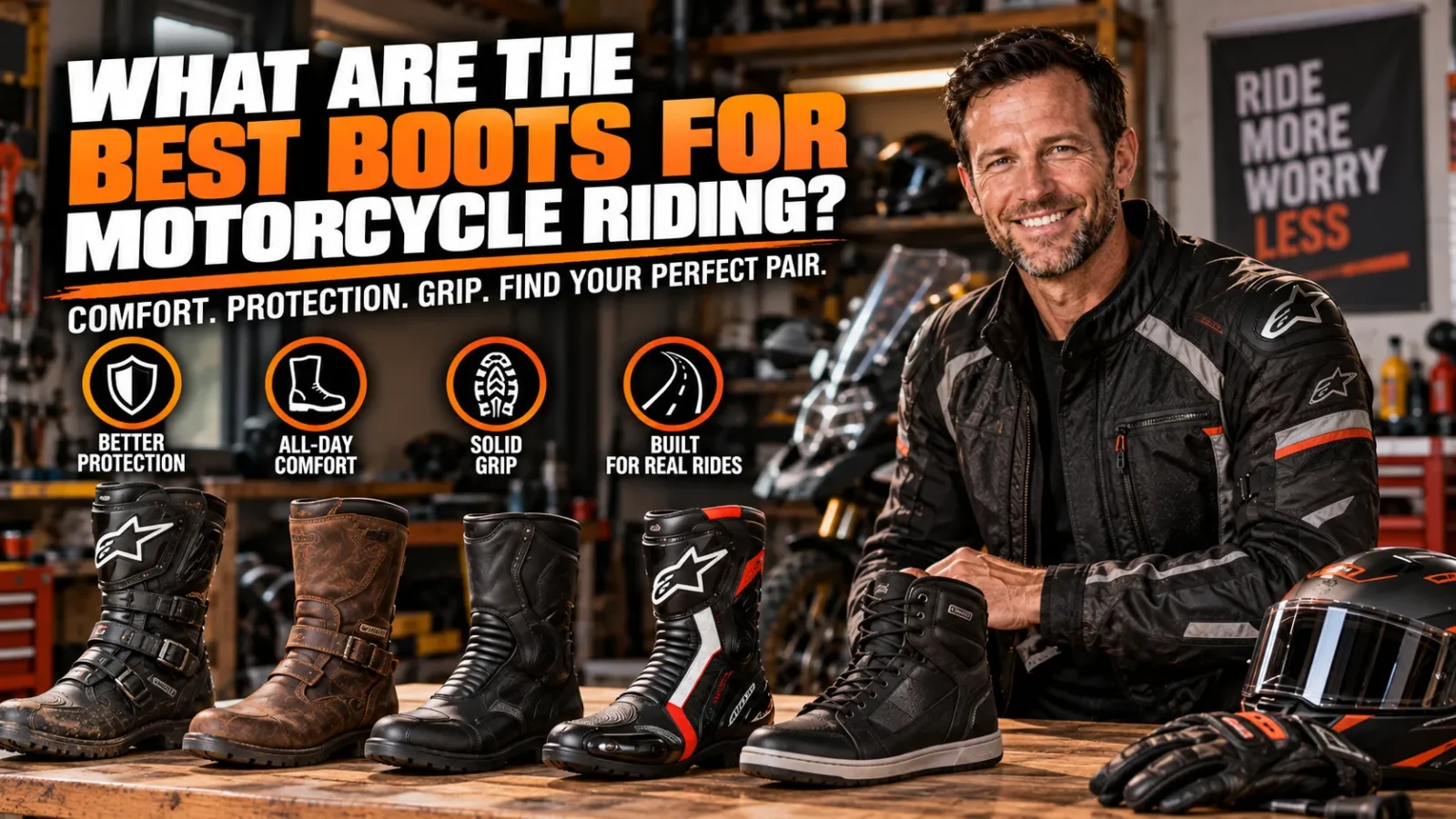
I’ve ruined a pair of sneakers on a hot exhaust pipe, felt my ankle twist painfully in a gravel parking lot, and stood in a puddle at a gas station with soaked socks for the rest of a 200-mile ride. Every single one of those moments taught me the same lesson: your boots matter more than almost any other piece of riding gear.
I’ve spent years testing different boots across commuting, touring, track days, and off-road trails. In this guide, I’m sharing exactly what I’ve learned, including my personal picks and the mistakes I made along the way.
If you want the full breakdown of boot types and materials, I’d also point you toward my Ultimate Guide to Motorcycle Boots, which digs even deeper into the technical side of things.
- The “best” boot depends entirely on your riding style: commuting, touring, sport, or off-road.
- Ankle support, abrasion resistance, and a proper snug fit matter more than brand names.
- My top all-around picks are touring boots with reinforced ankles and waterproof membranes.
- Cheap boots can cost you more in the long run if they fail in a crash.
- Adventure riders need a specialized boot; check out my dedicated guide for those picks.
Why Your Boot Choice Actually Matters
I used to think boots were just a formality. Something you wore because “real riders” did. That changed the first time I dropped my bike at low speed in a driveway.
My ankle rolled slightly under the bike’s weight, but my boots held firm. No sprain, no swelling, nothing. A regular sneaker would not have done that.
Motorcycle boots aren’t just about looking the part. They’re engineered with reinforced ankle cups, shifter pads, oil-resistant soles, and abrasion-resistant leather that regular footwear simply doesn’t have.
The Real Risks of Skipping Proper Boots
I’ve talked to riders who wore hiking boots or work boots thinking they’d be “good enough.” Most of them changed their minds after a close call.
Ankles and feet are incredibly vulnerable in a crash. There’s no fairing, no fuel tank, nothing between your foot and the asphalt except what you’re wearing.
Even a low-speed tip-over can crush toes or snap an ankle if your footwear doesn’t have structural support built in.
What I Actually Look For in a Good Motorcycle Boot
After years of trial and error, I’ve developed a checklist. I run every new boot through these criteria before I even consider buying.
Ankle and Shin Protection
This is non-negotiable for me. I want a reinforced ankle cup, preferably with a hard plastic or composite shell, plus some shin coverage on taller boots.
I learned this after a friend broke his ankle in a slow-speed spill wearing low-cut boots. Height and structure genuinely matter.
Sole Grip and Shifter Feel
A boot with a slippery sole is dangerous on wet pavement or when you’re paddling your bike backward out of a tight spot. I always check for a grippy, oil-resistant rubber sole.
I also want a reinforced toe box or shift pad, so I’m not wearing through the leather every time I upshift.
Waterproofing
I ride in the Pacific Northwest occasionally, and I cannot stress enough how miserable wet feet make a long ride. A quality waterproof membrane, like Gore-Tex, is worth every extra dollar.
I once rode three hours home in the rain with “water-resistant” boots that were absolutely not waterproof. My socks were soaked within twenty minutes.
Fit and Break-In Comfort
Motorcycle boots should fit snugly, almost like a firm handshake around your foot. Too loose, and your foot slides around inside during hard braking or acceleration.
I always try boots on with the socks I’ll actually ride in, usually thicker moisture-wicking socks, not thin cotton ones.
My Top Picks for Commuting and Everyday Riding
If you’re riding to work or running errands, you want something protective but not overly bulky. I’ve tested dozens of commuter-style boots over the years.
Short Ankle Boots
My favorite commuter boots sit right at or slightly above the ankle bone. They’re easy to walk in, don’t look out of place off the bike, and still offer solid protection.
I personally gravitate toward leather boots with a reinforced heel cup and a zip closure for quick on-off convenience before meetings or errands.
What I’ve Learned From Daily Wear
Daily riding means daily wear and tear. I look for double or triple stitching along stress points, since that’s usually where cheaper boots fail first.
I also prioritize boots I can comfortably walk in for a few blocks, because commuting almost always involves some walking too.
Best Boots for Long-Distance Touring
Touring is where boot comfort becomes make-or-break. I’ve done twelve-hour riding days, and the wrong boots can turn your feet into a throbbing mess by hour six.
Taller Boots With More Coverage
For touring, I want taller boots that cover more of my shin. Weather protection and vibration dampening become way more important on long stretches of highway.
My personal touring boots have a slightly padded ankle collar, which honestly makes a bigger difference than I expected on multi-day trips.
Waterproof Membranes Are a Must
I will not tour without waterproof boots anymore. I’ve been caught in unexpected downpours too many times, and dry feet genuinely affect your mood and focus after hours in the saddle.
Look for brands that specifically advertise a Gore-Tex or proprietary waterproof lining, not just “water-resistant” treated leather.
Breathability Matters Too
Here’s something I didn’t consider early on: waterproof boots can trap heat. I now look for boots with some kind of breathable lining or perforation options for warmer climates.
I switched to a boot with a mesh-backed waterproof membrane for summer touring, and it made a noticeable difference on hot days.
Best Boots for Sport and Track Riding
Sport riding demands a completely different boot than commuting or touring. I’ve done a handful of track days, and the gear requirements there are strict for good reason.
Race-Style Boots With Sliders
Track-focused boots typically include toe sliders and rigid external ankle protection. I noticed immediately how much more locked-in my foot felt on the pegs compared to a touring boot.
These boots sacrifice walking comfort for maximum protection and feel, which makes total sense for their purpose.
Stiffness and Feedback
I want a boot that transmits feedback from the footpegs without being painfully rigid. Most quality sport boots strike this balance through segmented panels around the ankle and shin.
My first pair felt awkward walking to the paddock, but once on the bike, the control improvement was obvious immediately.
Best Boots for Adventure and Off-Road Riding
Adventure riding is its own beast entirely. I’ve ridden gravel roads, mud, and the occasional unexpected river crossing, and my boot needs changed dramatically.
Taller, More Rigid Construction
ADV boots typically extend higher up the shin and use more rigid plastic reinforcement, similar to motocross boots but slightly more road-friendly.
I genuinely believe this category deserves its own deep dive, which is why I wrote a dedicated Best Motorcycle Boots for Adventure Riding guide covering my top picks and testing notes in detail.
Balancing Off-Road Protection With Road Comfort
The tricky part with ADV boots is finding one that doesn’t feel like a ski boot on paved sections. I’ve tried a few that were fantastic off-road but miserable during highway stretches.
My advice is to prioritize based on your actual riding split. If you’re 80% pavement, lean toward a lighter touring-adventure hybrid boot instead of a full off-road design.
Materials: Leather vs. Synthetic vs. Textile
I get asked about this constantly, so let’s break it down simply based on my own experience with each.
Full-Grain Leather
Leather remains my personal favorite for abrasion resistance. It’s proven itself in countless crash tests and real-world slides, and it molds nicely to your foot over time.
The downside is weight and break-in time. My leather boots took a good two weeks of regular wear before they stopped feeling stiff.
Synthetic Microfiber
Synthetic materials have improved massively. My newer synthetic boots are lighter, dry faster, and require almost no break-in period compared to leather.
I still slightly favor leather for pure abrasion resistance, but the gap has genuinely narrowed in recent years.
Textile and Mesh Combinations
These show up mostly in hot-weather or adventure boots. I like them for breathability, but I’m always a bit more cautious about their long-term abrasion resistance.
If you go this route, check for reinforced panels in high-impact zones like the ankle and toe.
Common Mistakes I Made Choosing Motorcycle Boots
I’ll be honest, I didn’t get this right immediately. Here are a few mistakes that cost me money and comfort.
Buying Based on Looks Alone
My first “motorcycle boot” purchase was honestly just a cool-looking leather boot from a general store. It had zero ankle reinforcement and fell apart within a year.
Looks matter, sure, but I now always check the internal construction details before caring about the aesthetic.
Ignoring Sizing Charts
Motorcycle boot sizing varies wildly between brands and countries. I’ve ordered what I thought was my size only to receive a boot that fit like a clown shoe.
I now always check the brand’s specific sizing chart and measure my foot in centimeters before ordering anything online.
Not Testing the Shifter Feel
Some boots feel great standing in a store but awkward on the actual shifter. I learned to always simulate shifting motions with my foot before committing to a purchase.
If a boot feels clunky doing that basic motion in the store, it will absolutely feel worse after two hours of riding.
How I Test and Break In New Boots
I never wear brand-new boots on a long ride right out of the box. That’s a recipe for blisters and discomfort.
Short Rides First
I always start with short 20-30 minute rides to identify pressure points before committing to anything longer. This has saved me from painful surprises more than once.
If something feels off in the first ride, it’s usually not going to magically fix itself later.
Walking Around the House
Before I even ride in new boots, I wear them around my house for an hour or two. It sounds silly, but it helps soften stiff leather and reveals any obvious fit issues early.
This simple step has helped me avoid returning boots that seemed fine in the store but felt wrong once worn longer.
My Final Take on Choosing the Right Boot
There’s no single “best” motorcycle boot for everyone. What’s best for my daily commute would feel completely wrong on a track day, and what works for touring wouldn’t survive a serious off-road trail.
My honest advice is to be brutally realistic about how you actually ride, not how you imagine riding on your best days. Buy boots for your real riding habits, not your aspirational ones.
I’ve made expensive mistakes buying gear for a version of riding I rarely actually do. Don’t repeat that mistake with your boots.
If you want a deeper technical breakdown of materials, certifications, and sizing across every category I mentioned here, my Ultimate Guide to Motorcycle Boots covers it in much more detail than I could fit into this post alone.
At the end of the day, the right boots are the ones that protect you, fit your riding style, and that you’ll actually want to wear every single time you swing a leg over the bike.
Frequently Asked Questions
Can I wear regular boots for motorcycle riding?
You technically can, but I don’t recommend it. Regular boots lack ankle reinforcement, shifter pads, and abrasion-resistant materials, which means far less protection if you go down or even just tip over at a stop.
How much should I spend on motorcycle boots?
I’d budget at least $120-$200 for a solid entry-level pair. You can find cheaper options, but you’re usually sacrificing ankle protection or durability. My personal sweet spot for value is the $150-$250 range.
Are motorcycle boots supposed to be tight?
Yes, snugger than your everyday shoes. A good motorcycle boot should fit closely with minimal internal movement, though your toes shouldn’t feel jammed. Break-in time usually loosens them up within a few rides.
Do I need waterproof motorcycle boots?
If you ride in unpredictable weather or commute year-round, absolutely. I learned this the hard way on a rainy highway commute with non-waterproof boots, and I’ve never made that mistake again.

Related Articles

9 Best Cowboy Boots for Motorcycle Riding You Can Actually Ride and Walk In
I break down the 9 best cowboy boots for motorcycle riding, covering heel height, shifter wear, ankle support, and comfort…
Jake Miller
11 min read

9 Best Motorcycle Boots for Hiking That Actually Work Off the Bike
I tested and researched the top hybrid motorcycle boots for hiking. Here are 9 real picks that protect on the…
Jake Miller
11 min read

9 Best Non-Motorcycle Boots for Cruisers That Still Ride Right
Not into moto-specific boots? I break down 9 real, non-motorcycle boots that hold up on cruisers—tough leather, good grip, and…
Jake Miller
13 min read