
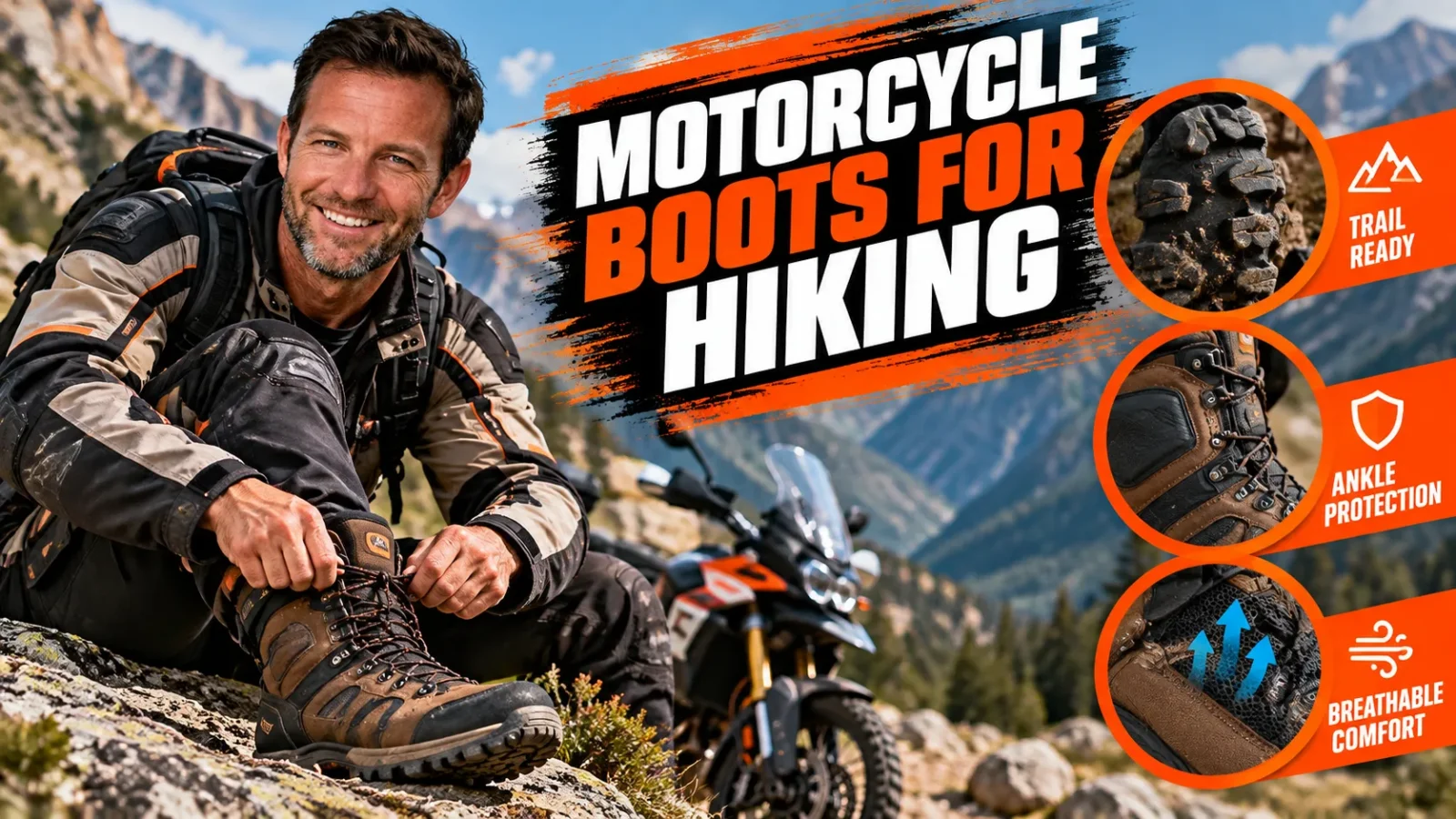
I’ve ruined more pairs of boots than I’d like to admit trying to make one pair do two jobs. There’s nothing worse than riding two hours to a trailhead, throwing your bike on the kickstand, and realizing your race-replica boots are basically ski boots once you start walking on gravel.
Over the last few seasons, I’ve deliberately hunted for motorcycle boots that don’t punish me the second I step off the pegs and onto a trail. Some of it was trial and error. Some of it came from swapping notes with riders doing the same dual-purpose trips I do.
This list is the result of that search. I go deep on the specifics in my Ultimate Guide to Motorcycle Boots if you want the full breakdown of construction, ratings, and fit — but here I’m focusing purely on boots that pull double duty on the bike and on the trail.
- My overall favorite hybrid is the Forma Adventure Low — it genuinely walks like a hiking boot but shifts and brakes like a proper motorcycle boot.
- If you want maximum crash protection and can tolerate slightly stiffer walking, the Alpinestars Corozal Adventure Drystar is my top pick.
- Budget-conscious riders should look at the TCX Baja Mid WP, which nails 80% of the hybrid experience for a fraction of the price.
- Waterproofing matters more than people think — I prioritized Gore-Tex or Drystar membranes on nearly every boot here.
- Fit and sole flex are everything for hiking comfort; I explain why in the sizing notes under each pick.
1. Forma Adventure Low — Best Overall Hybrid for Riding and Hiking
The Forma Adventure Low is the boot I recommend first when someone tells me they want one pair for touring and trailheads. It sits lower than a full adventure boot, which immediately makes it more like a hiking shoe in terms of ankle mobility.
It uses a full-grain leather and technical textile upper with a waterproof, breathable membrane that’s kept my feet dry through some genuinely miserable rainstorms. The sole is a replaceable rubber compound with real lug patterning, so it actually grips on wet rocks instead of just skating.
Where it really wins me over is the flex point at the ball of the foot. Most motorcycle boots feel like walking in a cast. This one bends close enough to a hiking boot that I’ve done two-mile hikes to waterfalls in it without regretting my life choices.
Protection-wise, you still get a reinforced heel cup, ankle brace system, and shifter pad, so it’s not just a hiking boot pretending to be a moto boot. Expect to pay somewhere in the $220–$260 range depending on retailer.
Who it’s best for
I’d point riders doing mixed-terrain trips — think forest service roads that end at a trailhead — straight to this boot. It’s also a great option if you’re newer to adventure riding and want something forgiving; it pairs nicely with the advice in my Best Motorcycle Boots for Beginners guide.
2. Alpinestars Corozal Adventure Drystar — Best for Serious Off-Road Protection
If your idea of “hiking” sometimes means scrambling over loose scree to check out a viewpoint your bike can’t reach, the Alpinestars Corozal Adventure Drystar is worth the extra stiffness. This is a genuine adventure boot that happens to walk better than most in its class.
It uses a microfiber and textile combination upper with a Drystar waterproof membrane, plus a reinforced toe box and shin plate that I trust in an actual off-road get-off. The sole is a dual-compound rubber with an aggressive tread that handles mud and loose dirt shockingly well for a “street-adventure” boot.
It’s not as flexible as the Forma when you’re purely hiking flat trails, but on uneven, technical ground it actually outperforms lighter hiking-style boots because of the ankle support. I’ve worn it on rocky switchbacks and felt more stable than I expected.
Pricing typically runs $270–$300, which puts it toward the premium end, but the protection level justifies it if adventure riding is your main use case.
A quick note on break-in time
This boot needs about 3–4 rides before the ankle collar loosens up enough to feel natural on foot. Don’t judge it on day one; it rewards patience.
3. TCX Baja Mid WP — Best Budget Hybrid Boot
I recommend the TCX Baja Mid WP constantly to riders who don’t want to spend $250+ but still want something better than a plain leather touring boot for walking around. It’s genuinely one of the best value picks in this category.
The upper mixes suede-look microfiber with mesh panels, and the waterproof lining has held up fine in light-to-moderate rain on my rides. The sole is where it really shines for hiking — it’s noticeably softer and more flexible than TCX’s fully off-road models.
It has a lower-cut ankle compared to the Corozal, which trades some crash protection for a lot more comfort on foot. For a lot of casual riders, that trade is worth it.
You’re typically looking at $150–$180, making it one of the most accessible options on this list without feeling like a compromise.
4. SIDI Adventure 2 Gore-Tex — Best for All-Day Comfort on Long Trips
SIDI has a reputation for fit precision, and the Adventure 2 Gore-Tex lives up to it. This is the boot I grab when I know I’ll be in the saddle for six hours and then want to walk around a national park afterward without my feet screaming at me.
The genuine Gore-Tex membrane is a step up from generic “waterproof” branding — it breathes noticeably better on hot days, which matters more than people realize when you’re hiking in riding gear. The microfiber upper is also more pliable than most competitors.
SIDI’s replaceable sole system is a nice long-term feature too. When the tread wears down from trail use, you don’t need to replace the whole boot, just the sole unit.
Expect to pay around $300–$330. It’s an investment, but I’ve had mine going strong for three seasons of mixed riding and hiking.
5. Rev’It! Cayenne Pro — Best Warm-Weather Hybrid Boot
For hot climates, the Rev’It! Cayenne Pro is my go-to. It ditches heavy waterproofing membranes in favor of a highly breathable microfiber and mesh construction, which makes an enormous difference on 95-degree days.
It still has a full armor package — ankle protectors, shin plate, and a reinforced heel — so you’re not giving up safety for airflow. The sole is TPU with solid grip, though I’d say it’s slightly stiffer than the Forma or SIDI options above.
Where it earns its spot on this list is the low weight. It’s noticeably lighter on foot than most adventure boots, which you feel immediately on longer hikes.
Pricing sits around $200–$230, which feels fair given the build quality Rev’It! is known for.
Best climates for this boot
I’d steer riders in the desert Southwest, or anyone doing summer trips through hot, dry trailheads, toward this one specifically.
6. Falco Mixto 2 — Best for Wide Feet and All-Day Standing
The Falco Mixto 2 doesn’t get talked about as much as the big Italian brands, but it deserves more attention, especially if you have wider feet. The last on this boot is noticeably roomier through the forefoot than most competitors.
It uses a full-grain leather upper with a waterproof, breathable liner, and the sole compound is soft enough that I’ve stood around on pavement and gravel for hours at events without foot fatigue. That standing comfort translates directly to hiking comfort.
Protection includes a molded ankle brace and reinforced toe and heel sections, keeping it firmly in “real motorcycle boot” territory despite the relaxed fit.
Prices land around $180–$210, and I think it’s underrated for the money.
7. Alpinestars Drystar XCR — Best Lightweight Trail-Friendly Pick
The Alpinestars Drystar XCR leans harder into the “hiking boot that happens to protect you on a motorcycle” philosophy than most other entries here. It’s lower profile, lighter, and noticeably more flexible underfoot.
It uses a suede and textile upper with the brand’s Drystar waterproofing, and the tread pattern is genuinely trail-capable — closer to what you’d find on a mid-range hiking shoe than a typical moto boot sole.
You do give up some ankle coverage compared to taller adventure boots, so I wouldn’t recommend this one for aggressive off-road riding. But for street riding with regular hiking stops, it’s excellent.
It typically runs $190–$220, positioning it as a strong mid-tier option.
8. Gaerne G-Adventure Gore-Tex — Best for Wet, Technical Terrain
Gaerne doesn’t always get the spotlight in the U.S. market, but the G-Adventure Gore-Tex is one of the most technically capable boots I’ve tested for mixed wet-weather riding and hiking. It’s built like a proper off-road boot but with real walkability built in.
The Gore-Tex lining paired with a full-grain leather shell handles genuinely bad weather better than most boots on this list. I’ve worn it through muddy trailhead parking lots without a single complaint about water getting in.
The sole uses a Vibram-style compound (Gaerne’s own version) that grips wet rock and roots impressively well. It’s stiffer than the Forma Adventure Low, but it makes up for it with confidence on technical, slippery terrain.
Pricing is typically in the $280–$310 range, putting it toward the premium tier alongside the Corozal.
9. Dainese Seeker Gore-Tex — Best Modern Adventure-Hiking Crossover
The Dainese Seeker Gore-Tex is one of the newer designs I’ve tried, and it genuinely feels like Dainese set out to build a hiking boot first and added moto protection second — in the best way.
It uses a lightweight textile and microfiber upper with Gore-Tex waterproofing, and the sole is a Michelin-developed compound with a tread pattern lifted almost directly from serious hiking footwear. It’s easily one of the most trail-capable soles in this entire list.
Protection includes a shin plate, ankle reinforcement, and a reinforced heel counter, keeping it road-legal-tough despite the trail-focused design language.
Expect pricing around $260–$290. If you want the newest tech in this hybrid category, this is it.
How I actually chose these boots
I didn’t just look at spec sheets. I factored in real fit reports, sole flexibility, waterproof membrane quality, and how each boot performed once actual walking was involved, not just riding.
I also leaned on rider feedback from people using these boots for multi-day trips where hiking wasn’t optional — it was part of the plan. That real-world context matters more than marketing copy ever will.
Fit and sizing considerations
Motorcycle boots run differently than hiking boots, and that trips a lot of people up. I always recommend trying these on with the socks you’ll actually wear, since a lot of hybrid boots fit snugger through the ankle than pure hiking footwear.
If you already know hiking boots that translate well to riding, my article on the best hiking boots for motorcycle riding covers that reverse angle — starting from a hiking boot and checking if it holds up on the bike.
What about foot pain and support issues?
A few of these boots, particularly the SIDI Adventure 2 and Falco Mixto 2, have removable footbeds that accept orthotic inserts. That’s a big deal if you deal with foot fatigue or arch pain on long days.
I go much deeper on this specific issue in my best hiking and motorcycle boots for plantar fasciitis guide, including which insoles I personally swap in.
Final thoughts on picking the right pair
There’s no single “best” answer here — it genuinely depends on how much hiking versus riding you’re doing on a given trip. If hiking is the priority and riding is secondary, lean toward the Forma Adventure Low or Dainese Seeker.
If you’re doing serious off-road riding with hiking as a bonus activity, the Alpinestars Corozal or Gaerne G-Adventure will serve you better once things get technical.
And if you’re still building out your first real riding wardrobe and trying to figure out where boots fit into the bigger picture, my what are the best boots for motorcycle riding article is a good next stop.
Whatever you choose, don’t settle for a boot that only does half the job. I’ve learned the hard way that comfort off the bike matters just as much as protection on it.
Frequently Asked Questions
Can I really hike long distances in motorcycle boots?
Yes, but comfort varies a lot by model. Boots like the Forma Adventure Low or TCX Baja use flexible soles and breathable liners that mimic hiking boot ergonomics, making multi-mile walks realistic without destroying your feet.
Do hiking-style motorcycle boots still protect me in a crash?
The best hybrids don’t skip safety. Look for reinforced ankle cups, shifter pads, and torsional support ratings similar to what’s covered in our Ultimate Guide to Motorcycle Boots, so you’re not sacrificing crash protection for trail comfort.
What’s the difference between adventure boots and true hiking-hybrid boots?
Adventure boots prioritize off-road impact protection first, while hiking-hybrids balance that protection with genuine walkability. If you’re mostly touring with hikes mixed in, check our Best Motorcycle Boots for Adventure Riding guide for the more aggressive end of the spectrum.
Are these boots a good option if I have foot pain issues?
Some models have removable footbeds that accept orthotics, which helps a lot. I break down specific options in my best hiking and motorcycle boots for plantar fasciitis article if that’s a priority for you.

Related Articles

9 Best Cowboy Boots for Motorcycle Riding You Can Actually Ride and Walk In
I break down the 9 best cowboy boots for motorcycle riding, covering heel height, shifter wear, ankle support, and comfort…
 Jake Miller
11 min read
Jake Miller
11 min read

9 Best Non-Motorcycle Boots for Cruisers That Still Ride Right
Not into moto-specific boots? I break down 9 real, non-motorcycle boots that hold up on cruisers—tough leather, good grip, and…
Jake Miller
13 min read

8 Best Boots for Motorcycle Safety Instructors Who Stand, Walk, and Ride All Day
I've spent years teaching MSF courses—here are the 8 best boots for motorcycle safety instructors that balance protection, comfort, and…
Jake Miller
9 min read