
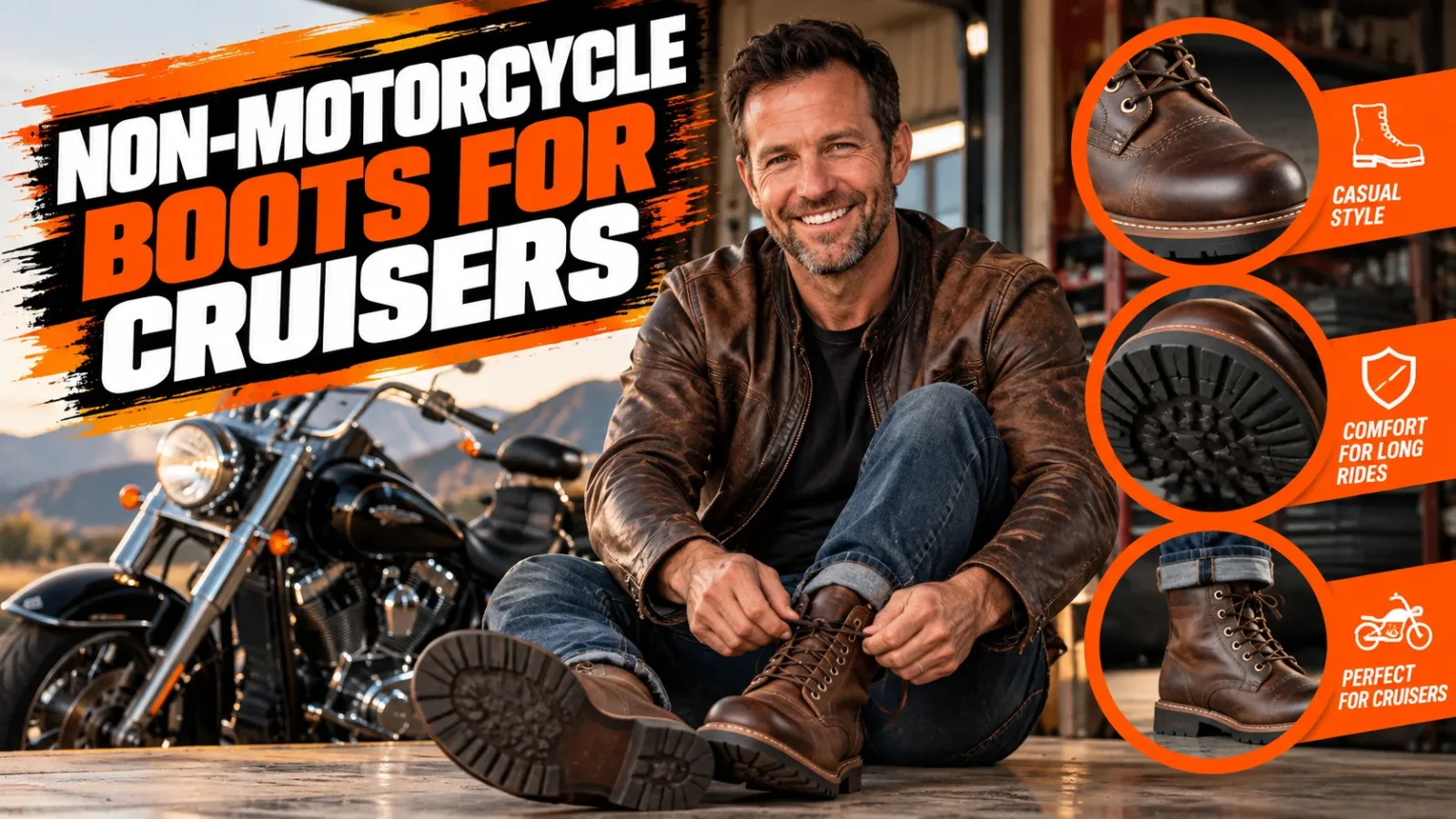
I get this question a lot from cruiser riders: “Do I really need moto-specific boots, or can I get away with something that looks better off the bike too?” Honestly? I’ve ridden thousands of miles in boots that were never designed with a motorcycle in mind, and some of them held up just fine.
Cruiser riding is a different animal than sportbike or adventure riding. You’re usually sitting more upright, going slower through town, and your feet are out front on highway pegs or floorboards rather than tucked under you. That changes what you actually need from a boot.
This list isn’t about cutting corners on safety — I always recommend checking out my Ultimate Guide to Motorcycle Boots if you want the full rundown on CE-rated protection. But I also know plenty of riders who want rugged, real-leather boots that double as everyday footwear. Here are the nine I trust most.
- My top all-around pick is the Red Wing Iron Ranger 8111 — full-grain leather, a stacked heel, and it’s genuinely built to last decades.
- For heritage engineer style with real ankle coverage, the Chippewa Original Engineer 27407 is hard to beat.
- Budget-conscious riders should look at the Thursday Boot Co. Captain — solid leather at a fraction of premium prices.
- None of these boots replace certified motorcycle boots for crash protection — treat them as a compromise for short, low-speed cruiser rides.
- Whatever you pick, prioritize a tall heel, minimal laces, and oil-resistant soles for grip and shifter safety.
1. Red Wing Iron Ranger 8111 — Best Overall Non-Motorcycle Boot for Cruisers
The Red Wing Iron Ranger 8111 is the boot I recommend most often when someone asks me this exact question. It’s a 6-inch work boot built from Red Wing’s famous Amber Harness leather, and it’s tough enough to handle daily riding abuse without falling apart.
What makes it work so well on a cruiser is the stacked leather heel. That heel gives you a solid platform on the peg or floorboard, which matters more than people realize until they’ve ridden in a flat-soled sneaker and felt their foot slide around.
The Goodyear welt construction means you can resole these things for years, so the $250-$300 price tag actually stretches a long way. I’ve had a pair going on four years now, and the leather just keeps getting better with age.
Why It Holds Up on the Bike
The toe box is roomy enough to work a heel-toe shifter comfortably, and the leather is thick enough to resist minor scuffs from foot pegs. It’s not oil-and-gas resistant like a true motorcycle boot, but for casual rides it’s more than adequate.
2. Chippewa Original Engineer 27407 — Best Traditional Engineer Boot
If you want that classic engineer-boot silhouette that’s basically synonymous with cruiser culture, the Chippewa Original Engineer 27407 nails it. This is the boot that inspired half the “motorcycle style” boots on the market — except this one’s the real deal, made in the USA since the brand’s early days.
It’s a 11-inch pull-on boot with two adjustable straps and buckles instead of laces, which I actually love for riding. No laces means nothing to snag on a shifter or chain guard, and the pull-on design makes it fast to get on and off.
At around $300-$350, it’s not cheap, but the steel shank and thick oil-tanned leather mean this boot is built for serious wear. I’ve worn mine through rain, gravel lots, and long highway stretches without a single complaint.
The taller shaft also gives you more ankle coverage than most casual boots, which I appreciate even though it’s not a certified motorcycle boot. If you’re curious how these stack up structurally against gear made specifically for riding, my breakdown on motorcycle boots vs work boots covers that comparison in detail.
3. Wolverine 1000 Mile Boot — Best for Everyday Comfort
The Wolverine 1000 Mile Boot is one I recommend to riders who want something they can wear to work, on errands, and then hop on the bike without changing shoes. It’s a plain-toe leather boot with a Goodyear welt and a leather sole option, or a Vibram sole if you want more grip.
I’d honestly steer you toward the Vibram-soled version for riding — the leather sole version looks sharp but gets slippery on wet pavement, and that’s the last thing you want when you’re putting a foot down at a stoplight.
Priced around $350-$400, it’s a premium pick, but the comfort factor is genuinely different from stiffer work boots. The break-in period is shorter too, which matters if you’re not willing to suffer through weeks of blisters.
A Quick Note on Soles
This is a boot where the sole choice actually changes how well it performs for riding. If you’re torn between models, always default to a lugged rubber sole over smooth leather for anything you’re wearing on two wheels.
4. Danner Bull Run Lace-to-Toe 6″ — Best for Ankle Support
The Danner Bull Run Lace-to-Toe is technically a work boot, but it gives you more ankle stability than most casual leather boots on this list. The lace-to-toe design lets you cinch the fit exactly how tight or loose you want it, which is great if you have narrower feet.
It runs about $190-$220, making it one of the more affordable full-grain leather options here. Danner builds it with a triple-stitched welt and a Vibram outsole, so grip and durability are both solid.
I like this one specifically for riders who’ve had ankle issues in the past or just want extra lateral support without going full motorcycle-boot armor. It won’t replace what you’d get from something built for adventure riding, but for cruiser duty it’s a noticeable step up from a low-cut boot.
5. Thursday Boot Co. Captain — Best Budget-Friendly Pick
Not everyone wants to drop $300+ on boots, and I get that. The Thursday Boot Co. Captain gives you full-grain leather, a Goodyear welt, and a rugged lug sole for around $200 — sometimes less during sales.
It’s a 6-inch boot with a moc-toe style that looks great with jeans off the bike, but still has enough substance to handle vibration and light abrasion while riding. I wouldn’t call the leather as thick as the Red Wing or Chippewa options, but for the price, it punches above its weight.
I’ve recommended this one to friends who are just starting to ride and don’t want to invest heavily before they know how often they’ll actually be on the bike. It pairs well with the mindset in my Best Motorcycle Boots for Beginners guide — start reasonable, upgrade once you know your riding habits.
6. Frye Phillip Harness Boot — Best Style Statement
If you care about looking sharp off the bike as much as riding comfortably on it, the Frye Phillip Harness Boot is one of my favorite crossover picks. It’s got that classic harness-boot silhouette with a decorative strap and buckle across the vamp, and the leather ages into a genuinely beautiful patina.
At roughly $350-$400, it’s on the pricier end, but Frye has been making boots since 1863, and the construction quality shows. The block heel gives decent peg feel, though it’s a touch higher than I’d ideally want for extended riding.
This one’s more of a style-first pick that still functions fine for shorter cruiser rides around town. I wouldn’t put a ton of highway miles on it, but for weekend rides and coffee shop stops, it looks the part.
7. Timberland PRO Boondock HD — Best Heavy-Duty Waterproof Option
When the forecast looks questionable, I reach for the Timberland PRO Boondock HD. It’s a 6-inch waterproof work boot with a rubber sole that’s genuinely aggressive — way more traction than most leather dress-style boots offer.
It runs around $180-$220, and the waterproof membrane actually works, which isn’t something I can say about every “waterproof” boot I’ve tested. The composite safety toe is optional depending on the model, which is a nice bonus for anyone who wants extra protection without going full steel toe.
The tradeoff is that it looks more “job site” than “cruiser cool,” so this is a functional pick rather than a style one. If you ride in unpredictable weather often, though, I think the tradeoff is worth it.
8. Cat Footwear Second Shift Steel Toe — Best for Toe Protection
The Cat Footwear Second Shift Steel Toe is a boot I recommend to riders who are hard on their gear — people who drop tools, kick stands into place aggressively, or just want extra peace of mind around a hot exhaust or heavy bike.
It’s a 6-inch leather boot with a steel toe cap, oil-resistant outsole, and a price point around $90-$110, making it one of the most affordable options on this list. The rubber sole grips well on wet asphalt, which I’ve genuinely tested during a surprise rainstorm on a weekend ride.
Steel toe boots aren’t for everyone since they add weight and reduce flexibility slightly. But if foot protection is your top priority over style, this is a smart, budget-friendly choice.
A Word on Shifter Wear
Steel-toe work boots like this one hold up better against shifter scuffing than soft dress leather. If you’re riding daily, that durability difference adds up fast, and it’s one reason I still recommend checking my notes on how to clean motorcycle boots — the maintenance tips apply just as well to tough work-style boots.
9. Dr. Martens 1460 Pascal — Best Lightweight Around-Town Pick
I’ll be upfront: the Dr. Martens 1460 Pascal is the least “moto” boot on this list. It’s an 8-eye leather boot with the brand’s signature air-cushioned sole, and it’s genuinely comfortable for walking around all day.
For short, low-speed cruiser rides — think city commuting or quick trips to a friend’s garage — it does the job fine. The smooth leather isn’t as thick as the work boots above, and the sole, while grippy, isn’t built with riding specifically in mind.
At around $150-$180, it’s an accessible price point, and I know plenty of riders who already own a pair for everyday wear. Just don’t expect the same abrasion resistance or ankle support you’d get from the Chippewa or Red Wing picks higher on this list.
What I Actually Look for When Choosing a Non-Motorcycle Boot
After years of testing gear that wasn’t technically designed for riding, I’ve settled on a short checklist. It’s saved me from a few bad purchases, and I think it’ll help you too.
Heel Height and Shape
A slight heel — like you’ll find on the Red Wing Iron Ranger or Chippewa Engineer — keeps your foot from sliding forward off the peg. Flat-soled sneakers or slip-ons don’t offer that same stability, especially on rougher roads.
Sole Material and Tread
I always check for oil-resistant rubber compounds with actual tread patterns. Smooth leather soles look classy but turn into ice skates the moment you hit wet pavement or a painted crosswalk line.
Minimal Hardware Near the Foot
Dangling laces, loose straps, or exposed grommets can catch on foot pegs or shifters. Pull-on boots or lace-to-toe designs like the Danner Bull Run reduce that risk significantly.
Leather Thickness
Thicker, full-grain leather gives you more real-world abrasion resistance than thin, fashion-oriented leather. It’s not a substitute for certified motorcycle leather, but it’s a meaningful step up from thin dress shoes.
Where Non-Motorcycle Boots Fall Short
I want to be honest here because I think too many “best boots” articles gloss over this. None of the boots on this list have CE-rated ankle or shin protection, and none are built with abrasion-resistant materials tested specifically for sliding across pavement.
If you’re doing serious highway miles, riding in a group, or just want maximum protection, I’d point you toward my broader piece on what are the best boots for motorcycle riding. It covers dedicated moto boots that outperform anything on this list in a crash scenario.
That said, I know not every ride calls for full gear. A five-minute trip to grab coffee on a cruiser at 25 mph is a very different risk profile than a 200-mile highway haul. Context matters, and I think it’s fine to make gear choices based on that context as long as you’re being honest with yourself about the tradeoffs.
My Honest Take on Mixing Style and Function
I’ve ridden cruisers for years now, and my boot collection has genuinely evolved based on what I actually needed versus what looked cool in a catalog. The Red Wing Iron Ranger has become my go-to because it splits the difference — rugged enough for the bike, sharp enough for everywhere else.
But I still keep a pair of proper motorcycle boots for longer rides, because I’ve seen what happens when things go wrong and your ankle isn’t protected. It’s not about fear-mongering — it’s just years of experience talking.
If you’re building out a cruiser-specific wardrobe, I’d treat this list as your “everyday and short-ride” rotation, and treat certified motorcycle boots as your “real mileage” gear. Having both covers you better than committing fully to one category.
Final Thoughts Before You Buy
Every boot on this list is something I’d actually put on my own feet, and most of them I already own or have tested extensively. The Red Wing Iron Ranger and Chippewa Original Engineer are my top two recommendations if you want something that genuinely performs well on a cruiser.
If budget’s tight, the Thursday Boot Co. Captain and Cat Footwear Second Shift both deliver solid value without asking you to compromise much on quality. And if you’re mostly riding short distances around town, the Dr. Martens 1460 Pascal or Frye Phillip Harness Boot will get the job done while looking great doing it.
Whatever you choose, just remember: comfort and style matter, but so does making an informed choice about what you’re trading off. Ride safe, break your boots in properly, and enjoy the miles.
Frequently Asked Questions
Are non-motorcycle boots actually safe for riding a cruiser?
They’re safer than sneakers or sandals, but they lack the ankle armor, oil-resistant soles, and abrasion-rated leather found in dedicated motorcycle boots. For serious protection, I’d point you to our Ultimate Guide to Motorcycle Boots, but for short, low-speed cruiser rides, sturdy leather work or heritage boots are a reasonable compromise.
What should I look for in a non-motorcycle boot for riding?
Look for full-grain leather uppers, a heel that’s tall enough to stay on the peg, minimal exposed laces or loops that could snag, and a sole with actual tread for grip on wet pavement. Steel shanks and oil-resistant outsoles are a bonus.
Will these boots damage my shifter or exhaust pipes?
Some can. Soft leather uppers can scuff quickly against a shifter, so I recommend a shift pad or choosing a boot with a reinforced toe box like the Cat Footwear Second Shift. Keep any boot away from hot exhaust for more than a second or two.
How are these different from actual motorcycle boots for beginners?
Dedicated motorcycle boots are built with impact protection and abrasion-resistant materials specifically for crashes. If you’re new to riding, I’d genuinely suggest starting with our Best Motorcycle Boots for Beginners guide before committing to a non-moto option.

Related Articles

9 Best Cowboy Boots for Motorcycle Riding You Can Actually Ride and Walk In
I break down the 9 best cowboy boots for motorcycle riding, covering heel height, shifter wear, ankle support, and comfort…
 Jake Miller
11 min read
Jake Miller
11 min read

9 Best Motorcycle Boots for Hiking That Actually Work Off the Bike
I tested and researched the top hybrid motorcycle boots for hiking. Here are 9 real picks that protect on the…
Jake Miller
11 min read

8 Best Boots for Motorcycle Safety Instructors Who Stand, Walk, and Ride All Day
I've spent years teaching MSF courses—here are the 8 best boots for motorcycle safety instructors that balance protection, comfort, and…
Jake Miller
9 min read