
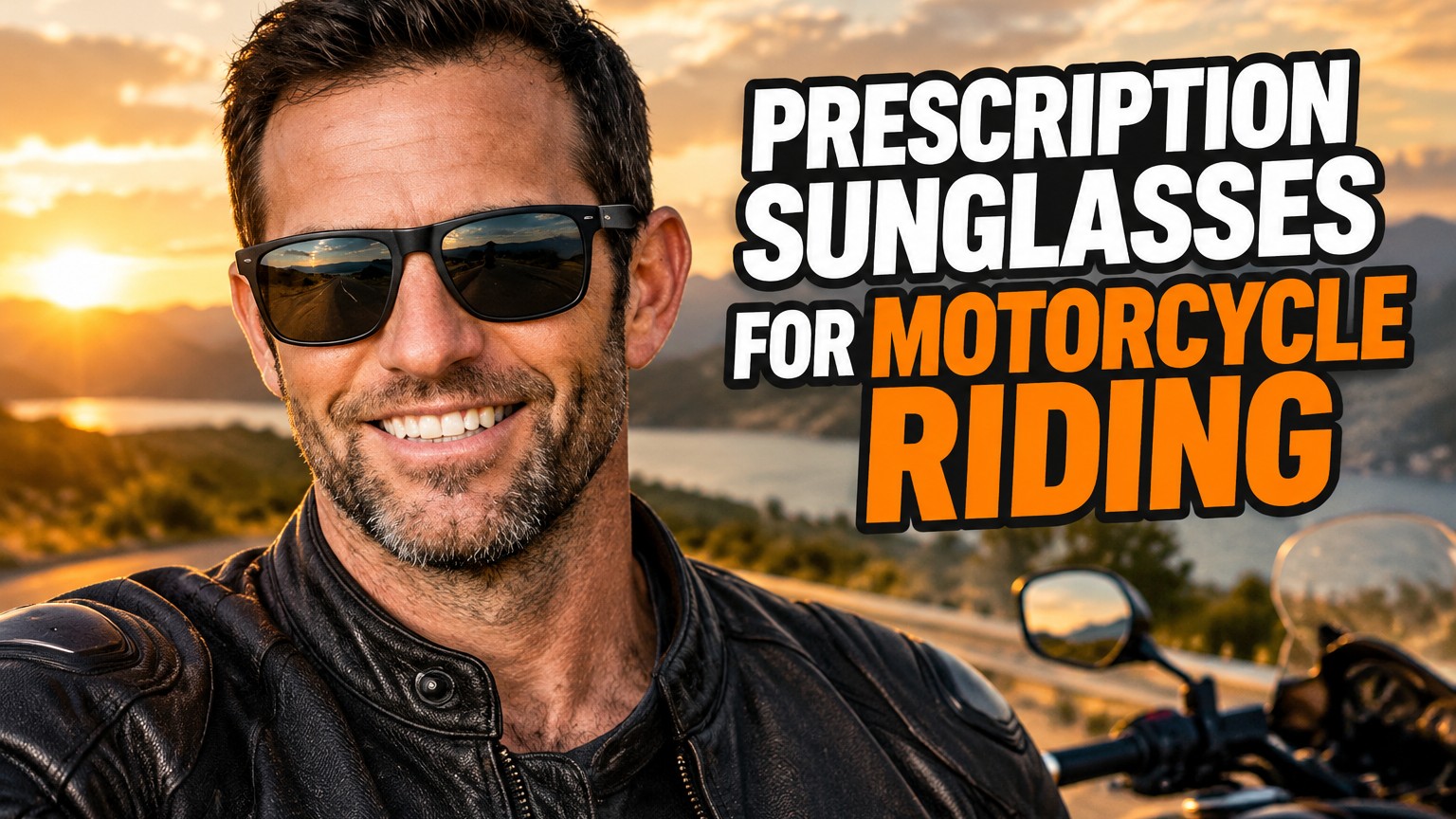
I’ve been riding motorcycles for over a decade, and finding the right prescription sunglasses completely transformed my riding experience. There’s nothing worse than squinting into the sun at 70 mph or having wind blast your eyes until they’re streaming with tears.
As someone who’s worn prescription glasses since high school, I know the struggle of finding eyewear that actually works on a bike. Regular sunglasses just don’t cut it—they let in too much wind, fog up constantly, or fly off your face the moment you pick up speed.
After testing dozens of pairs over the years and talking with optometrists who specialize in sports eyewear, I’ve narrowed down the best prescription sunglasses specifically designed for motorcycle riding. These aren’t just regular prescription shades—they’re built to handle wind, debris, UV exposure, and the unique demands of life on two wheels.
- Wiley X Gravity offers the best overall protection with ANSI Z87.1 ballistic rating and removable foam gasket
- Wraparound designs with close facial fit are essential to block wind and prevent eye watering at highway speeds
- Impact-resistant polycarbonate lenses are non-negotiable for motorcycle use—regular prescription lenses won’t protect you
- Budget options start around $150, but premium models with advanced lens tech run $300-400
- Consider interchangeable lens systems if you ride in varying light conditions
1. Wiley X Gravity — Best Overall Protection and Versatility
The Wiley X Gravity has been my go-to pair for the past two years, and they’ve never let me down. These sunglasses meet ANSI Z87.1 high-velocity impact safety standards, which means they’re rated to withstand ballistic impacts—serious protection when you’re dealing with road debris at speed.
What sets the Gravity apart is the removable closed-cell foam gasket that seals around your face. I can pop it in for highway rides to completely block wind, or remove it for casual around-town cruising when I want more ventilation. The wraparound design provides excellent peripheral coverage without creating blind spots.
The prescription insert system works brilliantly. Wiley X uses a clip-in Rx carrier that sits behind the main lens, so you get both your prescription correction and the impact-rated outer lens protection. I’ve worn mine in everything from desert heat to coastal fog, and they’ve performed flawlessly.
Price range: $300-380 with prescription lenses installed. The frame geometry accommodates prescriptions up to ±6.00 diopters, though I recommend checking with your optician for higher prescriptions.
2. Oakley Flak 2.0 XL Prescription — Best for Sport Riding
I switched to the Oakley Flak 2.0 XL for sport bike rides after my optometrist recommended them for their optical clarity. Oakley’s prescription lens technology is genuinely impressive—the High Definition Optics (HDO) system eliminates distortion even at the edges of your peripheral vision, which matters when you’re checking mirrors and scanning for hazards.
The XL version provides more coverage than the standard Flak 2.0, which I found essential for blocking wind at higher speeds. The O Matter frame material is incredibly lightweight but durable—I’ve dropped these more times than I’d like to admit, and they show zero damage.
One thing I appreciate is how well these fit under my Shoei RF-1400. The thin, flexible temples slide under the helmet padding without creating pressure points, even on all-day rides. If you struggle with glasses frames for motorcycle helmets, the Flak 2.0’s temple design is worth studying.
Price range: $350-420 with prescription lenses. Oakley offers Prizm lens technology as an upgrade, which enhances contrast and color—I find it especially helpful in low-light conditions during dawn and dusk rides.
3. 7eye Airshield Churada — Best Wind Protection
The 7eye Churada looks a bit unusual at first glance, but the integrated AirShield technology is genuinely game-changing for wind protection. This soft, removable eye cup creates a seal around your entire eye area, blocking wind from every angle—top, bottom, and sides.
I use these primarily for long highway tours where I’m spending hours at 70-80 mph. Before I found the Churada, I’d arrive at destinations with dry, irritated eyes and sometimes mild headaches from constant wind exposure. That problem completely disappeared with the AirShield seal.
The prescription options are straightforward—7eye works with several optical labs to provide direct glazing (grinding your prescription directly into the lens) rather than using inserts. This gives you clearer optics and a lower profile, though it makes lens replacement more expensive if you scratch them.
Price range: $250-320 with prescription lenses. The frame comes with interchangeable AirShield cups in different ventilation levels, so you can adjust airflow based on temperature and riding conditions.
4. Bobster Fuel Photochromic Prescription — Best for Variable Light Conditions
I picked up the Bobster Fuel specifically for rides where I’d be starting in bright sunshine and ending after dark. The photochromic lenses automatically adjust from clear to dark based on UV exposure, eliminating the need to carry multiple pairs or swap lenses mid-ride.
The transition speed is impressive—about 30 seconds to darken in full sun, and roughly 2-3 minutes to clear when you move into shade. I’ve used these extensively for mountain rides with frequent tunnels and tree-covered sections, and the automatic adjustment is incredibly convenient.
The frame includes a removable foam gasket similar to the Wiley X, though not quite as robust. It’s adequate for most riding speeds, but I’ve noticed some wind seepage above 80 mph. For touring riders who want versatility without carrying extra eyewear, these are hard to beat.
Price range: $180-240 with prescription photochromic lenses. This is one of the more affordable options on this list, making them a solid entry point if you’re new to prescription motorcycle eyewear.
5. Rudy Project Rydon — Best Optical Clarity and Customization
The Rudy Project Rydon is the most optically precise pair I’ve tested. Rudy Project is known in the cycling world for their prescription sports eyewear, and that expertise translates beautifully to motorcycle use. The ImpactX photochromic lenses are made from an advanced polycarbonate that’s both lighter and more impact-resistant than standard materials.
What I love about the Rydon is the adjustability. The nosepiece and temple tips have multiple adjustment points, letting me dial in a perfect fit that stays secure even on rough roads. The frame geometry is optimized for prescription inserts, accommodating stronger corrections (up to ±8.00 diopters) than most competitors.
The wraparound coverage is excellent, though there’s no foam gasket option—Rudy Project relies on the close facial fit to block wind. This works well up to about 75 mph for me, but I notice some air getting through at higher sustained speeds.
Price range: $320-400 with prescription insert and premium lenses. The modular design means you can swap between different lens tints easily, making these a great investment if you ride in diverse conditions—similar versatility to what you’d get with the best motorcycle goggles for touring.
6. ESS CDI Max Prescription — Best Budget Military-Grade Option
The ESS CDI Max delivers military-grade eye protection at a surprisingly accessible price point. These sunglasses meet U.S. Military MIL-PRF-32432 ballistic standards, which means they’re tested to withstand high-velocity impacts that would shatter regular eyewear.
I’ve recommended the CDI Max to several riding buddies who were hesitant about spending $300+ on prescription sunglasses. The build quality genuinely impressed me—the frame feels solid, the prescription insert system is straightforward, and the included hard case is more protective than cases I’ve gotten with much pricier eyewear.
The fit is on the larger side, which works perfectly for me but might overwhelm riders with smaller faces. The temples are slightly thicker than the Oakley or Rudy Project options, so you’ll want to test fit with your specific helmet. I’ve had no issues with my Arai, but a friend with a tighter-fitting AGV needed to adjust his cheek pads.
Price range: $150-200 with prescription insert. This is the most affordable option on my list without sacrificing safety standards. ESS includes multiple lens tints in the box, though swapping them requires removing the prescription insert.
7. Smith Parallel 2 Prescription — Best for Cruiser and Touring Riders
The Smith Parallel 2 bridges the gap between motorcycle-specific eyewear and stylish everyday sunglasses. If you ride a cruiser or touring bike and want something that looks good both on and off the bike, these are worth considering.
I use the Parallel 2 for my casual weekend rides on my Bonneville. They’re not as aggressively wraparound as the Wiley X or 7eye options, but they provide adequate wind protection for speeds up to about 60-65 mph. Beyond that, I notice some wind getting through, which isn’t ideal for extended highway use.
Smith’s ChromaPop lens technology enhances color and contrast in ways that make road reading easier. I’ve noticed I spot potholes, gravel, and debris more quickly with these lenses compared to standard tints. The prescription is ground directly into the lens rather than using an insert system, giving you cleaner optics.
For riders who split time between cruising and other activities, the Parallel 2’s versatile style is a major advantage. I’ve worn these hiking, fishing, and just running errands—they don’t scream “motorcycle gear” the way some tactical-looking options do.
Price range: $280-350 with prescription ChromaPop lenses. These work particularly well for cruiser riders who want protection without the aggressive sport look.
What to Consider When Choosing Prescription Motorcycle Sunglasses
After years of testing different eyewear, I’ve learned that certain features are non-negotiable for motorcycle use. Impact resistance tops the list—you need lenses that meet at least ANSI Z87.1 standards or equivalent ballistic ratings. Regular prescription sunglasses use optical-grade plastic that will shatter on impact.
Wraparound coverage matters more than you might think. The first time I tried properly sealed motorcycle sunglasses after years of wearing regular frames, the difference shocked me. No more watering eyes, no more squinting, and significantly less fatigue on long rides.
Fit and Helmet Compatibility
I can’t stress this enough: buy from retailers with good return policies and test fit with your actual helmet before committing. Temple thickness and temple length both affect how glasses sit under helmet padding. What works perfectly under my Shoei might create painful pressure points under your Schuberth.
Low-profile temples are essential. Look for frames specifically described as having thin or flexible temples. Some manufacturers like Oakley and Rudy Project design their sports eyewear with helmet compatibility in mind, while fashion-oriented brands often don’t consider this at all.
Lens Options and Light Conditions
I’ve found that photochromic lenses offer the best versatility for most riders, but they’re not perfect. They don’t transition behind windscreens (which block UV), so they’ll stay relatively clear if you ride with a large touring screen. For that scenario, I prefer carrying two pairs—dark for daytime and clear for night—or choosing interchangeable lens systems.
If you frequently ride in rain, consider how your chosen eyewear handles water. Some coatings shed water better than others. I’ve had good experiences with hydrophobic coatings from Oakley and Rudy Project. Speaking of rain gear, the best motorcycle goggles for riding in the rain use similar coating technologies that might inform your decision.
Prescription Range Limitations
Most prescription motorcycle sunglasses accommodate prescriptions up to around ±6.00 diopters for sphere and up to -2.00 for cylinder (astigmatism correction). If your prescription is stronger, you’ll have fewer options. I recommend calling the manufacturer or your optician before ordering to confirm your prescription will work with the frame geometry.
Progressive (no-line bifocal) prescriptions are challenging in wraparound frames. The curve of the lens can distort the progressive corridor, making them less effective. If you need progressives, look for frames specifically designed to accommodate them, like some models from Rudy Project and specialized sports opticians.
Maintenance and Care
I clean my motorcycle sunglasses after every ride—road grime, bugs, and dust accumulate fast. Use microfiber cloths and lens cleaner specifically designed for coated lenses. Never use your shirt or paper towels, which will scratch even impact-resistant lenses over time.
Store them in a hard case when not wearing them. I learned this lesson the expensive way after sitting on a $350 pair of Oakleys I’d carelessly tossed on my bike seat. The frame survived, but the prescription lens cracked and required replacement.
When to Choose Goggles Instead
Prescription sunglasses work brilliantly with full-face and modular helmets, but goggles might be better if you ride with an open-face or half helmet. Goggles seal more completely against wind and provide better peripheral protection when you don’t have a face shield in front of you.
I keep both options in my garage. For sport riding with my full-face Shoei, I grab prescription sunglasses. For cruising on my retro bike with a half helmet, I reach for prescription goggles. Having both expands your options and ensures you’re properly protected regardless of helmet choice.
Final Thoughts on Investment Value
Quality prescription motorcycle sunglasses aren’t cheap, but I consider them essential safety equipment rather than optional accessories. The difference in visual clarity, comfort, and protection compared to regular sunglasses or riding without proper eyewear is substantial.
I’ve spent less money maintaining one good pair of motorcycle-specific prescription sunglasses over three years than I spent replacing cheaper alternatives that broke, scratched, or just didn’t work well on the bike. The upfront investment pays off in durability, performance, and most importantly, protecting your vision.
Start with understanding your specific needs—what type of riding you do, what helmet you wear, and what conditions you typically encounter. Then test fit options with your actual helmet before buying. Your eyes are irreplaceable, and proper eyewear is a small price to pay for protecting them while enjoying the freedom of the road.
Frequently Asked Questions
Can I wear regular prescription sunglasses while riding a motorcycle?
Regular prescription sunglasses often lack the impact resistance and wraparound coverage needed for motorcycle riding. I always recommend ANSI Z87.1 certified eyewear designed specifically for high-speed use to protect against wind, debris, and UV rays.
What’s the difference between prescription motorcycle sunglasses and goggles?
Prescription sunglasses are lighter and more versatile for everyday use, while goggles offer superior wind protection and seal better with open-face helmets. For full-face helmets, I prefer sunglasses; for cruisers with half helmets, check out the best motorcycle goggles for half helmet options.
How much do prescription motorcycle sunglasses typically cost?
Quality prescription motorcycle sunglasses range from $150 to $400 depending on the frame, lens technology, and prescription complexity. I’ve found that investing in impact-rated lenses and shatterproof frames is worth every penny for safety.
Do prescription motorcycle sunglasses fit under all helmet types?
Not all frames work with every helmet. I recommend looking for low-profile temples and testing fit with your specific helmet. The best glasses frames for motorcycle helmets feature thin, flexible temples that don’t create pressure points.

Related Articles

7 Best Eyewear from Oakley SI for Motorcycle Riding
I've tested Oakley SI's tactical eyewear for riding. Here are the 7 best models that combine ballistic protection, clarity, and…
 Jake Miller
15 min read
Jake Miller
15 min read
7 Best Women’s Sunglasses for Motorcycle Riding in 2026
Discover the best women's sunglasses for motorcycle riding with our expert guide. From wind protection to UV coverage, find the…
Jake Miller
14 min read
7 Best Sunglasses for Motorcycle Riding I’ve Tested on the Road
I've tested dozens of motorcycle sunglasses in real riding conditions. Here are the 7 best pairs that stay put at…
Jake Miller
14 min read