
10 Best Oakley Glasses for Motorcycle Riding (Rider Tested at Highway Speed)
 Jake Miller
12 min read
Jake Miller
12 min read
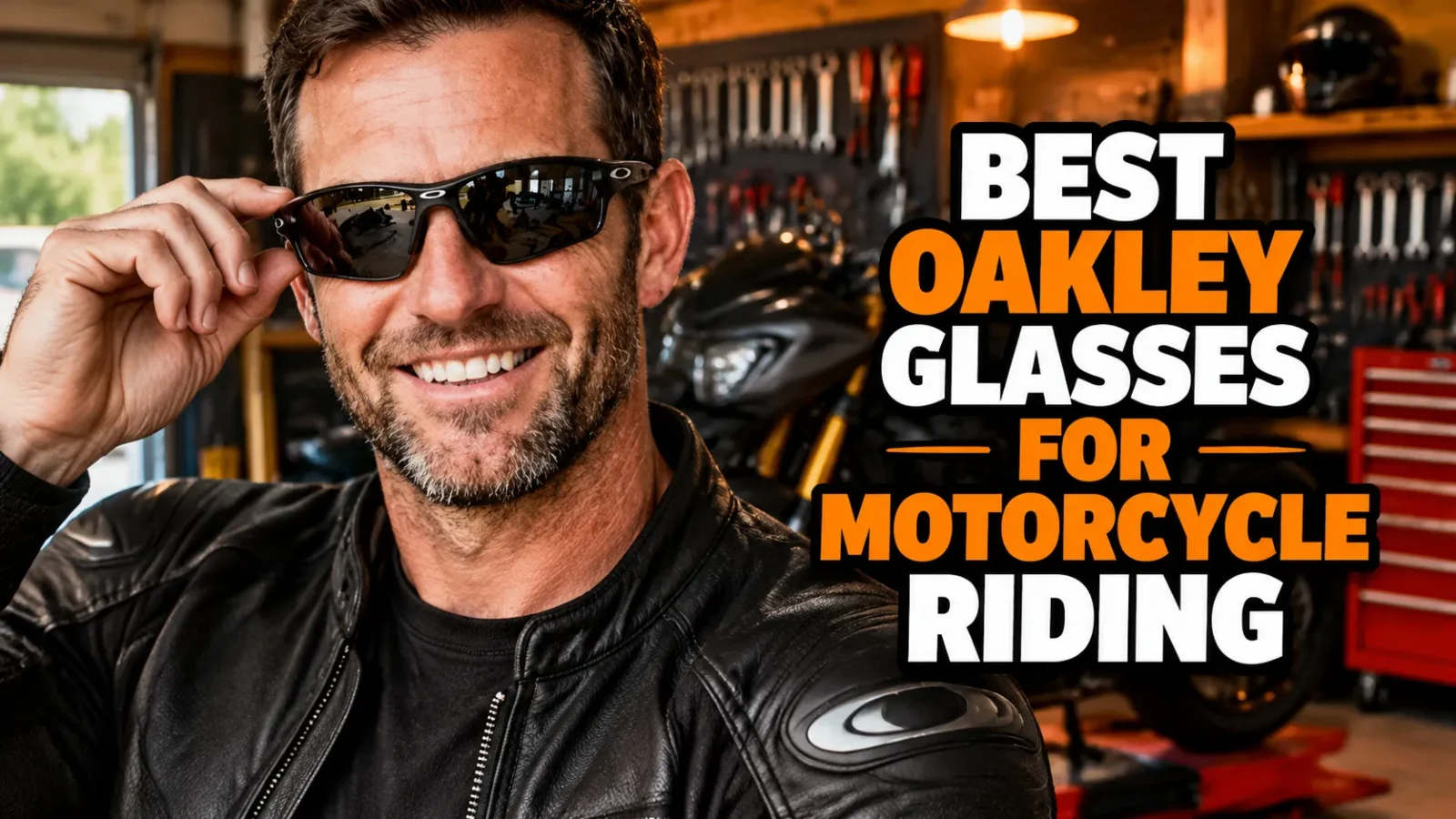
I have logged a lot of miles behind a lot of different lenses, and I will be honest with you: I wasted years on twenty dollar gas station sunglasses before I finally admitted they were making me a worse rider. Wind tears, glare off a chrome tank, bugs at seventy miles an hour, and lenses that scratched if you looked at them wrong. Switching to Oakley was the single biggest comfort upgrade I made to my riding kit, and it cost me less than a decent pair of gloves.
I do all my own maintenance, which means I have spent plenty of evenings squinting into a headlamp while chasing harley davidson transmission problems or working through a clutch adjustment on harley davidson. Cheap lenses made that work miserable. Good ones made it genuinely easy, and that taught me something important: eye protection is not just a comfort upgrade, it is a safety upgrade.
Below are the ten Oakley frames I would spend my own money on again. Some are purpose-built sport shields, some are casual lifestyle frames that happen to work beautifully behind a windshield, and one is the pair that lives permanently in my tank bag.
- My overall pick is the Oakley Flak 2.0 XL — ANSI Z87.1 rated, interchangeable Prizm lenses, and it stays glued to your face at speed.
- For tucked-in sport riding, the Jawbreaker gives the most coverage and the best venting.
- Long-distance touring riders should look at the Radar EV Path or Sutro for a taller lens and less eye fatigue.
- Cruiser riders behind a windshield can absolutely get away with a lifestyle frame like the Holbrook or Gascan.
- Budget roughly $130 to $260. If you ride day and night, budget for a second set of clear or photochromic lenses.
Why I Care About Eye Protection More Than Most Riders
Before we get into the list, I want to explain my bias. I ride a mix of faired and unfaired bikes, and I have taken a June bug to the eyeball through a cheap lens gap. It is not fun, and it is entirely preventable.
Wind is the other thing. At highway speed, your eyes water constantly if they are not fully shielded, and watery eyes mean you are blinking instead of scanning the road. That is how you miss a patch of gravel or a brake light three cars ahead.
Oakley’s big advantage here is Prizm lens technology, which boosts contrast on specific colors so asphalt, gravel, and oil sheen all pop differently. Once you ride with it for a week, going back to a plain grey tint feels like riding with the lights off.
1. Oakley Flak 2.0 XL — Best Overall for Motorcycle Riding
If you only buy one pair from this list, buy these. The Flak 2.0 XL is the frame I reach for on probably eighty percent of my rides, and it is the one I recommend to every rider who asks me this question in person.
The XL version has a taller lens than the standard Flak 2.0, which matters more than people realize. That extra few millimeters of vertical coverage is the difference between a clean view of your gauges and a distracting sliver of sky above the frame.
What makes it work on a bike
The O Matter frame is light and stays flexible in cold weather, so it does not get brittle in a January garage. The Unobtainium earsocks and nose pads actually grip harder when you sweat, which sounds like marketing nonsense until you feel it happen on a hot day.
It is ANSI Z87.1 impact rated, the lenses swap out in seconds, and it takes Prizm Road, Prizm Black, Prizm Trail, and photochromic options. Expect to pay somewhere between $170 and $220 depending on the lens you choose.
2. Oakley Jawbreaker — Best for High-Speed Sport Riding
The Jawbreaker is what I wear when I am riding something fast and tucked. It has the most aggressive wrap of anything on this list, and that wrap is exactly what you want when you are leaned over the tank at speed.
Oakley’s Switchlock system lets you flip a small lever and swap the entire lens out without fighting the frame. I keep a Prizm Road lens for sunny days and a clear lens for early morning starts, and the swap takes me under thirty seconds at a gas station.
Venting and fogging
The lens is vented along the top edge, which keeps fog from building up when you are stopped at a light breathing hard inside a full-face helmet. That venting is the detail that separates the Jawbreaker from prettier but stuffier shield frames.
It runs $200 to $250, it is Z87.1 rated, and the coverage extends far enough around that I have never had a wind leak at the corner of my eye. It looks like a piece of sports equipment, because it is one.
3. Oakley Radar EV Path — Best for Long-Distance Touring
When I am doing a five hundred mile day, the Radar EV Path is what I pack. The Path lens shape is taller than the standard Radar, giving you more coverage without the full shield look, and the frame weight basically disappears after the first hour.
Long days are really an eye fatigue problem. Squinting for eight hours straight drains you in a way most riders do not connect to their eyewear until they fix it. The Radar EV Path with a Prizm Road or Prizm Black lens cuts that fatigue noticeably.
I prep for a tour the same way I prep my drivetrain. I have written before about the best motorcycle chains for long distance tours, and my rule is the same for my eyes: if it is going to fail, it is going to fail at mile four hundred, so replace it before you leave.
Pricing lands around $180 to $230, and the interchangeable lens system means you can carry a low-light lens for the last hour of a late arrival.
4. Oakley Sutro — Best Full-Coverage Shield Lens
The Sutro is the frame I grab when I want maximum field of view with zero frame edge in my peripheral vision. The single shield lens wraps wide, and the lower profile means you are not looking over the top of a rim when you tuck.
On a faired bike, wind is deflected but glare off the tank and gauges is brutal. The Sutro’s Prizm Road lens handles that glare better than any grey lens I have owned, and the wrap kills the side light that sneaks in around narrower frames.
It is Z87.1 rated and comes in around $170 to $200. If you have a smaller face, look at the Sutro S, and if you want a half-frame version with more airflow, the Sutro Lite is the one to try on first.
5. Oakley Holbrook — Best Casual Cruiser Look
I will be straight with you: the Holbrook is a lifestyle frame, not an impact-rated sport shield. It does not have the ANSI Z87.1 rating that the Flak or Radar carry, and it does not wrap tightly enough to fully seal off wind on its own.
That said, if you ride a cruiser behind a windshield, in a half helmet or an open-face lid, the Holbrook is genuinely excellent. The O Matter frame is durable, the Prizm lens options are the same excellent optics, and it looks normal when you walk into a diner off the bike.
Prices sit around $130 to $180, and there are XL and Metal variants if the standard fit is not quite right. Just be honest with yourself about how much wind actually reaches your eyes before you commit.
6. Oakley Gascan — Best Value Workhorse
The Gascan has been around forever, and there is a reason for that. It is a squared-off wrap frame with real coverage, an ANSI Z87.1 rating, and a price that starts around $110 to $160. For a lot of riders, this is the smartest first pair.
I keep a scratched-up pair of Gascans in the garage as my shop glasses. Good lenses matter just as much when you are working as when you are riding, whether you are reading up on how does a wet clutch work or just trying to see a bolt head in a shadow.
On the road, the Gascan gives you solid wind protection for unfaired bikes and enough lens height to see over your bars comfortably. It is not as aerodynamic as the sport frames, but it is tough, cheap to replace, and it just works.
7. Oakley Turbine — Best for Bigger Faces and Helmet Fit
The Turbine is my recommendation for riders who find the Flak and Radar too narrow. It has a wider fit, more temple room, and it sits comfortably against a helmet cheek pad without digging in behind your ears.
It uses the same O Matter frame construction and Unobtainium grip points, it is Z87.1 rated, and it takes Prizm lenses. Pricing is typically $160 to $200, which puts it squarely in the middle of the range.
If you have ever pulled a helmet off and found red marks pressed into your temples from a too-narrow frame, the Turbine is worth trying on. Fit is the one thing you cannot judge from a spec sheet.
8. Oakley Batwolf — Best Interchangeable Style
The Batwolf is a bit of a sleeper pick. It has that shield-adjacent shape with a single continuous lens, plus interchangeable Oakley icons on the temples so you can change the look without buying a new frame.
Coverage is generous and the wrap is strong, which makes it a solid choice for unfaired bikes and naked sportbikes where you take the full brunt of the wind. It is Z87.1 rated and generally runs $140 to $190.
My only knock is that it is heavier than the Flak or Radar. On a short blast that is irrelevant. On a ten hour day, I notice it, and I usually reach for something lighter.
9. Oakley Encoder Strike — Best Lightweight Performance Frame
The Encoder Strike is one of the newer designs in Oakley’s lineup, and it is the lightest frame on this list. The temples are slim and the lens is tall, which is a combination that works beautifully under a full-face helmet.
I noticed the difference the first time I rode with it. There is less pressure behind the ears, less fogging when I am breathing hard in traffic, and the wrap still blocks wind completely at highway speed.
It is Z87.1 rated, takes Prizm lenses, and sits at the top of the price range around $220 to $260. There is also a vented version if you ride humid climates or wear a tight helmet liner.
Here is a tip that has saved me real money: good vision helps you catch small problems early, the same way you learn to spot the symptoms of bad timing chain tensioner motorcycle before they turn into a rebuild. Clear lenses make you a more observant owner, not just a more comfortable rider.
10. Oakley Clifden — Best Wind Protection
The Clifden is the odd one out on this list, and that is exactly why I included it. It comes with removable side shields that block wind and glare from the sides completely, which is something no standard sunglass frame can do.
I originally bought mine for cold weather riding, and it has become my go-to for early spring and late fall. The side shields keep cold air off your eyes in a way that makes a forty degree morning feel ten degrees warmer.
It is Z87.1 rated, takes Prizm lenses, and runs around $200 to $250. You can pop the shields off for a more normal look when you are off the bike, which makes it a genuinely versatile two-in-one.
How I Actually Test These Frames
I do not judge eyewear in a parking lot. Every pair on this list has been worn at sustained highway speed, in traffic, in the rain, and inside a full-face helmet for at least an hour at a time.
Fit inside a helmet
The single most common failure I find is temple pressure. A frame can feel perfect in a showroom and become unbearable after ninety minutes under a helmet liner. Slim temples win here, which is why the Flak 2.0 XL and Encoder Strike rank so high for me.
Lens clarity in real light
I test lenses at dawn, at noon, and at dusk on the same day. A tint that feels great at noon can be genuinely dangerous at seven in the evening, which is why I always recommend a second clear or photochromic lens if you ride into the evening.
Which Oakley Should You Buy?
If you want one answer and you want it now, buy the Oakley Flak 2.0 XL. It is the best all-around balance of coverage, weight, impact rating, and lens flexibility, and it works on almost every bike I have ridden.
If you ride tucked and fast, go Jawbreaker. If you tour long distances, go Radar EV Path or Sutro. If you cruise behind a windshield, save your money and grab a Holbrook or Gascan instead.
The one thing I would not do is keep riding in cheap lenses. Your eyes are the only pair you get, and a two hundred dollar pair of Oakleys is genuinely cheaper than one bad afternoon. Ride safe, keep your visor clean, and swap those lenses when the light changes.
Frequently Asked Questions
Are Oakley sunglasses ANSI Z87.1 rated for motorcycle riding?
Many Oakley sport frames such as the Flak 2.0 XL, Radar EV Path, Sutro and Jawbreaker carry an ANSI Z87.1 impact rating, but lifestyle frames like the Holbrook generally do not. Always check the specific model before you buy.
What is the best Oakley lens tint for motorcycle riding?
Prizm Road and Prizm Black are my picks for bright pavement, while a clear or photochromic lens is smarter for night rides and overcast mornings. I keep two sets of lenses and swap them with the season.
Do Oakley glasses fit under a full-face helmet?
Most low-profile frames do. I have the best luck with slim-temple designs like the Flak 2.0 XL and Encoder Strike, which slide under helmet liners without pinching your temples after an hour.
How much should I expect to pay for riding Oakleys?
Expect roughly $130 to $260 depending on the model and lens. Interchangeable lens systems like the Jawbreaker cost more up front but save you money on replacements later.

Related Articles

10 Best Sunglasses for Motorcycle Riding, Ranked by a Rider Who’s Worn Them All
I've ridden thousands of miles in wind, glare and bugs. Here are the 10 best sunglasses for motorcycle riding, from…
Jake Miller
9 min read

10 Best Safety Glasses for Riding Motorcycle at Night (Rider Tested)
I tested 10 pairs of night riding glasses to find the clearest, most fog-free options for motorcycle riding after dark,…
Jake Miller
12 min read

8 Best Ray-Bans for Motorcycle Riding: What Actually Works Under a Helmet
After years of riding in Ray-Bans, I ranked the 8 best pairs for motorcycling, from helmet-friendly Aviators to wind-blocking wraps,…
Jake Miller
10 min read