
8 Best Oakley Lenses for Motorcycle Riding: Prizm Picks I Actually Wear
 Jake Miller
13 min read
Jake Miller
13 min read
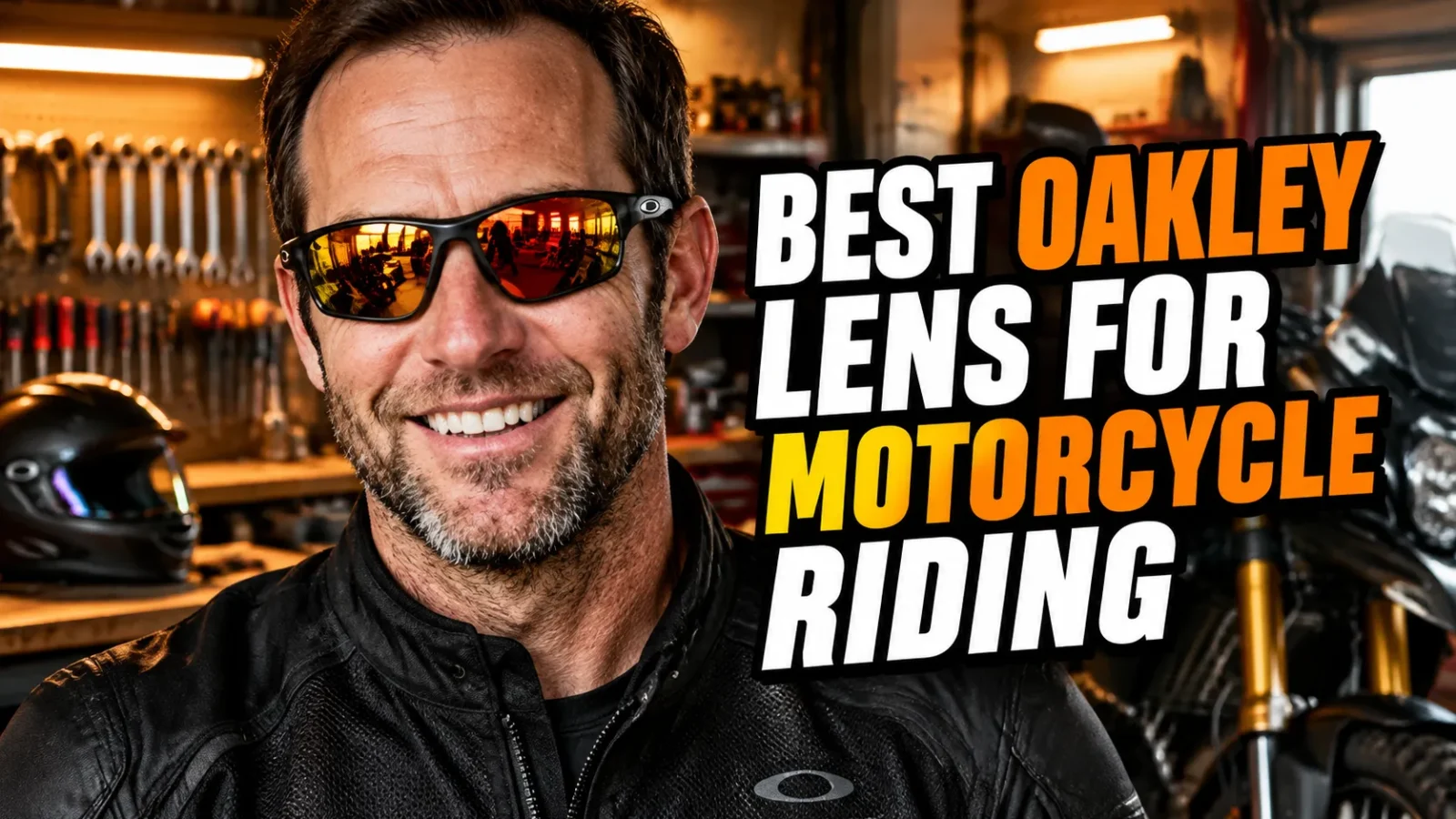
I have been riding with Oakley eyewear for close to fifteen years, and I have burned through more Prizm tints than I care to admit. Some of them were genuinely brilliant on a bike. A couple were expensive mistakes I only discovered at 70 mph with a low sun parked directly in my line of sight.
So this is not a spec sheet dump, and it is not a copy paste of Oakley’s own marketing. This is the list I wish someone had handed me before I spent my own money on the wrong lens three seasons in a row.
Below are the eight Oakley lens and frame combinations I would actually recommend to a motorcyclist, ranked roughly from “works for almost everybody” to “niche but unbeatable.” I have ridden most of these behind everything from a full face sport helmet to an open brain bucket, so I will tell you where each one shines and where it falls down.
- Prizm Road is the single best all round tint for motorcycle riding, full stop.
- Full face helmet wearers should prioritize thin temples: Sutro, Jawbreaker and Radar EV Path all fit cleanly.
- Skip polarized lenses on the bike if you rely on an LCD dash or a GPS screen.
- Prizm Low Light is the one lens I never ride without a spare of, for dawn, dusk and rain.
- Fit beats tint every time. A lens you have to push back up every twenty seconds is useless no matter how good the coating is.
How I Judge an Oakley Lens on a Motorcycle
On a bike you are not standing still in a parking lot. You are moving at speed, your eyes are drying out, and the light is changing every few seconds as you pass trees, bridges and buildings. That changes what actually matters.
The first thing I look at is visible light transmission, or VLT. A dark 11 percent lens is wonderful at noon in July and genuinely dangerous at 7 pm in October. Most riders are better served by something in the 15 to 25 percent range for daytime, plus a second lens for low light.
The second thing is contrast. Grey and neutral tints show the world exactly as it is. Prizm tints deliberately bend the color response to make certain surfaces pop. On asphalt, that means Prizm Road makes oil slicks, tar snakes and loose gravel announce themselves early. That is not a gimmick. I notice it every single time I switch back to a plain grey lens.
The third thing is temple thickness. This is the one nobody talks about and it ruins more rides than bad tint. Thick acetate arms and a snug full face helmet liner do not get along. You end up with pressure points above your ears after an hour and a headache by hour three.
Finally, there is impact protection. Oakley’s Plutonite lenses in the Sutro, Jawbreaker, Radar EV and Flak 2.0 lines meet or exceed ANSI Z87.1 for high mass and high velocity impact. That matters when you are tucked behind a flatbed truck throwing gravel.
1. Oakley Sutro Prizm Road — Best Overall for Motorcycle Riding
If you only buy one pair for the bike, I would buy the Oakley Sutro with Prizm Road. It is the closest thing to a default answer I can give.
The Sutro uses a single shield style lens in an O Matter frame, which means there is no lower rim to catch wind or block your downward vision. The Prizm Road tint sits around 20 percent VLT with a rose base, and on grey asphalt it is genuinely transformative. Tar snakes look purple. Oil patches look rainbow edged. Gravel looks like gravel instead of a shadow.
Why it works behind a helmet
The temples on the Sutro are relatively flat and thin, so they slide under a full face liner without creating hot spots. The Unobtainium nosepiece gets grippier as you sweat, which sounds like marketing until you are 90 minutes into a hot ride and your glasses have not moved a millimeter.
My only real complaint is coverage. The Sutro is a lifestyle leaning shield, not a true wrap, so at 80 mph on a naked bike you get some wind curling in around the edges. On a faired bike or behind a screen it is perfect. Expect to pay somewhere around $170 to $200 depending on the colorway, and replacement Prizm Road lenses are easy to find.
2. Oakley Jawbreaker Prizm Road — Best for Full Face Helmets
The Jawbreaker is the pair I reach for when I know I will be spending the day in a full face helmet with the visor up or a peaked adventure lid.
It has the widest coverage of anything on this list, and the Switchlock system lets you swap the lens in about fifteen seconds without tools. That single feature is why the Jawbreaker has stayed in my rotation for years. I run Prizm Road in it for daylight and swap to a clear or low light lens for evening rides.
The lens itself
Prizm Road in the Jawbreaker is the same rose base tint as the Sutro version, roughly 20 percent VLT, but the bigger lens shape means more of your peripheral vision is covered. The vents along the top and bottom edges do actually reduce fogging when you are stopped at a light with a hot engine underneath you.
It is not a cheap option. Figure $200 to $250 depending on the frame finish and whether you catch a sale. But if you ride with a full face helmet most of the time, the coverage and the lens swap justify it. This is the one I would call the serious rider’s pick.
3. Oakley Radar EV Path Prizm Trail — Best for Mixed Pavement and Gravel
A lot of my riding is paved road that turns into chip seal, then gravel, then back to pavement. For that, Prizm Trail in the Radar EV Path is hard to beat.
Prizm Trail sits around 36 percent VLT, which is much lighter than Prizm Road. That sounds like a downgrade until you ride into dappled tree shade on a dirt road. Prizm Road goes flat and murky in heavy shadow. Prizm Trail keeps the browns, reds and greens separated, so ruts and rocks stay readable.
Where it struggles
In full sun on open asphalt, 36 percent VLT is a lot of light. I squint. So I treat Prizm Trail as a dedicated lens for mixed surface days, not an everyday tint. The Radar EV Path frame itself is excellent, with an extended upper field of view and thin Unobtainium temples that disappear under a helmet. Budget around $180 to $220.
4. Oakley Flak 2.0 XL Prizm Sapphire — Best Do It All Lens
If you want one pair that handles bright daylight, looks normal off the bike, and fits under almost any helmet, the Flak 2.0 XL with Prizm Sapphire is my answer.
Prizm Sapphire is a grey base tint with a blue mirror finish, running about 12 percent VLT. It is far more neutral than Prizm Road. Colors look close to true, which I appreciate on long highway slogs where the rose tint of Prizm Road starts to feel like I am wearing beer goggles.
The half frame design keeps the bottom of your vision completely clear, and the interchangeable lens system means one frame can cover your whole year if you buy a second lens. XL sizing matters here: the standard Flak 2.0 is noticeably smaller and pinches on wider faces.
Real world notes
At 12 percent VLT this is a bright day lens. Do not try to stretch it into dusk. The Flak 2.0 XL runs roughly $180 to $210, and honestly the lens swap capability makes it one of the better values on this list. Mine has survived three years of tank bag abuse.
5. Oakley Holbrook Prizm Grey — Best for Cruisers and Around Town
Not every ride is a 500 mile day. For short hops on a cruiser, the Holbrook with Prizm Grey is the pair I grab when I want to look like a normal human at the coffee stop.
Prizm Grey is a neutral tint around 17 percent VLT. It does not push contrast the way Prizm Road does, but it is comfortable and it plays nicely with every helmet color and jacket I own. The O Matter frame is light and the classic shape has been around long enough that nobody looks twice at it.
Here is the honest caveat: the Holbrook is a lifestyle frame, not a riding frame. Coverage is limited, wind gets in around the edges above 50 mph, and the temples are chunky enough that some full face helmets will press them into your head. On a cruiser with a half helmet and a windscreen, none of that matters. On a sportbike, it does.
I will also say this: on a big twin cruiser, a rough running engine makes every one of these issues worse. If your vision is bouncing because the bike is shuddering at low speed, sort the bike out before you spend $180 on lenses. A lazy clutch adjustment on Harley Davidson models can turn a jerky, snatchy takeoff into something smooth, and smooth is what keeps your eyes steady.
6. Oakley Fuel Cell Prizm Tungsten — Best for Long Distance Touring
For all day touring I keep coming back to the Fuel Cell with Prizm Tungsten.
Prizm Tungsten is a warm brown base tint around 14 percent VLT. It is easy on the eyes in a way that a hard grey tint is not. After six or seven hours on the road, warm tints simply feel less fatiguing to me, and the contrast boost on brown and tan surfaces is genuinely useful in the desert and in autumn foliage.
The Fuel Cell frame is a big, wrapped rectangular shape with high coverage and thick O Matter arms. That wrap does a good job of cutting wind noise and keeping your eyes from tearing up at highway speed. The tradeoff is that those thicker arms can be fussy inside a tight full face helmet, so try before you commit.
Touring companions
Long days also expose every weakness in your bike, not just your eyewear. A stretched chain or a worn sprocket will send a vibration through the bars that you feel in your eyeballs by hour five. If you are planning a big trip, it is worth reading up on the best motorcycle chains for long distance tours before you leave. A quiet, smooth drivetrain makes a long ride with any of these lenses far more pleasant. The Fuel Cell itself runs about $170 to $190.
7. Oakley Split Shot Prizm Deep Water — Best for Half Helmet and Open Road
The Split Shot with Prizm Deep Water is a slightly unusual pick, because it started life as a fishing frame. That is exactly why it works for half helmet touring.
It ships with removable side shields and a leash, and Prizm Deep Water is a polarized blue base tint around 12 percent VLT. On open water, on bright coastal highways, and on long sun blasted straights, it is superb. The side shields are the real story though, because they cut wind and glare from the side in a way that no standard sunglasses frame does.
The polarization catch
Prizm Deep Water is polarized, and that is a genuine double edged sword on a motorcycle. Polarization can make an LCD dashboard or a GPS screen look washed out or black at certain angles. It also hides the rainbow sheen of oil on a wet road, which is exactly the kind of thing you want to see.
So I treat the Split Shot as a dry weather, bright light, half helmet frame. Around $200 to $220. If you ride a naked bike with no screen and you hate wind tearing at your eyes, this is the one I would try first.
8. Oakley Mainlink XL Prizm Low Light — Best for Dawn, Dusk and Rain
Every rider needs a low light lens, and Prizm Low Light in the Mainlink XL is the one I keep in my tank bag at all times.
At roughly 75 percent VLT, it is close to clear but not quite. The rose base tint still trims glare from oncoming headlights and wet road reflections better than your bare eyes manage, which is the whole point. Riding home into a setting sun with a dark lens on is genuinely dangerous, and I have watched riders do it because they only owned one pair.
The Mainlink XL is a wrap style frame with good coverage and a slightly taller lens than the standard Mainlink, which helps if you have a wider face or want more protection from road spray. It runs about $170 to $190.
Wind, Vibration and Why Your Bike Still Matters
Here is the thing nobody tells you when you start shopping for riding eyewear: half of what you blame on your lenses is actually your motorcycle.
If your vision is blurring at a steady cruise, it is not the tint. It is vibration. Loose engine mounts, a worn chain, unbalanced tires and drivetrain problems all show up first as a shimmer in your peripheral vision. I learned that lesson the hard way on a bike that turned out to have symptoms of bad timing chain tensioner motorcycle issues that I had been writing off as cheap sunglasses.
On the cruiser side, I have also watched people chase a vision problem that was really a drivetrain problem. Knowing how the power actually gets to the wheel helps. If you have ever wondered how does a wet clutch work, the short version is that smooth engagement is what keeps the bike from lurching, and a lurching bike is one where your head snaps forward and your glasses shift.
And on older Harleys, I have seen plenty of riders blame their eyewear for a buzzing that traced straight back to Harley Davidson transmission problems. Fix the machine, and suddenly a mid range Prizm lens feels like an upgrade.
My Final Verdict
If I had to hand one setup to a new rider tomorrow, it would be the Oakley Sutro with Prizm Road for daytime and a Mainlink XL with Prizm Low Light for everything else. That two lens combination covers 95 percent of the riding most of us actually do.
If you ride a full face helmet and want maximum coverage, go Jawbreaker. If you want one neutral, do everything frame that also works off the bike, go Flak 2.0 XL in Prizm Sapphire. If you tour long distances, the Fuel Cell in Prizm Tungsten is the most comfortable lens I have worn over a ten hour day.
Just remember the order of operations. Fit first, tint second, and make sure the bike underneath you is running smoothly before you blame the glass.
Frequently Asked Questions
What is the best Oakley lens for motorcycle riding overall?
For most riders it is Prizm Road. Its rose base tint boosts contrast on grey asphalt, so oil patches, gravel and pothole edges stand out before you are already on top of them.
Are polarized Oakley lenses good for motorcycle riding?
Not always. Polarization can make some LCD dashboards and GPS screens look washed out, and it hides the rainbow sheen of oil on a wet road. I stick to non polarized Prizm tints when I am actually riding.
Do Oakley Prizm lenses meet impact safety standards?
Yes. The Plutonite lenses used in the Sutro, Jawbreaker, Radar EV and Flak 2.0 lines meet or exceed ANSI Z87.1 for high mass and high velocity impact, which matters a lot when you are riding behind a truck.
What Oakley lens should I wear for night or rainy riding?
Prizm Low Light. At roughly 75 percent visible light transmission it is bright enough for dusk, heavy overcast and rain, but it still trims glare from oncoming headlights better than your bare eyes do.

Related Articles

10 Best Sunglasses for Motorcycle Riding, Ranked by a Rider Who’s Worn Them All
I've ridden thousands of miles in wind, glare and bugs. Here are the 10 best sunglasses for motorcycle riding, from…
Jake Miller
9 min read

10 Best Safety Glasses for Riding Motorcycle at Night (Rider Tested)
I tested 10 pairs of night riding glasses to find the clearest, most fog-free options for motorcycle riding after dark,…
Jake Miller
12 min read

8 Best Ray-Bans for Motorcycle Riding: What Actually Works Under a Helmet
After years of riding in Ray-Bans, I ranked the 8 best pairs for motorcycling, from helmet-friendly Aviators to wind-blocking wraps,…
Jake Miller
10 min read