
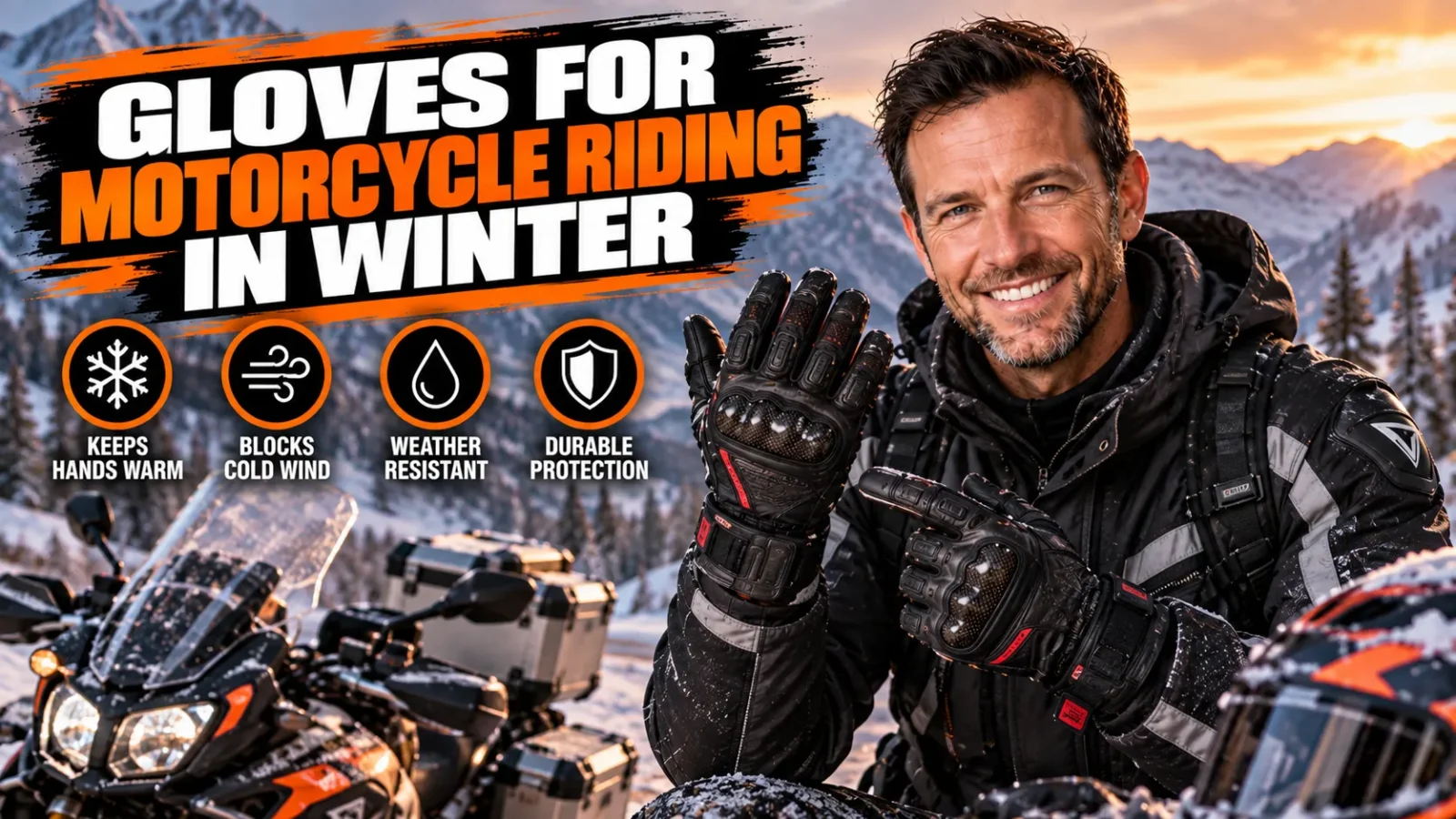
There’s a specific kind of misery that comes with riding a motorcycle in winter with the wrong gloves. Your fingers go numb, then they ache, then you can’t feel the clutch lever anymore. I’ve been there more times than I’d like to admit, and it’s genuinely dangerous, not just uncomfortable.
After years of testing gear through brutal cold commutes and the occasional snow-dusted ride I probably shouldn’t have taken, I’ve narrowed down what actually works. This isn’t theory. This is stuff I’ve worn at 20°F with wind chill making it feel worse.
If you want the full breakdown on glove construction, materials, and fit before diving into winter-specific picks, my Ultimate Guide to Motorcycle Gloves covers everything you need to know as a foundation.
- The best winter motorcycle gloves combine waterproofing, windproofing, and real insulation like Thinsulate or Primaloft.
- Gauntlet-style cuffs that seal over your jacket sleeves make a massive difference in keeping cold air out.
- Heated gloves are a game-changer for sub-freezing rides and worth the investment if you commute year-round.
- Fit matters more in winter gloves because too-tight fingers actually make your hands colder by restricting blood flow.
- Leather palms with textile or membrane backing give you the best mix of warmth, feel, and durability.
Why Winter Gloves Are Their Own Category
I used to think I could just layer thin gloves under my regular riding gloves. It doesn’t work. Bulk in the wrong places kills your feel for the controls, and cheap layering lets cold air sneak in through gaps.
Winter gloves are engineered differently from the ground up. They use insulation that traps warmth without adding excessive bulk, and they’re built with sealed seams that keep wind and moisture from finding their way in.
The Real Enemy Isn’t Just Cold, It’s Wind Chill
Riding at 50 mph in 40-degree weather feels a lot colder than standing still in that same temperature. Wind chill on a moving bike can drop the effective temperature by 20 degrees or more.
That’s why windproofing matters just as much as insulation. A glove that’s warm standing in your garage can feel like nothing once you’re doing highway speeds.
What I Look for in a Winter Motorcycle Glove
Before I get into specific recommendations, let me walk you through my actual evaluation criteria. I don’t just grab whatever looks thick and puffy in a store.
Insulation That Actually Performs
Thinsulate is my go-to benchmark. It’s thin enough to preserve dexterity but traps heat remarkably well. Gloves rated 100g to 200g of Thinsulate tend to hit the sweet spot for most riders in genuinely cold climates.
Anything below 100g feels more like a three-season glove with a warm lining. Above 200g, you start sacrificing feel on the controls, which isn’t a great trade-off for most street riding.
Waterproofing and Breathability
A Gore-Tex or similar membrane liner is non-negotiable for me in winter. Cold and wet together is the fastest way to lose feeling in your hands, sometimes within ten minutes.
I’ve also learned that breathability matters even in cold weather. Sweaty hands inside a sealed glove get cold fast once that moisture has nowhere to go.
Gauntlet Length and Cuff Design
Short gloves are fine for summer, but in winter I want a gauntlet that extends well over my jacket cuff. This creates a seal that stops cold air from funneling straight up my sleeve.
Look for an adjustable closure at the wrist too. A loose cuff defeats the purpose of a long gauntlet entirely.
My Top Picks for Winter Riding Gloves
Here’s where I get specific. These are gloves I’ve either owned personally or tested extensively on cold-weather rides, not just skimmed from a spec sheet.
1. Klim Badlands GTX Long Gloves
These are my personal daily winter gloves, and I’m not exaggerating when I say they’ve saved my hands on multiple sub-freezing commutes. The Gore-Tex membrane is bombproof, and the leather-and-textile construction holds up incredibly well.
They’re pricey, no doubt about it. But if you ride through actual winter rather than just chilly mornings, I think they’re worth every penny.
2. Alpinestars WR-1 Gore-Tex Gloves
I love these for touring in cold, wet conditions. The insulation is well-balanced, so I never felt like I was fighting bulk when reaching for the brake lever.
The knuckle protection is solid too, which I appreciate since a lot of winter gloves skimp on armor to save on cost.
3. Rukka Virium Gloves
Rukka doesn’t get talked about enough in the US market, but these gloves are seriously impressive. The waterproofing is top-tier, and the fit feels more precise than most bulky winter gloves I’ve tried.
If you can find a pair in your size, I’d say grab them. They run a little narrow, so sizing up slightly is smart.
4. Held Satu Gore-Tex Gloves
Held makes gear that flies under the radar, but this glove punches way above its price point. I found the dexterity noticeably better than competitors with similar insulation ratings.
It’s become my recommendation for riders who want serious winter protection without spending flagship-level money.
5. Heated Options: Gerbing’s T5 Hybrid Gloves
When temperatures drop into the low 30s or below, insulation alone sometimes isn’t enough. That’s when I switch to heated gloves like the Gerbing’s T5, which plug into your bike’s electrical system or a battery pack.
The heat output is adjustable, so I can dial it back on milder days and crank it up when I’m riding through an actual cold front. This is the closest thing to a cheat code for winter riding I’ve found.
Leather vs. Textile: Which Wins in Winter?
This debate comes up constantly, and honestly, my answer is “it depends on the glove.” Pure leather gloves feel amazing and offer great abrasion resistance, but they need extra treatment to stay waterproof in snow or slush.
Textile gloves with membrane liners tend to be more consistently waterproof out of the box. Many of my favorite winter gloves actually combine both, leather palms for grip and feel, textile backing for insulation and weatherproofing.
Why I Lean Toward Hybrid Construction
Full leather winter gloves can get stiff in extreme cold, which hurts your feel for the clutch and throttle. Hybrid gloves flex better because the textile panels move more naturally when the temperature drops.
If you’re deciding between the two, I’d say prioritize hybrid construction unless you’re set on a specific leather glove with proven cold-weather performance.
Fit and Sizing Mistakes I’ve Made
I once bought winter gloves in my regular size, thinking thicker insulation just meant a snugger fit. Big mistake. Tight gloves restrict blood flow, and restricted blood flow means colder fingers, not warmer ones.
Now I always size up when buying insulated winter gloves. There should be enough room to wiggle your fingers and make a full fist without the material pulling tight across your knuckles.
The Liner Glove Trick
On the coldest days, I sometimes wear a thin silk or merino wool liner glove underneath my riding gloves. This adds a surprising amount of warmth without much added bulk.
Just make sure your outer glove has enough room to accommodate the liner. This goes back to that sizing-up advice I mentioned above.
How Winter Gloves Compare to Other Seasonal Gear
I get asked a lot whether winter gloves are just “beefed up” summer gloves. They’re not, and understanding the difference helps you avoid buying the wrong gear for the season.
If you’re newer to riding and building out your gear collection, my guide to the Best Beginner Gloves for Motorcycle riding is a good starting point for understanding fit and protection basics before you specialize into seasonal gloves.
Summer Gloves Prioritize Airflow
Summer gloves are built almost entirely around ventilation, perforated leather, mesh panels, and minimal insulation. If you’ve checked out my picks for the best motorcycle gloves for summer, you’ll notice they’re the near-total opposite of what I’m recommending here.
There’s zero crossover potential. A summer glove in January is basically a fashion statement, not protective gear.
Budget Seasonal Options Still Matter
I know not everyone wants to drop $200 on gloves, and that’s fair. For warmer months, my roundup of the best cheap motorcycle gloves for summer proves you don’t need to overspend when the weather’s on your side.
Winter is different, though. I’m far less willing to cut corners when frostbite and numb fingers are the actual risk on the table.
Women Riders Need Season-Specific Fit Too
Fit issues are magnified for women riders since a lot of winter gloves are designed on men’s sizing templates first. If you’re shopping for warmer weather gear instead, my guide to best summer leather motorcycle gloves for women has some great options with proper sizing in mind.
For winter specifically, I’d recommend trying gloves on in person whenever possible, since insulation bulk affects women’s narrower hand shapes differently than it does mine.
Signs Your Current Winter Gloves Aren’t Cutting It
I want to help you diagnose this before you’re stuck freezing on a highway somewhere. There are a few clear warning signs that your gloves aren’t up to the job.
Fingertip Numbness Within 15 Minutes
If your fingertips go numb quickly, even at moderate winter temps, your insulation is likely insufficient or your gloves are too tight. This was my exact problem before I switched to properly sized, better-insulated gloves.
Don’t just tough it out. Numb fingers can’t operate brake and clutch levers safely, and that’s a real safety issue, not just discomfort.
Damp Gloves After Light Rain or Snow
A properly waterproofed glove should shrug off light precipitation entirely. If your gloves are getting damp inside after brief exposure, the membrane has likely failed or was never truly waterproof to begin with.
This is a good moment to reconsider your glove choice before the next storm catches you unprepared.
Wrist Gaps Letting In Cold Air
If you feel a cold draft at your wrist while riding, your gauntlet isn’t sealing properly against your jacket sleeve. Sometimes this is fixable with a better adjustment strap, but often it means the glove’s cuff design just isn’t long enough.
Caring for Winter Gloves So They Last
Good winter gloves are an investment, and I want mine to last multiple seasons. A little maintenance goes a long way here.
Drying Them Properly
Never put wet winter gloves directly on a heater or radiator. I learned this the hard way when I cracked the leather on an old pair by drying them too fast. Stuff them with newspaper and let them air dry at room temperature instead.
Reproofing Waterproof Membranes
Over time, DWR (durable water repellent) coatings wear down, even on Gore-Tex gloves. I reproof mine once a season with a proper waterproofing spray made for technical textiles, not generic leather conditioner.
Storing Them Between Rides
I keep my winter gloves somewhere they can fully dry out between uses, never balled up in a saddlebag. Trapped moisture breeds odor and slowly breaks down the insulation’s loft over time.
My Final Take
Winter riding gear is one area where I genuinely believe you get what you pay for. Cheap gloves might survive a few chilly mornings, but they’ll fail you exactly when you need them most, on that brutally cold ride you can’t avoid.
My honest recommendation is to invest in one excellent pair of insulated, waterproof gloves rather than cycling through multiple cheap ones every season. Your hands will thank you, and so will your riding confidence when the temperature drops.
Stay warm out there, and ride safe.
Frequently Asked Questions
What makes a glove truly warm for winter motorcycle riding?
The best winter gloves combine windproof outer shells, waterproof membranes like Gore-Tex, and thick insulation such as Thinsulate, plus a gauntlet cuff that seals out cold air at the wrist.
Should I size up when buying winter motorcycle gloves?
Yes, in most cases. Insulated gloves are bulkier than three-season gloves, so I usually recommend going up half a size to keep circulation flowing, which actually helps you stay warmer.
Are heated motorcycle gloves worth the extra cost?
If you ride in temperatures below freezing regularly, heated gloves are absolutely worth it. They solve the fingertip-numbness problem that even great insulation sometimes can’t fix.
Can I use my winter gloves for rain riding too?
Many winter gloves double as excellent wet-weather gear since they’re waterproof, but if rain is your main concern in milder temps, check out my breakdown of the best motorcycle gloves for rain for dedicated options.

Related Articles
8 Best Waterproof Motorcycle Gloves for Summer Riding
I tested and researched the 8 best waterproof motorcycle gloves for summer, balancing breathability, dry hands, and all-day comfort. Find…
 Jake Miller
10 min read
Jake Miller
10 min read
10 Best Motorcycle Gloves for Protection That I’d Actually Trust My Hands To
I've crashed, dropped bikes, and tested dozens of gloves. Here are the 10 best motorcycle gloves for protection I genuinely…
Jake Miller
11 min read
9 Best Mechanix Gloves for Motorcycle Riding You Can Actually Trust
I've tested Mechanix gloves on real rides—here are the 9 best models for motorcycle riding, from impact protection to cold-weather…
Jake Miller
11 min read