
Best Motorcycle Gloves for Carpal Tunnel: My Honest Picks for Pain-Free Riding
 Jake Miller
10 min read
Jake Miller
10 min read
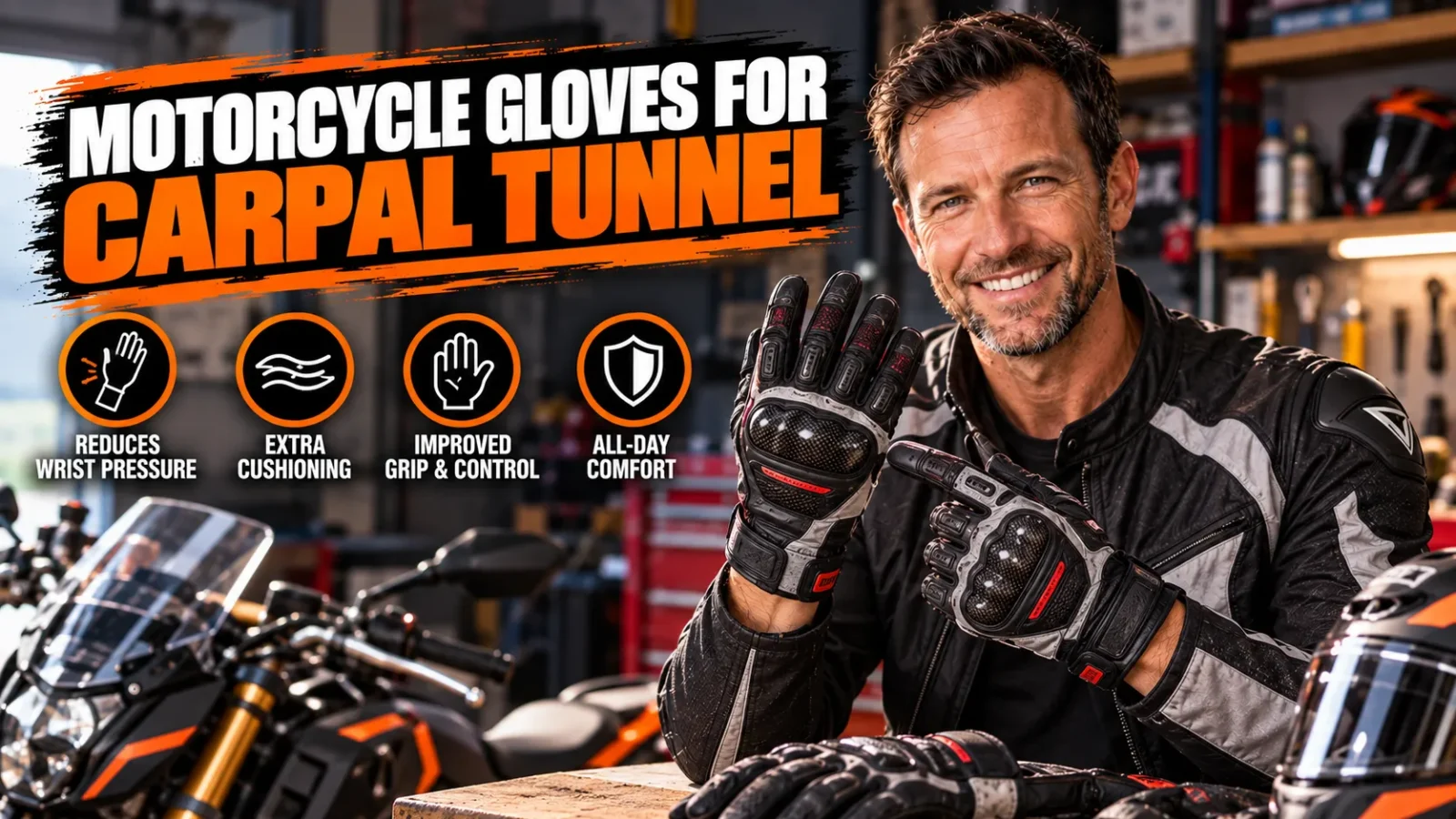
I still remember the ride where my hand went completely numb on the highway. My fingers tingled, my wrist ached, and by the time I pulled over, I couldn’t even unzip my jacket properly. That was my wake-up call about carpal tunnel and motorcycling.
Since then, I’ve tried more gloves than I care to admit, chasing that perfect balance of support, comfort, and control. Some were a waste of money. Others genuinely changed how my hands feel after a three-hour ride.
If you’re dealing with carpal tunnel syndrome or just chronic wrist pain from gripping your bars all day, I want to walk you through what actually works. And if you want the bigger picture on glove shopping in general, my Ultimate Guide to Motorcycle Gloves is a great companion read to this one.
- Gloves with gel padding and a pre-curved, neutral wrist fit reduce nerve pressure and vibration significantly.
- My top picks combine wrist support straps, breathable materials, and shock-absorbing palms.
- Fit matters more than brand hype — a glove that’s too tight at the wrist can make carpal tunnel worse, not better.
- Pairing the right glove with ergonomic grips and proper riding posture gives the best long-term relief.
- Budget options exist too — you don’t need to spend a fortune to protect your wrists.
Why Motorcycle Riding Is So Hard on Your Wrists
Riding puts your wrists in a weird spot, literally. Your hands are extended and slightly bent backward for hours, gripping and absorbing vibration the entire time. That posture alone can aggravate the median nerve running through your carpal tunnel.
Add in road vibration, throttle tension, and the occasional pothole jolt, and you’ve got a recipe for numbness, tingling, and that dull ache that creeps up your forearm.
I’ve learned that it’s not just about how long you ride, it’s about how your hands are positioned the whole time. Even short commutes can flare things up if your grip angle is wrong.
The Role Gloves Actually Play
Gloves aren’t a cure for carpal tunnel syndrome, and I want to be upfront about that. But the right pair can absolutely reduce the strain that triggers symptoms.
Think of it like this: a well-designed glove redistributes pressure away from the center of your palm, dampens vibration before it reaches your nerves, and keeps your wrist in a more neutral position instead of bent at an awkward angle.
That combination is often enough to turn a painful two-hour ride into a manageable one.
What I Look For in Carpal Tunnel-Friendly Gloves
After years of trial and error (and a few painful rides I probably shouldn’t have finished), I’ve narrowed down the features that actually matter.
Gel or Foam Palm Padding
This is non-negotiable for me now. Gel inserts placed strategically across the palm absorb road vibration before it travels up into your wrist and hand.
Some gloves place the padding right where you’d want it, directly under the heel of your palm where most of your gripping pressure lands.
A Pre-Curved, Ergonomic Shape
Flat gloves force your hand into an unnatural position when gripping round bars. Pre-curved gloves are shaped to match your natural riding grip, which keeps your wrist closer to neutral instead of flexed or extended.
I didn’t appreciate how much this mattered until I switched from a flat-cut glove to a curved one and immediately noticed less strain after my ride.
Supportive Wrist Closures
This one is huge for carpal tunnel specifically. Some gloves include a wider wrist strap or even a light brace-like structure that stabilizes the joint, almost like a soft splint you’d wear for tendinitis.
It’s not the same as a medical wrist brace, but it does limit excessive movement that can aggravate symptoms during long stretches of riding.
Breathable, Non-Restrictive Materials
If a glove is too hot or too tight, you’ll unconsciously grip your bars tighter to compensate for discomfort, which is exactly what you don’t want. Breathable panels help you stay relaxed, and a relaxed grip is a healthier grip.
My Top Picks for the Best Motorcycle Gloves for Carpal Tunnel
Here’s where I get specific. These aren’t just gloves I’ve heard good things about, these are ones I’ve personally worn on real rides with real wrist pain on the line.
1. The Gel-Padded All-Rounder
My go-to recommendation for most riders dealing with wrist discomfort is a leather glove with generous gel padding across the palm and a slightly pre-curved fingers design.
What sold me was how the padding sits exactly where my hand contacts the grip, not just scattered decoratively across the glove.
Best for: Riders who want daily comfort without sacrificing the classic leather feel and durability.
2. The Wrist-Brace Hybrid
This is the closest thing I’ve found to wearing a wrist brace and a riding glove at the same time. It has a wider, adjustable wrist strap that wraps snugly without cutting off circulation.
I noticed the biggest difference on longer rides, over two hours, where the extra stability kept my wrist from flopping around on bumpy roads.
Best for: Riders with moderate to more noticeable carpal tunnel symptoms who need extra joint support.
3. The Breathable Summer Option
For warmer months, I don’t want a heavy, sweaty glove making my grip worse. A well-ventilated glove with light padding and a snug but flexible wrist closure works great when temperatures climb.
If you’re shopping seasonally, my breakdown of the best motorcycle gloves for summer covers a few more options that balance airflow with support.
Best for: Hot-weather commuters who still need wrist protection without overheating.
4. The Budget-Friendly Pick
I get it, not everyone wants to drop premium money on gloves, especially if you’re still figuring out what works for your hands. There are solid budget options with decent gel padding that get the job done without breaking the bank.
I actually found a few great choices in my guide to best cheap motorcycle gloves for summer, several of which have enough palm support to help with mild wrist discomfort.
Best for: New riders or anyone testing the waters before investing in a premium pair.
5. The Women’s Fit Option
Glove fit matters enormously for wrist support, and generic unisex sizing often leaves women with excess material bunching at the wrist, which defeats the purpose of a supportive closure entirely.
I always point female riders toward properly tailored options, like the ones featured in my roundup of best summer leather motorcycle gloves for women, which fit snugly through the wrist without excess bulk.
Best for: Women riders who need a true-to-hand fit for proper wrist stabilization.
Rain, Weather, and Wrist Pain
Something people don’t talk about enough: cold and wet conditions make carpal tunnel symptoms worse. Cold weather naturally causes joints to stiffen, and stiff joints under repetitive strain are a bad combination.
If you ride in unpredictable weather, I’d steer you toward my guide on the best motorcycle gloves for rain, since staying dry and warm indirectly helps keep your wrists from tensing up.
I’ve noticed my own symptoms flare up noticeably faster on cold, damp mornings compared to warm, dry afternoons. Keeping your hands warm isn’t just about comfort, it’s genuinely protective.
Beginner Riders and Wrist Health
If you’re new to riding, I really want to stress this early: don’t wait until your wrists hurt to think about glove support. Building good habits from day one saves you a lot of pain down the road.
New riders also tend to grip harder out of nervousness, which puts even more strain on the wrist than experienced riders typically deal with. A supportive glove can help offset that instinct.
My guide to the Best Beginner Gloves for Motorcycle touches on comfort features that double as wrist-friendly choices, so it’s worth a look if you’re just starting out.
Fit Tips I Wish Someone Had Told Me Sooner
Don’t Size Down for a “Snug” Feel
I used to think tighter meant more supportive. Wrong. A glove that’s too small compresses your wrist and can actually pinch the nerve pathway, making symptoms worse, not better.
You want snug through the palm, but with enough room at the wrist that the closure can do its job without cutting off circulation.
Test the Wrist Closure Before You Buy
Whenever possible, try gloves on and mimic a riding grip. Bend your wrist slightly and see if the closure digs in or stays comfortable. If it pinches while just standing in a store, it’ll be worse after an hour of riding.
Break Them In Gradually
Even the best gloves need a short break-in period. I always start with shorter rides in a new pair before committing to a long highway trip, just to make sure nothing rubs or presses wrong.
Beyond Gloves: Other Things That Helped My Wrists
Gloves are a big piece of the puzzle, but I’d be doing you a disservice if I said they were the only fix. A few other changes made a noticeable difference for me too.
Ergonomic Handlebar Grips
Switching to grips with a slight palm-swell shape reduced how hard I had to squeeze to maintain control. Less squeezing means less strain on the exact nerve pathway that causes carpal tunnel symptoms.
Adjusting Lever Reach
If your clutch or brake lever is too far from your fingers, you end up stretching and straining with every pull. Most modern bikes let you adjust lever reach, and it’s a five-minute fix that pays off over hours of riding.
Taking Real Breaks
I know it’s tempting to push through and just get to your destination, but stopping every hour or so to shake out your hands and stretch your wrists genuinely helps prevent flare-ups.
Simple wrist circles and finger stretches at a gas stop take thirty seconds and make a real difference on longer rides.
Putting It All Together
If I had to boil this down to one piece of advice, it’s this: prioritize fit and padding placement over brand names or flashy features. The best motorcycle gloves for carpal tunnel are the ones that keep your wrist neutral, dampen vibration, and never feel restrictive.
I’ve ridden in pain, and I’ve ridden in comfort, and the difference genuinely comes down to gear choices like this. Your hands do all the work of controlling your bike, so they deserve the right protection.
Take your time trying different options, pay attention to how your wrists feel after each ride, and don’t be afraid to switch gloves if something isn’t working. Your comfort on two wheels is worth the experimentation.
Frequently Asked Questions
Can motorcycle gloves actually help with carpal tunnel syndrome?
Yes, the right gloves can make a real difference. Gloves with built-in wrist support, gel padding, and vibration-dampening palms reduce the pressure and repetitive strain on your median nerve, which is often what flares up carpal tunnel symptoms during rides.
What features should I look for in gloves for carpal tunnel pain?
Look for a contoured or supportive wrist closure, gel or foam padding across the palm, a pre-curved fit that keeps your wrist in a neutral position, and breathable materials so you’re not tempted to grip tighter out of discomfort.
Are gel-padded gloves better than leather gloves for wrist pain?
Gel padding specifically targets pressure points and vibration, which leather alone doesn’t address. That said, many of my favorite options combine leather durability with gel inserts, giving you the best of both worlds for comfort and protection.
Do compression-style motorcycle gloves help with carpal tunnel?
Compression and supportive wrist wraps can help some riders by stabilizing the joint, similar to a brace. It’s worth trying a few styles since everyone’s wrist anatomy and symptoms are a little different.

Related Articles
8 Best Waterproof Motorcycle Gloves for Summer Riding
I tested and researched the 8 best waterproof motorcycle gloves for summer, balancing breathability, dry hands, and all-day comfort. Find…
Jake Miller
10 min read
10 Best Motorcycle Gloves for Protection That I’d Actually Trust My Hands To
I've crashed, dropped bikes, and tested dozens of gloves. Here are the 10 best motorcycle gloves for protection I genuinely…
Jake Miller
11 min read
9 Best Mechanix Gloves for Motorcycle Riding You Can Actually Trust
I've tested Mechanix gloves on real rides—here are the 9 best models for motorcycle riding, from impact protection to cold-weather…
Jake Miller
11 min read