
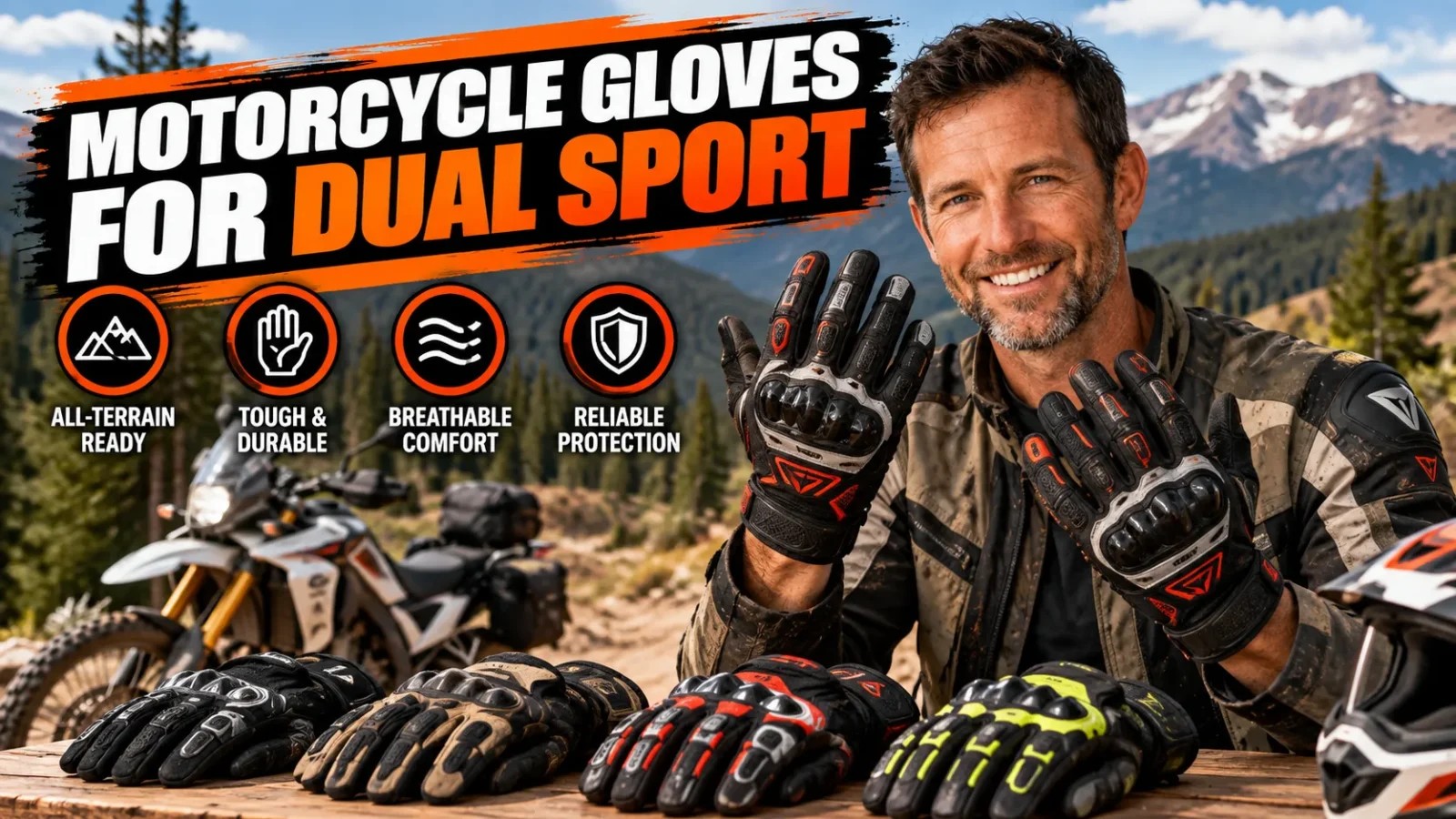
I’ve spent more hours than I’d like to admit stuck between two worlds on my dual sport bike: blasting down a fire road one minute, then merging onto a highway the next. That constant back-and-forth is exactly why finding the best motorcycle gloves for dual sport riding took me way longer than it should have.
Most gloves are built for one discipline. Motocross gloves feel amazing on dirt but shred apart on pavement slides. Touring gauntlets protect great at highway speed but feel like oven mitts when you’re standing on the pegs picking a line through rocks. I’ve burned through a small pile of gloves figuring out what actually works.
In this guide, I’m sharing what I’ve learned from real miles, real falls, and a few embarrassing crashes I’d rather forget. If you want the bigger picture on glove technology and sizing, my Ultimate Guide to Motorcycle Gloves covers all of that in depth.
- The best dual sport gloves blend dirt-bike knuckle armor with street-worthy palm padding and abrasion resistance.
- Look for adjustable cuffs, breathable panels, and a snug but not restrictive fingertip fit for clutch and brake feel.
- My top picks range from budget-friendly trail gloves to premium adventure gauntlets that handle rain and heat.
- Short-cuff gloves suit hot, technical riding while gauntlet styles suit highway-heavy dual sport routes.
- Fit and finger dexterity matter more than flashy armor when it comes to actual on-bike control.
Why Dual Sport Gloves Are Their Own Category
Dual sport riding is a strange hybrid. You’re not purely off-road, and you’re not purely street either. Your gloves need to survive both worlds without forcing you to compromise on protection or feel.
On the trail, I need knuckle protection for branch strikes and tip-overs at low speed. On the highway, I need palm sliders and abrasion-resistant material in case things go sideways at 65 mph.
That combination is rare, and it’s why dedicated dual sport gloves exist as their own product category rather than just borrowed motocross or touring gear.
The Core Features I Look For
Before I even try a glove on, I check for a few non-negotiables. These are the features that separate a genuinely great dual sport glove from a glove that just looks the part.
- Hard knuckle protection that doesn’t restrict your fist from closing around the grip.
- Reinforced palm material, ideally with a slider patch for pavement slides.
- Breathable mesh or perforated panels across the back of the hand and fingers.
- Pre-curved fingers so your hand isn’t fighting the glove all day on the bars.
- Adjustable wrist closure that seals out dust without cutting off circulation.
My Top Picks for Best Dual Sport Motorcycle Gloves
I’ve narrowed this down to gloves I’ve either personally worn for extended stretches or that consistently show up praised in rider communities I trust. Every pick here earns its spot for a specific reason.
1. The All-Around Adventure Glove
This is the glove I reach for when I genuinely don’t know what the day’s ride will throw at me. It’s got a short gauntlet cuff, hard knuckle armor, and a goat-leather palm that’s held up shockingly well against gravel spills.
What sold me was the finger dexterity. I could still feel my clutch lever and thumb my kill switch without pulling the glove off, which sounds small until you’re doing it at a trailhead in the cold.
Best for: Riders who split their time roughly 50/50 between dirt and pavement on longer rides.
2. The Hot-Weather Trail Specialist
For summer rides where temps climb past 90°F, I switch to a lighter, more ventilated glove with a shorter cuff. The mesh panels across the back of the hand genuinely make a difference when you’re grinding up a technical climb in the heat.
It sacrifices a little wrist coverage, but honestly, in scorching conditions I’d rather have airflow than an extra inch of cuff. If you want more options built specifically for heat, I’ve got a whole roundup on the best motorcycle gloves for summer that pairs nicely with dual sport riding in hot climates.
Best for: Desert riders, summer trail days, and anyone who runs hot on the bike.
3. The Budget Workhorse
Not every rider wants to drop $150 on gloves, especially if you’re still figuring out whether dual sport riding is your thing. This pick punches way above its price tag with solid knuckle protection and a durable palm.
I’ve genuinely been surprised by how long these last given the price point. They’re not going to feel as premium, but they get the job done for weekend trail riders.
If budget is the main concern, my guide to the best cheap motorcycle gloves for summer has more affordable options worth comparing against this pick.
4. The Rain-Ready Option
Dual sport riding often means you’re out in conditions street riders would avoid, and rain is a big part of that. I keep a dedicated waterproof pair in my saddlebag for exactly this scenario.
They’re bulkier than my regular gloves and dexterity takes a small hit, but staying dry through a surprise downpour on a remote trail is worth that trade every time. For a deeper dive, check out my picks for the best motorcycle gloves for rain.
Best for: Anyone riding in unpredictable weather or wet climates regularly.
5. The Beginner-Friendly Pick
If you’re newer to dual sport riding, I don’t recommend jumping straight into the most aggressive, race-oriented gloves on the market. Comfort and forgiving fit matter more early on than shaving grams off armor weight.
I steered a friend toward a simpler, well-padded glove when he started riding, and it made his first few spills far less painful both physically and financially. My full breakdown of the Best Beginner Gloves for Motorcycle riding covers this in more detail.
How I Actually Test Dual Sport Gloves
I don’t just try gloves on in a parking lot and call it a review. My testing process happens across multiple rides, multiple conditions, and honestly, multiple mistakes.
The Dexterity Check
Within the first ten minutes of wearing a new glove, I’m checking whether I can operate my phone, adjust my mirrors, and work my clutch lever cleanly. If a glove fails this basic test, it doesn’t matter how tough the armor is.
The Sweat Test
I wear each pair on at least one hot, sweaty ride and one cold morning ride. This tells me whether the ventilation claims on the packaging actually hold up in the real world, not just on a spec sheet.
The Fall Test
Unfortunately, dual sport riding guarantees you’ll tip over eventually, usually at the worst possible moment. I pay close attention to how gloves hold up after a low-speed spill, checking seams, palm material, and knuckle armor for any damage.
Fit Tips That Make a Real Difference
Even the best glove on paper will feel wrong if the fit is off. I’ve learned this the hard way after buying a “size medium” from three different brands and getting three very different results.
Always measure your hand before buying online, rather than trusting the size you wear in a completely different brand. Glove sizing is shockingly inconsistent across manufacturers.
A properly fitted glove should feel snug when new, with almost no extra material bunching at the fingertips. Leather and most synthetic materials will break in and loosen slightly after a few rides.
Watch the Finger Length
If your fingertips have room to wiggle inside the glove, you’re going to lose feel on the brake and clutch levers. This is one of the most common fit mistakes I see other riders make.
Check the Wrist Closure
The wrist strap should close firmly enough to keep dust and debris out but never so tight that it restricts blood flow. I test this by making a full fist and holding it for ten seconds to feel for any numbness.
Materials Worth Knowing About
Not all “leather” or “textile” claims on a glove label mean the same thing. Understanding what’s actually inside your gloves helps you make a smarter buying decision.
Goat and Kangaroo Leather
Goat leather is a favorite in dual sport gloves because it’s tough, flexible, and doesn’t stiffen up too much when wet. Kangaroo leather is even stronger for its weight but tends to push the price up significantly.
Synthetic and Textile Blends
Many modern dual sport gloves blend textile panels with leather reinforcement in high-wear zones like the palm. This combo keeps weight down while still protecting the areas that actually hit the ground in a fall.
Armor Placement
Hard armor over the knuckles and sometimes along the outer edge of the palm absorbs impact from rocks, branches, and pavement. I always flex my hand into a fist when trying on gloves to make sure the armor doesn’t dig into my skin uncomfortably.
Seasonal Considerations for Dual Sport Riders
One glove rarely covers every season unless you’re lucky enough to ride somewhere with mild year-round weather. I personally rotate through at least two or three pairs depending on the month.
Riding Through Summer Heat
Ventilation becomes the priority once temperatures climb, and I’ll happily sacrifice some abrasion resistance for airflow on a scorching trail day. Perforated leather and mesh panels are your best friends here.
Riding Through Cold and Wet Conditions
Insulation and waterproofing take over as the priority once temps drop or rain becomes likely. I layer a thin glove liner under my regular gloves on chilly mornings rather than buying an entirely separate insulated pair.
A Quick Note for Women Riders
Fit is even more critical for women riders since most dual sport gloves are designed on a unisex or men’s hand shape by default. Narrower palms and shorter fingers mean generic sizing often leaves extra bulk at the fingertips.
If you’re also looking for warmer weather options with a better tailored fit, my guide on the best summer leather motorcycle gloves for women is a great companion read alongside this one.
Common Mistakes I See Riders Make
After years of riding and talking gear with other dual sport enthusiasts, a few mistakes come up again and again. I’ve made most of these myself at some point.
Buying Based on Looks Alone
A glove can look aggressive and race-ready while offering mediocre real-world protection. I always dig into the actual materials and armor placement before letting the aesthetics sway me.
Ignoring Break-In Time
Leather gloves often feel stiff out of the box, and some riders give up on a good pair too early. Give leather a few rides to soften up before deciding it’s the wrong fit.
Skipping the Seasonal Swap
Wearing the same heavy gauntlet gloves in July that you wore in January is a recipe for sweaty, uncomfortable hands. Rotating gloves seasonally makes a bigger comfort difference than most riders expect.
My Final Take
Finding the right dual sport glove really comes down to being honest about how you actually ride. If you’re mostly hitting technical trails, lean toward lighter, more flexible options. If highway miles dominate your routes, prioritize abrasion resistance and wrist coverage instead.
I’ve cycled through a lot of gloves to land on the picks I actually trust, and I’ll keep updating my choices as new gear crosses my hands. Whatever you land on, don’t skip this piece of gear. Your hands hit the ground first in almost every fall, and good gloves are one of the cheapest insurance policies you can buy for your riding season.
Frequently Asked Questions
What makes a glove good for dual sport riding specifically?
A great dual sport glove balances off-road knuckle protection with the finger dexterity and comfort needed for long highway stretches. It should also breathe well and handle light moisture without turning into a swamp.
Can I use motocross gloves for dual sport riding?
You can, but pure MX gloves usually lack the palm padding and abrasion resistance needed for pavement slides. I recommend a hybrid glove built specifically for adventure or dual sport use instead.
Are gauntlet-style gloves necessary for dual sport bikes?
Not always. Short-cuff gloves work great for hot climates and technical trail riding, while gauntlet cuffs are better if you’re covering serious highway miles or riding in cooler weather.
How often should I replace my dual sport gloves?
I typically replace mine every one to two seasons, or immediately after any crash where the palm or knuckle armor took an impact. Check out my Ultimate Guide to Motorcycle Gloves for more on lifespan and care.

Related Articles
8 Best Waterproof Motorcycle Gloves for Summer Riding
I tested and researched the 8 best waterproof motorcycle gloves for summer, balancing breathability, dry hands, and all-day comfort. Find…
 Jake Miller
10 min read
Jake Miller
10 min read
10 Best Motorcycle Gloves for Protection That I’d Actually Trust My Hands To
I've crashed, dropped bikes, and tested dozens of gloves. Here are the 10 best motorcycle gloves for protection I genuinely…
Jake Miller
11 min read
9 Best Mechanix Gloves for Motorcycle Riding You Can Actually Trust
I've tested Mechanix gloves on real rides—here are the 9 best models for motorcycle riding, from impact protection to cold-weather…
Jake Miller
11 min read