
Best Motorcycle Gloves for Women: My Honest Picks After Years of Testing
 Jake Miller
11 min read
Jake Miller
11 min read
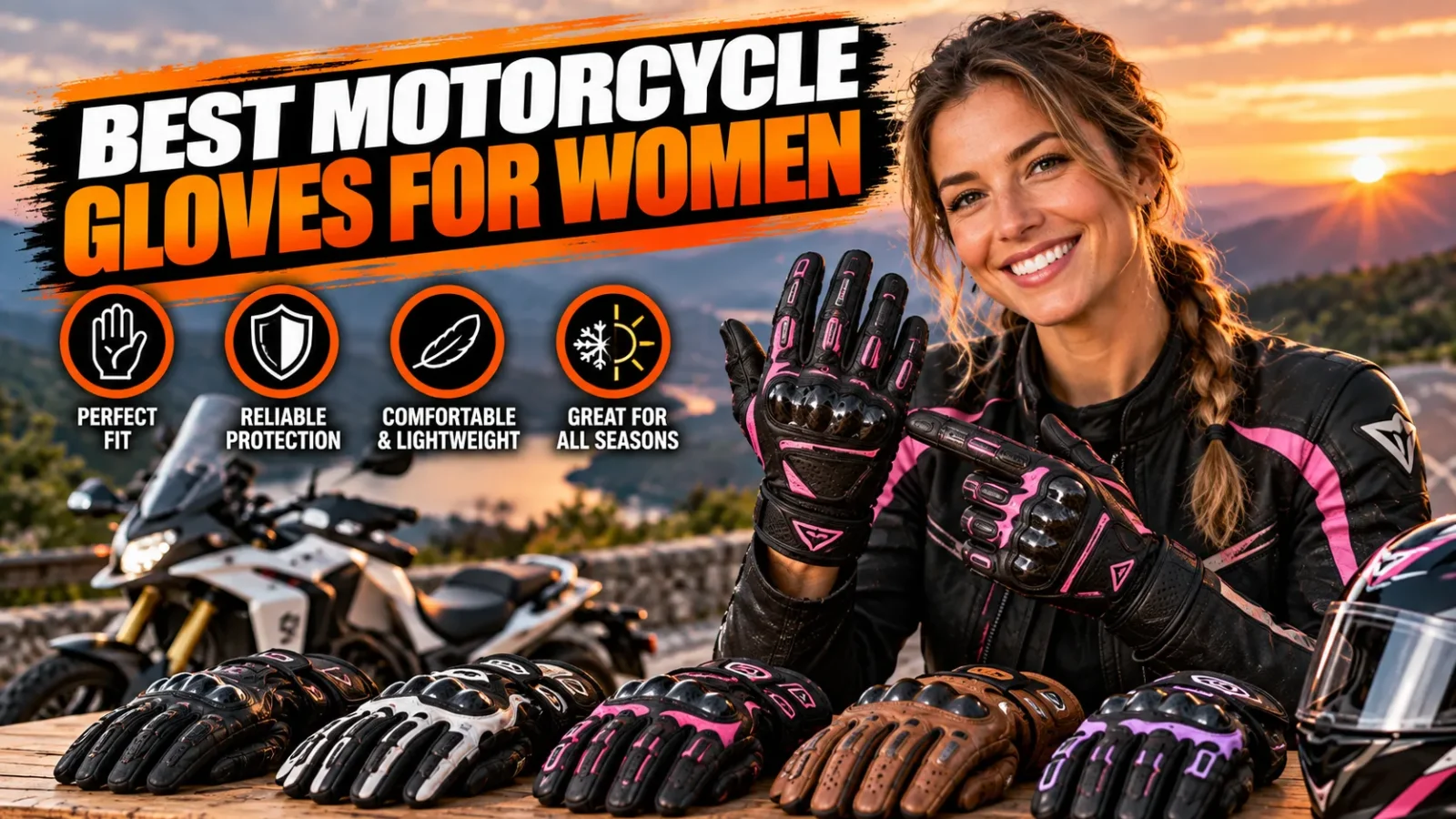
I still remember the first pair of “women’s” motorcycle gloves I bought years ago. They were basically men’s gloves in a smaller size, with a pink logo slapped on the cuff. My fingertips swam in the fingers, the palm sagged, and I couldn’t get a decent feel on the clutch to save my life.
That experience sent me down a rabbit hole of testing, returning, and testing again. I’ve bought, worn, crashed in (yes, really), and washed more pairs of gloves than I care to admit over the years of riding everything from a scrappy little 250 to my current sport-tourer.
This isn’t a list I pulled from a spec sheet somewhere. Every pair below has actually been on my hands, on a bike, in real conditions. If you want the deeper background on materials, certifications, and construction, my Ultimate Guide to Motorcycle Gloves covers all of that in detail. But here, I’m just going to tell you what actually works.
- Fit matters more than brand name — a glove sized for a woman’s hand shape will always outperform a “shrunk down” men’s glove.
- My top all-around pick balances hard knuckle protection with a snug, dexterous fit for everyday riding.
- Season changes everything: what works in July will leave your hands frozen (or soaked) in December.
- Leather gives the best abrasion resistance, but textile and hybrid gloves offer better weather flexibility.
- Don’t skip touchscreen compatibility unless you enjoy pulling your glove off at every red light like I used to.
Why Women-Specific Motorcycle Gloves Actually Matter
I get asked this a lot: “Can’t I just buy a small men’s glove?” Technically, yes. Practically, it’s usually a mistake.
Women’s hands aren’t just smaller versions of men’s hands. The palm width-to-finger-length ratio is different, and the padding placement that works for a broader male palm often sits in the wrong spot on mine.
When a glove doesn’t match your hand shape, you lose dexterity. And dexterity isn’t a luxury on a motorcycle — it’s how you feel the friction zone on your clutch or modulate your front brake in a panic stop.
I learned this the hard way on a wet backroad where my ill-fitting gloves made it nearly impossible to feather the brake lever smoothly. A properly fitted glove would have given me way more confidence in that moment.
The Fit Test I Use Every Single Time
Before I buy any glove, I run through the same checklist, whether I’m shopping online or in a store.
- Make a full fist — there should be no excess material bunching at the palm.
- Check the fingertips — they shouldn’t have empty space at the ends.
- Grip an imaginary handlebar and squeeze — the glove shouldn’t pull tight across your knuckles.
- Wiggle your fingers independently — if they move together like mittens, size down or try a different model.
If a glove fails even one of these, I don’t buy it, no matter how good the reviews are. Fit is everything.
My Top Picks for Best Motorcycle Gloves for Women
I’ve broken these down by use case because honestly, the “best” glove depends entirely on what kind of riding you’re doing. A track day glove and a commuter glove are not the same animal.
Best Overall: The Everyday All-Rounder
My go-to daily glove is a short-cuff leather and textile hybrid with a hard knuckle guard and a reinforced palm slider. I’ve had this exact style for two riding seasons now and it’s held up beautifully.
What sold me was the pre-curved finger construction. It sounds like a small detail, but it means my hand isn’t fighting the glove every time I grip the bars — the glove already wants to sit in a natural riding position.
Why I love it: It hits that sweet spot of protection without feeling bulky. I can text at a stoplight (touchscreen fingertip, thank goodness), and I’ve slid across pavement in it once with zero road rash on my palm.
Best for: Commuting, everyday street riding, and anyone who wants one glove that does 90% of the job well.
Best for Hot Weather Riding
Summer riding gear is its own challenge, especially with gloves, because you’re constantly trading airflow for protection. I’ve tested a lot of options here, and perforated leather consistently wins for me.
If you ride in serious heat, I’d point you straight to my roundup of the best summer leather motorcycle gloves for women. Perforated leather still gives you real abrasion resistance while letting air move through, which mesh alone often can’t match in a crash.
For even more breathable options, especially if you’re riding somewhere brutally hot, I also break down my favorites in this guide to best motorcycle gloves for summer.
My personal summer pair has laser-cut perforation across the back of the hand and fingers, with a mesh panel between the fingers. My hands actually stay dry on 95-degree days, which felt impossible before I found this style.
Budget-Friendly Summer Options
Not everyone wants to spend big money on a glove they’ll only wear four months a year, and I totally get that. I’ve had good luck with a few affordable pairs that still get the fundamentals right.
For anyone watching their budget, I’d check out my list of the best cheap motorcycle gloves for summer. A couple of these punch way above their price point, with real knuckle protection despite the low cost.
Best for Cold and Wet Weather
This is where a lot of women’s gloves fall apart, in my experience. Waterproofing that actually works, combined with insulation that doesn’t turn your hands into oven mitts, is genuinely hard to find.
My winter pair uses a waterproof, breathable membrane sandwiched between a leather outer shell and a fleece-brushed liner. It’s not the most dexterous glove I own, but on a 35-degree morning commute, I don’t care — my fingers stay warm and dry.
I’ve also spent time testing dedicated wet-weather gloves, and I put together everything I learned in my guide to the best motorcycle gloves for rain. If you commute regardless of forecast like I do, that guide will save you from a lot of soggy, miserable rides.
My biggest tip here: Buy your winter gloves slightly roomier than you think you need. You’ll likely be wearing a thin liner glove underneath on the coldest days, and a too-tight winter glove restricts blood flow, which makes your hands colder, not warmer.
Best for New Riders
If you’re just starting out, I’d steer you away from anything too race-focused or stiff. New riders need dexterity and confidence more than aggressive armor.
I always point beginner riders toward my breakdown of the Best Beginner Gloves for Motorcycle, because fit and comfort matter enormously when you’re still building muscle memory on the controls.
A stiff, over-armored glove can actually make you a worse rider in your first few months simply because you can’t feel what your hands are doing. Start with something protective but flexible, then upgrade as your skills and preferences develop.
What I Actually Look for in a Glove’s Construction
After years of buying gloves, I’ve developed some non-negotiables. These are the details I check before I even try something on.
Hard Knuckle Protection
I don’t compromise on this anymore. A hard knuckle guard, whether it’s molded plastic, TPU, or carbon fiber, has saved my hand from serious injury in a low-speed tip-over.
Soft knuckle padding is better than nothing, but in a slide, your hand often makes contact with the ground knuckles-first. I want something rigid there, full stop.
Palm Sliders and Reinforcement
Your palm is one of the first things to hit the ground in a fall, since it’s a natural instinct to put your hands out. A reinforced or slider palm helps your hand glide instead of grabbing pavement and twisting your wrist.
I look for stitched-on leather patches or dedicated slider material across the base of the palm. It’s a small feature that makes a massive difference in a real slide.
Wrist Closure
A glove that flies off in a crash isn’t protecting anything. I always check for a secure wrist strap, ideally with a locking or double closure, not just a single thin velcro tab.
Gauntlet-style gloves that go over your jacket cuff also help prevent air (and water) from funneling up your sleeve, which matters more than people expect until they’ve ridden through a downpour without one.
Material Breakdown
I’ve worn just about every material combination out there, and here’s my honest take on each.
- Full-grain leather: Best abrasion resistance, molds to your hand over time, but less breathable and needs a break-in period.
- Textile/synthetic: More flexible seasonally, often more affordable, but usually lower abrasion resistance than leather.
- Hybrid leather-textile: My personal favorite for everyday riding — leather where it counts (palm, knuckles), textile elsewhere for flexibility and airflow.
- Kevlar-lined: Adds serious cut and abrasion resistance without much bulk, though it does raise the price.
Common Mistakes I See Women Make When Buying Gloves
I’ve made most of these mistakes myself, so I say this with zero judgment — just hard-earned experience.
Buying Based on Color, Not Fit
I love a cute glove as much as anyone. But I’ve bought pairs purely because the color matched my jacket, only to realize weeks later that the fit was mediocre at best.
Now I try on (or carefully check size charts for) every color option before deciding, because sizing can genuinely vary between colorways from the same brand.
Ignoring the Break-In Period
Leather gloves, especially, need time to mold to your hand. I’ve had pairs that felt stiff and awkward for the first few rides, then became my favorite gloves within a month.
Don’t write off a leather pair after one ride if the fit and protection specs check out otherwise. Give it a fair shot over several rides before deciding it’s wrong for you.
Skipping the Touchscreen Test
This feels minor until you’re fumbling with your phone mount at a gas station in the rain. I now specifically check for conductive fingertip material on the thumb and index finger, since those are the fingers I actually use on a screen.
Overlooking CE Certification
I always check for CE Level 1 or Level 2 protection ratings when I’m shopping, especially for knuckle and palm impact zones. It’s an actual tested standard, not just marketing language on a hangtag.
A glove without any certification might still offer some protection, but I’d rather see the lab-tested proof than take a brand’s word for it.
How I Care for My Gloves to Make Them Last
Good gloves are an investment, and I want mine lasting multiple seasons, not falling apart after a summer of daily commuting.
Leather Care Routine
I condition my leather gloves every few months with a proper leather conditioner, especially if they’ve been rained on. Dried-out leather cracks, and cracked leather loses abrasion resistance exactly where you need it most.
I never dry wet leather gloves near direct heat like a radiator or heater vent. It causes the leather to stiffen and crack. Air drying at room temperature, stuffed loosely with paper towel to hold their shape, works far better.
Textile and Mesh Care
Most of my textile gloves can handle a gentle hand wash with mild soap. I always let them air dry completely before wearing them again, since trapped moisture inside a glove is a fast track to unpleasant odors.
Storage Habits
I keep my gloves stuffed with their fingers upright rather than crumpled at the bottom of my gear bag. Crushed fingertips over time can actually deform the shape of the glove and affect fit.
My Final Take
If I had to boil down everything I’ve learned into one piece of advice, it’s this: fit and hard protection first, style second. A gorgeous glove that doesn’t protect your hands or restricts your grip isn’t doing its job.
My honest recommendation is to build a small rotation rather than hunting for one “perfect” glove. A hybrid leather pair for daily riding, a perforated pair for summer heat, and a waterproof insulated pair for cold or wet mornings will cover you in almost any situation you’ll actually ride in.
I’ve crashed in gloves, sweated through gloves, and frozen through gloves that weren’t right for the conditions. Every single time, the right glove for the right season made an enormous difference in both comfort and confidence on the bike.
Take your time with the fit test, don’t skip the knuckle and palm protection, and don’t be afraid to build out a proper collection over time. Your hands will thank you on every single ride.
Frequently Asked Questions
How do I know if motorcycle gloves fit correctly?
A properly fitting glove should feel snug like a second skin with no bunching at the fingertips or loose fabric at the palm. You should be able to make a full fist and grip the brake lever without the material pulling tight across your knuckles.
Are men’s motorcycle gloves okay for women to wear?
You can wear them, but most women have narrower palms and shorter fingers than men’s gloves are built for, which often leaves extra material bunching up in the palm. This can actually reduce grip and control, so a women’s specific cut usually performs better.
Do I need different gloves for different seasons?
Ideally, yes. I keep a lightweight pair for summer, a insulated waterproof pair for cold or wet rides, and a leather pair for everyday riding. Check out my breakdown of the best motorcycle gloves for summer if you’re building out your collection.
What’s the most important safety feature in a women’s motorcycle glove?
Hard knuckle protection and reinforced palm sliders are non-negotiable for me. Those two features have saved my hands more than once, and I explain why in more detail in my Ultimate Guide to Motorcycle Gloves.

Related Articles
8 Best Waterproof Motorcycle Gloves for Summer Riding
I tested and researched the 8 best waterproof motorcycle gloves for summer, balancing breathability, dry hands, and all-day comfort. Find…
Jake Miller
10 min read
10 Best Motorcycle Gloves for Protection That I’d Actually Trust My Hands To
I've crashed, dropped bikes, and tested dozens of gloves. Here are the 10 best motorcycle gloves for protection I genuinely…
Jake Miller
11 min read
9 Best Mechanix Gloves for Motorcycle Riding You Can Actually Trust
I've tested Mechanix gloves on real rides—here are the 9 best models for motorcycle riding, from impact protection to cold-weather…
Jake Miller
11 min read