
Best Motorcycle Gloves for Commuting: My Real-World Picks & Buying Guide
 Jake Miller
10 min read
Jake Miller
10 min read
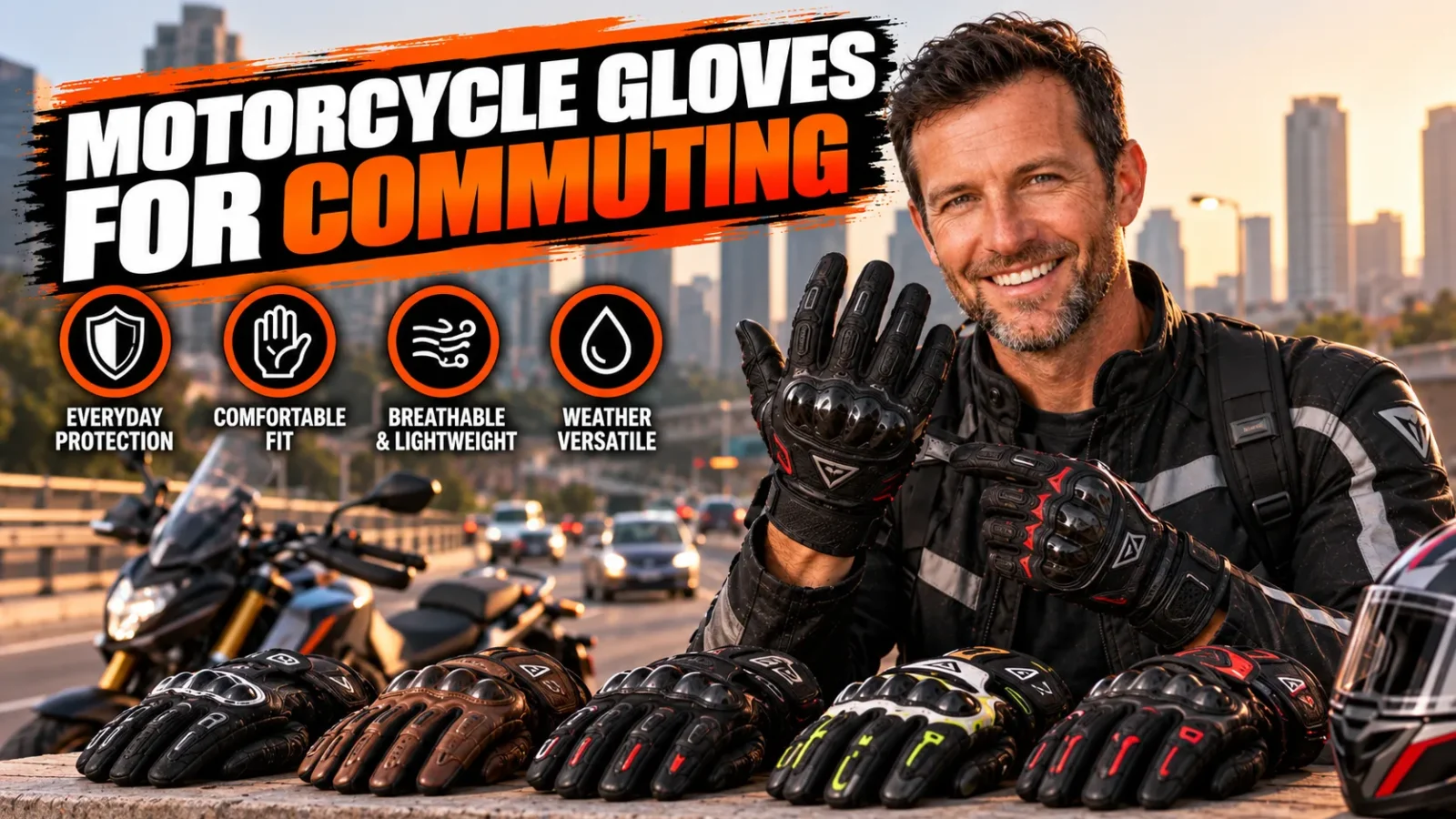
I’ve ridden to work through frost, downpours, and enough summer heatwaves to lose count. If there’s one piece of gear that’s made or broken my commute more than any other, it’s my gloves.
A bad pair means numb fingers at a red light or sweaty palms slipping on the grips. A good pair just disappears on your hands and lets you focus on traffic instead of discomfort.
I’ve gone through more gloves than I’d like to admit over the years, chasing that perfect balance of protection, feel, and weather-readiness. This guide is everything I’ve learned, distilled into picks and advice I actually stand behind. For a deeper dive into materials and construction, my Ultimate Guide to Motorcycle Gloves is a great companion read.
- The best commuting gloves balance knuckle protection, breathability, and touchscreen compatibility for daily riding.
- I don’t rely on one glove year-round — I rotate between warm-weather, cold-weather, and waterproof pairs.
- Fit matters more than brand hype; a glove that bunches or slips will wreck your grip and confidence.
- Short-cuff gloves are great for casual commutes, but gauntlet-style gloves seal out wind and rain far better.
- Budget doesn’t have to mean unsafe — there are solid, affordable options at every price point.
Why Commuting Gloves Are a Different Beast
Track gloves and touring gauntlets get a lot of glory, but commuting gloves live a harder, weirder life. They deal with stop-and-go traffic, sudden rain, texting at lights, and grabbing your keys without taking them off.
My commuting gloves need to work with my phone, survive being shoved in a bag, and still protect me if some sends a text instead of watching the road ahead.
That’s a very specific list of demands. It’s why I don’t think “best overall glove” is really a fair category for commuters — the best glove depends heavily on your climate and route.
The Daily Grind Is Different From a Weekend Ride
On a weekend ride, I can plan around the weather. On a Tuesday morning commute, I don’t get that luxury.
I’ve left the house in sunshine and come home in a downpour more times than I care to remember. That unpredictability shapes everything about how I choose gear now.
What I Actually Look for in a Commuting Glove
After years of trial and error (and a few painful lessons), I’ve narrowed my priorities down to a short, non-negotiable list.
Knuckle and Palm Protection
I want hard knuckle armor, full stop. It doesn’t need to be race-spec, but I’m not riding without it, even for a five-minute trip to the corner store.
Palm sliders are a nice bonus too. If I ever go down, my instinct is to catch myself with my hands, and I’d rather slide than grip the asphalt.
Breathability Without Sacrificing Coverage
Sweaty hands on a commute are more than uncomfortable — they’re a genuine safety issue because they affect your grip. I look for perforated leather or mesh panels wherever the glove can afford to lose a little wind protection.
This is especially true in summer. If you’re commuting through genuinely hot months, my thoughts on the best motorcycle gloves for summer go into a lot more depth on ventilation strategies.
Touchscreen Fingertips
I didn’t think I’d care about this until I had a glove without it, and suddenly paying for parking or checking a map became a whole production. Now it’s basically mandatory for me.
Easy On, Easy Off
Commuting means putting gloves on and taking them off constantly — at the gas station, at work, at every single stop. I’ve learned to appreciate simple wrist closures that don’t fight me every time.
My Top Picks for Commuting Gloves
These are the gloves I keep coming back to, or that I’ve watched fellow commuters swear by. I’ve tried to cover a range of budgets and climates here.
1. The All-Rounder Short Cuff
For the majority of my daily riding, especially in mild weather, I reach for a short-cuff leather glove with a hard knuckle and touchscreen fingertip. It’s the glove I grab without thinking, which says a lot.
These typically run in the $50 to $90 range, and honestly, I don’t think you need to spend much more than that for a commuting glove that ticks every box.
What I love: Quick to put on, breathable enough for most weather, and low profile enough that I forget I’m wearing them by the second stoplight.
What bugs me: Short cuffs let in wind at highway speeds, so if your commute includes a stretch of freeway, you’ll feel it.
2. The Gauntlet for Colder Mornings
Once temperatures drop, I switch to a longer gauntlet-style glove that seals over my jacket sleeve. Wind sneaking up your cuff at 60 mph is miserable, and this fixes that completely.
I look for a thin thermal liner here rather than bulky insulation, because I still need to feel the controls properly.
What I love: No more wind funneling up my sleeves, and my wrists stay warm even on frosty starts.
What bugs me: They’re bulkier, and fine motor tasks like fishing out my phone take a bit more effort.
3. The Waterproof Workhorse
If your commute happens rain or shine, this category is non-negotiable. I’ve been caught in sudden downpours enough times to know that “water-resistant” and “waterproof” are two very different promises.
A genuinely waterproof membrane, like a Hipora or similar liner, is worth the extra cost. I dove much deeper into specific options in my best motorcycle gloves for rain guide, if you want the full breakdown.
What I love: Dry hands mean a confident grip, and a confident grip means a safer ride in bad weather.
What bugs me: Even the best waterproof gloves sacrifice a little dexterity and breathability compared to summer gloves.
4. The Budget-Friendly Mesh Glove
Not every commuter wants to, or can, spend triple digits on gloves, and that’s completely fair. I’ve tested several budget mesh gloves that still include real knuckle protection.
They won’t have premium leather or fancy liners, but for short commutes in mild climates, they get the job done without draining your wallet. I rounded up several solid options in my best cheap motorcycle gloves for summer article.
What I love: Real protection at a price that doesn’t sting, which is great if you’re building up your gear collection gradually.
What bugs me: Durability isn’t in the same league as premium leather, so expect to replace them sooner.
5. A Great Option for Women Commuters
I’ve heard from a lot of female riders that generic “unisex” gloves just don’t fit their hands properly, and that’s a legitimate problem, not a minor inconvenience. Proper fit affects everything from grip to protection.
If you’re in that boat, I’d point you toward my roundup of the best summer leather motorcycle gloves for women, which covers gloves actually built on women’s-specific patterns rather than just shrunk-down men’s models.
Short Cuff or Gauntlet: Which Should You Pick?
This question comes up constantly, and my honest answer is: it depends on your commute, not just your preference.
When I Reach for Short Cuff Gloves
If most of my ride is through city streets at lower speeds, short cuffs are genuinely fine. They’re easier to live with day to day and I don’t overheat as easily.
When I Reach for Gauntlets
Any commute involving highway stretches or genuinely cold mornings, and I’m grabbing a gauntlet without a second thought. That wind seal at the wrist makes a bigger difference than people expect until they’ve felt it.
Materials That Actually Hold Up to Daily Wear
Commuting gloves get abused in ways track gloves never do — dropped on gas station pavement, stuffed into backpacks, exposed to sun on a dashboard.
Leather
Full-grain leather is still my favorite for durability and abrasion resistance. It breaks in beautifully over time and molds to your hand, though it does need occasional conditioning to stay supple.
Textile and Synthetic Blends
These dry faster after rain and often cost less. I’ve found the abrasion resistance is generally a notch below quality leather, but for city speeds, that trade-off feels reasonable to me.
Mesh Panels
Mesh is there purely for airflow, and it should never be the material covering your knuckles or palms. I always check where the mesh panels are placed before buying.
Fit: The Detail Everyone Underestimates
I can’t stress this enough: a glove that doesn’t fit properly is a glove that will let you down exactly when you need it most.
Too loose, and the padding shifts away from your knuckles in a fall. Too tight, and your circulation gets cut off on longer rides, which is its own kind of miserable.
My Simple Fit Test
I always make a full fist while trying on gloves in-store, or right after they arrive if I ordered online. If the leather bunches painfully in my palm or my fingertips feel like they’re swimming in extra room, it’s a no.
If you’re newer to buying gear and want a fuller breakdown of sizing and fit logic, my Best Beginner Gloves for Motorcycle guide walks through it step by step.
Building a Small Glove Rotation Instead of One “Perfect” Pair
Honestly, the biggest shift in my thinking over the years wasn’t finding one magic glove. It was accepting that I need a small rotation.
My Personal Setup
I keep three pairs on rotation: a breathable short-cuff for mild days, a waterproof gauntlet for rain, and a lighter mesh pair for peak summer heat. Swapping based on the forecast takes ten extra seconds and saves my hands from a miserable ride.
Why This Beats Compromise Gear
Gloves designed to “do it all” usually do everything at 70%. I’d rather have three gloves that each excel in their lane than one glove that’s mediocre in every condition I actually ride in.
Common Mistakes I’ve Made (So You Don’t Have To)
I’m not going to pretend I got this right from day one. A few lessons came the hard way.
Buying for Looks Over Function
Early on, I picked a slick-looking glove with barely any armor because it matched my jacket. It looked great right up until I realized it offered almost no real protection.
Ignoring the Cuff Closure
I once bought gloves with a closure system that took both hands and thirty seconds to fasten. At a red light, in traffic, that’s a genuinely bad design decision, and I learned to check this before buying now.
Skipping the “Fist Test”
I used to try gloves on flat, relaxed hands and assume that was good enough. It’s not — you ride with a gripping, flexing hand, so that’s the position you need to test in.
How Often Should You Replace Commuting Gloves?
Commuting gloves take more daily wear than most riders realize, so I don’t treat them as a lifetime purchase.
If the palm leather is thinning, the stitching is fraying, or the armor has shifted out of position, that’s my cue to retire them. I generally get one to two solid years out of a daily-use pair, depending on materials and how brutal my climate is.
My Final Take
If I had to boil down everything I’ve learned into one piece of advice, it’s this: buy for your actual commute, not for an idealized version of riding you saw in a magazine.
Match the glove to your climate, respect the fit test, and don’t be afraid to build a small rotation instead of hunting for one perfect pair. Your hands will thank you every single morning.
Frequently Asked Questions
What is the single most important feature in a commuting glove?
For me, it’s knuckle protection combined with breathability. Commuting means unpredictable traffic and weather, so I look for hard knuckle armor first, then check that the glove won’t turn my hands into a swamp on warmer days.
Can I use the same gloves year-round for commuting?
Honestly, no. I keep a lighter pair for summer (check my thoughts in the best motorcycle gloves for summer guide) and a waterproof pair for cold, wet mornings. Trying to make one glove do everything usually means it does nothing particularly well.
Are expensive motorcycle gloves worth it for daily commuting?
Not always. Some of my favorite commuting gloves are mid-priced, and I’ve had good luck with budget options too, especially in warmer months, like the ones I cover in my best cheap motorcycle gloves for summer roundup. What matters more than price is fit, protection, and matching the glove to your actual commute.
How do I know if my gloves fit correctly for everyday riding?
You should be able to make a full fist without the material bunching painfully in your palm, and your fingertips shouldn’t have dead space at the ends. If you’re new to buying gear, my Best Beginner Gloves for Motorcycle post breaks down fit in more detail.

Related Articles
8 Best Waterproof Motorcycle Gloves for Summer Riding
I tested and researched the 8 best waterproof motorcycle gloves for summer, balancing breathability, dry hands, and all-day comfort. Find…
Jake Miller
10 min read
10 Best Motorcycle Gloves for Protection That I’d Actually Trust My Hands To
I've crashed, dropped bikes, and tested dozens of gloves. Here are the 10 best motorcycle gloves for protection I genuinely…
Jake Miller
11 min read
9 Best Mechanix Gloves for Motorcycle Riding You Can Actually Trust
I've tested Mechanix gloves on real rides—here are the 9 best models for motorcycle riding, from impact protection to cold-weather…
Jake Miller
11 min read