
8 Best Concealed-Carry Holsters for Motorcycle Riders Who Prioritize Secure Fit
 Jake Miller
12 min read
Jake Miller
12 min read
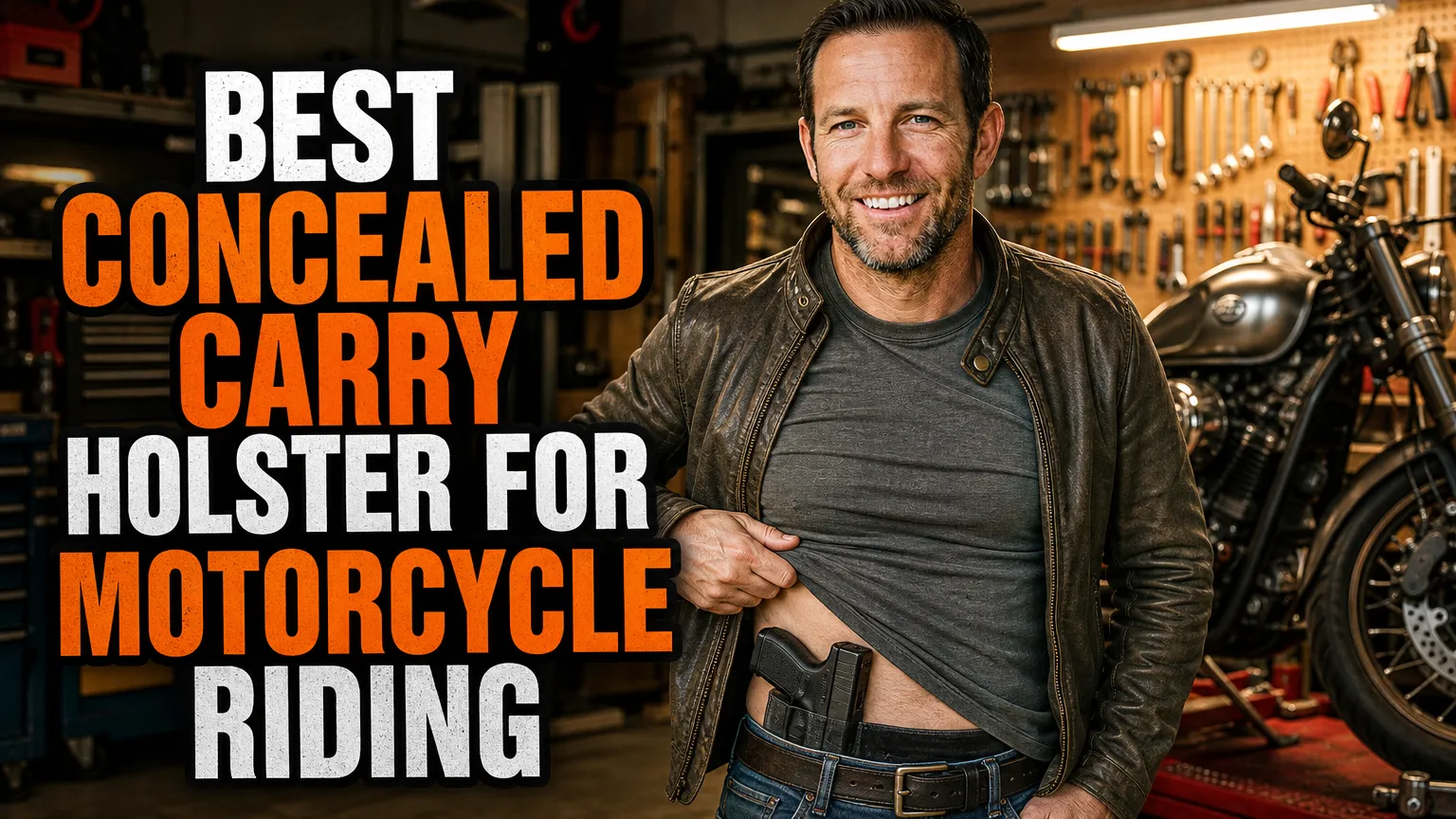
I choose a motorcycle carry holster differently from one I wear for a quick walk around town. A riding position can press a holster into my waist, change how a jacket drapes, and make an unstable setup especially uncomfortable. My shortlist focuses on named products with distinct carry styles, so I can compare what might suit my body, gear, and riding routine.
There is no single best option for every rider. I treat retention, complete trigger coverage, a stable fit when seated, and lawful, responsible carry as non-negotiable. I also verify that a holster works with my specific firearm and doesn’t interfere with protective gear or safe operation of the motorcycle.
- I prioritize secure retention, full trigger coverage, and comfort in a seated riding posture.
- The PHLster Enigma Express is my beltless option; the Vedder LightTuck is a versatile IWB pick.
- For a shoulder rig, I consider the Galco Classic Lite; for a pocket setup, I look at the DeSantis Nemesis.
- I check fit with my complete riding gear, confirm local laws, and never adjust or handle a firearm while riding.
1. PHLster Enigma Express — My Beltless Carry Pick
When a normal belt-and-holster setup doesn’t fit the clothes I want to wear, I consider the PHLster Enigma Express. It is a beltless concealment system built around a chassis worn against the body, with a compatible holster and concealment wing. That design gives me a carry option that doesn’t depend on a sturdy trouser belt.
I would verify the exact Enigma Express configuration against my firearm model before ordering. The system is designed around specific firearm fitments rather than being a one-size-fits-all holster. Its chassis can take adjustment, but I still need to spend time positioning it so it remains comfortable when I’m seated and wearing riding layers.
Why I’d consider it for a ride
The Enigma’s independent chassis may help me keep a consistent carry position when I’m wearing riding pants or clothing without belt loops. It also gives me more flexibility to choose where the system sits on my body. I’d treat setup as essential: a fit that feels fine standing up may feel very different once I lean forward and bend at the hips.
This is a higher-cost option than a basic Kydex holster, with prices commonly in the roughly $125–$175 range depending on configuration and retailer. I’d check the current price, included parts, and compatibility directly before purchasing. For me, its appeal is the beltless design, not a claim that it suits every rider.
2. Vedder LightTuck — My Adjustable IWB Choice
The Vedder LightTuck is a compact, tuckable inside-the-waistband holster made for specific firearm models. I like that its adjustable cant and ride height let me experiment with position rather than being locked into one setup. The molded Kydex shell is designed to cover the trigger guard, and an optional claw can help tuck the grip closer to the body.
On a motorcycle, I would pay particular attention to the clip and how the holster behaves under a jacket and riding pants. I want it to stay in place through normal movement without digging into my hip or pressing awkwardly against the seat. A LightTuck that works well on a short walk may still need different adjustments for a long ride.
What I’d check before choosing it
I’d confirm the exact model, any light-bearing requirements, and whether I want the optional claw. A claw changes how the holster sits, so I’d test it with my actual belt and clothing rather than assuming the add-on is automatically better. Prices often fall around $60–$90, depending on options and seller.
For my shortlist, the LightTuck makes sense if I want a relatively simple, adjustable IWB design. I’d also consider it alongside my broader riding layers: choosing protective apparel that accommodates a holster comfortably can matter as much as the holster itself. I use this guide to compare best clothes for motorcycle riding when planning that setup.
3. Alien Gear Cloak Tuck 3.5 — My Comfort-Focused IWB Pick
The Alien Gear Cloak Tuck 3.5 combines a molded shell with a flexible, padded backing and adjustable hardware. Alien Gear describes its backing as CoolVent neoprene, with a steel-reinforced base and adjustable cant and ride height. For me, that construction is worth considering if a rigid holster edge tends to bother me when I’m seated for a while.
The Cloak Tuck 3.5 is an inside-the-waistband design, so it needs a stable belt and clothing that can accommodate it. I’d test how the backing feels against my body under a riding jacket and check whether the holster shifts when I lean forward. Comfort padding can help, but it does not make an unsuitable position or poor fit safe.
Where it fits in my comparison
I’d put this model on my list for riders who want a more cushioned contact surface and adjustable positioning. Its replaceable shell system is another point to investigate if I own multiple compatible firearms, but I would verify the exact shell and firearm fit rather than assume parts interchange. Depending on configuration, prices are often around $60–$80.
My practical test is simple: with an unloaded firearm, I check that the shell fully covers the trigger guard, the holster stays put, and my seated posture doesn’t create painful pressure. I’d also inspect the fasteners regularly. Riding vibration and repeated movement are good reasons for me not to treat holster maintenance as an afterthought.
4. CrossBreed SuperTuck — My Hybrid Holster Option
The CrossBreed SuperTuck is a hybrid IWB holster with a molded Kydex shell attached to a leather backing. CrossBreed offers versions with different backing materials and firearm fits, so I’d make sure I’m looking at the right model for my needs. Its adjustable clips allow changes to cant and ride height.
That broad backing may spread contact across more of my waist than a narrow, all-Kydex design. On a bike, though, more surface area isn’t automatically a comfort win: a backing that feels supportive standing up might press against me differently when I’m seated or leaning forward. I’d test the SuperTuck with my actual seat, belt, and riding layers.
My fit and care considerations
I’d choose this style only if the backing sits comfortably against my body and the holster remains secure throughout a range of movement. Leather also needs reasonable care, especially if it gets soaked with rain or sweat. I’d follow the manufacturer’s guidance for cleaning and drying rather than leaving a damp holster trapped under gear.
The SuperTuck commonly sits around $70–$100, depending on material and options. I see it as a recognizable hybrid design for someone who prefers leather against the body, not as a universal fix for riding discomfort. I’d compare it with other protective equipment too, including the recommendations in best gear for motorcycle safety top protective clothing and accessories.
5. Black Arch Protos-M — My Hybrid Pick With Broad Trigger Coverage
The Black Arch Protos-M is a hybrid IWB holster with a molded Kydex shell and a breathable backing. The design is notable for its three-quarter Kydex shell, which is intended to cover the trigger area while leaving part of the grip accessible. As with any holster, I would inspect the specific firearm fit and confirm that the trigger guard is fully protected when the gun is holstered.
I’d consider the Protos-M if I want a hybrid backer but prefer a shell that covers more of the firearm than some minimalist designs. Its clips and overall size still need to work with my belt and seated riding position. I’d avoid assuming that a breathable backing will automatically stay comfortable through hot weather, sweat, or a full day on the road.
Who I think might like this design
For me, the Protos-M is a candidate for someone who wants to balance a body-contact backer with a more structured molded shell. I’d inspect the clips, fasteners, and fit periodically, especially after frequent rides. The model and options can affect the price, but I’d generally budget roughly $80–$110 and check the current listing.
Before buying, I’d check that the shell is made for my exact firearm and any mounted accessories. A light or optic can change fit considerably. I’d also compare holster setup with my other protective layers; riders new to assembling a complete kit may find best motorcycle clothing for beginners useful when planning what to wear on the bike.
6. Galco Classic Lite — My Shoulder-Holster Choice
The Galco Classic Lite is a leather shoulder holster designed to carry under a jacket. Its harness and holster are configured for particular firearm models, and Galco offers different fitments. I’d consider it for a rider whose jacket has enough room and whose preferred carry position makes an IWB holster uncomfortable.
A shoulder rig can be more practical with a jacket than with a snug base layer, but I wouldn’t assume every motorcycle jacket accommodates one. I’d check for binding across my chest and shoulders, restricted arm movement, and pressure from the harness while leaning toward the bars. I’d also confirm that the chosen configuration retains the firearm securely during ordinary movement.
Important trade-offs I’d weigh
Leather requires care and can be affected by moisture, so I’d keep the rig clean and dry according to the maker’s instructions. Shoulder holsters also have a different draw path than waist holsters. I’d practice safe handling in a controlled setting and check that the jacket doesn’t catch or obstruct the holster.
Prices commonly fall in the broad $150–$200 range, though the exact firearm fit and retailer can change that. I’d choose the Classic Lite only after trying the complete setup with my riding jacket, gloves, and seated posture. If it shifts, interferes with protective gear, or feels uncomfortable, I’d choose another carry method.
7. Safariland 7378 7TS ALS — My Active-Retention Option
The Safariland 7378 7TS ALS is a specific outside-the-waistband concealment holster with Safariland’s Automatic Locking System. When the firearm is holstered, the ALS mechanism is designed to lock it in place; the wearer releases it with a thumb-operated action. Its 7TS material is a lightweight nylon-based construction, and the model is available in firearm-specific versions.
I include it because secure retention is an important consideration for any riding setup. But an OWB holster can be harder to conceal under close-fitting motorcycle gear, and the paddle or belt attachment must sit securely with the belt I’m wearing. I’d check the fit carefully and make sure the holster doesn’t interfere with my riding jacket, tank, or movement.
My caution about OWB carry on a bike
I would not choose an OWB holster just because it has active retention. I’d consider where it sits, whether the attachment is stable, and whether the firearm is protected from accidental contact. A hard holster can also create a pressure point, so I’d test the setup while seated before taking it on the road.
Prices often land around $80–$120, depending on configuration. I’d confirm the exact 7378 fit, attachment, and firearm compatibility with Safariland’s current information. This model is a better fit for a rider who can conceal a belt-mounted holster under suitable outerwear than for someone who needs an invisible setup under a snug jacket.
8. DeSantis Nemesis — My Pocket-Holster Pick
The DeSantis Nemesis is a pocket holster made for specific small firearm models. It uses a soft construction with a textured exterior intended to help the holster stay in the pocket while the firearm is drawn. The interior is designed to allow the firearm to move out smoothly, but the exact fit depends on the gun and pocket.
I’d consider it only if the firearm and holster fit fully and safely in a dedicated pocket that remains accessible and clear of other objects. Motorcycle pants often have pockets that are too small, too shallow, or positioned poorly for this purpose. I’d never carry a pocket holster in a pocket with keys, tools, or anything else that might interfere with the trigger guard.
When I’d skip pocket carry
Even with a well-fitted holster, a pocket setup may be uncomfortable or impractical in riding pants, and a jacket pocket can shift as I move. I’d check that the holster stays oriented correctly while seated and that no clothing seam presses against it. If the pocket doesn’t hold the holster securely, I’d rule out this option rather than force it.
The Nemesis is usually one of the more affordable choices, often around $20–$35. I’d confirm the model number for my firearm and make sure the pocket is dedicated to the holster. For cold-weather riders, I’d also plan the rest of my layers using guides to the best winter face mask for motorcycle riding and best gear for riding motorcycle in cold weather stay warm and protected.
How I Choose a Holster for Riding
I check retention and trigger coverage first
I want a holster made for my exact firearm, with a secure fit and full trigger-guard coverage. I check for movement, loose hardware, or anything that might press the trigger. If the holster does not hold the firearm securely or completely cover the trigger, I don’t use it.
I test the seated position with all my gear
I try the setup while wearing the clothes, belt, jacket, and protective equipment I’ll actually use. With the firearm unloaded, I sit on the motorcycle, lean toward the controls, turn my torso, and check for painful pressure or restricted movement. I make adjustments off the bike, never while riding.
I account for laws and crash risk
Carry laws vary by location, and rules may change when crossing state or national borders. I check the requirements for every part of my route and follow safe storage and transport rules. I also keep in mind that carrying a firearm on a motorcycle introduces risks in a crash; a holster choice can’t eliminate those risks.
My best choice is the one that fits my firearm, body, riding gear, and local laws without compromising safe movement or the secure fit of my protective equipment. I’d rather change holsters—or decide not to carry on a particular ride—than accept a setup that shifts, presses painfully, or interferes with riding safely.
Frequently Asked Questions
What should I prioritize in a motorcycle carry holster?
I look for full trigger-guard coverage, secure retention, a stable fit in riding posture, and compatibility with my riding gear.
Is an inside-the-waistband holster comfortable on a motorcycle?
It can be, but comfort depends on the holster, body shape, clothing, and riding position. I check for pressure points while seated before riding.
Can I carry in a shoulder holster under a motorcycle jacket?
A shoulder holster may work with a jacket designed to accommodate it, but I check for secure retention, safe access, and freedom of movement.
Should I check local laws before carrying on a motorcycle?
Yes. I check the laws for every place I ride, including rules for concealed carry, transport, and crossing state or national borders.

Related Articles

8 Best Sunscreens for Motorcycle Riders Who Spend Hours on the Road
I compare eight rider-friendly sunscreens for sweat, long highway days, and helmet comfort, with practical picks for face and body…
Jake Miller
11 min read