
7 Best Small Tents for Motorcycle Camping: Packable Shelters I Actually Trust
 Jake Miller
9 min read
Jake Miller
9 min read
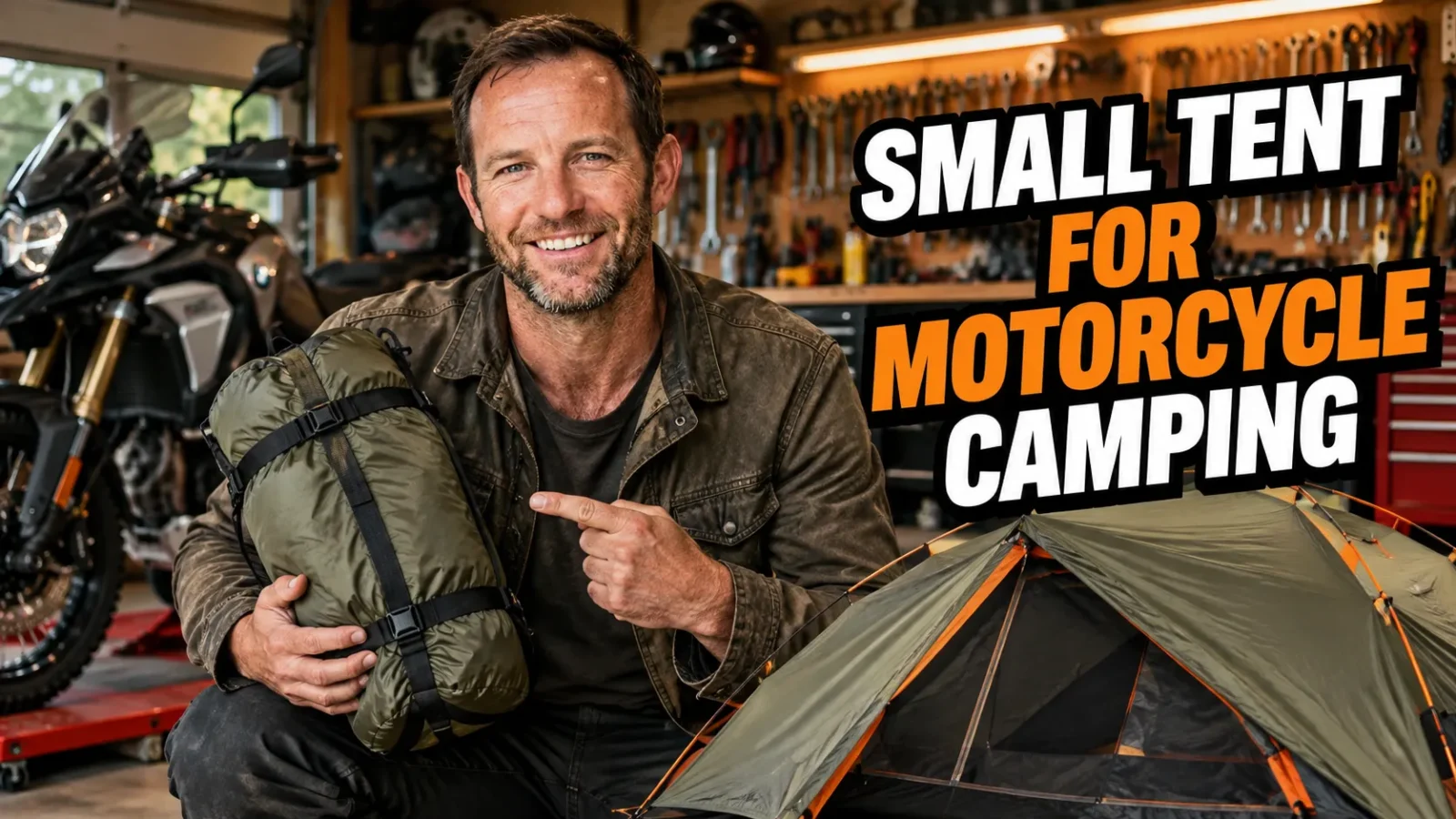
One of the first lessons I learned after my first multi-day moto trip was that your tent is either your best friend or your worst enemy. I’ve crammed too-big shelters into panniers, fought with flimsy poles in the rain, and once strapped a two-person dome to my tail rack like a sad luggage tower. After years of trial and error, I finally have a shortlist of tents that earn their spot on the bike.
If you are also managing a smaller machine, it helps to think about how your whole setup fits together — from the space you have to the batteries powering your electronics to the gear you actually want to carry. That mindset keeps your luggage lean and your ride comfortable.
Below are the seven small tents I’d personally recommend to any rider who wants a compact, reliable shelter for motorcycle camping.
- My top overall pick is the Big Agnes Copper Spur HV UL2 for its blend of light weight and livable space.
- Budget-conscious riders should look at the Kelty Late Start 2 or REI Co-op Trail Hut 2.
- For the smallest packed size, trekking-pole tents like the Six Moon Designs Lunar Solo win.
- Always match your tent’s packed length to your pannier or dry bag dimensions before you buy.
1. Big Agnes Copper Spur HV UL2 — My Overall Pick for Moto Camping
If I had to pick just one tent for the rest of my riding days, the Big Agnes Copper Spur HV UL2 would be it. I’ve used it on everything from weekend trips to week-long tours, and it consistently balances low weight with genuinely livable interior space.
The “HV” stands for high volume, and it shows — the near-vertical walls give me enough headroom to sit up and change clothes without feeling like I’m in a coffin. Trail weight is around 3 lbs 2 oz, and the packed size is roughly 19.5 x 6 inches, which slides neatly into a 30-40L dry bag on my tail rack.
The materials are where the price tag shows up. It uses a mix of silicone-treated ripstop nylon and a proprietary lightweight fabric, and it’s held up beautifully for me through wind and light snow. The two-door, two-vestibule layout is a luxury I now refuse to give up — one side for gear, one side for me.
Yes, it costs real money (usually in the $400-$500 range), but in my experience it pays for itself in comfort and durability. If your touring setup is on a small-displacement bike, you might also enjoy my thoughts on the best small motorcycle for long trips to pair with a shelter like this.
2. NEMO Hornet Elite OSMO 2P — The Ultralight Weight Weenie Option
When I want to shave every possible ounce, the NEMO Hornet Elite OSMO 2P is what I reach for. It’s one of the lightest freestanding two-person tents you can buy, and on a long trip where every gram adds up, that matters.
Trail weight comes in around 2 lbs 4 oz, which is genuinely featherweight for a double-wall, freestanding design. The OSMO fabric is a big deal here — it’s a composite material that reportedly absorbs less water and resists stretching when wet, which I’ve found translates to less sagging on damp mornings.
The trade-off is interior space. This is a tent built for one person and a limited amount of gear, not for lounging. The packed size is tiny — I can stuff it into a dry bag no bigger than a football.
It’s expensive, often north of $500, but for riders obsessed with minimal packing, it’s hard to beat. If your body size shapes your bike choices too, my guide to the best small motorcycle for short riders touches on a similar “right-size your gear” philosophy.
3. REI Co-op Trail Hut 2 — The Reliable Budget Pick
Not every rider wants to drop four figures on a tent, and honestly, they shouldn’t have to. The REI Co-op Trail Hut 2 is the tent I recommend to friends who are just getting into moto camping.
It’s a simple, freestanding two-person dome with a trail weight around 5 lbs and a packed size of roughly 20 x 7 inches. That’s heavier than the ultralight options, but for the price — usually under $200 — it’s an incredible value.
I’ve used this tent in heavy rain and it kept me dry thanks to a full-coverage rainfly and a bathtub-style floor. Setup is dead simple, which matters when you roll into camp after a long day and just want to sleep.
The trade-off is bulk and weight, but if you’re on a mid-size adventure bike with proper panniers, you’ll barely notice it. It’s a tent that earns its keep through pure reliability.
4. Kelty Late Start 2 — Best Value Freestanding Shelter
The Kelty Late Start 2 has become a quiet favorite of mine for shorter trips. It pitches fast, packs down reasonably small, and doesn’t break the bank.
Trail weight is around 4 lbs 12 oz, and the packed dimensions land near 22 x 7 inches. It’s not the slimmest option out there, but it fits comfortably in most panniers, especially side-loading hard cases.
What I like most is the pre-bent pole architecture, which gives the interior a bit more headroom than you’d expect from a budget tent. The vestibule is small but usable for boots and a helmet.
For riders who tour occasionally rather than every weekend, the Late Start 2 is a smart, low-risk investment. I’ve recommended it to plenty of people, and no one has come back disappointed.
5. MSR Hubba Hubba NX 2 — The All-Around Adventure Classic
The MSR Hubba Hubba NX 2 is one of those tents that seems to be on every experienced rider’s shortlist, and for good reason. I’ve owned and used this design for years, and it just works.
Trail weight is about 3 lbs 8 oz, with a packed size near 18 x 6 inches. That combination of light weight and compact packed size makes it ideal for motorcycle touring, where every inch of pannier space counts.
The two-door layout, two vestibules, and a sturdy freestanding frame make it a joy at camp. It’s also held up well in wind I wouldn’t have expected from a tent this light.
Pricing sits in the $400-$500 range, so it’s a real investment. But the Hubba Hubba NX is the kind of tent you buy once and trust for a decade.
6. Six Moon Designs Lunar Solo — The Smallest Packed Size
If your absolute priority is packing small, the Six Moon Designs Lunar Solo deserves a serious look. It’s a single-wall, trekking-pole tent, meaning it uses your trekking poles (or an optional dedicated pole) for structure rather than dedicated aluminum poles.
The result is a packed size of around 12 x 5 inches and a trail weight that often lands under 2 lbs. For a rider with limited luggage space, that’s transformative.
It’s a one-person design, so solo riders will love it. Setup takes a little practice because it’s not freestanding, but once you’ve done it a few times, it’s quick and intuitive.
This is the tent I’d grab if I were riding a smaller bike with minimal luggage capacity. It’s also a great option for riders who want a lightweight setup across the board — and pairing it with smart mechanical choices, like the right motor oil for your 4-stroke, keeps the whole trip dialed in.
7. Big Agnes Tiger Wall UL2 — My Lightest Freestanding Pick
The Big Agnes Tiger Wall UL2 closes out my list because it hits a sweet spot many riders overlook: it’s freestanding and genuinely ultralight.
Trail weight comes in around 2 lbs 8 oz, with a packed size near 18 x 5.5 inches. That’s remarkably small for a freestanding two-door tent, and it fits neatly into almost any pannier or dry bag I’ve used.
The interior is a bit more cramped than the Copper Spur, but for solo riders or couples who pack light, it’s more than enough. I’ve weathered some serious storms in this tent without a single leak.
It typically runs in the $450-$550 range, so it’s a premium choice. But if you want freestanding convenience with the smallest possible footprint, this is the tent I personally trust most.
How I Choose a Tent for the Bike
After enough trips, my criteria have gotten pretty specific. Here’s the short version of what I actually look for.
Packed Size and Shape
The single biggest mistake I made early on was buying a tent based on its sleeping capacity alone. Packed dimensions matter more when you’re strapping it to a bike.
I look for a packed length under 20 inches so it fits inside a pannier or 40L dry bag. Rectangular stuff sacks are easier to pack than long cylindrical ones.
Weight That Matches Your Ride
Weight matters more the smaller your bike is. On a lightweight tourer, every extra pound eats into your usable load capacity.
My rule of thumb is to aim for a trail weight between 2 and 5 lbs, and never to exceed 5 lbs unless I’m on a large adventure bike with generous luggage.
Freestanding vs. Trekking-Pole Designs
Freestanding tents are easier to pitch on hard, rocky campsite pads, which is common in established campgrounds. Trekking-pole designs save weight and bulk but need soft ground and some practice.
I tend to pick freestanding tents for mixed terrain and trekking-pole designs for long solo trips where every ounce counts.
Materials and Weather Protection
Look for a silicone-treated or PU-coated rainfly and a bathtub floor you can trust. Ripstop nylon is the standard, and I’ve found higher-denier fabrics sag less when wet.
If you’ll be riding through cold or wet regions, a full-coverage rainfly is non-negotiable in my book.
Final Thoughts From the Saddle
There’s no single perfect tent for every rider, but there is a perfect tent for your setup. If you want my single top recommendation, it’s the Big Agnes Copper Spur HV UL2 for its balance of weight, space, and durability.
For budget riders, the REI Co-op Trail Hut 2 or Kelty Late Start 2 will get you camping without the sticker shock. And if pack size is your obsession, the Six Moon Designs Lunar Solo is the one I’d grab every time.
Whatever you choose, match it to your bike, your luggage, and your riding style. And while you’re dialing in your kit, don’t forget the other details — like using the right top engine oil for your 4-stroke motorcycle and picking a touring mount that fits you, whether that’s a touring motorcycle for a smaller rider or a full-size adventure bike. Small, thoughtful choices add up to a much better trip.
Frequently Asked Questions
What size tent is best for motorcycle camping?
For solo riders, a 1-person or 2-person tent is ideal. A 2-person tent gives you room for gear without adding much weight, and most pack down to fit in a pannier or 40L dry bag.
Can a tent fit in motorcycle panniers?
Yes, if you choose wisely. Look for a packed size under 18-20 inches long and a trail weight under 4 lbs. Trekking-pole and ultralight designs pack the smallest.
Are freestanding tents better for motorcycle camping?
Freestanding designs are easier to pitch on hard or rocky ground at campsites, while trekking-pole tents save weight and bulk. I prefer freestanding for the flexibility, but both work great on a bike.
What weight should I look for in a motorcycle camping tent?
Aim for a trail weight between 2 and 5 lbs. Beyond 5 lbs and you are sacrificing valuable luggage capacity on a small bike.

Related Articles

7 Best 1-Person Tents for Motorcycle Adventures: Lightweight Shelters Tested for the Road
I've pitched these 7 one-person motorcycle tents across thousands of miles. From Big Agnes to MSR, here's the best 1…
Jake Miller
10 min read

9 Best Budget Tents for Motorcycle Touring That Actually Survive the Road
I've slept in cheap tents across 30,000+ touring miles. Here are 9 genuinely good budget tents for motorcycle touring, with…
Jake Miller
10 min read

7 Best 2-Person Tents for Motorcycle Camping: Packable Shelters I Actually Trust
I've pitched these 7 two-person tents on real moto trips. From Big Agnes to MSR, here's what actually fits in…
Jake Miller
10 min read