
10 Best Camera Bags for Motorcycle Enthusiasts Who Refuse to Compromise on Gear
 Jake Miller
12 min read
Jake Miller
12 min read
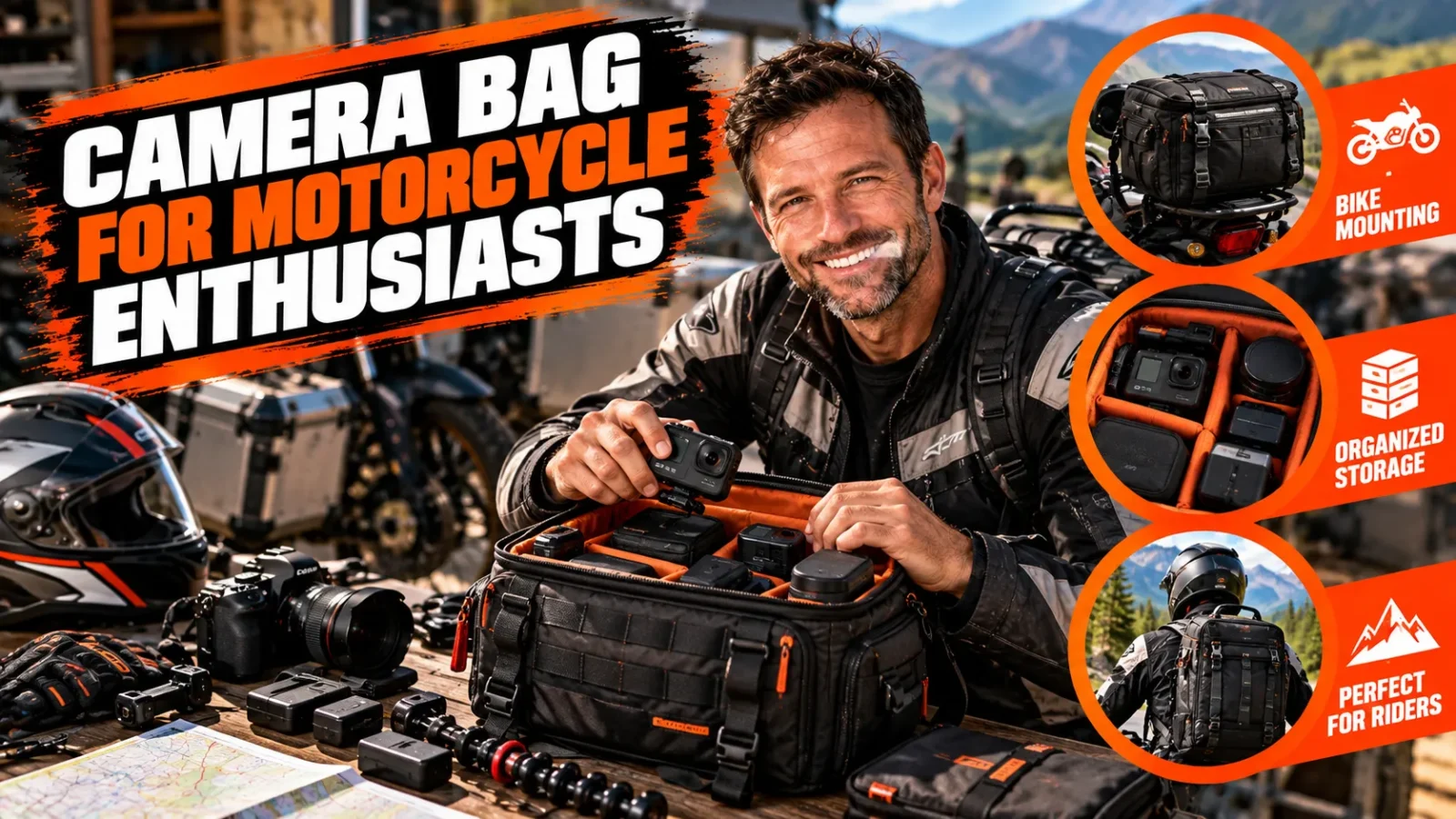
I’ve been riding and shooting photos on the road for over a decade now, and I can tell you the wrong camera bag will ruin a good trip faster than a sudden downpour. I’ve had straps snap on the highway, zippers fail in the rain, and lenses get scratched because I trusted a bag that was never built for two wheels.
Finding a camera bag for motorcycle enthusiasts isn’t the same as picking a bag for a weekend hike or a studio shoot. You need something that survives vibration, weather, and the awkward geometry of a bike seat. I’ve spent years testing options on sport bikes, adventure bikes, and long-haul tourers to figure out what actually holds up.
In this guide, I’m sharing the ten bags I trust most, along with what I look for before I ever throw one over my shoulder or strap it to a rear rack.
- My overall favorite is the Peak Design Everyday Backpack 20L V2 because it balances protection, comfort, and everyday usability.
- If you want something built specifically for motorcycles, the Kriega R30 is fully waterproof and rides like it’s part of your body.
- Budget-conscious riders should look at the Lowepro Photo Hatchback BP 150 AW II, which punches well above its price point.
- For hard-shell protection in panniers, I always recommend the Pelican Air 1535.
- Weatherproofing, chest/hip straps, and low bulk matter more than sheer capacity when you’re choosing a bag for riding.
1. Peak Design Everyday Backpack 20L V2 — Best Overall Camera Bag
This is the bag I reach for more than any other, even on days I’m not riding. The Peak Design Everyday Backpack 20L V2 uses a weatherproof 400D recycled nylon canvas shell that shrugs off light rain, which matters a lot when you’re parked at a scenic overlook and the sky turns on you.
What sold me on it for motorcycle use specifically is the low, wide profile. It doesn’t ride up on my helmet when I lean forward into the tank, and the sternum strap keeps it locked to my back through twisty roads.
The internal FlexFold dividers let me reconfigure the inside in seconds, so I can carry a mirrorless body with two lenses, or swap that space for a jacket and a spare pair of gloves. It runs about $280-$300, which isn’t cheap, but I’ve used mine daily for three years without a single stitch coming loose.
Why It Works So Well on a Bike
The side access panel is the real trick here. I can pull my camera out without taking the whole bag off, which is huge when I’m stopped at a light and want a quick shot before traffic moves again.
2. Kriega R30 Backpack — Best Motorcycle-Specific Waterproof Bag
Kriega builds gear exclusively for riders, and it shows. The Kriega R30 is a fully waterproof roll-top backpack with a welded, seamless construction that I’ve personally ridden through torrential rain in the Scottish Highlands without a drop getting inside.
It doesn’t come with camera-specific padding out of the box, but I pair mine with a Peak Design Camera Cube insert, and the combination is bombproof. The harness system is genuinely the most comfortable I’ve worn on a motorcycle, thanks to the QRM quick-release buckles and the way it hugs your spine instead of pulling on your shoulders.
At roughly $220, it’s an investment, but I consider it the gold standard for riders who care about weatherproofing above everything else.
A Note on Capacity
30 liters sounds like a lot, but the roll-top design means real capacity flexes with how much you roll it down. I’ve carried a full-frame body, three lenses, and a rain jacket in mine with room to spare.
3. Lowepro Photo Hatchback BP 150 AW II — Best Budget Pick
I recommend the Lowepro Photo Hatchback BP 150 AW II to almost every rider who tells me they’re just getting into photography and don’t want to spend a fortune. It typically sells for under $90, which is remarkable for a bag with a dedicated camera compartment and an included all-weather rain cover.
The bottom compartment holds a mirrorless or compact DSLR with a lens attached, while the top section is open for a jacket, snacks, or a spare visor. It’s not as rugged as the Kriega or Peak Design options, but for weekend rides and casual shooting, it’s held up fine in my experience.
The side access door is a smaller, simpler version of what you get on pricier bags, and honestly, it works just as well for quick grab-and-shoot moments at rest stops.
4. F-Stop Sukha 70L — Best for Adventure and Overland Touring
When I’m packing for a multi-day adventure ride, the F-Stop Sukha 70L is what goes on my back or bungeed to my pillion seat. It’s built for backcountry photographers, but the load-bearing suspension system translates beautifully to long days in the saddle.
You buy the ICU (Internal Camera Unit) separately, which I actually like because it means I only carry camera padding when I need it. The rest of the time, the Sukha just works as an oversized touring pack for camping gear, tools, and extra layers.
Expect to pay $300-$350 for the bag plus another $70-$150 for the ICU insert of your choice. It’s a serious investment, but if you’re doing week-long ADV trips, nothing else I’ve tried compares for comfort under heavy loads.
Built for Rough Terrain
The exterior is made from a burly VX21 or Robic fabric depending on the version you pick, and mine has survived being dropped on gravel more times than I’d like to admit.
5. Pelican Air 1535 — Best Hard Case for Panniers
Soft bags aren’t always the answer, especially if your bike has hard panniers or a top box. The Pelican Air 1535 is a lightweight, crushproof hard case that I use specifically for storing camera bodies and lenses when they’re not on my back.
It’s watertight, dustproof, and rated to float, which sounds excessive until you’ve had a case slide off a wet dock or riverbank during a shoot. Customizable foam inserts let you carve out exact spaces for each lens, so nothing rattles around over rough roads.
It costs around $250-$280, and while it’s not something you’d wear while riding, it’s the case I trust most for gear that lives in my top box during long tours.
6. Nelson-Rigg CL-1060 Sport Touring Tail Bag — Best for Sportbike Riders
If you ride a sportbike and don’t love the idea of a backpack pulling on your shoulders at speed, the Nelson-Rigg CL-1060 tail bag is worth a look. It straps directly to your rear seat using an expandable strap system, no permanent mounts needed.
It’s not marketed as a camera bag, but I line mine with a padded camera insert cube and it’s protected my gear through thousands of miles of canyon carving. The expandable design goes from 21 to 33 liters, which is handy when you’re packing for a day ride versus an overnight trip.
At about $130-$150, it’s a smart pick if you want your camera gear off your back entirely, which honestly makes cornering feel more natural.
7. Think Tank Photo StreetWalker HardDrive V2.0 — Best for Pro-Level Gear
Working photographers who ride will recognize this one. The Think Tank Photo StreetWalker HardDrive V2.0 is built to carry a pro body with a 70-200mm lens attached, plus two or three additional lenses, all cushioned in dense, customizable padding.
It runs about $200 and includes a rain cover tucked into the base pocket, which I’ve used more often than I expected on coastal rides where weather flips fast. The back panel is heavily padded and ventilated, which helps a lot during summer rides when heat buildup against your spine gets uncomfortable.
It’s a bit bulkier than the Peak Design or Lowepro options, so I mostly use it for day trips rather than long-distance touring where every liter and pound counts.
8. Tenba Solstice 24L Backpack — Best Weatherproof Backpack on a Budget
The Tenba Solstice 24L has quietly become one of my favorite grab-and-go bags. It’s made from a weather-resistant nylon shell, has a padded laptop sleeve, and the removable camera insert means I can use it as a normal travel backpack when I’m not shooting.
At roughly $150, it sits comfortably between the budget Lowepro and the pricier Peak Design in terms of build quality. The exterior straps let me lash on a tripod or a rolled-up rain jacket, which I appreciate on days when I’m not sure what the weather’s going to do.
I’ve found the hip belt genuinely useful for stability when I’m wearing it over riding gear, something a lot of “everyday” camera bags skip entirely.
9. Lowepro Flipside 400 AW III — Best Anti-Theft Design
Parking your bike at a crowded viewpoint or gas station always makes me a little nervous about my gear. The Lowepro Flipside 400 AW III addresses that directly, since the entire camera compartment opens against your back instead of facing outward.
That design means a thief would have to physically take the bag off you to get into it, which has given me real peace of mind on solo trips through unfamiliar towns. It holds a DSLR with a 70-200mm lens attached plus 3-4 additional lenses, and there’s a tripod pouch on the side for good measure.
It costs around $190-$210 and includes an integrated rain cover, so it checks nearly every box I care about for touring photography.
10. Manfrotto Pro Light Reloader Air-50 — Best Rolling Case for Base Camp Storage
Not every bag needs to go on your back. When I’m based at one location for a few days of shooting, the Manfrotto Pro Light Reloader Air-50 rolling case lives in my hotel room or tent as my “home base” for gear storage.
It’s technically a carry-on sized rolling case, but the customizable interior dividers make it excellent for organizing bodies, lenses, and accessories when you’re not actively riding. I typically pack it in a car or van for multi-day shoots and use a smaller bag like the Peak Design for the actual riding portions of the trip.
It runs about $280-$300, and while it’s the least “motorcycle” item on this list, I include it because serious enthusiasts often need a secure base to return to after a day on two wheels.
What I Actually Look for Before Buying a Camera Bag for Riding
After going through more bags than I can count, I’ve narrowed my checklist down to a handful of things that actually matter once you’re on the bike.
Weatherproofing Isn’t Optional
Weather changes fast on a ride, and camera gear hates moisture. I always check for sealed zippers, welded seams, or at minimum a snug-fitting rain cover before I even consider capacity or price.
Low Profile Beats Big Capacity
A tall, bulky bag catches wind and can throw off your balance in corners. I’d rather carry slightly less gear in a bag that hugs my back than deal with a top-heavy pack swaying at highway speed.
Strap Stability Matters More Than You’d Think
Sternum straps and hip belts aren’t just for comfort on long hikes. On a bike, they keep the bag from bouncing or shifting when you hit uneven pavement, which protects both your gear and your back.
Don’t Forget Your Action Camera Setup
Most of us riding with a camera bag are also running an action cam on the helmet these days. If you haven’t settled on one yet, I’d start with this rundown of the best GoPro camera for motorcycle helmet setups, or browse a broader comparison of the best action cameras for motorcycle helmets if you’re not locked into a brand.
Whatever bag you choose, leave a small organizer pocket free for mounts and cables. I keep mine dedicated to spares, and it’s saved more than one ride when a mount snapped unexpectedly.
Mounting Hardware Deserves Its Own Space
If you’re running an action camera alongside your main camera setup, you’ll want a reliable mounting system too. I’ve had good results researching the best GoPro mounts for motorcycle helmets before committing to a specific kit, since not every mount survives vibration the same way.
For riders who prefer a more permanent setup, it’s worth reading up on the best GoPro adhesive mount setup for motorcycle helmet options too, since a proper adhesive mount frees up bag space you’d otherwise use for a clamp or strap mount.
My Final Take
If I had to pick just one bag from this list, I’d still grab my Peak Design Everyday Backpack 20L V2 on the way out the door. But if I know rain is coming or I’m heading off-road, the Kriega R30 comes with me instead, no question.
The right choice really depends on your bike, your riding style, and how much gear you’re hauling. Start with what matters most to you, whether that’s weatherproofing, theft protection, or simply not spending a fortune, and build from there.
Whatever you pick, test it on a short local ride before you commit to a long tour with it strapped to your back. I’ve learned the hard way that comfort at a standstill doesn’t always mean comfort at 70 mph.
Frequently Asked Questions
Can I wear a regular camera backpack while riding a motorcycle?
You can, but I’d stick to bags with a sternum strap, hip belt, and a low-profile design. A bulky bag with dangling straps can catch wind, shift your center of gravity, and become a real hazard at speed.
Is a hard case or soft backpack better for carrying a camera on a motorcycle?
It depends on your bike. Hard cases like the Pelican Air 1535 are great for panniers and top boxes, while soft backpacks like the Peak Design Everyday Backpack are better for wearing on your back during the ride.
Do I need a separate bag for my action camera and mounts?
Not necessarily, but a bag with small organizer pockets helps. I keep my spare mounts and cables in the front pocket of my bag, and if you’re shopping for the camera itself, check out this guide to the best action cameras for motorcycle helmets.
How do I keep my camera gear dry on long rides?
Look for bags with a factory-sealed base, welded seams, or a included rain cover, like the Kriega R30 or Tenba Solstice 24L. I also toss a few silica gel packs inside my camera cube for extra insurance.

Related Articles

6 Best Rear View Cameras for Motorcycle: Riders Who Want Eyes in the Back of Their Head
I've tested the top rear view cameras for motorcycles so you don't have to. Here are my real-world picks for…
Jake Miller
12 min read

8 Best Cameras for Riding Motorcycle in 2026 (Rider-Tested Picks)
I've mounted, crashed, and rain-soaked dozens of cameras on my helmet and bike. Here are the 8 best cameras for…
Jake Miller
9 min read

9 Best Cameras for Motorcycle Travel: My Tested Picks for Long-Haul Rides
I've tested action cams, 360 cameras, and mirrorless bodies on thousands of touring miles. Here are the 9 best cameras…
Jake Miller
12 min read