
8 Best Cameras for Motorcycle Riders in the Philippines (2026 Buyer’s Guide)
 Jake Miller
11 min read
Jake Miller
11 min read
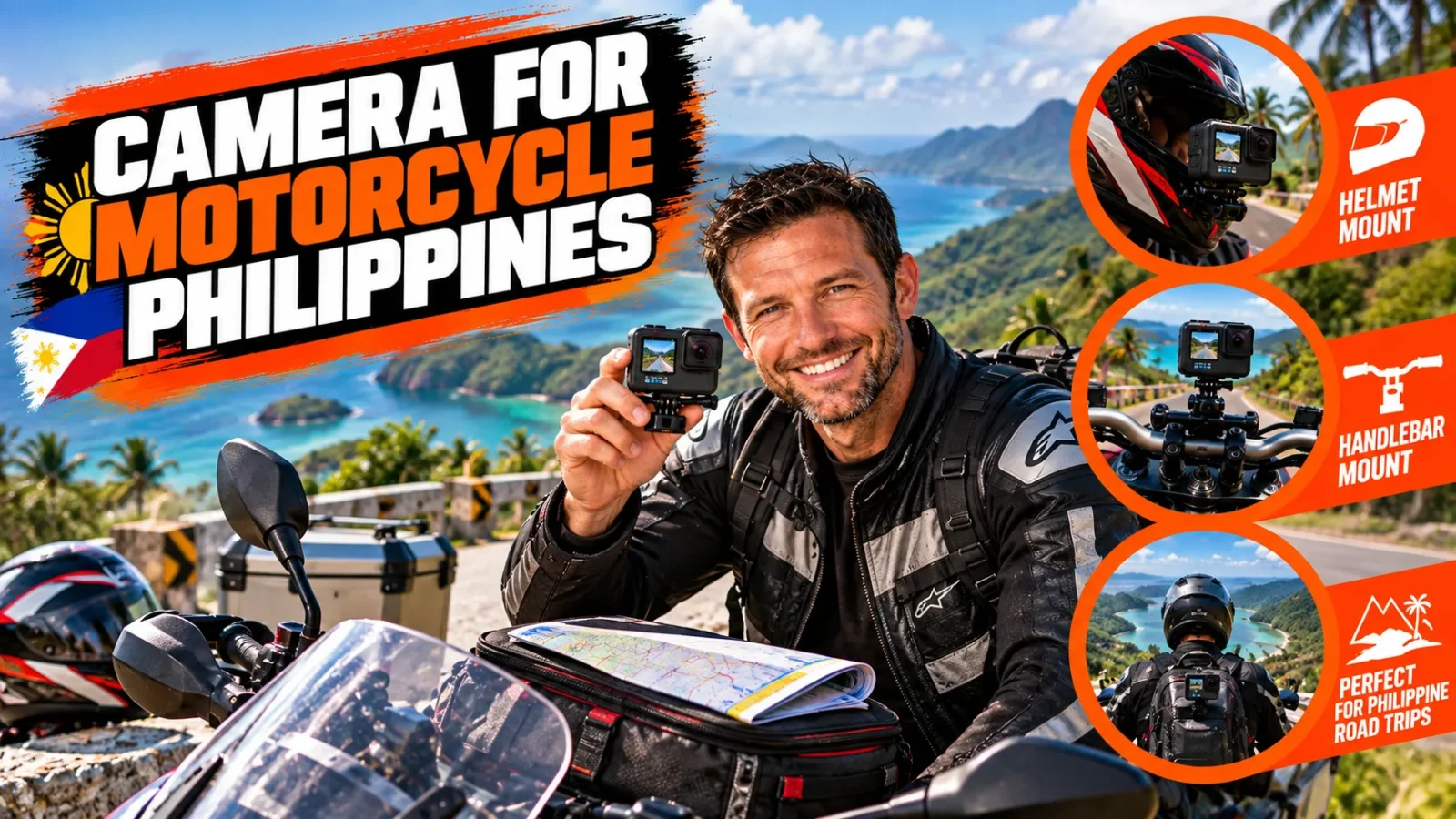
I’ve been riding through Manila traffic, up to Baguio, and down south to Batangas for years now, and if there’s one accessory I never leave home without, it’s my camera. Between erratic jeepneys, sudden potholes, and the occasional counterflow motorcycle, having footage has saved me more than once in an argument with an insurance adjuster.
I’ve personally tested and owned a good handful of these cameras myself, and borrowed a few more from riding buddies to get a real feel for how they hold up on actual Philippine roads — not just in a controlled studio somewhere. This list is based on that hands-on experience, plus what I’ve seen work (and fail) within our local riding community.
- My overall favorite is the GoPro HERO13 Black for its durability and image quality in PH heat and rain.
- If you want a “set it and forget it” dash cam-style system, the INNOVV K5 records front and rear continuously.
- Budget-conscious riders should look at the SJCAM SJ11, which delivers surprisingly solid footage for the price.
- For low-light night rides on unlit provincial roads, the DJI Osmo Action 5 Pro genuinely outperforms most rivals.
- Mounting matters as much as the camera itself — I go into that near the end, so don’t skip it.
1. GoPro HERO13 Black — Best Overall Camera for Motorcycle Riding
I keep coming back to the GoPro HERO13 Black whenever someone asks me what to buy first. It’s the camera I trust the most on long rides, whether I’m grinding through EDSA gridlock or blasting down Marcos Highway.
The HydroBoost stabilization on this thing is genuinely impressive. Even on rough provincial roads with potholes that rattle my whole bike, the footage stays smooth without that jittery, nauseating look older action cams used to produce.
It shoots up to 5.3K at 60fps, which gives me plenty of room to crop and reframe in post if I want a tighter shot of a scenic overlook in Tagaytay. Battery life has also improved noticeably over previous HERO models, which matters a lot on all-day group rides.
Price-wise, expect to pay around ₱23,000 to ₱26,000 locally depending on the bundle. It’s not cheap, but the build quality and the massive third-party mount ecosystem make it worth it in my book. If you’re deciding between this and other action cams, I actually break it down further in my best action camera for motorcycle helmets comparison.
Why I recommend it for Philippine conditions
Our tropical heat and sudden downpours are brutal on electronics. The HERO13 Black is waterproof up to 10 meters without a housing, which means I never worry about flash floods on EDSA ruining my gear mid-ride.
2. DJI Osmo Action 5 Pro — Best for Low-Light and Night Riding
A lot of my rides happen after work, which usually means navigating dim, unlit roads in Rizal or Cavite once the sun goes down. This is exactly where the DJI Osmo Action 5 Pro earns its keep.
DJI’s 1/1.3-inch sensor is noticeably larger than what you get on most competing action cams, and it shows. Night footage stays clean with far less of that grainy noise I used to get on older cameras when riding past dimly lit sari-sari stores or unlit barangay roads.
I also genuinely appreciate the dual screens — front and back — which make framing a selfie-style motovlog shot so much easier without guessing. Battery life is rated at over 240 minutes in some tests, and I’ve found it comfortably lasts a full day trip with moderate use.
It retails for roughly ₱21,000 to ₱24,000 here in the Philippines. If you do a lot of early morning or nighttime rides, I’d honestly rank this above the GoPro for that specific use case.
3. Insta360 Ace Pro 2 — Best Large-Sensor Camera for Sharper Video
The Insta360 Ace Pro 2 surprised me the first time I used it. It has a 1/1.3-inch sensor co-engineered with Leica, and the color science is genuinely a step above typical action cameras.
Skin tones look more natural on my motovlogs, and highlights don’t blow out as easily when I’m riding straight into the sun along Roxas Boulevard during golden hour. That’s a small detail, but it makes a real difference when I’m editing footage later.
It also has a flip-up touchscreen, which I find genuinely useful for vlogging at gas stops without needing a separate monitor. Waterproofing is rated to 10 meters on its own, no case needed, which matters during sudden rain in Q3 to Q1 of our calendar.
Pricing sits around ₱20,000 to ₱23,000. It’s a strong alternative if you want GoPro-level performance but prefer Insta360’s app and editing ecosystem, which I personally find a bit more intuitive on mobile.
4. Insta360 X4 — Best 360-Degree Camera for Full Ride Coverage
I’ll admit I was skeptical about 360 cameras at first, but the Insta360 X4 changed my mind after one trip to Batangas. Because it captures everything around the camera, I can reframe the shot after the ride and pick whatever angle actually tells the story best.
It shoots 8K 360 footage, and using their “reframe” feature in the app, I’ve pulled out both a front-facing view and a rear “mirror check” angle from a single clip. That’s something no traditional single-lens action camera can do.
Mounted on top of my helmet, it also acts as an invisible selfie stick camera since the app auto-erases the stick from the shot. It’s a neat party trick, but it’s also genuinely practical for solo riders who want cinematic group-ride footage without a drone.
Expect to spend around ₱24,000 to ₱27,000 for the X4. It’s pricier, but for content creators specifically, I think it pays for itself in editing flexibility alone.
5. Insta360 GO 3S — Best Ultra-Compact, Wearable Option
Sometimes I don’t want a bulky camera on my helmet, especially on hot, humid days when every extra gram feels like more strain on my neck. That’s when I reach for the Insta360 GO 3S.
It’s tiny, magnetic, and clips easily onto my jacket collar or chest strap. Despite the small size, it records 4K video and has genuinely solid stabilization for something this compact.
The magnetic pendant mount is clever too. I can pop the camera off, hand it to a riding buddy to film me passing by, then snap it right back on without fumbling with screws or adhesive plates mid-ride.
It runs about ₱16,000 to ₱18,000 depending on the bundle. It’s not going to replace a GoPro for serious motovlogging, but as a lightweight secondary angle camera, I’ve found it invaluable.
6. INNOVV K5 — Best Dedicated Front-and-Rear Motorcycle Dash Cam
If your main goal is safety and evidence recording rather than cinematic vlogging, the INNOVV K5 is what I’d point you toward. This isn’t an action camera you clip on and off — it’s a hardwired system with front and rear cameras permanently mounted on the bike.
Both cameras record in 2K resolution simultaneously, giving continuous loop recording the entire time your bike is on, similar to a car dash cam. This has become popular among Filipino riding groups specifically for documenting accidents and road rage incidents involving other motorists.
Installation takes some wiring work, so I’d recommend having it professionally installed, which local moto shops in Metro Manila and Cebu are increasingly familiar with. It also includes a mini control unit with GPS and a small screen for playback.
Pricing typically runs ₱18,000 to ₱25,000 for the full kit depending on the model variant. It’s a bigger commitment than an action cam, but for daily commuters who want passive, always-on protection, I think it’s worth the investment.
7. SJCAM SJ11 — Best Budget Action Camera
Not everyone wants to drop ₱20,000+ on a camera, and honestly, I don’t blame you. The SJCAM SJ11 is the budget option I recommend most often to riding buddies who are just starting to document their trips.
It shoots 4K30fps video with electronic image stabilization that, while not quite GoPro-level, is more than adequate for casual weekend rides and group ride compilations. The touchscreen is responsive enough, and the app pairing is straightforward.
Build quality feels sturdier than I expected at this price point, and it’s rated waterproof to 10 meters without a separate housing. For riders in Cebu, Davao, or anywhere with frequent rain, that’s a meaningful feature to have standard.
You’re typically looking at around ₱6,000 to ₱8,000 for the SJ11. If you’re testing the waters with motovlogging before committing to a premium camera, this is exactly where I’d start.
8. DJI Osmo Pocket 3 — Best for Motovlogging Stops and Café Content
This one isn’t a helmet camera, but I use it constantly whenever I stop for food, coffee, or to interview other riders during group events. The DJI Osmo Pocket 3 has a gimbal-stabilized 1-inch sensor that produces footage far cleaner than anything a typical action cam manages handheld.
Its rotating touchscreen automatically flips for vertical content, which has made my Instagram Reels and TikTok clips from rest stops noticeably more polished. The low-light performance is excellent too, useful for those evening merienda stops after a long ride.
It’s not built for mounting on your helmet or bike, so I treat it as a companion camera rather than a replacement for a GoPro or Insta360. Pricing runs about ₱26,000 to ₱30,000 for the Creator Combo.
If your content strategy includes a lot of talking-head segments or interviews with fellow riders, I genuinely think this justifies the extra cost.
How I Actually Choose and Mount These Cameras
Picking the camera itself is honestly only half the equation. Where and how you mount it changes everything about the footage quality and how safe the setup feels while riding.
Chin mount versus top-of-helmet mount
I personally prefer a chin mount for most of my GoPro and Insta360 footage because it captures more of the bike’s instrument cluster and gives viewers a better sense of speed and lean angle. Top mounts are better for wide scenic shots but tend to bob around more with head movement.
I go much deeper into this comparison, including specific bracket recommendations, in my guide on the best GoPro mounts for motorcycle helmets.
Adhesive mounts and long-term durability
Our humidity and heat here in the Philippines are genuinely tough on adhesive mounts. I’ve had cheap 3M knockoffs fail on me mid-ride, which is a scary and expensive lesson to learn the hard way.
If you’re setting up a permanent mount on your helmet shell, I strongly recommend reading through my notes on the best GoPro adhesive mount setup for motorcycle helmet before committing to any glue-on solution.
Matching the camera to your actual riding style
If you’re mostly commuting solo and just want an extra layer of safety documentation, I’d lean toward something like the INNOVV K5 or even a simpler helmet cam you barely have to think about. If you’re building a motovlogging channel, investing in a proper setup covered in my best GoPro camera for motorcycle helmet guide makes more sense long-term.
There’s no single “correct” answer here — it really depends on whether you’re prioritizing safety, content creation, or a bit of both like I usually do.
My Final Take
After years of testing these on actual Philippine roads, my honest recommendation is this: start with the GoPro HERO13 Black if budget allows, since it balances image quality, durability, and mounting flexibility better than almost anything else on this list.
If daily safety recording matters more to you than content creation, the INNOVV K5 is the system I’d trust to just quietly do its job every single ride. And if you’re not ready to spend big yet, the SJCAM SJ11 is a genuinely solid entry point that won’t leave you disappointed.
Whichever camera you land on, just make sure your mounting setup is secure before you hit the highway. Trust me, no footage is worth a camera flying off your helmet at 80 km/h on SLEX.
Frequently Asked Questions
What is the best camera for motorcycle riders in the Philippines?
For most riders, the GoPro HERO13 Black is the best all-around choice because of its rugged build, excellent stabilization, and huge accessory ecosystem. If you want a dedicated front-and-rear system that records continuously like a car dash cam, the INNOVV K5 is my top pick.
Do I need a helmet-mounted camera or a bike-mounted one?
It depends on your goal. Helmet mounts are great for POV footage and vlogging, while bike-mounted or dedicated dash cam systems like the INNOVV K5 are better for continuous evidence recording in case of accidents. Check out my guide on the best GoPro mounts for motorcycle helmets for more on this.
Is a 360 camera worth it for motorcycle riding in the Philippines?
Yes, if you want flexibility in editing angles after the ride. The Insta360 X4 lets you reframe shots and even simulate a rear-view mirror cam from one device, which is handy for our chaotic traffic.
How much should I budget for a decent motorcycle camera in PH?
You can get a reliable action camera like the SJCAM SJ11 for around ₱6,000 to ₱8,000, while premium options like the GoPro HERO13 Black or DJI Osmo Action 5 Pro run ₱20,000 to ₱25,000.

Related Articles

6 Best Rear View Cameras for Motorcycle: Riders Who Want Eyes in the Back of Their Head
I've tested the top rear view cameras for motorcycles so you don't have to. Here are my real-world picks for…
Jake Miller
12 min read

8 Best Cameras for Riding Motorcycle in 2026 (Rider-Tested Picks)
I've mounted, crashed, and rain-soaked dozens of cameras on my helmet and bike. Here are the 8 best cameras for…
Jake Miller
9 min read

9 Best Cameras for Motorcycle Travel: My Tested Picks for Long-Haul Rides
I've tested action cams, 360 cameras, and mirrorless bodies on thousands of touring miles. Here are the 9 best cameras…
Jake Miller
12 min read