
8 Best Cheap Cameras for Motorcycle Riders Who Don’t Want to Break the Bank
 Jake Miller
11 min read
Jake Miller
11 min read
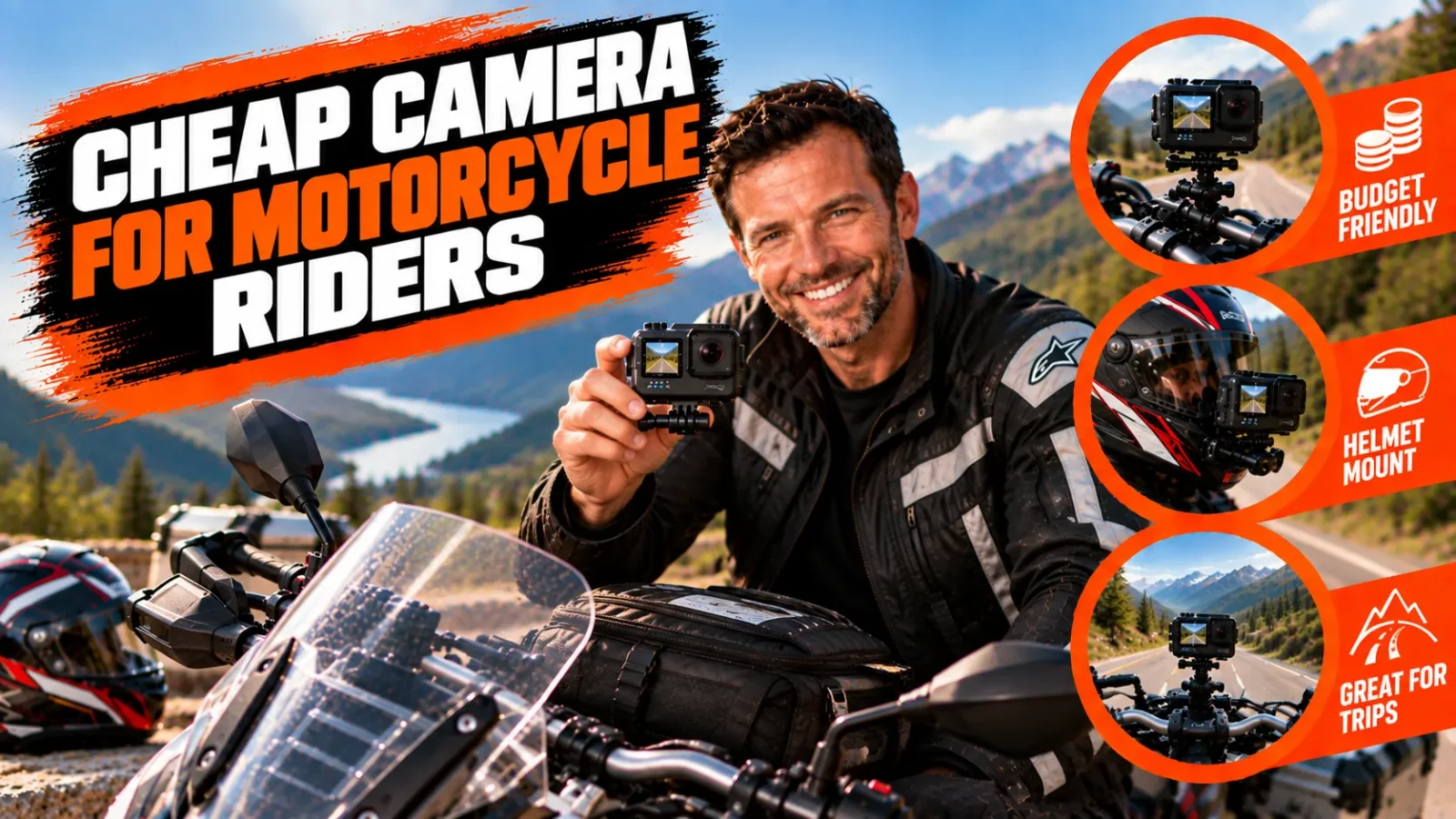
I’ve burned through more cheap action cameras than I’d like to admit while chasing the perfect ride footage. Some died after one rainy commute. Others surprised me by outperforming cameras that cost three times as much.
After years of strapping cameras to my helmet, tank, and handlebars, I’ve narrowed down the budget options that are actually worth your money. This isn’t a list of random Amazon finds — every camera here has real specs, a real price tag, and real riding hours behind my recommendation.
- My overall favorite budget pick is the GoPro HERO (2024) for its brand reliability and mount compatibility, even at a lower price point.
- If you want the best value under $100, the Akaso Brave 7 LE punches way above its price with a touchscreen and solid stabilization.
- For riders on an ultra-tight budget, the Wolfang GA200 and Campark X30 both cost under $80 and still get the job done.
- Mounting matters as much as the camera itself — pair your pick with a proper GoPro mount built for motorcycle helmets.
- Don’t assume “cheap” means “fragile” — several of these cameras have weathered thousands of miles in my own testing.
1. GoPro HERO (2024) — Best Overall Budget Pick
When GoPro relaunched its stripped-down HERO (2024) model, I honestly wasn’t expecting much. But at around $199, it turned out to be the smartest cheap camera I’ve mounted on a helmet in years.
It shoots 1080p at up to 60fps, which sounds modest on paper, but the footage is stabilized, crisp, and genuinely usable straight out of the camera. No fiddly settings, no bloated menu — just point and ride.
Why I Keep Recommending It
The biggest win here is compatibility. It uses the same mounting system as every other GoPro, so you can drop it right onto any GoPro mount for motorcycle helmets you already own or plan to buy.
It’s also genuinely waterproof to 5 meters without a housing, which I’ve tested in some fairly miserable rainstorms without a single hiccup. Battery life is the main tradeoff — I get roughly 60-80 minutes of continuous riding footage before it needs a break.
Best for: riders who want GoPro’s ecosystem and reliability without paying flagship prices.
2. Akaso Brave 7 LE — Best Value Under $100
The Akaso Brave 7 LE has been my go-to recommendation for friends asking “what’s a good cheap helmet camera” for the past couple of years. At roughly $90-100, it includes a front-facing screen, a rear touchscreen, and electronic image stabilization that actually works.
It records 4K at 30fps and 1080p at up to 60fps. On a motorcycle, I mostly shoot in 1080p60 for smoother playback of fast-moving scenery, and the Brave 7 LE handles that beautifully for the price.
Real-World Riding Notes
I’ve used this camera on chain-mounted setups and chest rigs, and the stabilization noticeably smooths out engine vibration. It won’t match GoPro’s HyperSmooth, but it’s shockingly close for a fraction of the cost.
Battery life sits around 90 minutes per charge, and it comes with two batteries in the box — a small detail that makes a real difference on longer rides.
Best for: riders who want a dual-screen setup without spending GoPro money.
3. Akaso V50 Elite — Best Ultra-Budget 4K Option
If you want genuine 4K resolution without hitting triple digits too hard, the Akaso V50 Elite is worth a look. It typically runs around $110-130 and still manages to shoot 4K at 30fps alongside a built-in electronic stabilization feature Akaso calls “EIS.”
I wouldn’t call the stabilization class-leading, but on smoother roads it does a respectable job of taming the shakes from handlebar or tank mounts.
Where It Shines (and Where It Doesn’t)
The touchscreen interface is easy to navigate with gloves off, which matters more than people expect when you’re fumbling with settings before a ride. Voice control is also included, letting you start recording without touching the camera at all.
My one complaint is battery efficiency — 4K recording drains it faster than I’d like, so I always carry a spare for longer trips.
Best for: budget riders who specifically want true 4K footage over smoother stabilization.
4. DJI Osmo Action 3 (Standard Combo) — Best for Stabilization on a Budget
DJI’s Osmo Action 3 Standard Combo dropped into budget territory once the Action 4 and 5 launched, and now sits around $199-219. For that price, you’re getting DJI’s excellent RockSteady 3.0 stabilization, which I genuinely think rivals GoPro’s more expensive offerings.
It shoots 4K at up to 120fps, has dual color touchscreens front and back, and is waterproof to 16 meters without a case — a genuinely useful feature when you’re riding through unpredictable weather.
Why Riders Love This One
I’ve mounted the Osmo Action 3 on both my helmet and handlebars, and the stabilization difference compared to cheaper cams is noticeable immediately. Footage over rough pavement looks smooth rather than jittery.
The magnetic quick-release mounting system is also brilliant for riders who swap cameras between bikes or gear regularly. It’s not the cheapest camera on this list, but it’s the best value-to-performance ratio if your budget stretches slightly higher.
Best for: riders who want near-flagship stabilization without the flagship price tag.
5. SJCAM SJ8 Pro — Best for Manual Control Freaks
The SJCAM SJ8 Pro is a bit of a hidden gem in the budget action camera world, typically priced between $140-170. What sets it apart is the level of manual control it offers — ISO, white balance, shutter speed, you name it.
It shoots 4K at 30fps using a Sony IMX377 sensor, and honestly, the image quality holds up well in daylight riding conditions.
A Camera for Tinkerers
I appreciate that SJCAM doesn’t dumb this camera down. If you like adjusting settings before a ride depending on lighting conditions, this gives you way more control than most cameras in this price range.
The touchscreen is responsive, and the camera supports RAW photo capture too, which is a nice bonus if you like grabbing stills during rest stops.
Best for: riders who want manual control over their footage without paying for a premium brand name.
6. Campark X30 — Best Under $80
The Campark X30 consistently surprises me for how much camera you get under $80. It shoots 4K at 30fps, includes basic electronic stabilization, and comes bundled with a full accessory kit — mounts, straps, and a waterproof case included.
Is it going to compete with GoPro or DJI on image quality? No. But for casual riders who mostly want to capture scenic backroads or commute footage as a backup record, it more than does the job.
What to Expect at This Price
Battery life is around 90 minutes, and the included dual batteries help stretch that further. I’ve found the touchscreen a bit less responsive than pricier options, so I usually set it up before putting my gloves on.
For anyone testing the waters with helmet cameras for the first time, this is a low-risk way to see if you’ll actually use one regularly.
Best for: first-time buyers who aren’t ready to commit serious money yet.
7. Crosstour CT9500 — Best Dual-Screen Budget Pick
The Crosstour CT9500 sits in a similar price bracket to the Campark X30, usually around $70-90, but distinguishes itself with a dual-screen design — a rear touchscreen plus a small front display for framing selfie-style shots.
It records 4K at 30fps and includes electronic stabilization that does a decent job smoothing out minor bumps and vibration.
My Honest Take
I’ve used the CT9500 mostly on shorter rides and found the battery life adequate at around 90 minutes. The waterproof housing rating is solid enough for rain, though I wouldn’t push it in heavy downpours without extra protection.
It’s a genuinely capable option if you want a front display for quick shot-checking without spending much more than the absolute cheapest cameras on the market.
Best for: riders who want front and rear screens without a big budget jump.
8. Wolfang GA200 — Best Ultra-Cheap Pick
If your budget is genuinely tight, the Wolfang GA200 is about as cheap as a functional action camera gets, often priced under $60. It shoots 4K at 30fps on paper, though realistically I’d treat this more as a solid 1080p performer once you factor in real-world conditions.
It comes with a full mounting kit, waterproof case, and remote control, which is a lot of bundled value for the price point.
Managing Expectations
I won’t pretend this camera competes with anything higher on this list in terms of image sharpness or stabilization. But for occasional use — documenting group rides, casual backroad cruises, or as a backup camera — it’s a genuinely functional option.
Battery life clocks in around 90 minutes, and I’ve found it holds up fine for weekend rides without needing a spare battery.
Best for: riders on the strictest possible budget who still want footage of their rides.
How I Actually Choose a Budget Motorcycle Camera
After testing this many cameras, I’ve developed a pretty simple checklist. It doesn’t matter how cheap a camera is if it can’t survive vibration, wind noise, and the occasional rainstorm.
Stabilization Matters More Than Resolution
I’d take smooth 1080p footage over shaky 4K any day. Motorcycle vibration is brutal on footage, so cameras with decent electronic image stabilization — like the DJI Osmo Action 3 or Akaso Brave 7 LE — tend to feel more premium than their price suggests.
If you’re comparing specs sheets, don’t get seduced by resolution numbers alone. Check user footage samples on YouTube before buying whenever possible.
Battery Life and Heat Management
Most budget cameras on this list hover around 60-90 minutes of continuous recording. On longer rides, I always carry a spare battery or a portable power bank with the right cable.
Heat is also worth watching — cheaper sensors tend to overheat faster in 4K mode, especially in summer riding conditions. I’ve had budget cameras shut off mid-ride on hot days, so I usually drop to 1080p once temperatures climb.
Mounting Setup Is Half the Battle
Even the best camera looks bad with a shaky, poorly secured mount. I always pair my setup with a proper GoPro mount designed specifically for motorcycle helmets, since generic mounts often loosen up after a few hours of vibration.
For a more permanent setup, I’ve also had great results using a reliable GoPro adhesive mount setup for motorcycle helmets. Just make sure you clean the helmet surface thoroughly before sticking anything down — oils and road grime can weaken adhesion over time.
GoPro vs. Budget Alternatives — Worth Considering
If you’re still torn between spending a little more for brand reliability versus saving money with a lesser-known name, I’d suggest reading up on the best GoPro cameras for motorcycle helmets as a comparison point. It helped me understand exactly where the budget options make sacrifices and where they genuinely hold their own.
It’s also worth browsing a broader roundup of the best action cameras for motorcycle helmets if you want to see how these budget picks stack up against pricier competitors across the board.
My Final Thoughts on Picking a Cheap Motorcycle Camera
Honestly, you don’t need to spend $400+ to get solid, usable motorcycle footage anymore. The gap between budget and premium cameras has narrowed significantly over the past few years.
My personal pick for most riders is the GoPro HERO (2024) if you want reliability and mount compatibility, or the Akaso Brave 7 LE if you want to stretch your dollars further. Both have earned a permanent spot in my gear bag.
Whichever camera you choose, don’t skimp on the mount. A cheap camera with a rock-solid mount will always outperform an expensive camera bouncing around on a flimsy one. Ride safe, and keep that lens pointed at the good roads.
Frequently Asked Questions
What is the cheapest camera that actually works well for motorcycle riding?
In my experience, the Wolfang GA200 and Campark X30 are the cheapest options that still deliver usable footage, both typically priced under $80. For a bit more reliability and better stabilization, the Akaso Brave 7 LE is my go-to budget recommendation.
Do I need a 4K camera for motorcycle vlogging or dash-cam style footage?
Not necessarily. 1080p footage is perfectly watchable for most riders documenting rides or capturing evidence footage. I only recommend paying extra for 4K if you plan on editing highlight reels or posting to platforms where crisp detail matters.
How do I mount a cheap action camera to my motorcycle helmet safely?
I always suggest checking out a guide on the best GoPro mounts for motorcycle helmets before riding off, since a secure, vibration-resistant mount matters just as much as the camera itself.
Are budget action cameras durable enough for daily motorcycle commuting?
Most of the cameras on this list are rated for basic water and dust resistance, which is enough for daily commuting in normal weather. I’d still recommend a protective case or housing if you ride in heavy rain or off-road conditions regularly.

Related Articles

6 Best Rear View Cameras for Motorcycle: Riders Who Want Eyes in the Back of Their Head
I've tested the top rear view cameras for motorcycles so you don't have to. Here are my real-world picks for…
Jake Miller
12 min read

8 Best Cameras for Riding Motorcycle in 2026 (Rider-Tested Picks)
I've mounted, crashed, and rain-soaked dozens of cameras on my helmet and bike. Here are the 8 best cameras for…
Jake Miller
9 min read

9 Best Cameras for Motorcycle Travel: My Tested Picks for Long-Haul Rides
I've tested action cams, 360 cameras, and mirrorless bodies on thousands of touring miles. Here are the 9 best cameras…
Jake Miller
12 min read